
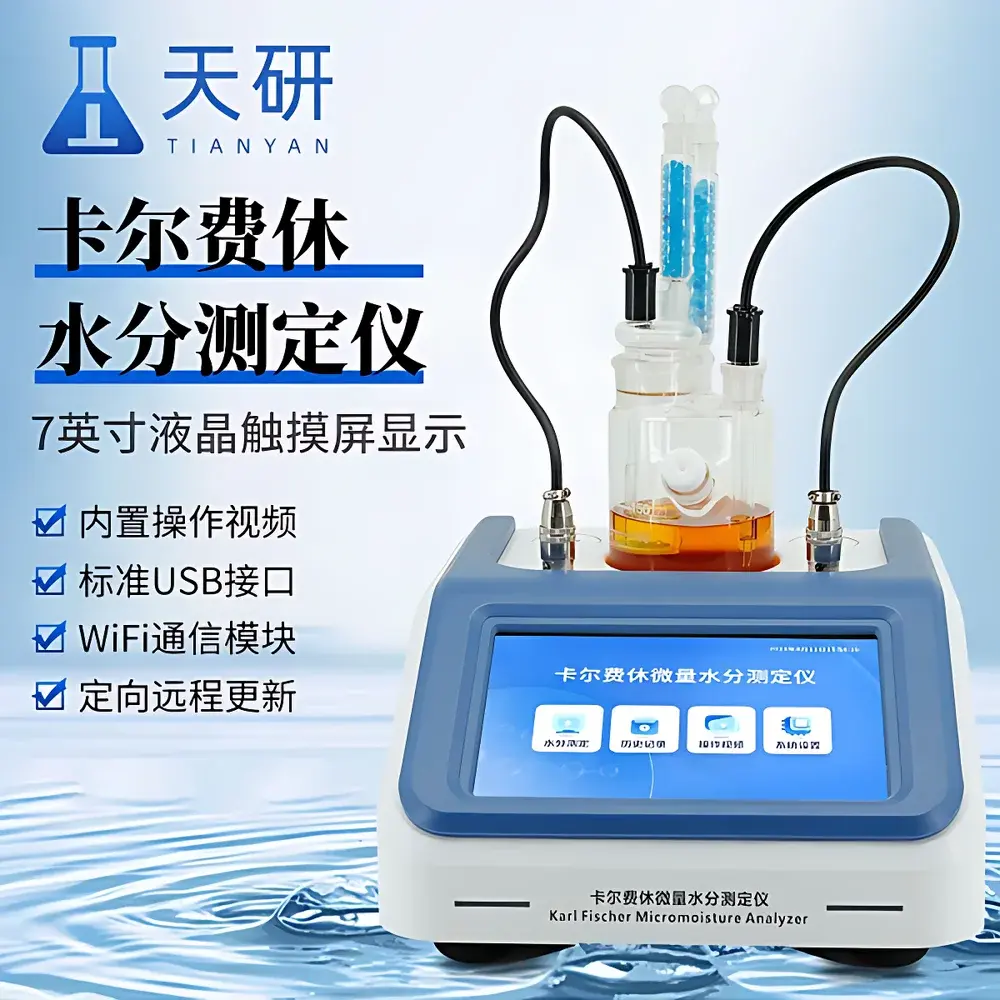
Tianyan TY-WS3 Karl Fischer Moisture Analyzer (Coulometric & Volumetric)
| Brand | Tianyan |
|---|---|
| Origin | Shandong, China |
| Model | TY-WS3 |
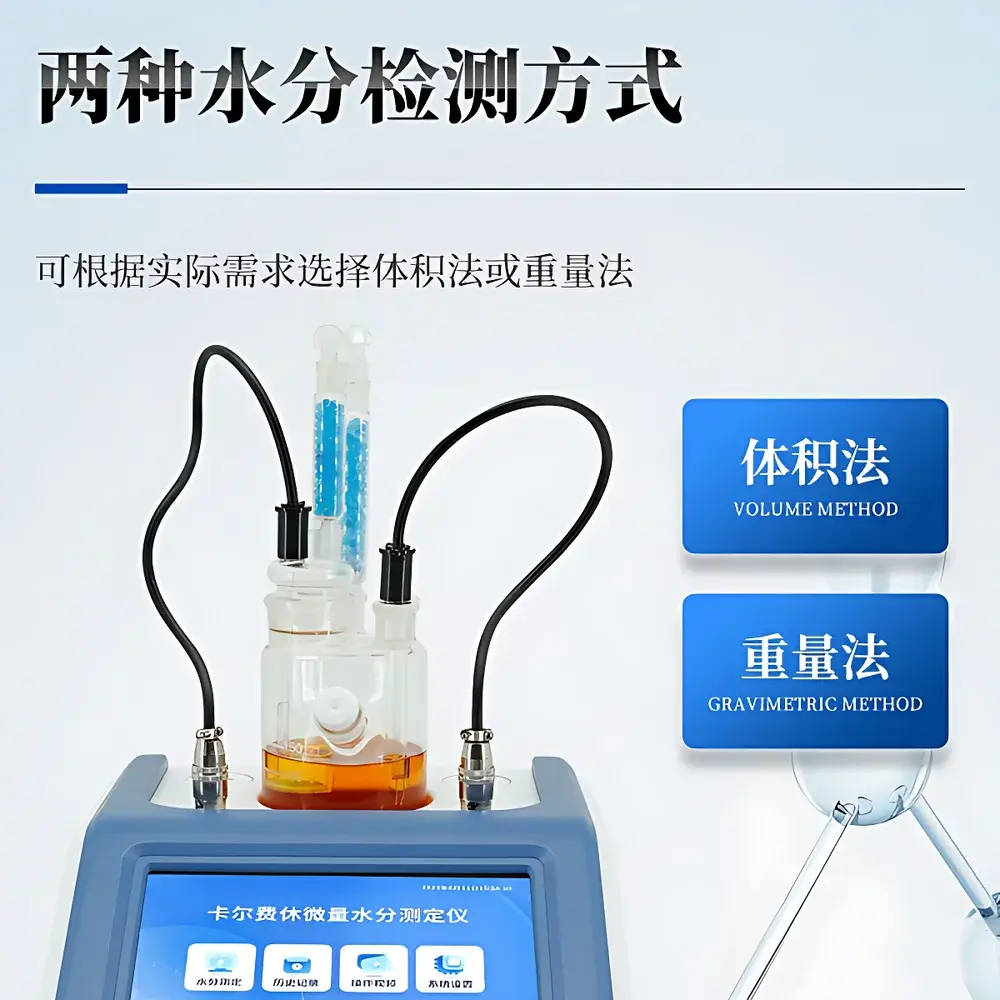
| Titration Method | Manual & Automated Coulometric/Volumetric |
| Moisture Range | 0.01 µg – 100% (w/w) |
| Detection Limit | 0.01 µg H₂O |
| Accuracy | ±2 µg (for 5–1000 µg), ±0.2% (for >1 mg, excluding sampling error) |
| Repeatability | ≤2% RSD |
| Titration Resolution | 0.1 µL (volumetric) / ±0.1 µA (coulometric current resolution) |
| Electrolysis Rate | 2 min per titration |
| Stirring Speed | 10 adjustable levels |
| Zero-Balance Time | ≤1 min |
| Power Supply | 12 V DC / 3 A |
| Operating Environment | 5–40 °C, <85% RH |
| Dimensions | 235 × 270 × 130 mm |
| Weight | 2.0 kg |
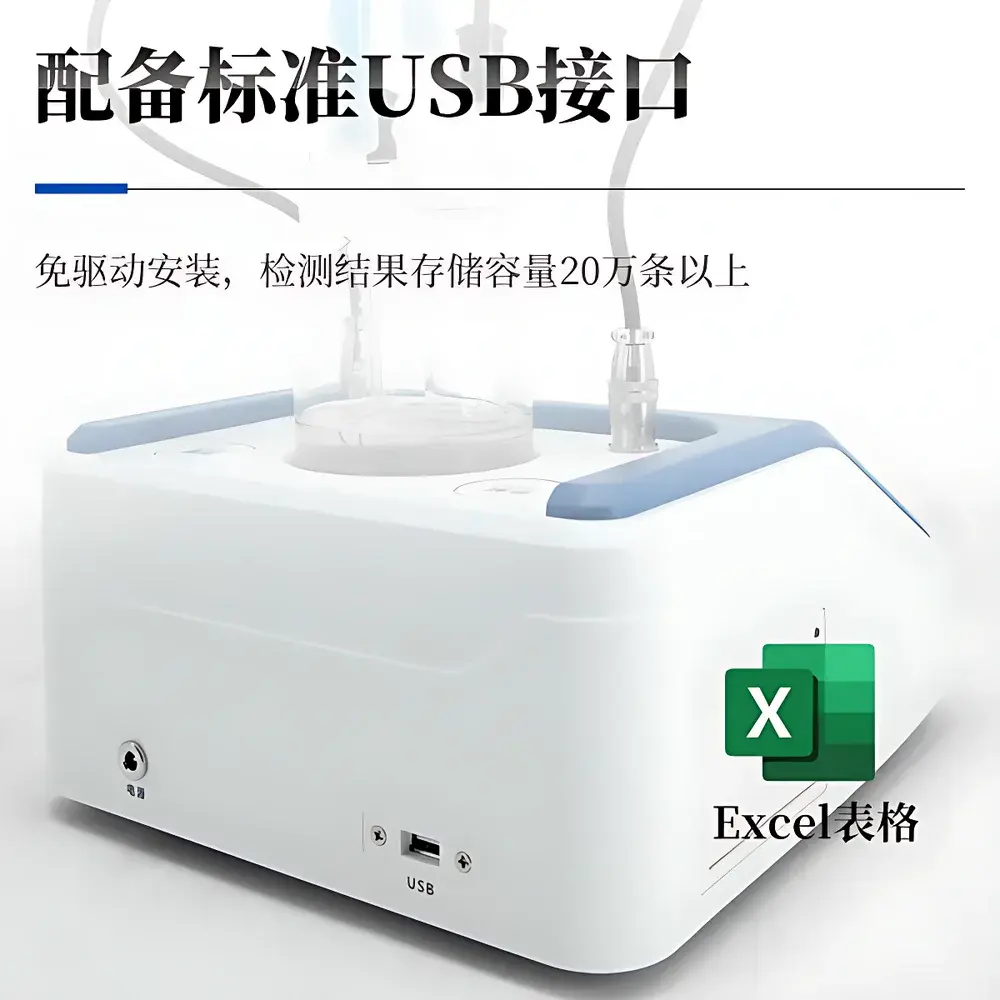
| Data Storage Capacity | >200,000 records |
| Compliance | GB/T 7600, GB 6283, SH/T 0246, SH/T 0255, GB/T 11133, GB/T 7380, GB 10670, GB/T 606, GB/T 8350, GB/T 8351, GB/T 3776.1, GB/T 6023, GB/T 3727, GB/T 7376, GB/T 18619.1, GB/T 1600, GB/T 11146, GB/T 12717, GB/T 18826, Chinese Pharmacopoeia (ChP) General Chapter 0832 |
Overview
The Tianyan TY-WS3 Karl Fischer Moisture Analyzer is a dual-mode benchtop instrument engineered for precise, trace-level water quantification in diverse liquid, solid, and gaseous samples using both coulometric and volumetric Karl Fischer titration principles. Based on the stoichiometric reaction between iodine, sulfur dioxide, methanol, and water—where water is the limiting reagent—the system enables highly selective detection of moisture without interference from most solvents or matrix components. The coulometric mode delivers sub-microgram sensitivity (0.01 µg detection limit), ideal for low-water-content materials such as pharmaceutical excipients, lithium battery electrolytes, and high-purity solvents. The volumetric mode supports broader dynamic range applications—including oils, polymers, and fuels—covering 0.01% to 100% (w/w) water content. Its ARM Cortex-A7 quad-core processor (1.88 GHz) ensures real-time algorithm execution for endpoint detection, drift compensation, and adaptive titration control, meeting the computational demands of GLP-compliant routine analysis.
Key Features
- Integrated dual-method architecture supporting both coulometric and volumetric KF titration in a single platform, eliminating the need for separate instruments.
- 7-inch capacitive touchscreen with intuitive English-language UI, preloaded operational video tutorials, and context-sensitive help prompts for rapid method setup and troubleshooting.
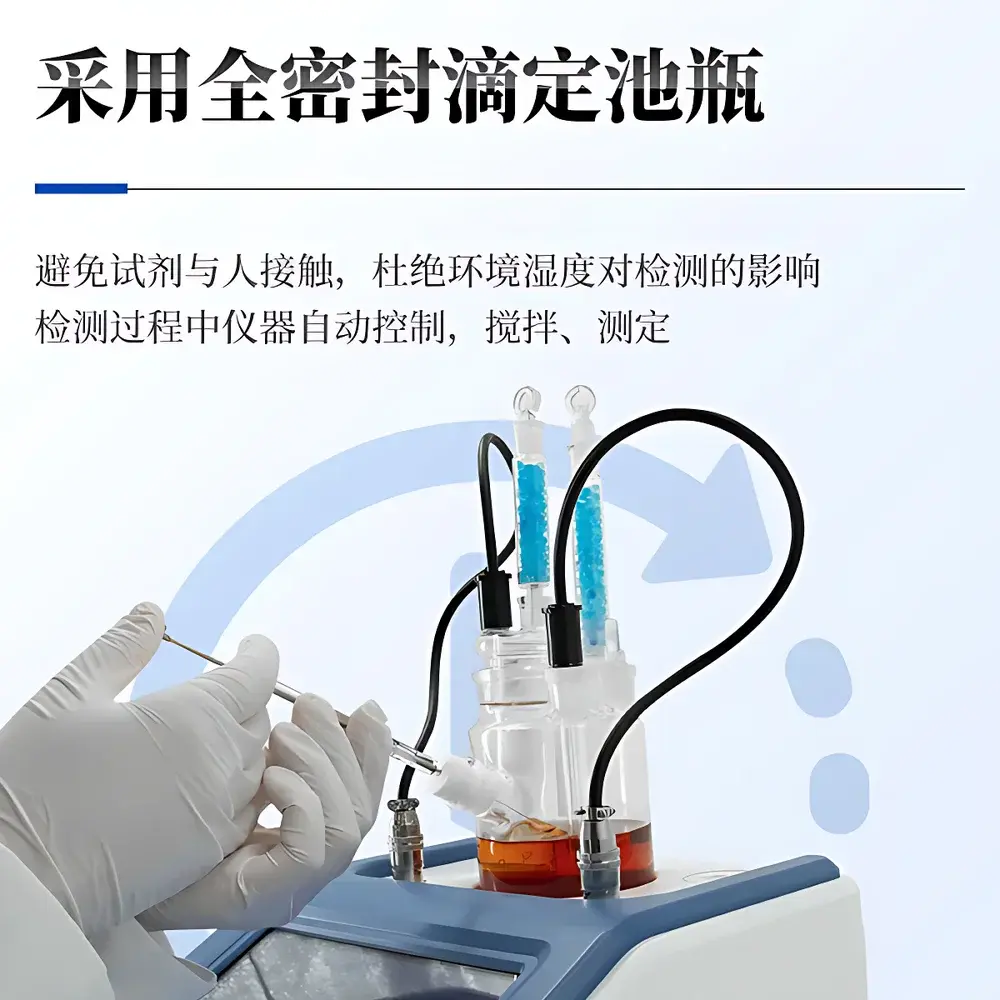
- Hermetically sealed titration cell design minimizes ambient humidity ingress and operator exposure to toxic KF reagents (e.g., SO₂, pyridine-free alternatives).
- Automated endpoint recognition with adaptive current thresholding and real-time drift correction, ensuring robust performance across variable sample matrices.
- Configurable titration parameters including electrolysis current (coulometric), titrant delivery volume (volumetric), stirring speed (10-step adjustment), and reaction time limits.
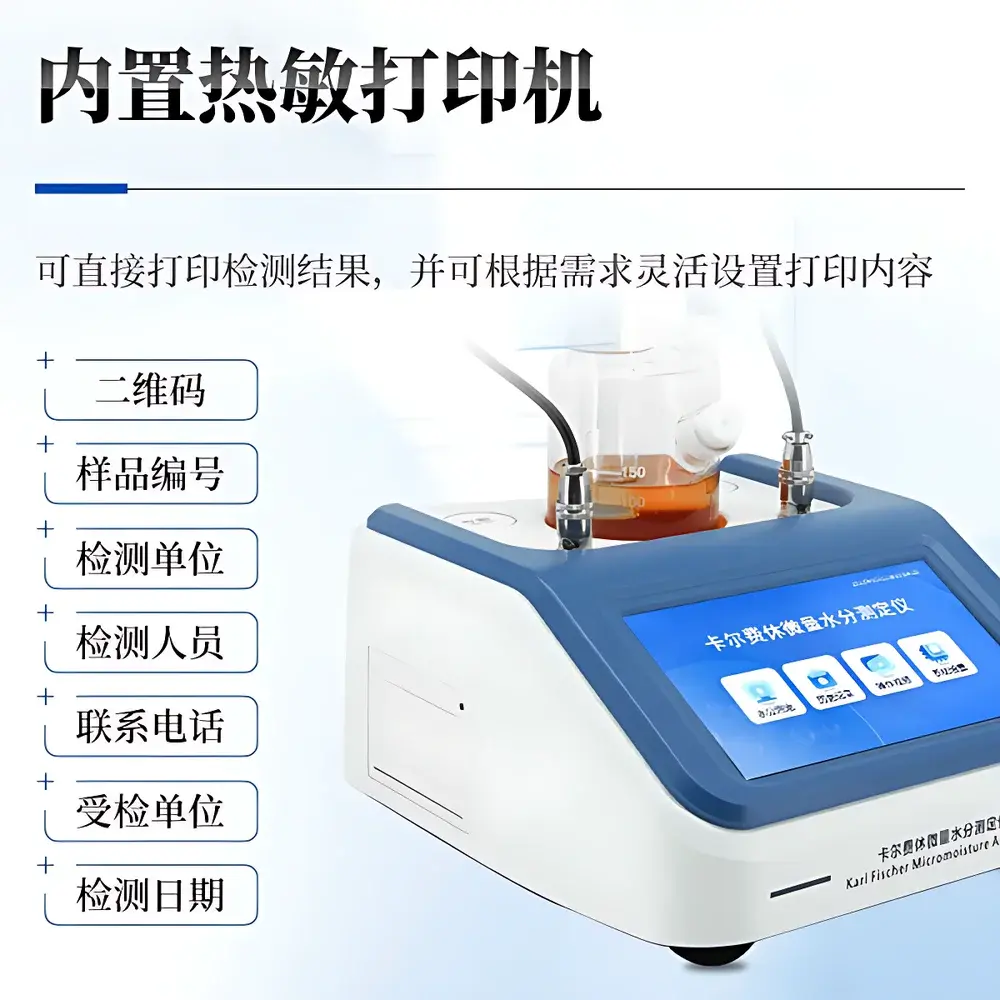
- Onboard thermal printer with customizable label templates—supporting QR code generation, sample metadata fields (ID, operator, unit, timestamp), and regulatory-compliant reporting.
- Local data management with >200,000 result storage capacity; exportable to Excel via USB 2.0 (driverless HID-class interface).
- Wi-Fi-enabled cloud synchronization for centralized data access, trend analysis, and audit-ready reporting across laboratory networks.
- Remote firmware updates over secure OTA channel—no physical return required—ensuring continuous compliance with evolving pharmacopeial and industrial standards.
Sample Compatibility & Compliance
The TY-WS3 accommodates a wide spectrum of sample types: hygroscopic solids (e.g., APIs, catalysts), viscous liquids (lubricants, resins), volatile solvents (acetone, THF), and gas-phase samples (via carrier gas sparging). It complies fully with 20 national standards referenced in the technical documentation—including GB/T 7600 (transformer oil), GB/T 11133 (petroleum products), GB/T 11146 (crude oil), and ChP General Chapter 0832 (pharmaceuticals). These alignments ensure suitability for QA/QC workflows under GMP, ISO/IEC 17025, and FDA 21 CFR Part 11 environments when paired with appropriate electronic signature and audit trail configurations. All calibration, verification, and performance qualification procedures are traceable to NIST-traceable water standards.
Software & Data Management
Data integrity is enforced through structured metadata capture at acquisition: sample name, ID, density, weight/volume, operator, testing unit, and custom annotations. Each record includes timestamped raw current/time curves, titration logs, endpoint confirmation flags, and calculated moisture values with uncertainty estimates. Historical queries support multi-field filtering (date range, sample ID, operator, unit) and export in CSV/Excel formats. Cloud integration supports role-based access control, automated backup, and statistical process monitoring (SPC) dashboards. The system supports ALCOA+ principles—attributable, legible, contemporaneous, original, accurate—with optional digital signature modules compliant with 21 CFR Part 11 Annex 11 requirements.
Applications
- Pharmaceutical manufacturing: residual moisture in lyophilized powders, tablet granules, and packaging headspace validation per ICH Q5C.
- Petrochemical QA: water in jet fuel (ASTM D6304), transformer oil (IEC 60814), and LNG feedstocks.
- Electrochemical materials: trace H₂O in Li-ion battery electrolytes (<10 ppm specification per ISO 16000-23).
- Chemical synthesis: real-time monitoring of dehydration reactions and solvent purity certification.
- Food & beverage: moisture in powdered dairy, starches, and edible oils per AOAC 985.15 adaptations.
- Polymers & coatings: water content in polyurethane prepolymers and epoxy resins affecting cure kinetics.
FAQ
Does the TY-WS3 support both coulometric and volumetric titration modes simultaneously?
Yes—the instrument automatically detects and configures the appropriate mode based on selected reagent type and method parameters.
Is the system compliant with 21 CFR Part 11 for regulated pharmaceutical laboratories?
Out-of-the-box, it meets core data integrity requirements; full Part 11 compliance requires deployment with validated electronic signature and audit trail software modules.
What is the recommended maintenance interval for the titration cell and electrodes?
Cell cleaning is advised after every 50–100 analyses; platinum electrode polishing and diaphragm replacement are recommended quarterly under continuous use.
Can the instrument be integrated into LIMS or ELN platforms?
Yes—via standardized CSV/Excel export, HTTP API (available upon request), or middleware-compatible Wi-Fi cloud gateway.
How is measurement uncertainty quantified for reported results?
Uncertainty is calculated per GUM (JCGM 100:2008) incorporating repeatability (≤2% RSD), accuracy limits (±2 µg / ±0.2%), and certified standard deviation from calibrant runs.



