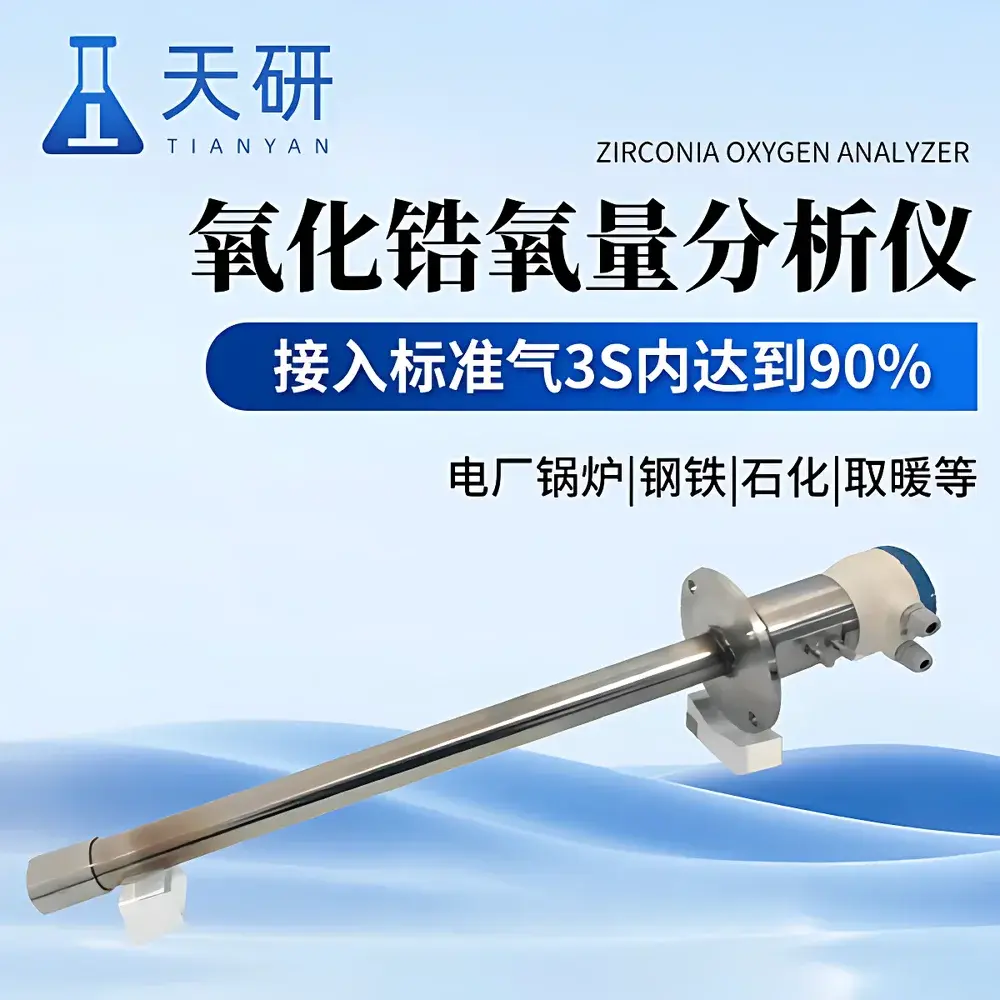
Tianyan TY-ZO-S Panel-Mount Zirconia Oxygen Analyzer for Flue Gas Monitoring
| Brand | Tianyan |
|---|---|
| Origin | Shandong, China |
| Model | TY-ZO-S |
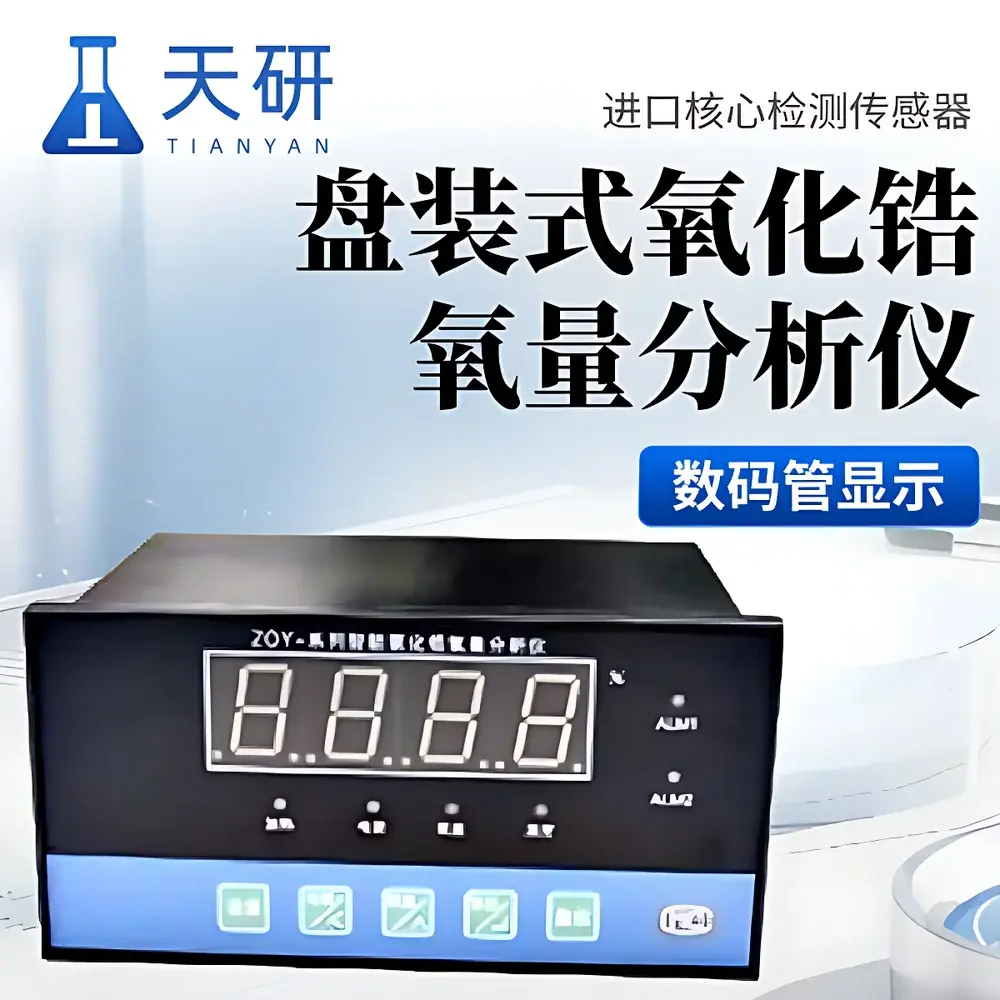
| Installation Type | Panel-mount (DIN rail or cutout mounting) |
| Display | LED numeric display (standard) |
| Power Supply | 220 V AC ±10%, 50 Hz |
| Power Consumption | ≤150 W |
| Oxygen Range | 0–25% O₂ (programmable, adjustable between 5–25% O₂) |
| Output Signal | 4–20 mA (load ≤500 Ω) |
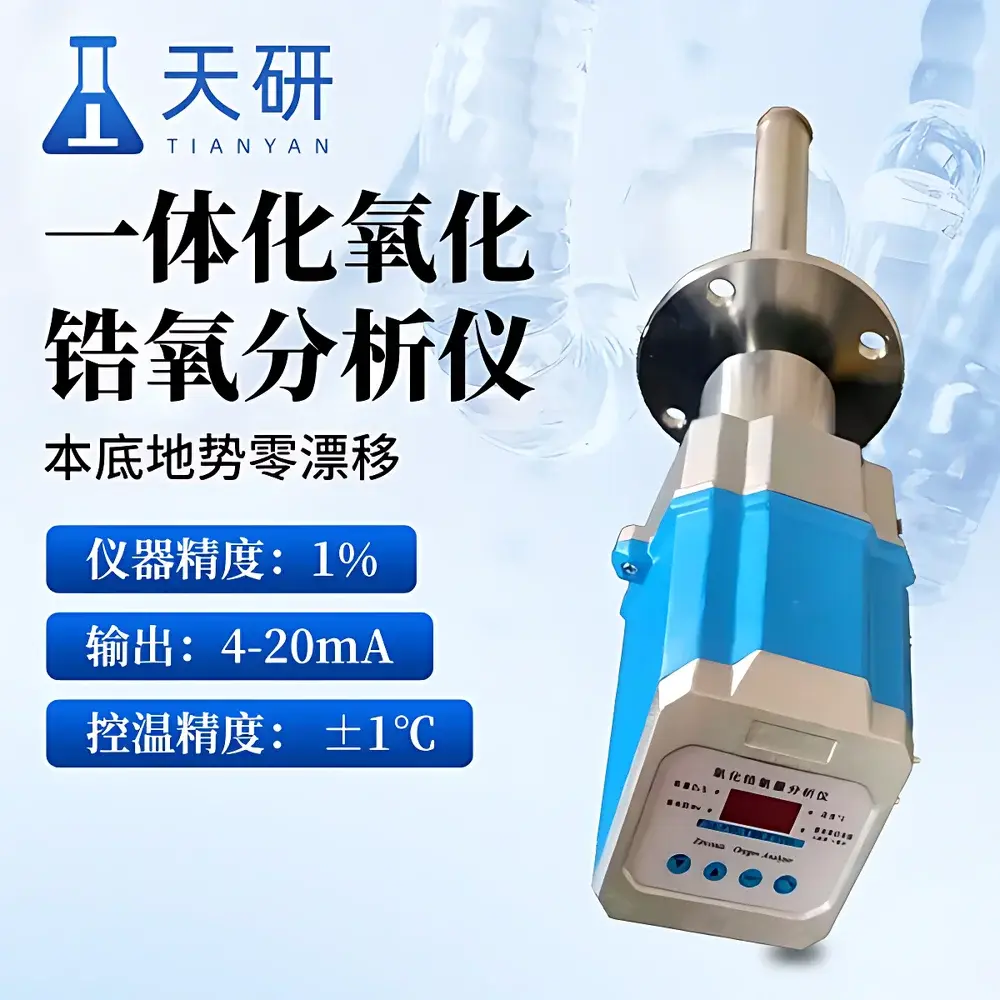
| Temperature Control Accuracy | ±1°C |
| Measurement Accuracy | ±1% of reading (O₂) |
| Response Time | ≤5 s to 90% of final value upon standard gas introduction |
| Operating Ambient Temperature | −20°C to +70°C |
| Enclosure Dimensions (Analyzer Unit) | 160×80×160 mm (horizontal), 80×160×160 mm (vertical), 144×144×160 mm / 160×160×160 mm (square variants) |
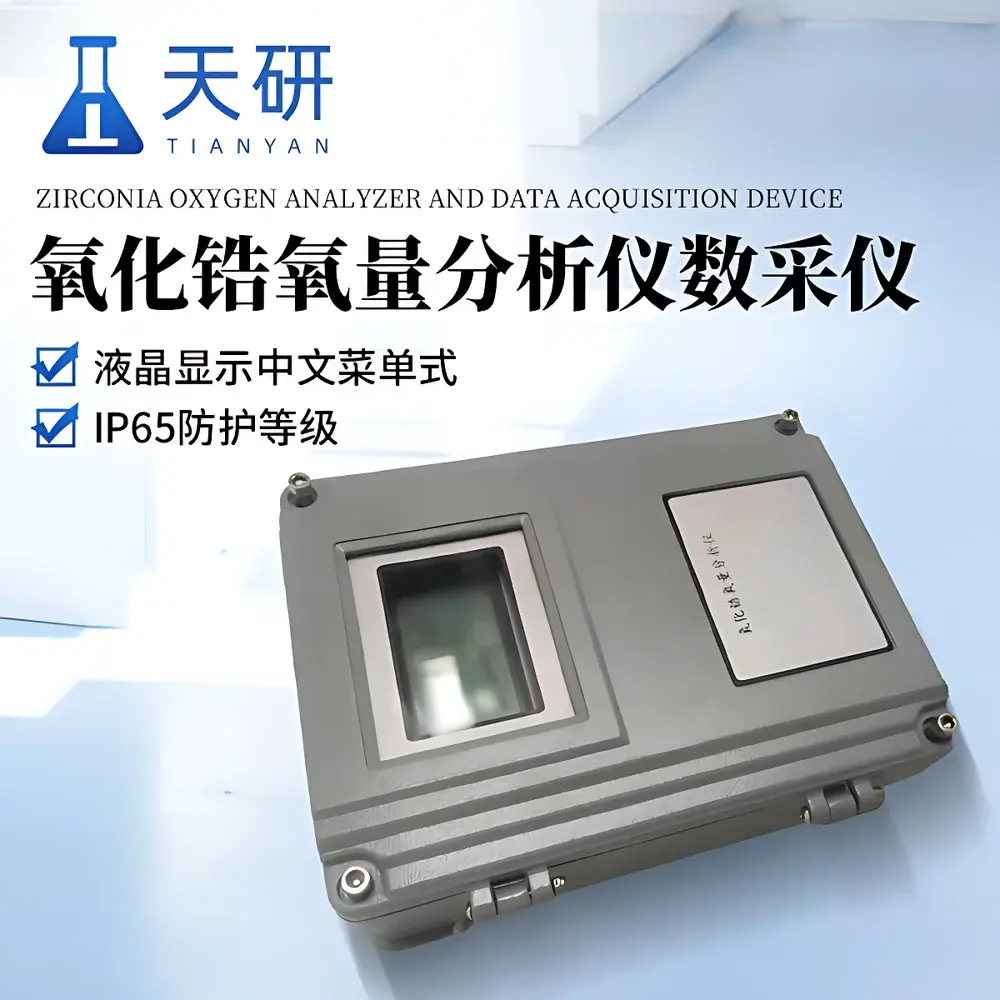
| Housing Material | Aluminum die-cast enclosure (IP65-rated) |
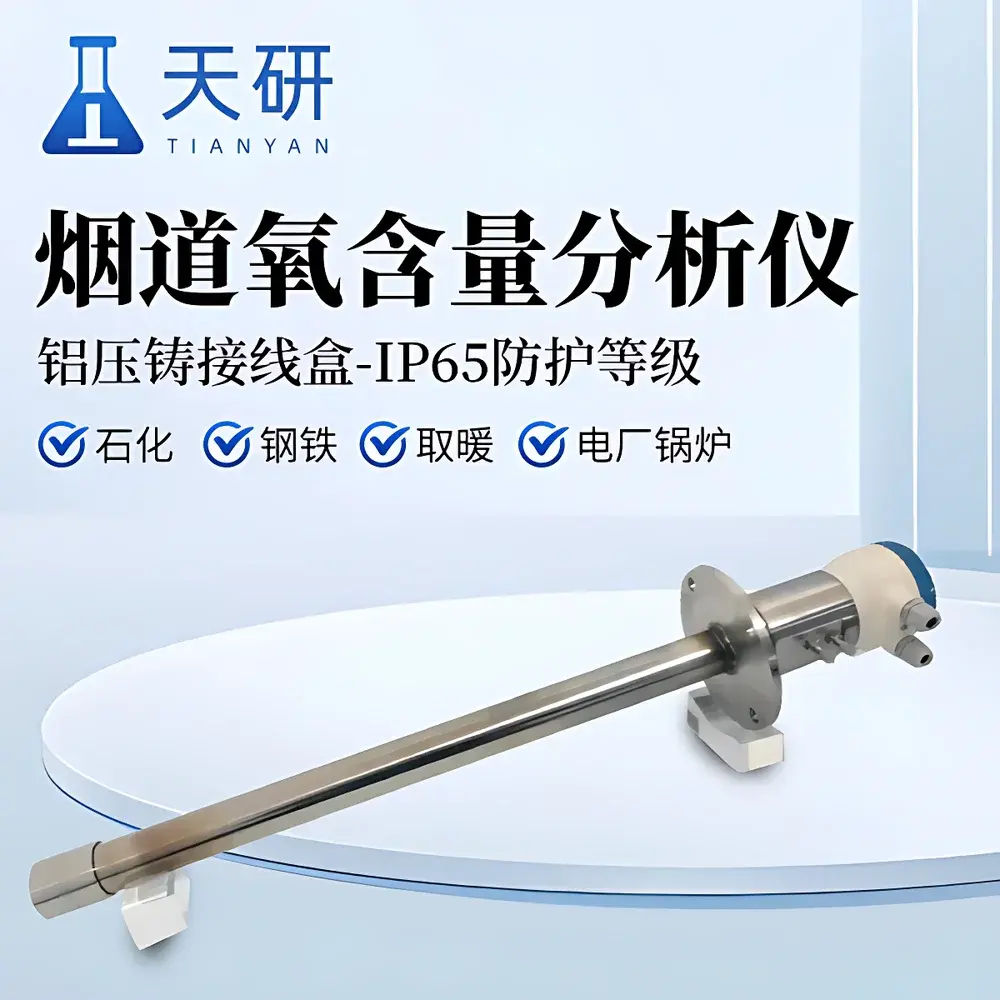
| Probe Material | 304 stainless steel (316L optional) |
| Probe Insertion Lengths | 500, 800, 1000, 1200 mm (custom lengths available) |
| Flue Gas Temperature Limit | ≤700°C |
| Flue Gas Pressure Range | −10 kPa to +10 kPa |
| Flue Gas Velocity | 0–50 m/s |
| Weight | ~2 kg |
Overview
The Tianyan TY-ZO-S is a panel-mounted zirconia-based oxygen analyzer engineered for continuous, in-situ measurement of oxygen concentration in industrial flue gases. It operates on the principle of high-temperature electrochemical oxygen partial pressure sensing using a stabilized zirconium dioxide (ZrO₂) solid electrolyte cell. At elevated temperatures (>650°C), the zirconia element becomes conductive to oxygen ions; when exposed to differing O₂ partial pressures across its reference (air) and sample (flue gas) sides, a Nernst voltage is generated—proportional to the logarithm of the O₂ ratio. This signal is linearized, temperature-compensated, and converted into a calibrated 0–25% O₂ output. Designed for integration into control cabinets in power plants, metallurgical furnaces, petrochemical crackers, and district heating systems, the TY-ZO-S delivers stable, drift-resistant readings under dynamic combustion conditions—without requiring external calibration gases during routine operation.
Key Features
- Robust panel-mount architecture compatible with standard DIN-cutout or rail-mounted control panels (250×190×90 mm chassis housing)
- Dual-display option: high-visibility LED numeric display (standard) or optional backlit LCD with intuitive Chinese-language menu navigation and five-key membrane keypad
- Integrated temperature-controlled zirconia sensor assembly with ±1°C thermal regulation stability—critical for minimizing Nernst voltage drift
- Wide flue gas compatibility: rated for continuous exposure up to 700°C, −10 to +10 kPa pressure differential, and flow velocities up to 50 m/s
- Modular probe design with 304 stainless steel construction (316L available for corrosive or high-chloride environments), IP65-rated junction box, and customizable insertion depths (500–1200 mm)
- Low intrinsic zero drift and high long-term reproducibility—typical baseline shift <0.05% O₂/month under controlled lab validation
Sample Compatibility & Compliance
The TY-ZO-S is validated for use with non-explosive, non-acidic flue streams containing CO, CO₂, NOₓ, SO₂, H₂O vapor, and particulates typical of coal-, oil-, gas-, and biomass-fired combustion processes. It excludes applications involving hydrogen-rich or acetylene-containing atmospheres due to potential catalytic interference at the zirconia electrode surface. While not certified to IEC 61508 (SIL) or ATEX/IECEx for hazardous area installation, its IP65-rated probe and panel enclosure meet general industrial ingress protection requirements per EN 60529. The analyzer supports traceability via manual calibration log entries and complies with basic data integrity expectations aligned with ISO 5667-14 (water and wastewater sampling) and ASTM D6522 (oxygen measurement in combustion exhaust)—though formal GLP/GMP audit trails require external SCADA-level logging.
Software & Data Management
The TY-ZO-S operates as a standalone analog transmitter with no embedded firmware update capability or network interface. All configuration—including range scaling (5–25% O₂), damping factor adjustment, and zero/span offset correction—is performed locally via the front-panel keypad. The 4–20 mA analog output is isolated and linear over the full measurement span, supporting connection to DCS, PLC, or chart recorders compliant with IEC 61131-3 and ISA-50.00.01 standards. For regulatory environments requiring electronic record retention (e.g., EPA Method 203A compliance reporting), integration with third-party historian systems (e.g., Siemens Desigo CC, Honeywell Experion PKS) is recommended to capture timestamped analog values and alarm status flags.
Applications
- Real-time O₂ trim control in utility boiler combustion management systems to optimize excess air and reduce NOₓ formation
- Combustion efficiency monitoring in iron & steel reheating furnaces, coke ovens, and sintering belts
- Emissions compliance verification for CEMS (Continuous Emission Monitoring Systems) per local environmental regulations
- Oxygen profiling in waste-to-energy incinerators to prevent incomplete combustion and dioxin precursor formation
- Process safety interlocks in thermal oxidizers handling VOC-laden exhaust streams
FAQ
What is the minimum flue gas temperature required for accurate measurement?
The zirconia sensor must operate above 650°C to ensure sufficient ionic conductivity. For low-temperature stacks (<300°C), a heated probe variant or in-situ thermowell installation is mandatory.
Can the TY-ZO-S be used with sour gas containing H₂S?
No. Hydrogen sulfide poisons the platinum electrodes and degrades zirconia grain boundaries. Use only in low-sulfur fuels or with upstream desulfurization.
Is field calibration possible without test gas cylinders?
Zero calibration may be performed using ambient air (20.9% O₂) at the reference port; span verification requires certified calibration gas (e.g., 8.0% O₂ in N₂) per ISO 6141.
Does the unit support Modbus RTU or HART communication?
No. The TY-ZO-S provides only analog 4–20 mA output. Digital protocols require external signal converters.
What maintenance intervals are recommended for extended service life?
Probe cleaning every 3–6 months (depending on fly ash loading), annual verification of thermocouple accuracy, and replacement of the zirconia cell after 1–5 years—based on cumulative thermal cycling and contaminant exposure history.