
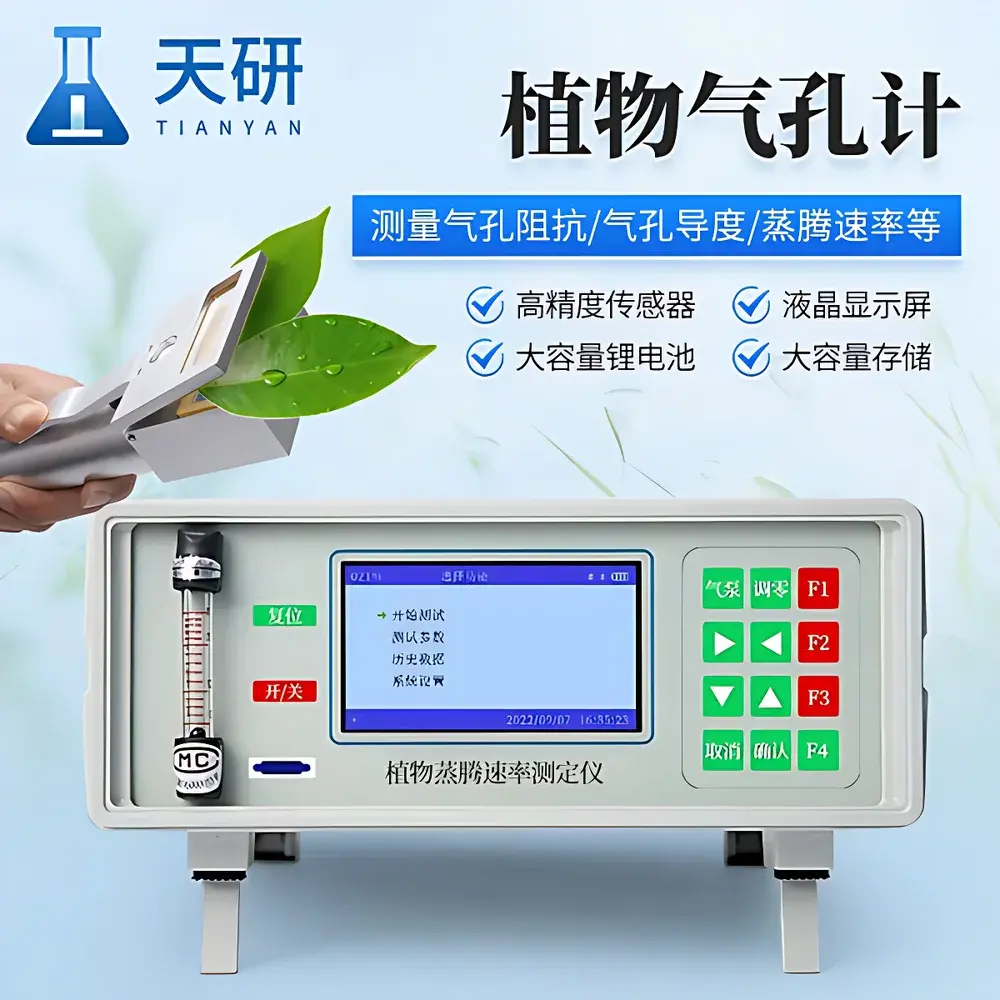
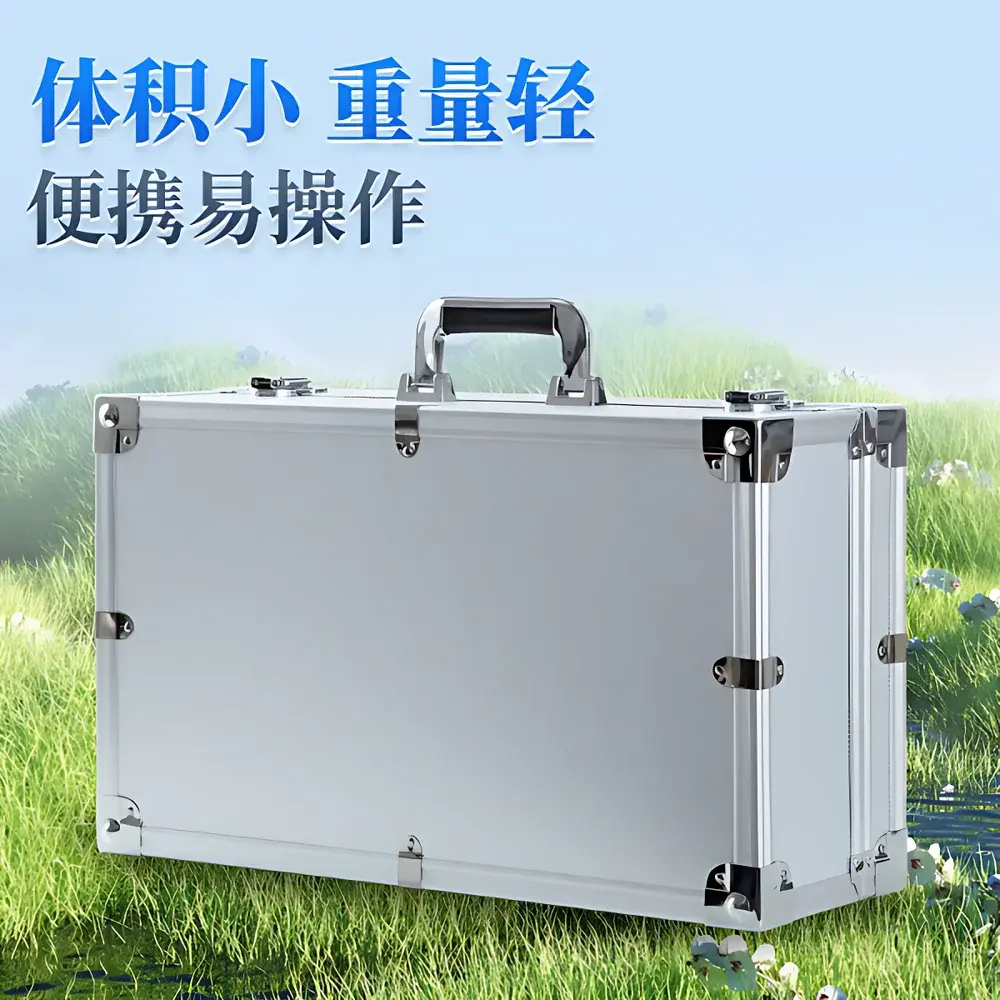
Tianyan TY-ZT10 Portable Leaf Porometer
| Brand | Tianyan |
|---|---|
| Model | TY-ZT10 |
| Type | Portable Leaf Porometer for Stomatal Conductance and Transpiration Rate Measurement |
| Origin | Shandong, China |
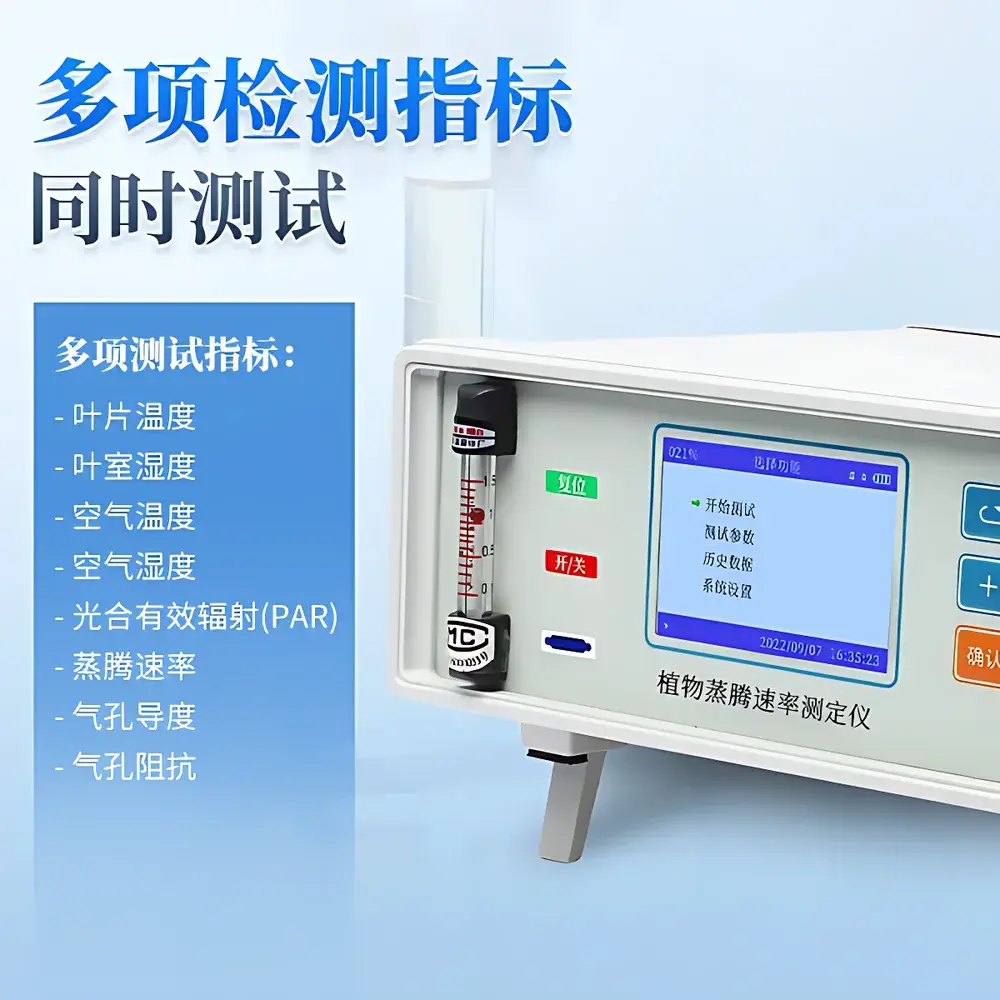
| Key Sensors | Swiss-made digital temperature & RH sensors, Pt100 leaf temperature probe, PAR-calibrated silicon photodiode with correction filter |
| Flow Control | Precision micro-flowmeter (0.2–1.0 L/min, ±0.2% accuracy) |
| Leaf Chamber | Standard 55 × 20 mm (customizable) |
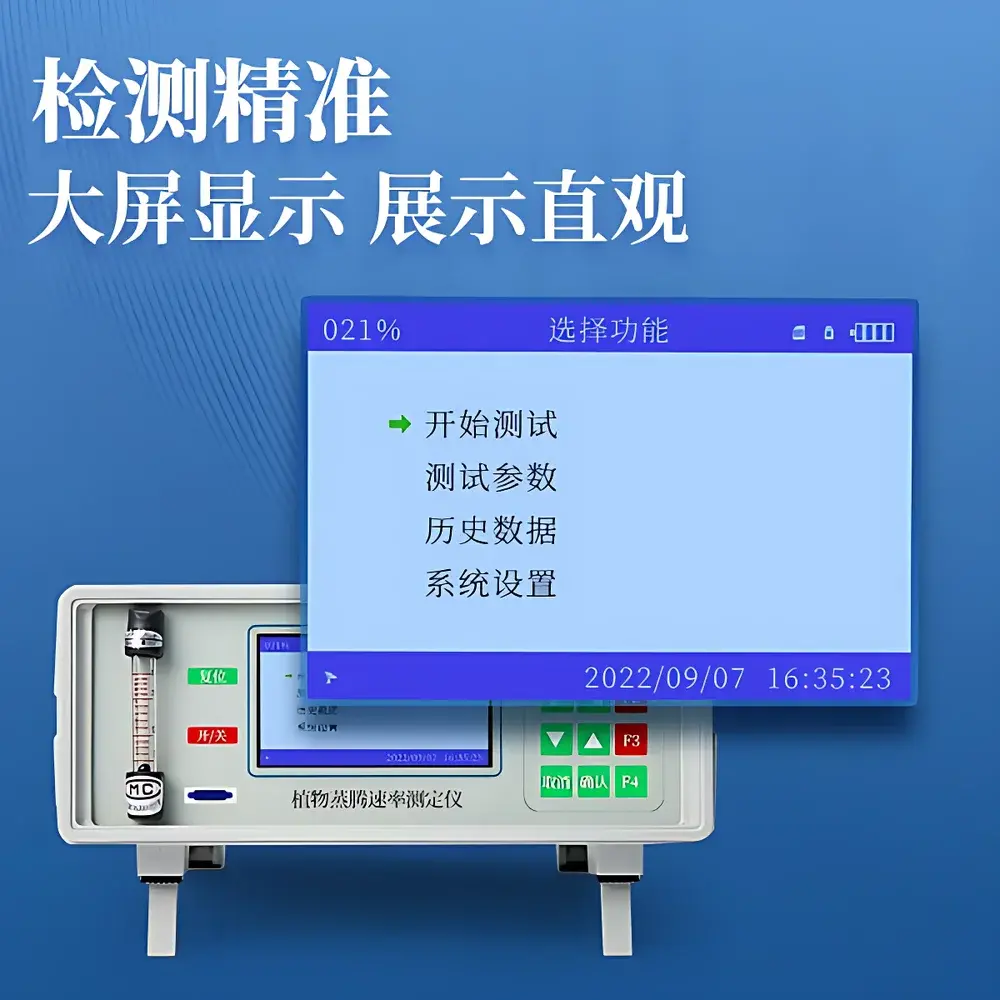
| Display | 3.5" TFT color LCD (800 × 480) |
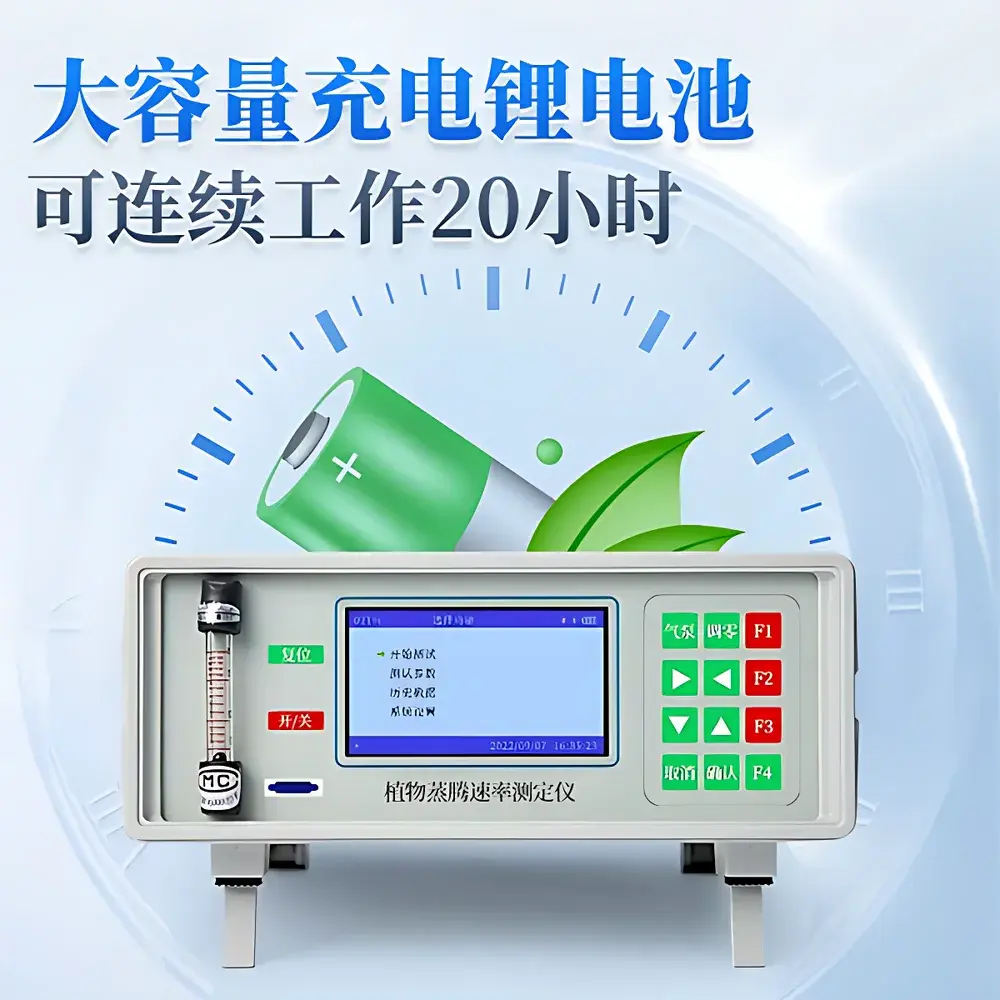
| Battery | Rechargeable 8.4 V DC Li-ion (20 h operation, no external light source) |
| Data Storage | 16 GB internal (expandable to 32 GB) |
| Interface | USB direct data export |
| Operating Environment | 20–50 °C, 0–100% RH (non-condensing) |
| Dimensions | 260 × 260 × 130 mm |
| Weight | 3.25 kg (host only) |
Overview
The Tianyan TY-ZT10 Portable Leaf Porometer is a field-deployable, closed-system diffusion porometer engineered for high-reproducibility measurement of stomatal conductance (gs), transpiration rate (E), and associated microclimatic parameters in real time. It operates on the principle of steady-state diffusion: a known, precisely regulated air flow passes through a sealed leaf chamber; water vapor concentration gradients between the leaf surface and the incoming air stream are quantified via integrated humidity and temperature sensing. Using the Hsieh–Gardner–Bunce equation—derived from Fick’s first law of diffusion—the instrument calculates gs (mol m−2 s−1) and E (mmol m−2 s−1) while simultaneously recording leaf temperature (TL), ambient air temperature (Ta), relative humidity (RH), and photosynthetically active radiation (PAR). Its design prioritizes robustness under variable field conditions, including full-spectrum sunlight exposure and fluctuating ambient humidity—critical for longitudinal studies in agronomy, forest ecology, and climate-resilience phenotyping.
Key Features
- High-accuracy dual-temperature measurement: Swiss-made digital sensor for Ta (−20 to 80 °C, ±0.2 °C) and Pt100 resistance thermometer for TL (−20 to 60 °C, ±0.2 °C), enabling precise leaf-to-air vapor pressure deficit (VPD) computation.
- Calibrated PAR sensor: Silicon photodiode with optical correction filter (0–3000 µmol m−2 s−1, <5 µmol m−2 s−1 absolute error), traceable to NIST-standard irradiance references.
- Stable laminar airflow control: Micro-flowmeter with programmable range (0.2–1.0 L min−1), certified accuracy ≤±0.2% within operational band—minimizing boundary layer disturbance and ensuring consistent diffusion geometry.
- Optimized leaf chamber: Standard 55 × 20 mm aperture with uniform sealing gasket; optional custom dimensions available to accommodate broadleaf, needle, or succulent morphology without compromising chamber homogeneity.
- Field-rugged interface: 3.5-inch TFT display (800 × 480 resolution) with anti-glare coating and wide viewing angle—legible under direct solar irradiance (>1000 W m−2).
- Integrated data governance: Onboard 16 GB flash memory with timestamped, parameter-tagged CSV logging; USB 2.0 interface supports direct transfer to Windows/macOS systems without proprietary drivers.
Sample Compatibility & Compliance
The TY-ZT10 accommodates intact, attached leaves across diverse plant functional types—including C3/C4 angiosperms, gymnosperms, and CAM species—provided leaf thickness permits secure chamber sealing. It is validated for use with herbaceous crops (e.g., wheat, soybean), horticultural species (tomato, strawberry), and woody perennials (apple, poplar) under ambient or controlled-environment conditions. While not certified to ISO/IEC 17025 for metrological traceability, its sensor subsystems conform to manufacturer specifications aligned with ASTM E2700 (Standard Guide for In Situ Measurements of Plant Water Status) and support GLP-compliant experimental protocols when used with documented calibration logs and environmental metadata capture. The device meets CE electromagnetic compatibility (EMC) Directive 2014/30/EU and RoHS 2011/65/EU material restrictions.
Software & Data Management
Data acquisition and post-processing rely on vendor-supplied PC software compatible with Windows 10/11 and macOS 12+. The application enables batch import, time-series visualization (gs, E, VPD, PAR), and export to CSV, Excel, or MATLAB-compatible formats. All measurements include embedded UTC timestamps, GPS coordinates (when connected via Bluetooth-enabled external module), and operator-defined sample IDs. Audit trails record instrument configuration changes, calibration events, and user login sessions—supporting 21 CFR Part 11–aligned data integrity requirements where local regulatory frameworks mandate electronic record retention. Raw sensor outputs (voltage, resistance, pulse counts) are preserved alongside derived physiological indices for method validation and uncertainty propagation analysis.
Applications
- Agronomic drought-response screening: Quantifying genotype-specific stomatal kinetics under progressive soil moisture depletion.
- Canopy gas-exchange modeling: Parameterizing stomatal conductance subroutines in SVAT (soil–vegetation–atmosphere transfer) models.
- Post-harvest physiology: Monitoring stomatal closure dynamics during storage of leafy vegetables and cut flowers.
- Eco-physiological field campaigns: Correlating gs with microclimate gradients across elevation transects or urban–rural interfaces.
- Teaching laboratories: Demonstrating stomatal regulation mechanisms, light-response curves, and VPD-driven transpiration feedback loops.
- Regulatory ecotoxicology: Assessing sublethal phytotoxic effects of foliar-applied agrochemicals on stomatal function.
FAQ
What is the minimum leaf area required for reliable measurement?
A fully sealed chamber contact area of ≥8 cm² is recommended; the standard 55 × 20 mm chamber covers 11 cm², suitable for most dicotyledonous leaves. Smaller leaves may require custom chambers or gasket adaptation.
Does the instrument correct for CO₂ concentration effects on stomatal conductance?
No—the TY-ZT10 measures water vapor diffusion only and does not integrate CO₂ sensing. For coupled photosynthesis–transpiration analysis, concurrent use with an infrared gas analyzer (IRGA) is advised.
How often should calibration be performed?
Factory calibration is valid for 12 months under normal use. Field verification using saturated salt solutions (e.g., LiCl for 11% RH, NaCl for 75% RH) and NIST-traceable thermometers is recommended before critical experiments.
Can the device operate continuously during extended field deployments?
Yes—battery life supports >20 hours of intermittent measurement cycles (10–30 s per reading); external 12 V DC power input is available via optional adapter for multi-day unattended monitoring.
Is leaf surface wetness or dew formation compatible with measurement?
No—condensation or free water on the leaf surface invalidates diffusion assumptions. Measurements must be conducted under non-condensing ambient conditions (RH <100%, no dew point intersection).




