
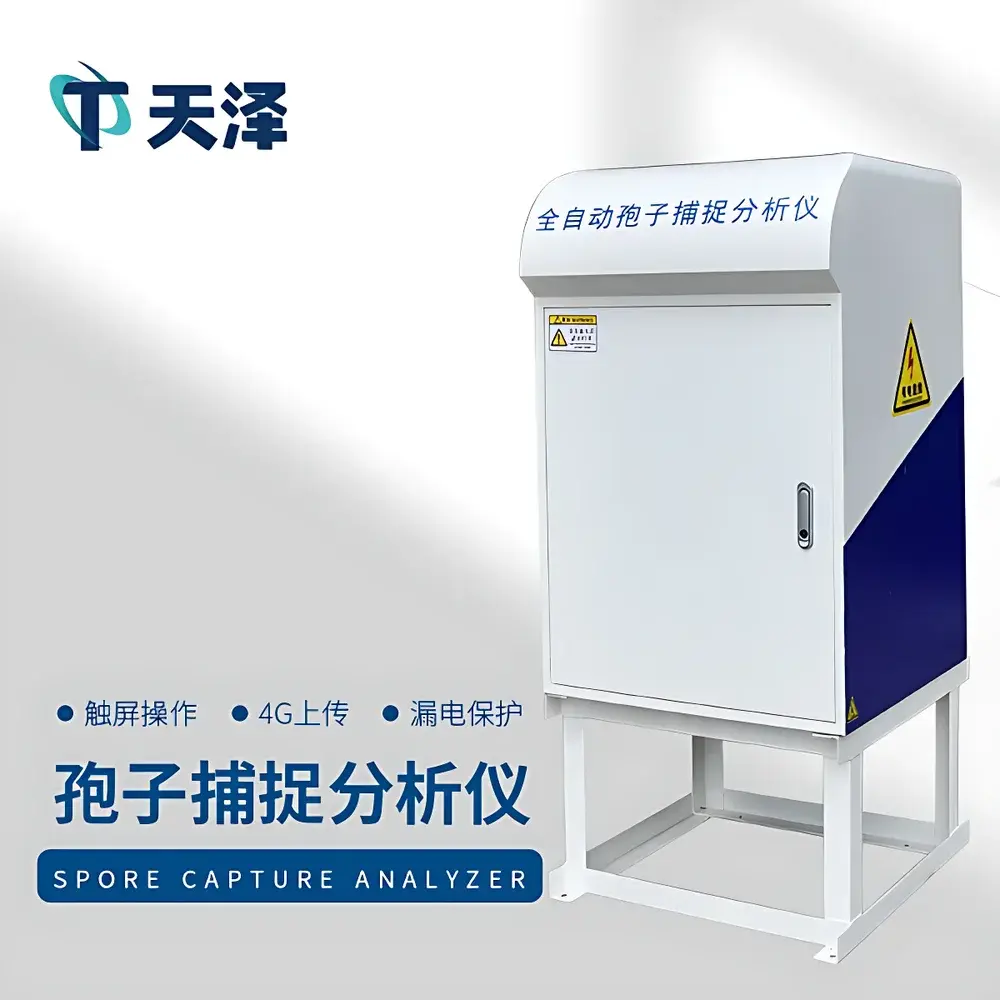
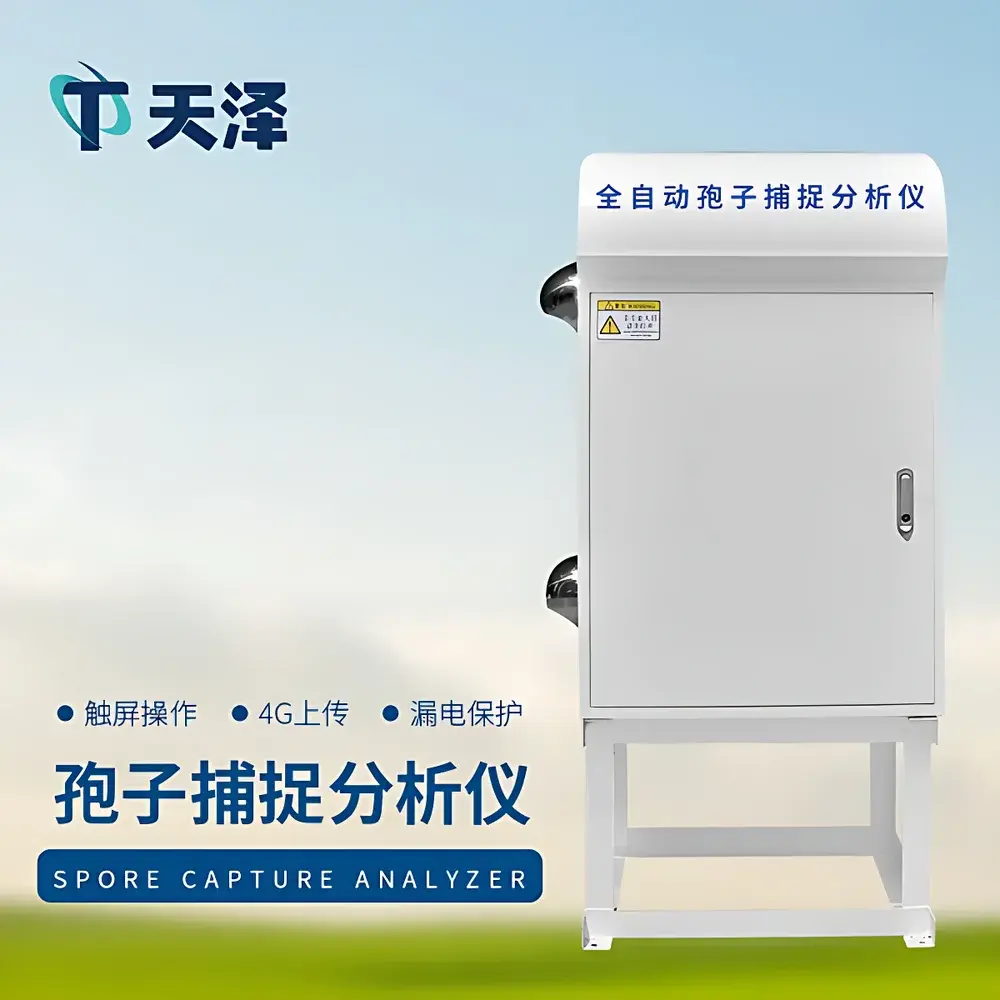
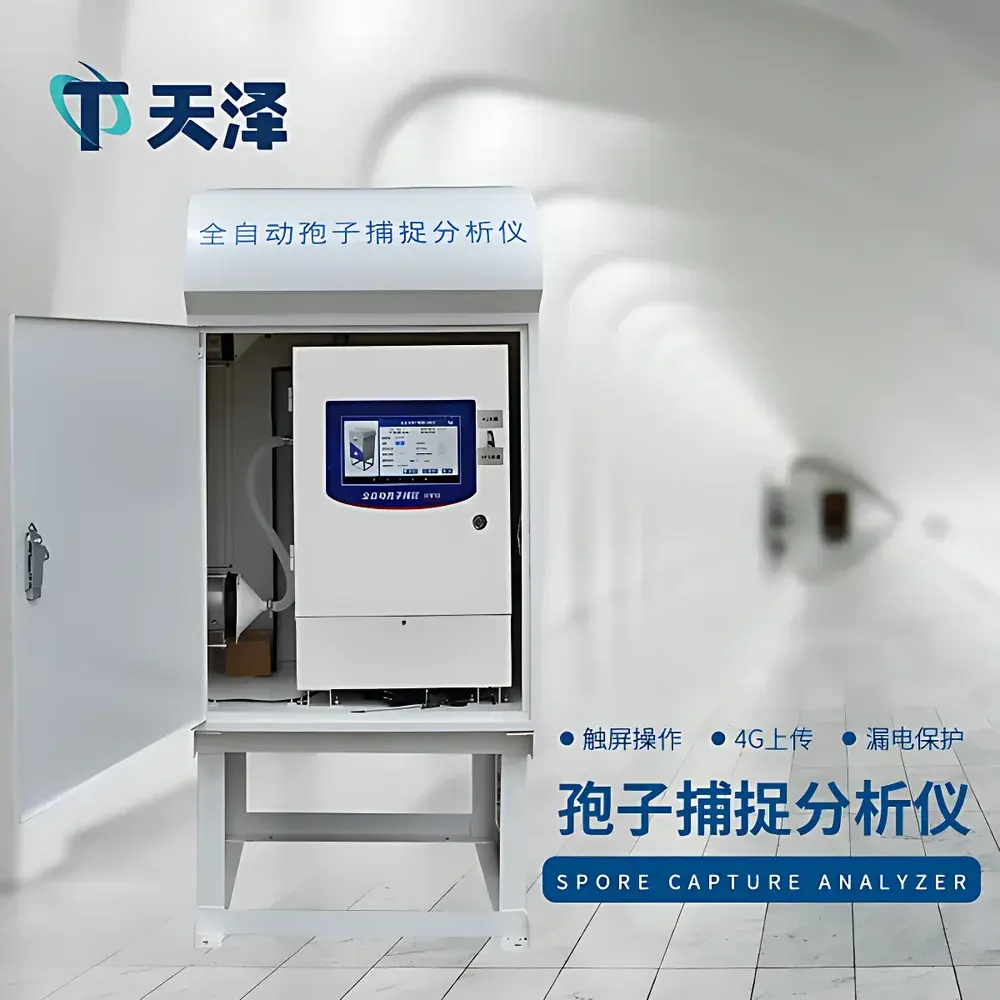
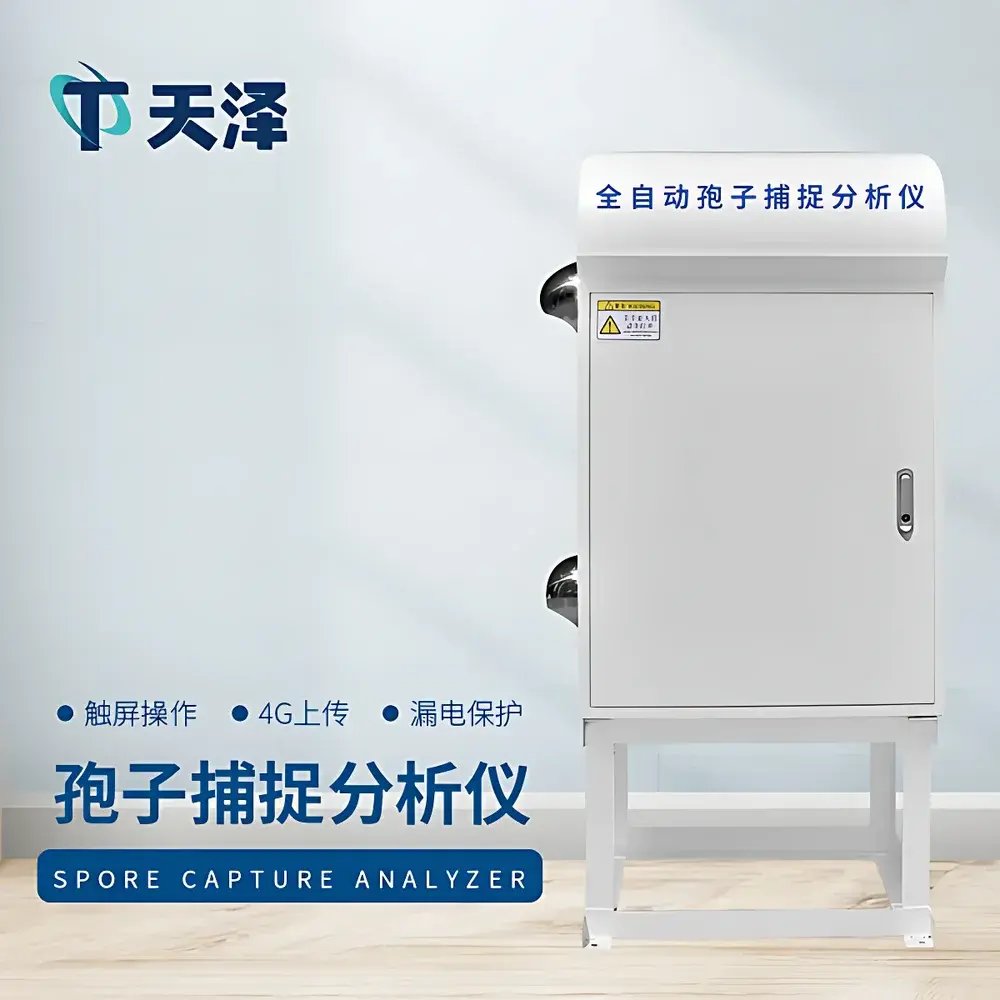
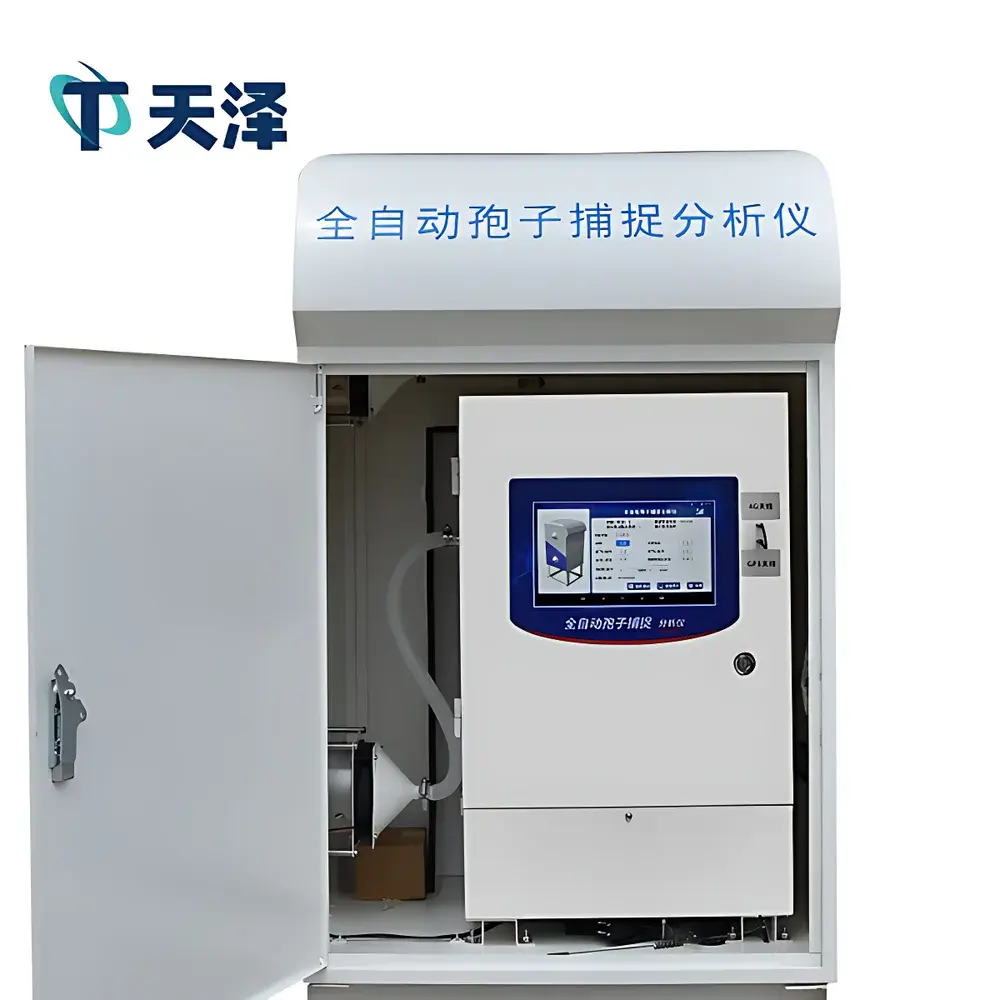
Tianze Environment TZ-BZ3 Spore Trap
| Brand | Tianze Environment |
|---|---|
| Origin | Shandong, China |
| Manufacturer Type | Authorized Distributor |
| Country of Origin | China |
| Model | TZ-BZ3 |
| Price | USD 3,400 (FOB) |
| Power Supply | 220 VAC / Optional 480 W–200 Ah Solar Kit |
| Max. Startup Power | ≤65 W |
| Operating Power | ≤50 W |
| Standby Power | ≤26.4 W |
| Dimensions (W×D×H) | 600 × 640 × 1418 mm |
| Operating Temperature | −20 to +70 °C |
| Relative Humidity | 0–95% RH (non-condensing) |
| Communication | 4G LTE (TCP/IP), DDNS-supported |
| Microscope Resolution | 5 MP (500 W pixels) |
| Spore Detection Range | 5–100 µm |
| Sampling Area | 50 × 21 mm |
| Sampling Duration | 60–1200 min per cycle |
| Image Capture Frequency | Configurable (up to 3 images/day on standard tape usage) |
| Tape Lifespan | 365 days (3 captures/day) |
| Tape Drive | Dual-axis (X/Y) stepper motor control with usage tracking & password-protected reset |
| Display | 10.1″ Android 10 touchscreen interface |
| Insulation Resistance | ≥2.5 MΩ |
| Airflow Design | Optimized laminar flow path with inlet/outlet channeling to minimize particle re-entrainment |
| Compliance | CE-marked enclosure design |
Overview
The Tianze Environment TZ-BZ3 Spore Trap is an automated, field-deployable aerobiological monitoring instrument engineered for continuous, non-destructive capture and high-resolution optical imaging of airborne fungal spores in agricultural and phytosanitary environments. It operates on the principle of volumetric air sampling combined with precision mechanical deposition onto a moving adhesive tape substrate, followed by in situ microscopic imaging and edge-based digital transmission. Unlike passive traps or impaction-based samplers, the TZ-BZ3 integrates active aspiration with controlled airflow dynamics—designed to reduce particle bounce and recirculation—thereby improving collection fidelity for fragile, low-density spore populations. Its core function supports early-warning systems for crop pathogens such as Puccinia, Blumeria graminis, and Alternaria spp., enabling time-sensitive intervention decisions aligned with integrated pest management (IPM) protocols.
Key Features
- Dual-axis (X/Y) stepper motor system ensures precise tape positioning and repeatable frame registration across sequential sampling cycles.
- Integrated 5-megapixel industrial-grade microscope with auto-focus fusion algorithm delivers consistent image clarity for spores ranging from 5 µm to 100 µm—critical for morphological differentiation under field lighting conditions.
- Smart adhesive tape management: real-time usage tracking, configurable alert thresholds, password-protected manual reset, and remote firmware-triggered replacement notifications via cloud dashboard.
- Configurable sampling logic: programmable start/end times (24-hour clock), variable aspiration duration (60–1200 minutes), adjustable interval spacing, and pulse-controlled tape advancement per capture event.
- 10.1-inch Android 10 touchscreen interface enables local parameter configuration, live preview, image review, motor diagnostics, and offline operation without network dependency.
- Optimized aerodynamic chamber with directional inlet/outlet ports minimizes turbulent eddies and enhances particle deposition efficiency—validated against ISO 21501-4 principles for aerosol sampler performance assessment.
- Low-power architecture: ≤50 W nominal draw during imaging cycle; optional solar-ready configuration (480 W panel + 200 Ah LiFePO₄ battery) extends deployment autonomy in off-grid orchards and remote farmland.
Sample Compatibility & Compliance
The TZ-BZ3 is validated for capturing viable and non-viable airborne propagules—including conidia, ascospores, and basidiospores—from ambient air in open-field, greenhouse, and peri-urban agricultural zones. Its 50 × 21 mm sampling footprint conforms to standardized deposition area conventions used in national plant protection organizations (NPPOs). The device meets electromagnetic compatibility (EMC) requirements per EN 61000-6-2/6-4 and carries CE marking for safe outdoor use. While not certified under ISO 14644 cleanroom standards, its sealed optical path and dust-resistant tape transport mechanism align with GLP-relevant sample integrity controls. Data export formats (JPEG + JSON metadata) support interoperability with FAO’s Pest Risk Information Service (PRISE) and EPPO’s Datasource schema.
Software & Data Management
Data acquisition and remote supervision are managed through Tianze’s secure, role-based SaaS platform hosted on AWS infrastructure. Each image upload includes embedded EXIF tags (timestamp, GPS coordinates if enabled, tape position index, exposure settings) and is assigned a SHA-256 hash for audit trail integrity. The platform implements granular user permissions, session logging, and 21 CFR Part 11–compatible electronic signatures for validation-critical deployments. Manual annotation tools allow mycologists to tag morphotypes directly on thumbnails; AI-assisted pre-classification (optional module) uses transfer learning on ResNet-50 trained against USDA ARS spore libraries. All raw images and processed reports are retained for ≥7 years with immutable versioning and encrypted backup.
Applications
- Real-time surveillance of wheat leaf rust (Puccinia triticina) and barley powdery mildew (Blumeria graminis f. sp. hordei) in cereal belt regions.
- Pre-harvest forecasting of Botrytis cinerea in vineyards and strawberry tunnels using spore load trends correlated with microclimate variables.
- Validation of fungicide application timing by quantifying post-spray spore suppression rates over 72-hour windows.
- Long-term phenological studies linking airborne inoculum density to host phenophase progression (e.g., BBCH scale staging).
- Supporting national early warning systems under frameworks such as China’s National Agricultural Biosecurity Monitoring Network and ASEAN’s Transboundary Plant Pest Initiative.
FAQ
Does the TZ-BZ3 require laboratory-based spore identification?
No—morphological classification is performed remotely via the cloud platform; however, final taxonomic confirmation may still require culturing or molecular analysis depending on regulatory reporting requirements.
Can the device operate without cellular connectivity?
Yes—the unit stores up to 30 days of images and metadata locally on internal eMMC storage and synchronizes automatically upon network restoration.
Is the adhesive tape compatible with downstream PCR or MALDI-TOF analysis?
The standard acrylic-based tape is optimized for optical imaging; for molecular workflows, users must validate tape elution efficiency and inhibitor carryover prior to nucleic acid extraction.
How is time synchronization maintained across distributed units?
The device performs daily NTP polling via 4G connection; fallback RTC accuracy is ±2 seconds/month at 25 °C.
What maintenance intervals are recommended for field deployment?
Biannual inspection of airflow filters, quarterly calibration of motor step accuracy, and annual verification of tape tension consistency using included test gauge kit.




