
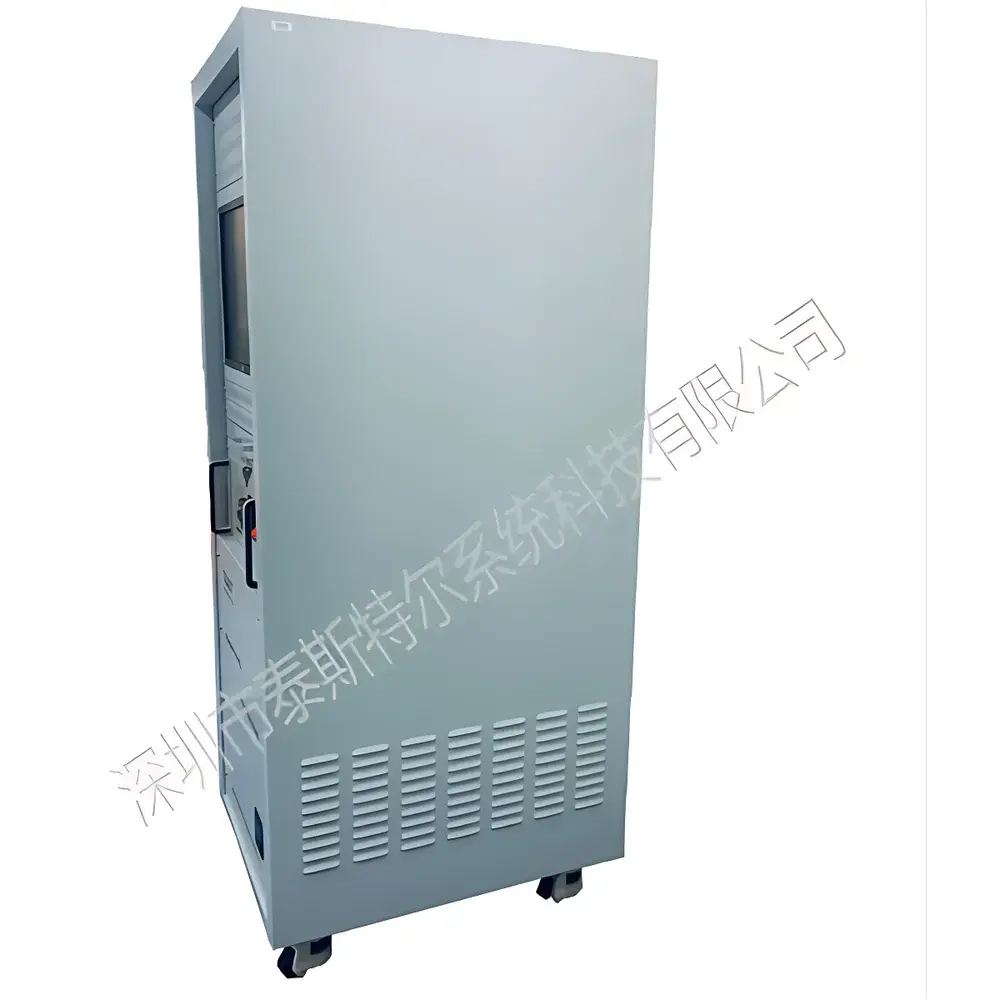
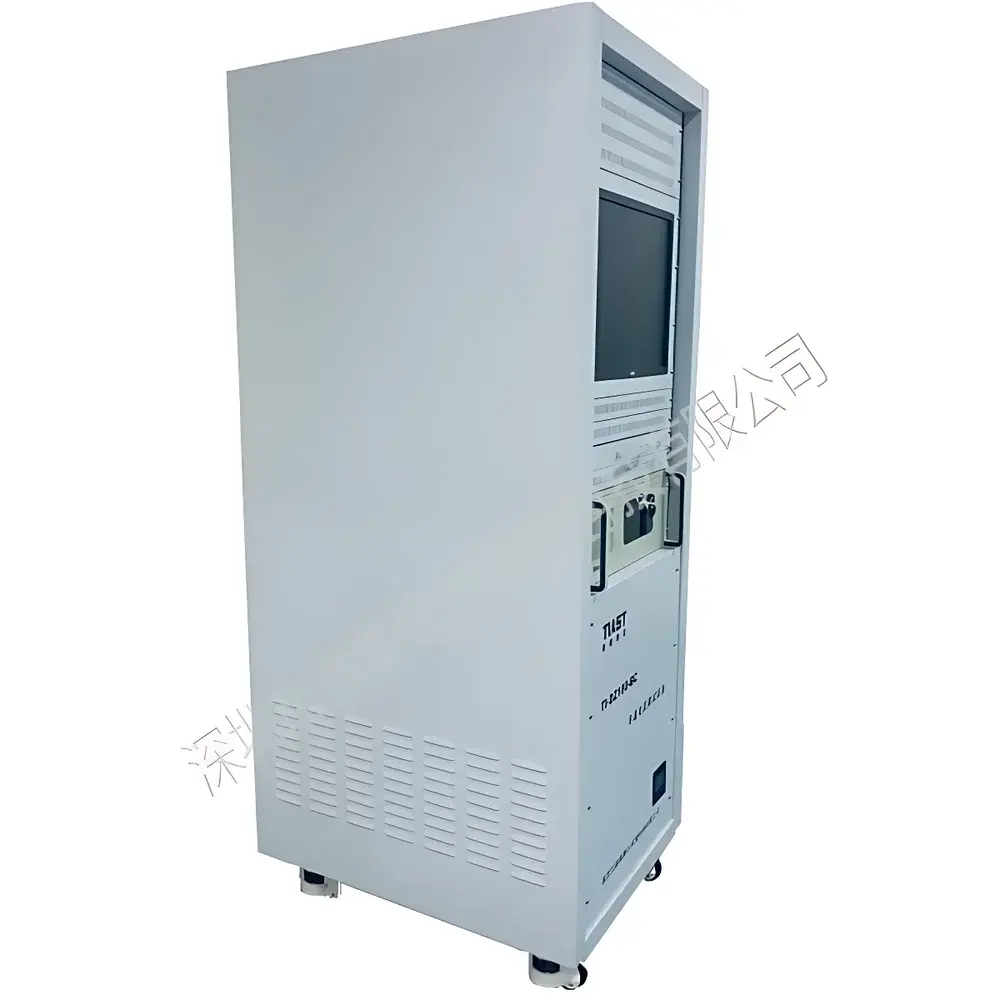
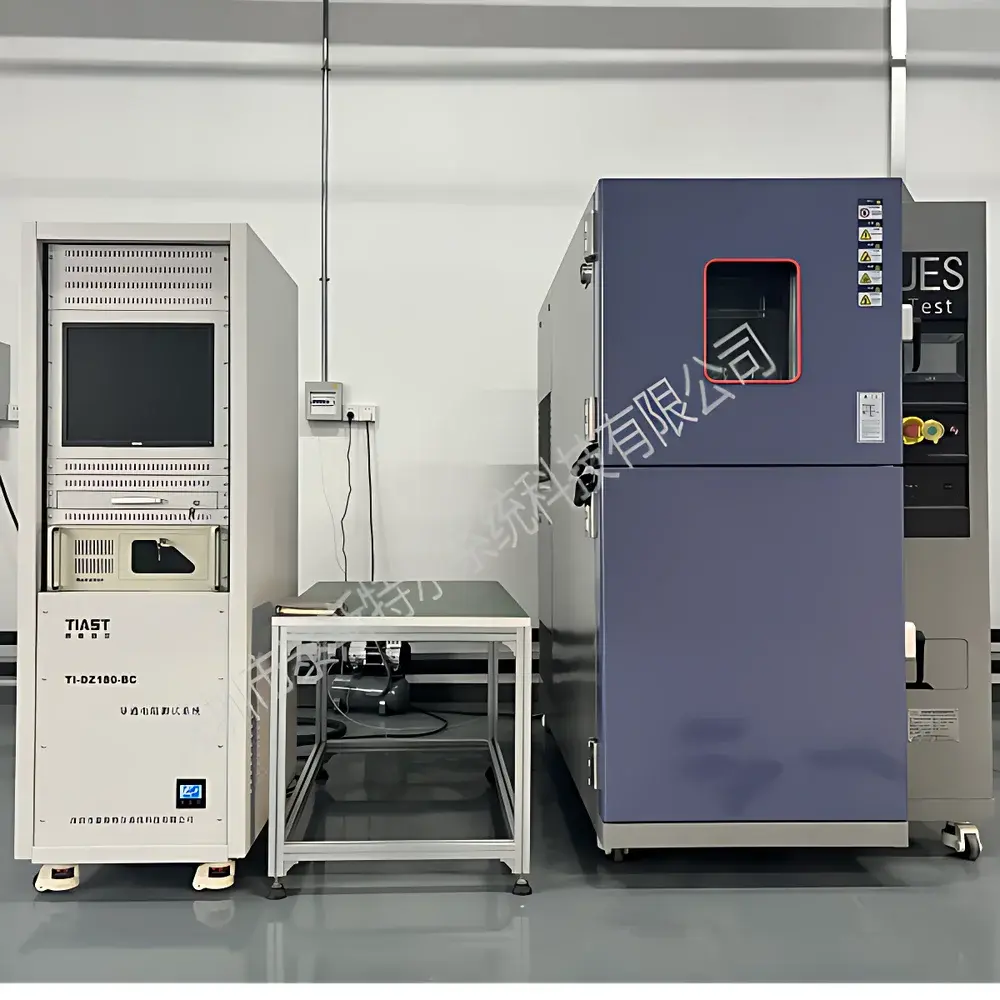
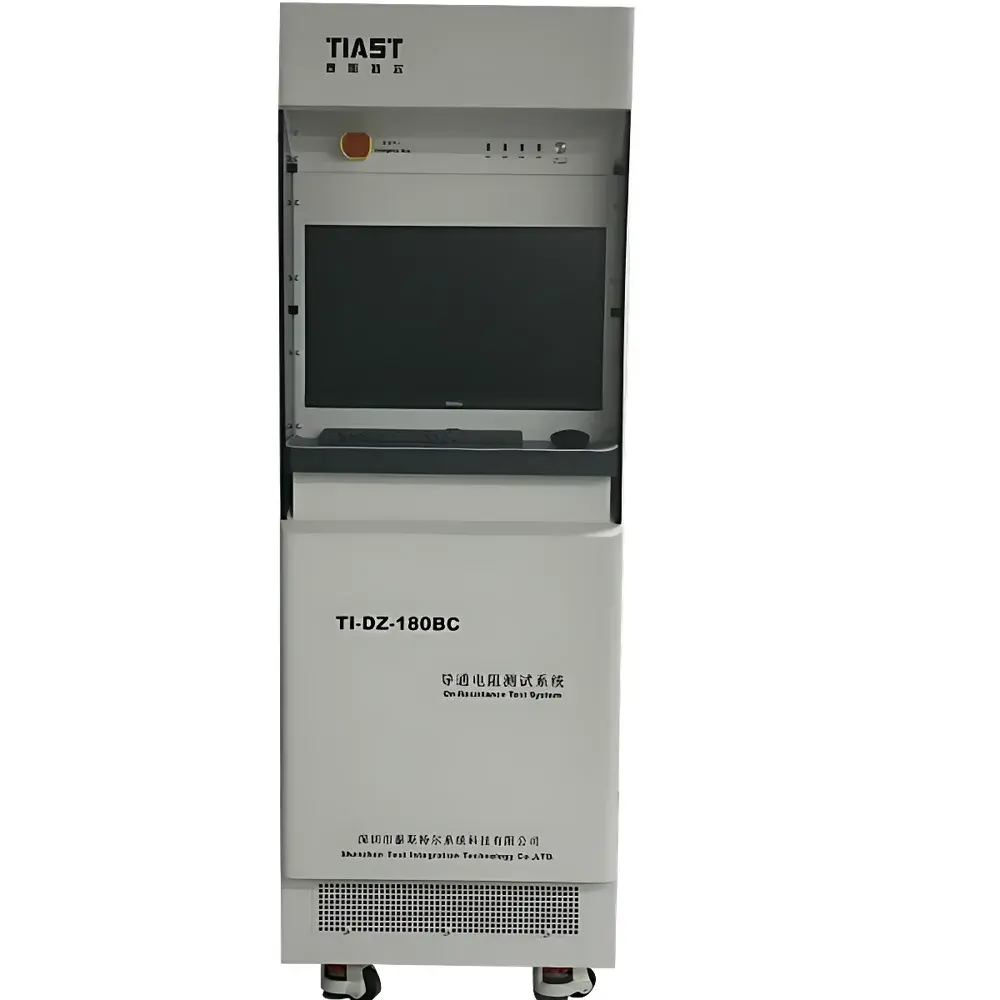
TIAST TI-DZ Series Conductive Resistance Test System
| Brand | TIAST |
|---|---|
| Origin | Guangdong, China |
| Manufacturer Type | Authorized Distributor |
| Product Origin | Domestic (China) |
| Model | TI-DZ Series |
| Pricing | Available Upon Request |
| Measurement Current Options | 3 A, 5 A, 15 A (user-configurable) |
| Channel Capacity | Multi-channel, Group-assignable |
| Data Interface | RS232/RS485/Ethernet (protocol provided upon request) |
| Software | Proprietary Windows-based Control & Analysis Suite |
| Environmental Integration | Compatible with climate chambers (temperature/humidity logging, time-scheduled testing, alarm monitoring) |
| Compliance Support | GLP-compliant audit trail (optional), ISO/IEC 17025 traceability-ready |
Overview
The TIAST TI-DZ Series Conductive Resistance Test System is an engineered solution for high-reproducibility, low-resistance continuity and contact resistance measurement in electronic interconnect validation. Based on four-wire (Kelvin) measurement architecture, the system eliminates lead and contact resistance errors to deliver stable, traceable resistance readings across a wide dynamic range — from sub-milliohm to several ohms. Designed for integration into reliability laboratories and manufacturing QA environments, it supports real-time, synchronized resistance monitoring under controlled thermal and mechanical stress conditions — particularly critical for assessing solder joint integrity, plated-through-hole (PTH) conductivity in PCBs, and interfacial stability in flip-chip assemblies.
Key Features
- Four-terminal (Kelvin) measurement topology ensuring elimination of probe contact resistance and wiring impedance effects
- User-selectable test current sources: 3 A, 5 A, and 15 A — programmable per channel or group to optimize signal-to-noise ratio and minimize Joule heating during extended dwell tests
- Multi-channel architecture with configurable grouping logic, enabling parallel evaluation of up to 64 test points (scalable via modular expansion)
- Real-time data acquisition at up to 100 Hz sampling rate, with on-the-fly editing, annotation, and metadata tagging during active test sequences
- Integrated delay-power supply subsystem to prevent inrush current-induced transient errors during initial contact establishment
- Native communication protocols (Modbus RTU/TCP, custom ASCII over RS232/RS485, Ethernet TCP/IP) supporting bidirectional integration with environmental test chambers, LIMS, MES, and ERP platforms
- Remote diagnostics and firmware update capability via secure SSH or HTTPS-enabled service interface
Sample Compatibility & Compliance
The TI-DZ Series accommodates rigid PCBs, flexible printed circuits (FPC), BGA/CSP packages, press-fit connectors, and wire-bonded substrates — with fixtures designed for standardized IPC-9701A and IPC-TM-650 2.6.3 compliant contact geometry. All resistance measurements adhere to ASTM B570 (Standard Test Methods for Electrical Resistance of Metallic Materials) and IEC 61340-2-3 (Electrostatics – Part 2-3: Methods of Test for Determining the Resistance and Resistivity of Solid Materials Used to Avoid Electrostatic Charge Accumulation). The system’s software architecture supports GLP-compliant operation: full electronic audit trail (user login, parameter changes, test start/stop timestamps, raw data checksums), password-protected configuration levels, and exportable CSV/Excel reports with embedded calibration certificate references. Optional 21 CFR Part 11 compliance package available upon request.
Software & Data Management
The proprietary TIAST ControlSuite™ v4.x provides a deterministic Windows-based environment optimized for engineering workflows. It features synchronized multi-channel waveform visualization, statistical process control (SPC) charting (X-bar/R, Cpk), pass/fail threshold mapping with visual alert overlays, and automated report generation per IPC-A-610 or J-STD-001 criteria. Raw data is stored in binary-encoded .tdz files with embedded metadata (test ID, operator, chamber setpoints, timestamp, firmware version). Export options include IEEE 1597-compliant data interchange format, SQL database push (ODBC), and RESTful API endpoints for enterprise system ingestion. Calibration history and instrument verification logs are retained independently and linked to each measurement record.
Applications
- Plated-through-hole (PTH) continuity assessment in multilayer PCBs under thermal cycling (−40 °C to +125 °C)
- Solder joint resistance drift analysis during accelerated aging (JESD22-A104, IPC-9701)
- Contact resistance stability evaluation of press-fit pins and edge connectors under vibration profiles
- FPC flex-life cycle monitoring: resistance change tracking across >50,000 bend cycles
- Intermetallic compound (IMC) growth kinetics quantification via in-situ resistance monitoring during reflow simulation
- BGA/CSP bump resistance uniformity mapping pre- and post-reflow, including void detection correlation
FAQ
What is the minimum measurable resistance and associated uncertainty?
The system achieves a base resolution of 0.1 µΩ with a typical expanded uncertainty (k=2) of ±0.25% of reading + 0.5 µΩ for measurements below 10 mΩ, calibrated per ISO/IEC 17025 accredited procedures.
Can the TI-DZ Series perform simultaneous resistance measurement and environmental chamber control?
Yes — using the provided protocol documentation, users can configure bi-directional handshake signals for synchronized ramp-hold-soak cycles, real-time temperature/humidity overlay on resistance plots, and automatic test suspension upon chamber fault detection.
Is third-party software integration supported beyond standard protocols?
Custom driver development kits (C++/C#/.NET SDK) and Python API wrappers are available under NDA for direct integration with LabVIEW, MATLAB, or proprietary test executive platforms.
How is calibration maintained across long-term deployment?
The system includes internal reference standards traceable to NIM (National Institute of Metrology, China); annual verification is recommended, with optional on-site calibration services and digital calibration certificate archiving within ControlSuite™.



