
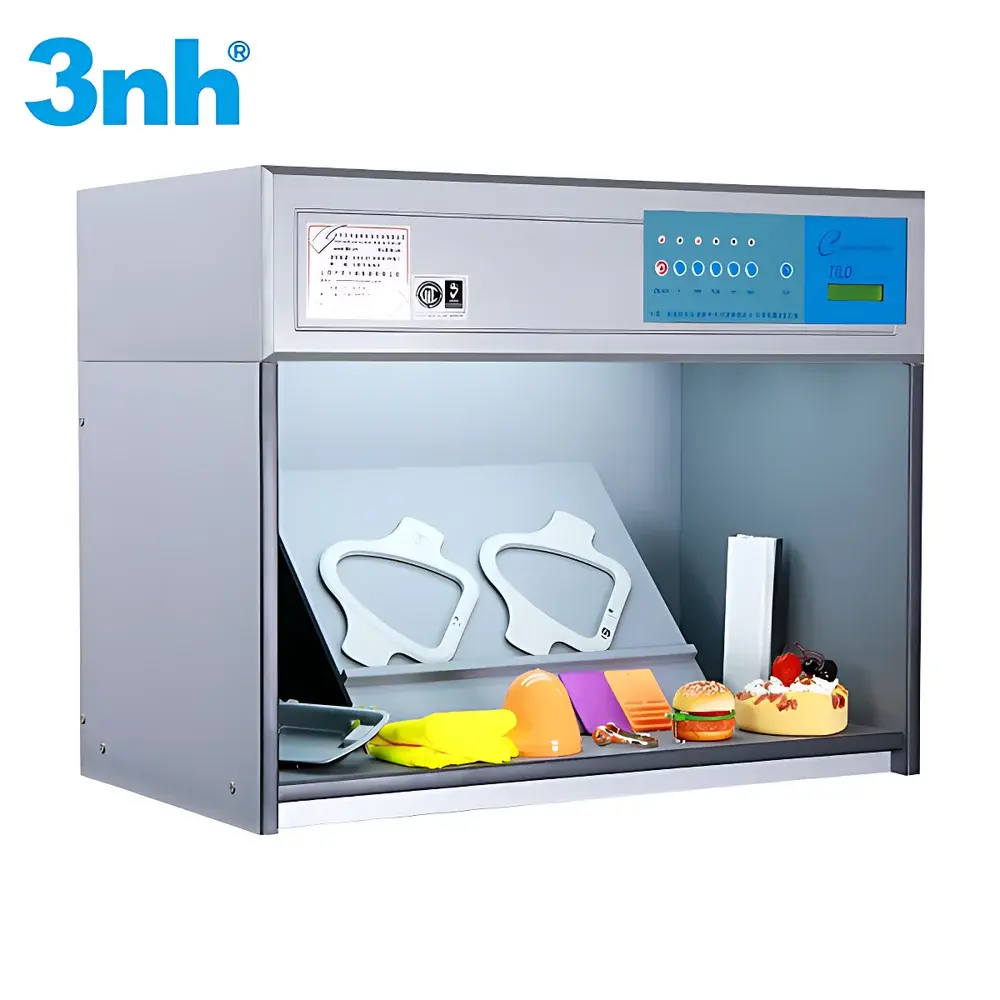
TILO T60(5) Five-Source Standard Light Booth
| Brand | TILO |
|---|---|
| Model | T60(5) |
| Light Sources | D65 (6500K, 18W), TL84 (4000K, 18W), CWF (4150K, 18W), F (2700K, 40W), UV (365 nm, 18W) |
| Dimensions | Compact Benchtop Form Factor |
Overview
The TILO T60(5) Five-Source Standard Light Booth is an engineered optical evaluation system designed for precise visual color assessment under controlled, standardized illumination conditions. It operates on the principle of spectral simulation—reproducing the spectral power distribution (SPD) of internationally recognized reference illuminants to enable consistent, repeatable color judgment across diverse material types and production environments. Unlike broadband or filtered incandescent systems, the T60(5) employs high-stability fluorescent and UV lamps with tightly specified chromaticity coordinates and correlated color temperatures (CCT), compliant with ISO 3664:2009, ASTM D1729, and CIE Publication No. 51. Its core function is to detect metamerism—the phenomenon where two samples match under one illuminant but diverge under another—by enabling rapid, sequential comparison under five distinct spectral conditions without manual lamp replacement or warm-up delay.
Key Features
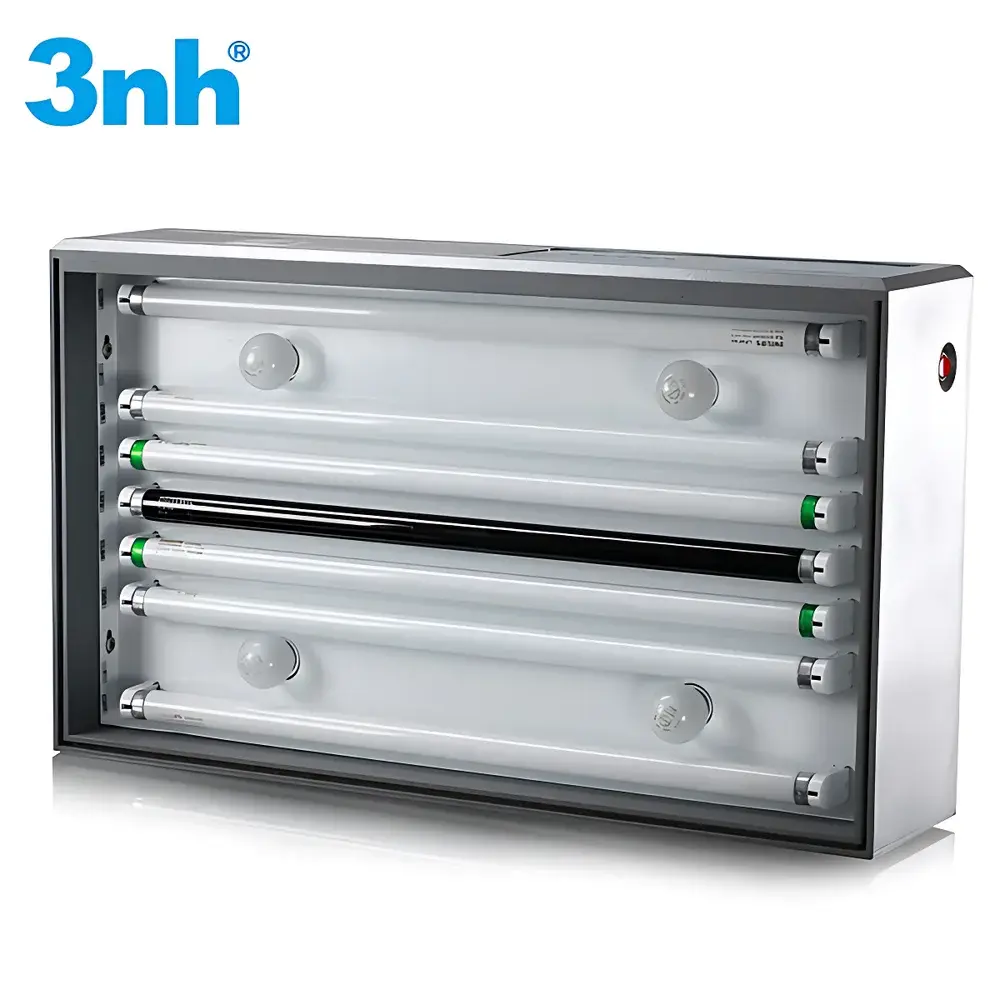
- Five pre-calibrated light sources integrated into a single compact enclosure: D65 (6500 K, simulating daylight), TL84 (4000 K, retail lighting in Europe/Japan/China), CWF (4150 K, U.S. cool white fluorescent), F (2700 K, incandescent/hospitality lighting), and UV (365 nm, for fluorescence detection and optical brightener evaluation)
- Flicker-free, instant-on operation with no thermal stabilization period—eliminates measurement latency and supports high-throughput QC workflows
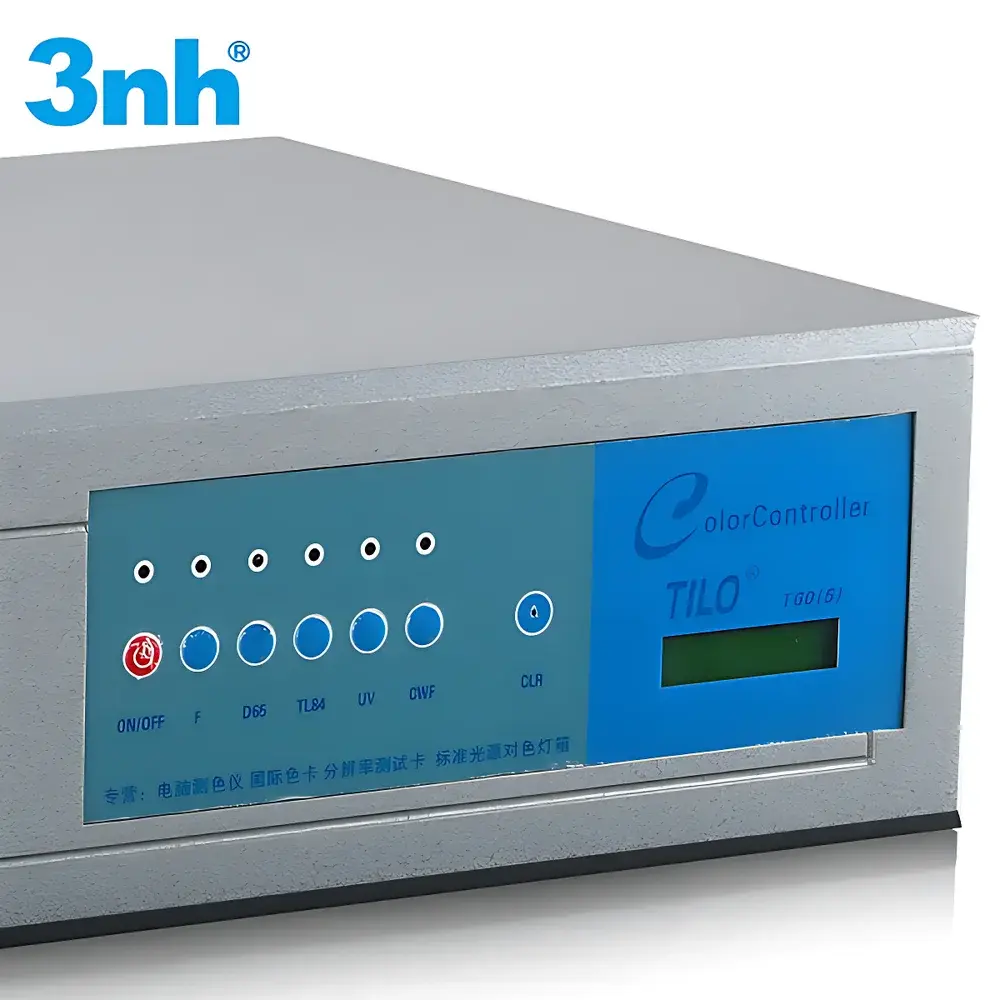
- Individual lamp-hour tracking for each source, accessible via front-panel display; records both cumulative usage and per-source runtime to support lamp replacement scheduling and metrological traceability
- Passive thermal design: low-wattage lamps (18 W for D65/TL84/CWF/UV; 40 W for F) generate minimal heat, eliminating active cooling components and reducing long-term drift risk
- Metamerism index evaluation mode: automated side-by-side or sequential illumination enables direct visual comparison to identify non-spectral matches
- Benchtop footprint optimized for integration into quality control labs, textile studios, paint formulation rooms, and packaging inspection stations
Sample Compatibility & Compliance
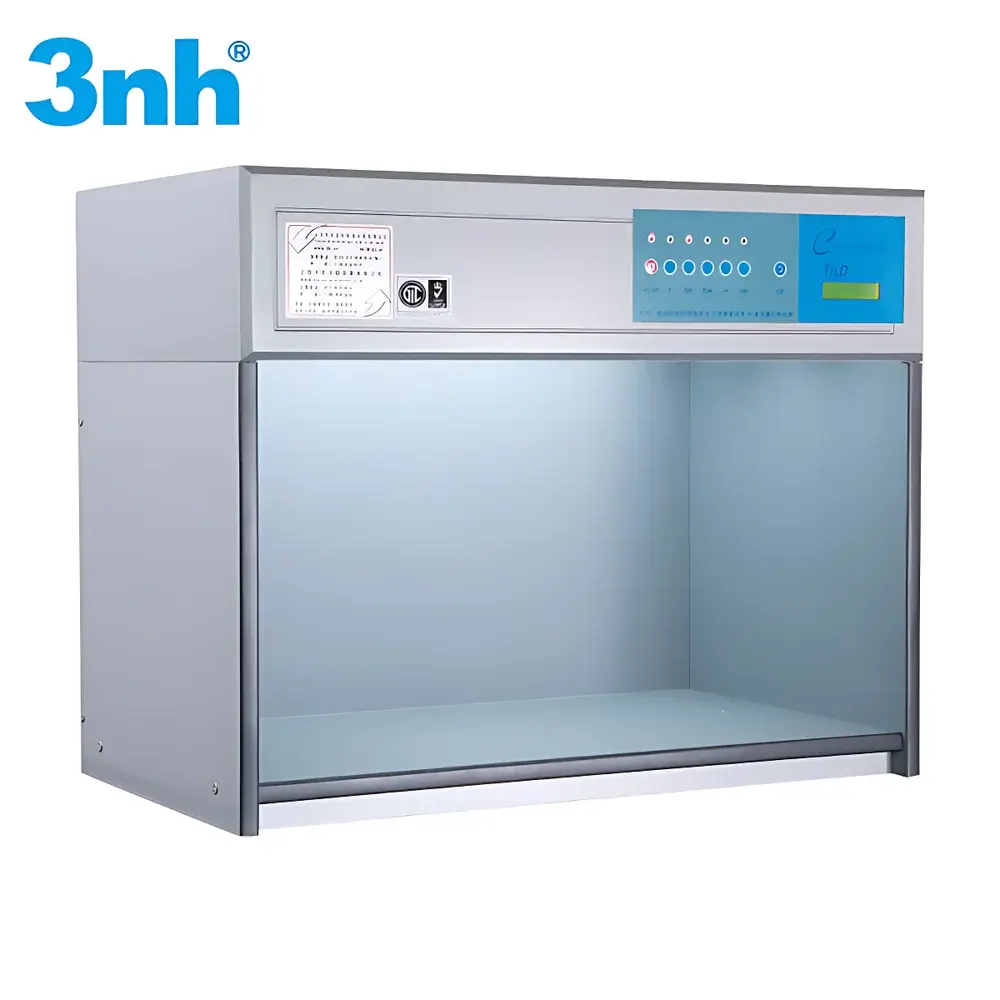
The T60(5) accommodates flat, rigid, or flexible specimens up to 300 mm × 200 mm × 100 mm (W × D × H), with neutral-gray interior walls (Munsell N8) to minimize stray-light interference. It complies with ISO 3664:2009 requirements for viewing environment geometry, illuminance uniformity (>80% across central 2/3 area), and spectral irradiance stability (±5% over 1,000 hours). The D65 and TL84 sources meet CIE S 005/E:2017 tolerances for chromaticity deviation (u’v’ ±0.005). While not certified to IEC 61000-4-3 for EMC, its EMI profile aligns with Class B industrial equipment standards. The unit is intended for use in GLP-aligned laboratories where visual assessment forms part of documented color release protocols.
Software & Data Management
The T60(5) operates as a standalone hardware platform with no embedded firmware or network interface. All operational parameters—including source selection, timer activation, and hour logging—are managed through tactile push-button controls and an LCD status display. No proprietary software is required, nor is USB/Bluetooth connectivity provided. However, lamp usage data may be manually recorded for inclusion in internal calibration logs or audit-ready documentation packages. For laboratories requiring electronic recordkeeping, integration with LIMS or MES systems is achieved via external time-stamped operator logs or optional third-party machine vision capture synchronized to light-source activation signals.
Applications
- Textile and apparel manufacturing: shade matching of dyed fabrics across global retail lighting conditions (e.g., TL84 for EU department stores, CWF for U.S. big-box retailers)
- Printing and packaging: verification of spot-color fidelity and substrate-dependent hue shifts under D65 (proofing) vs. F (in-store shelf lighting)
- Automotive interiors: evaluation of trim component color consistency under both daylight (D65) and cabin lighting (F/TL84)
- Plastics and coatings: detection of fluorescent whitening agent (FWA) effects using the 365 nm UV channel
- Pharmaceutical packaging: visual inspection of label color integrity under UV to confirm absence of unauthorized ink substitutions
- Academic color science instruction: hands-on demonstration of illuminant metameric failure and CIE 1931 chromaticity diagram interpretation
FAQ
Does the T60(5) support automatic metamerism scoring or quantitative delta-E calculation?
No. It is a visual assessment tool only. Quantitative color difference analysis requires integration with a spectrophotometer (e.g., Konica Minolta CM-700d or X-Rite Ci7800) operated under the same illuminant.
Are replacement lamps supplied with NIST-traceable spectral certification?
TILO provides manufacturer-specified spectral data sheets for each lamp type. Full NIST-traceable calibration reports are available upon request at additional cost and require third-party validation.
Can the unit be mounted vertically or wall-mounted?
No. It is engineered exclusively for horizontal benchtop operation to ensure consistent sample illumination geometry and avoid shadowing artifacts.
What is the recommended recalibration interval for lamp spectral output?
Per ISO 3664:2009 Annex B, fluorescent lamps should be replaced after 1,500–2,000 hours of cumulative use or every 12 months—whichever occurs first—to maintain spectral fidelity within specification limits.
Is the interior surface coating resistant to solvent exposure during cleaning?
The matte-finish Munsell N8 paint is alcohol-resistant but not compatible with chlorinated or aromatic solvents. Cleaning must be performed using lint-free cloths dampened with isopropyl alcohol (70%) only.





