
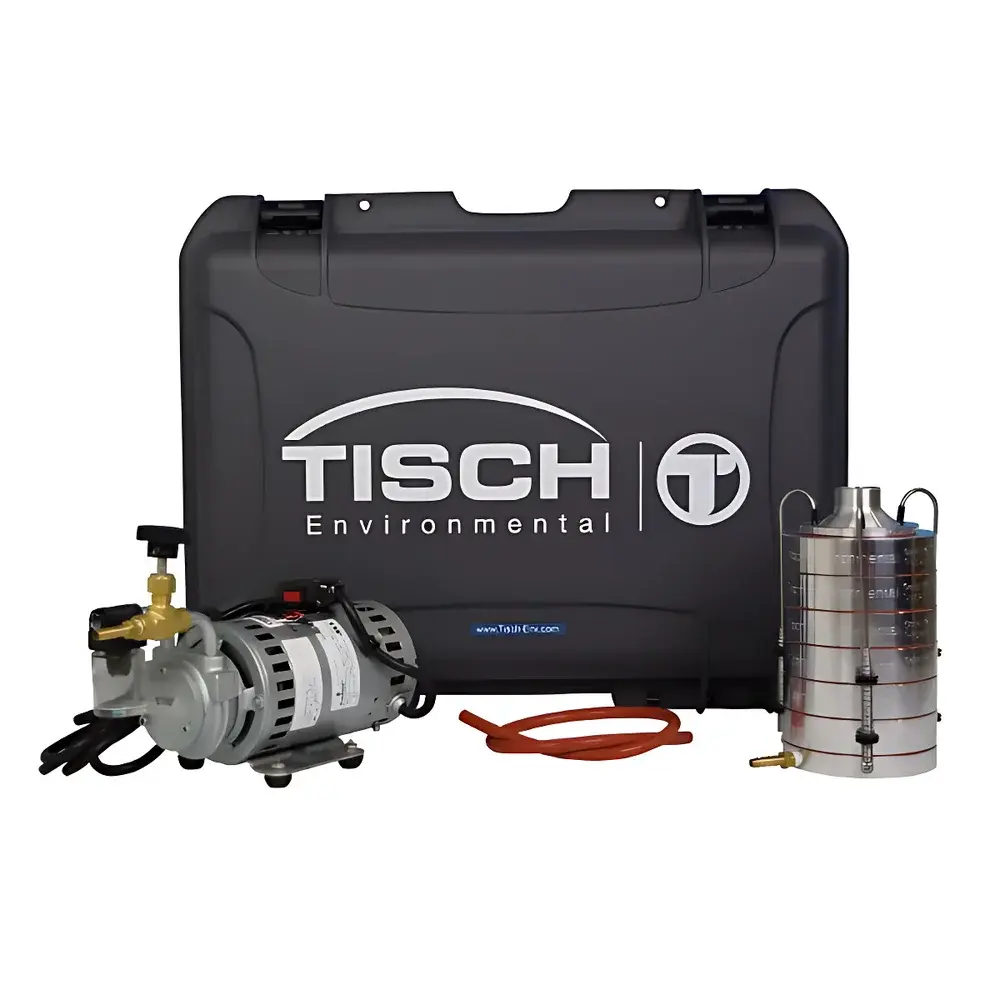
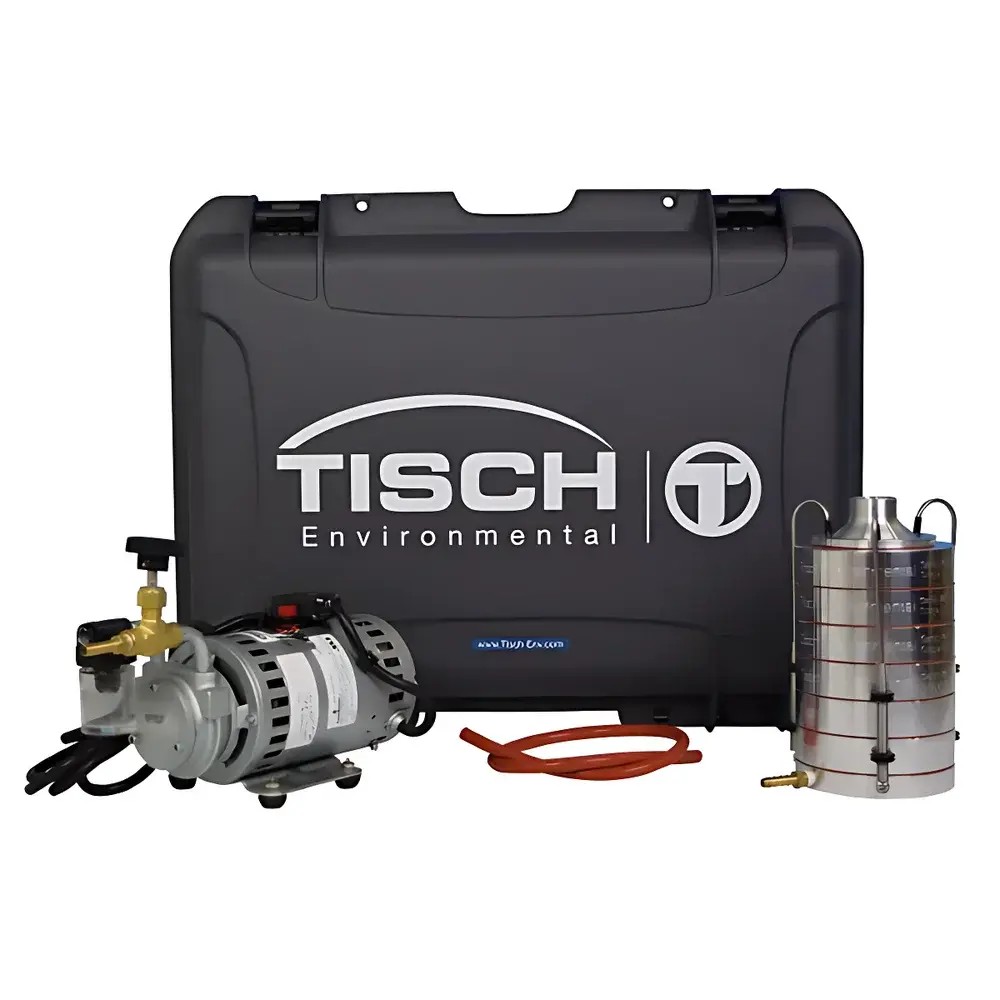
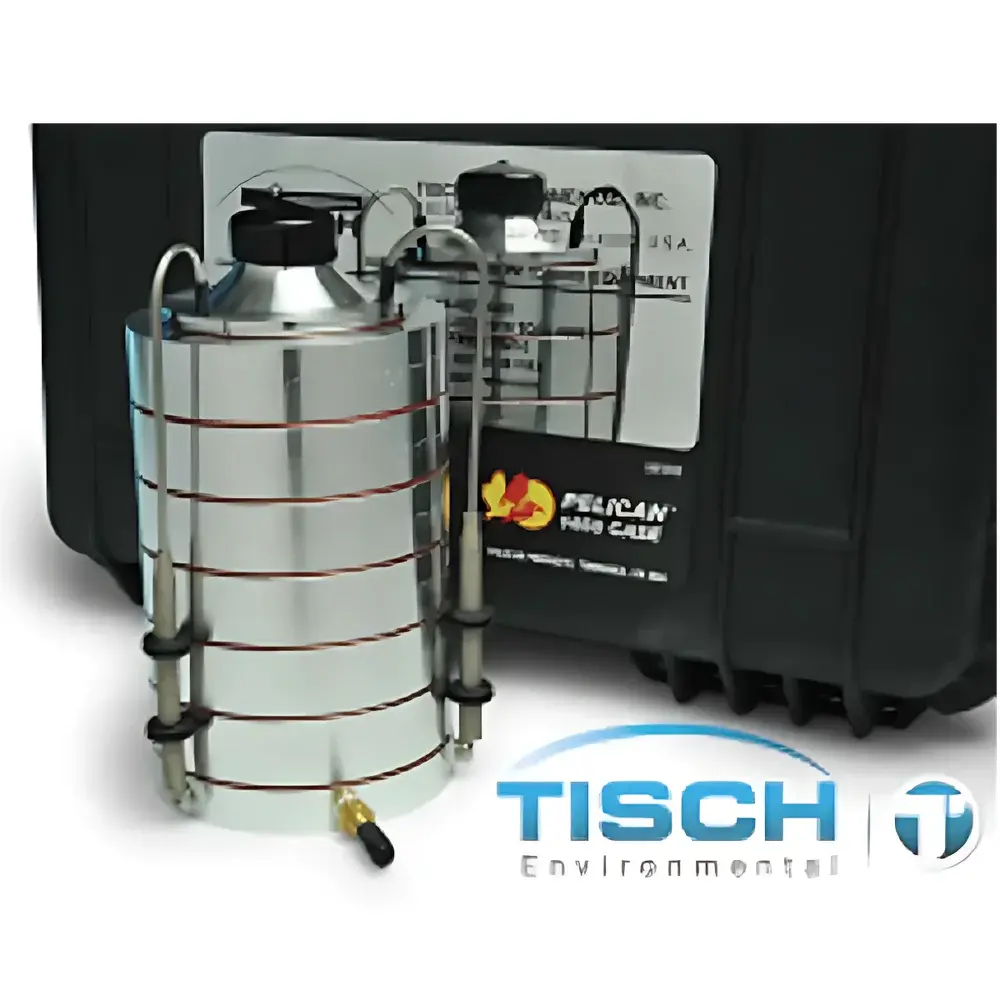
Tisch TE-10-800X Six-Stage Andersen Impactor Air Microbial Sampler
| Brand | Tisch |
|---|---|
| Origin | USA |
| Model | TE-10-800X |
| Sampling Principle | Inertial Impaction |
| Flow Rate | 28.3 L/min |
| Operating Temperature | <35°C |
| Operating Relative Humidity | <90% RH |
| Material | Anodized Aluminum Alloy |
| Stage Count | 6 |
| Aerodynamic Cut-Points (at 28.3 L/min) | Stage 1 ≥7.1 µm, Stage 2 4.7–7.1 µm, Stage 3 3.3–4.7 µm, Stage 4 2.1–3.3 µm, Stage 5 1.1–2.1 µm, Stage 6 0.65–1.1 µm |
| Dimensions (Impactor Only) | 133 mm Ø × 88.9 mm H |
| Weight (Impactor Only) | 2.75 kg |
Overview
The Tisch TE-10-800X Six-Stage Andersen Impactor is a precision-engineered inertial impactor designed for quantitative assessment of viable airborne microorganisms and their aerodynamic size distribution. Based on the classical Anderson cascade impactor principle—first developed to model human respiratory deposition—the instrument separates particles by inertial impaction across six sequentially finer stages, each calibrated to a defined aerodynamic cut-point at a nominal flow rate of 28.3 L/min. This flow rate aligns with standardized protocols for environmental and occupational bioaerosol monitoring (e.g., ISO 14698-1, ASTM D6059). Each stage features a precisely drilled aluminum plate positioned above a standard 88-mm Petri dish containing nutrient agar or selective growth media. As sampled air accelerates through progressively smaller nozzles, particles with sufficient inertia impact onto the agar surface in accordance with their aerodynamic equivalent diameter (AED), enabling subsequent colony-forming unit (CFU) enumeration and size-resolved viability analysis. The anodized aluminum construction ensures dimensional stability, corrosion resistance, and compatibility with sterilization procedures required under GLP and clinical laboratory environments.
Key Features
- Six-stage cascade design with traceable, NIST-traceable cut-points calibrated at 28.3 L/min per ISO 21501-4 and USP <797> guidance
- Anodized aluminum alloy body offering thermal stability, mechanical rigidity, and resistance to repeated autoclaving (up to 121°C, 20 min)
- Interchangeable nozzle plates and precision-machined alignment pins ensuring reproducible stage stacking and minimal flow leakage
- Integrated O-ring sealing system (silicone elastomer, FDA-compliant) providing >99.9% collection efficiency across all stages when operated within specified humidity and temperature limits (<35°C, <90% RH)
- Modular configuration supporting optional vacuum pump integration (220 V AC or 12 V DC variants available)
- Compliance-ready architecture: supports audit trails, operator ID logging, and raw data export for 21 CFR Part 11–aligned workflows when paired with validated acquisition software
Sample Compatibility & Compliance
The TE-10-800X is validated for collection of culturable aerobic bacteria, yeasts, molds, and spores from ambient, indoor, and controlled-environment air streams—including cleanrooms (ISO Class 5–8), hospital isolation rooms, pharmaceutical manufacturing suites, and biosafety level 2 laboratories. It meets performance criteria outlined in ISO 14698-1 (Biocontamination control — General principles and methods), EU GMP Annex 1 (2022), and USP <1116> (Microbiological Evaluation of Clean Rooms and Controlled Environments). Its cut-point fidelity enables correlation with regional deposition models (e.g., ICRP Human Respiratory Tract Model), supporting risk assessment for inhalation exposure in occupational health studies. All components are non-pyrogenic and compatible with gamma irradiation (25 kGy) for pre-sterilized field deployment.
Software & Data Management
While the TE-10-800X operates as a standalone hardware platform, it integrates seamlessly with Tisch’s optional TE-DataLink™ acquisition module—a CE-marked, Windows-based application that records real-time flow rate, total sampling volume, elapsed time, and environmental conditions (via external sensor inputs). Data files are exported in CSV and PDF formats compliant with ALCOA+ principles (Attributable, Legible, Contemporaneous, Original, Accurate, Complete, Consistent, Enduring, Available). Audit trail functionality includes user login authentication, electronic signatures, and immutable change logs—fully satisfying FDA 21 CFR Part 11 and EU Annex 11 requirements for regulated microbiological testing.
Applications
- Quantitative bioaerosol characterization in HVAC system validation and routine environmental monitoring programs
- Hospital infection control: source tracking of airborne pathogens (e.g., Aspergillus, Staphylococcus aureus, Mycobacterium tuberculosis) in operating theaters and immunocompromised patient wards
- Pharmaceutical aseptic processing: monitoring viable particle load during Grade A/B area qualification per EU GMP Annex 1
- Research on microbial aerosol generation mechanisms, including cough/sneeze simulators and nebulizer-based challenge studies
- Environmental health assessments in agricultural facilities, wastewater treatment plants, and composting operations
- Validation of air disinfection technologies (e.g., UV-C, bipolar ionization, photocatalytic oxidation) via pre- and post-treatment size-resolved CFU analysis
FAQ
What is the recommended calibration frequency for the TE-10-800X?
Annual calibration using NIST-traceable flow meters and particle sizing standards is recommended; verification of cut-point performance should accompany each major maintenance cycle.
Can the TE-10-800X be used for non-viable particle collection?
No—it is specifically engineered for viable microorganism capture and culture-based enumeration; non-viable particle analysis requires optical or condensation particle counters.
Is the impactor compatible with selective media such as Sabouraud Dextrose Agar or Tryptic Soy Agar?
Yes—standard 88-mm Petri dishes accommodate all common microbiological media formulations without modification.
Does the device require regulatory approval for use in GMP environments?
The TE-10-800X itself is not an FDA-cleared medical device but is widely accepted as a compendial method tool under USP <1116> and EU GMP Annex 1 when qualified per site-specific protocols.
How is carryover between stages prevented during operation?
Stage-to-stage isolation is achieved through precise nozzle-to-plate spacing, laminar flow design, and the use of sterile, low-adhesion agar surfaces—validated to maintain inter-stage cross-contamination below 0.5% under standard operating conditions.







