
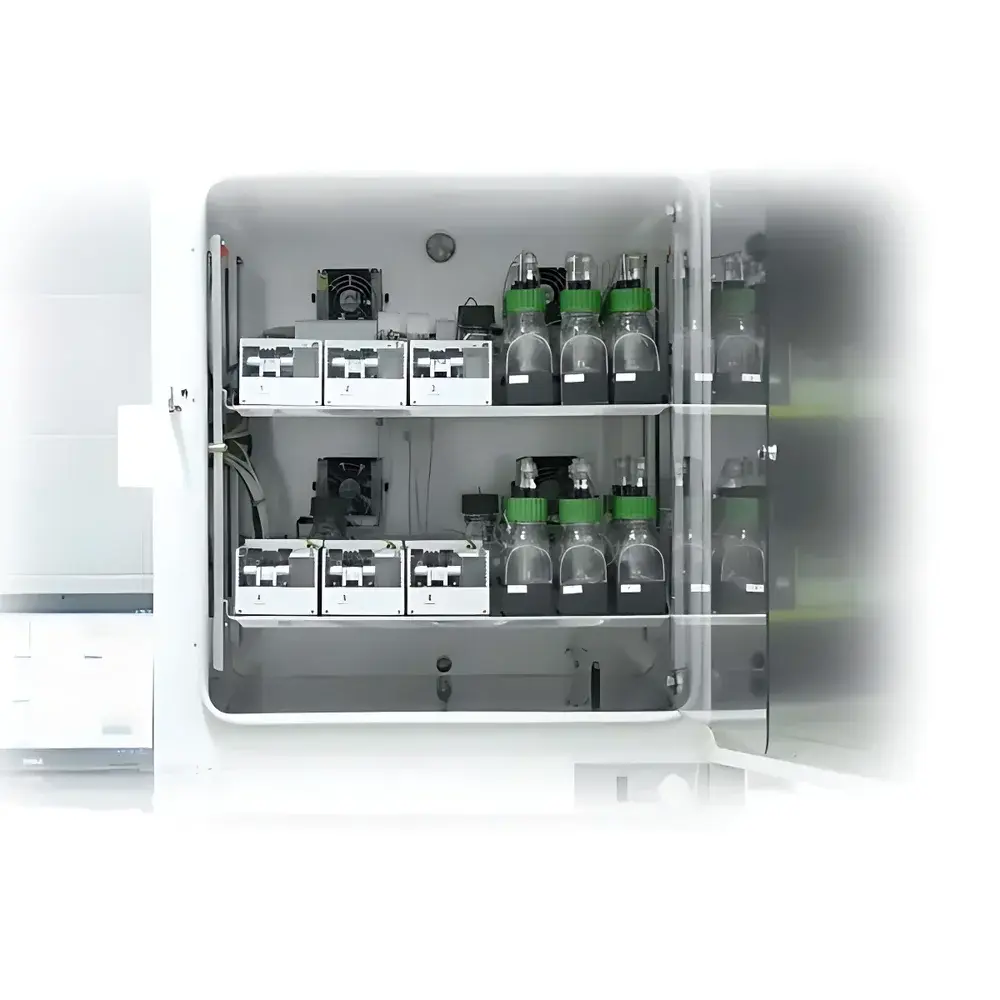
Tissuse IMOLA Multi-Parameter Energy Metabolism Analyzer
| Brand | Tissuse |
|---|---|
| Origin | Germany |
| Manufacturer Type | Authorized Distributor |
| Origin Category | Imported |
| Model | IMOLA |
| Pricing | Available Upon Request |
Overview
The Tissuse IMOLA Multi-Parameter Energy Metabolism Analyzer is a microphysiological measurement platform engineered for label-free, real-time, longitudinal monitoring of metabolic and morphological dynamics in living cells, primary tissues, and organoids. Based on proprietary biochip technology, the IMOLA system applies microsensor-integrated microfluidic chambers to quantitatively assess extracellular acidification rate (ECAR), oxygen consumption rate (OCR), carbon dioxide partial pressure (pCO₂), dissolved oxygen (pO₂), and impedance-based cell adhesion/morphology—simultaneously and continuously over periods ranging from hours to multiple weeks. Its core measurement principle—microphysiometry—relies on high-fidelity electrochemical and impedimetric transduction within physiologically relevant perfusion environments. Unlike endpoint assays or single-parameter platforms, IMOLA captures integrated physiological responses by correlating mitochondrial respiration, glycolytic flux, and structural integrity under dynamic culture conditions. This enables mechanistic interpretation of cellular energetics in contexts such as drug-induced metabolic reprogramming, mitochondrial toxicity, or regenerative recovery post-treatment.
Key Features
- Integrated microphysiological biochips with co-localized pO₂, pCO₂, pH, and impedance sensors enabling simultaneous multi-parameter acquisition
- Automated, programmable perfusion system supporting precise media exchange, compound dosing, and washout protocols without manual intervention
- Label-free operation eliminating artifacts associated with fluorescent dyes, genetic reporters, or metabolic tracers
- High-temporal-resolution data logging (sub-minute sampling intervals) with onboard temperature and CO₂ control (37 °C, 5% CO₂)
- Modular design accommodating up to 8 parallel biochips per run, facilitating dose-response studies and biological replicates
- Robust architecture compliant with ISO 13485–aligned manufacturing standards and CE-marked for in vitro diagnostic (IVD) research use
Sample Compatibility & Compliance
The IMOLA platform supports a broad range of adherent and suspension-derived biological models, including immortalized cell lines (e.g., HepG2, A549), patient-derived primary cells, precision-cut tissue slices, spheroids, and stem-cell-derived organoids (e.g., intestinal, hepatic, neuronal). All measurements occur under controlled normoxic or hypoxic conditions (0.1–21% O₂), with biochip surface chemistry optimized for native extracellular matrix interaction. The system complies with GLP-relevant documentation practices and supports audit-ready data export conforming to FDA 21 CFR Part 11 requirements—including electronic signatures, time-stamped audit trails, and immutable raw data archives. It meets ISO/IEC 17025 calibration traceability standards for sensor modules and is validated against reference methods per ASTM E2561 (for OCR) and ISO 15197 (for pH/pCO₂ sensor performance).
Software & Data Management
Data acquisition, protocol scheduling, and real-time visualization are managed via DALiA (Dynamic Analysis of Living cells Application), a Windows-based software suite designed for life science researchers. DALiA provides intuitive workflow scripting for complex perfusion sequences (e.g., staggered drug addition, gradient exposure, recovery phases), automated baseline correction, and synchronized multi-sensor signal alignment. Raw data exports in HDF5 and CSV formats support downstream analysis in MATLAB, Python (via SciPy/Pandas), or commercial platforms like GraphPad Prism. Built-in analytical modules compute derived metrics—including proton efflux rate (PER), respiratory exchange ratio (RER), and morphological stability indices—enabling direct comparison across experimental conditions. All user actions, parameter changes, and instrument events are logged with cryptographic hashing for full regulatory traceability.
Applications
- Preclinical assessment of mitochondrial toxicants and metabolic modulators in hepatotoxicity and cardiotoxicity screening
- Longitudinal evaluation of therapeutic interventions in disease-relevant organoid models (e.g., cystic fibrosis intestinal organoids, Alzheimer’s neuronal co-cultures)
- Mechanistic studies of metabolic flexibility during differentiation, senescence, or immune cell activation
- Pharmacodynamic profiling of oncology compounds targeting glycolysis or oxidative phosphorylation
- Regenerative medicine research tracking metabolic recovery kinetics following ischemia-reperfusion or chemotherapeutic insult
- Quality control of biomanufactured tissues by establishing functional metabolic benchmarks
FAQ
What sample types are compatible with the IMOLA system?
Primary tissues, 2D monolayers, 3D spheroids, and stem-cell-derived organoids—provided they adhere stably to the biochip surface or are retained within the perfusion chamber geometry.
Is sensor calibration required before each experiment?
Yes; automated two-point calibration (air-saturated and CO₂-buffered solutions) is performed prior to each run using built-in fluidic routines, ensuring traceable accuracy per ISO 8655.
Can IMOLA data be integrated into LIMS or enterprise ELN systems?
Yes; DALiA supports secure RESTful API integration and standardized metadata tagging (ISA-Tab compliant), enabling seamless ingestion into laboratory informatics platforms.
Does the system support hypoxia or hyperoxia studies?
Yes; optional gas-mixing module allows precise regulation of O₂ (0.1–95%) and CO₂ (0–20%) concentrations independent of incubator environment.
What is the typical duration of uninterrupted measurement?
Up to 21 days with continuous perfusion, depending on biochip configuration, cell density, and medium formulation—validated through ISO 10993–5 cytocompatibility testing.
Related Products



