
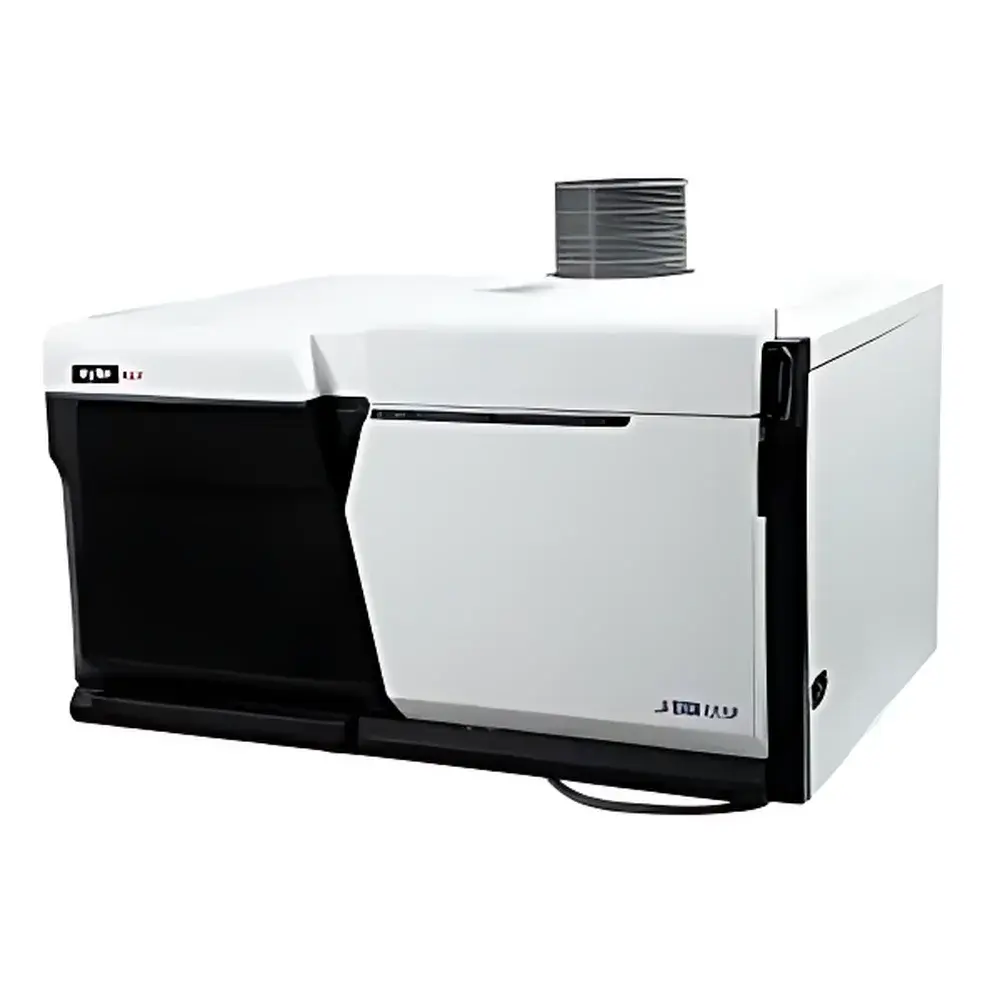
Titan Instruments Kylin A13 Triple-Channel Atomic Fluorescence Spectrometer
| Brand | Titan Instruments |
|---|---|
| Origin | Beijing, China |
| Model | Kylin A13 |
| Instrument Type | Multi-channel Atomic Fluorescence Spectrometer |
| Sample Introduction | Dual Sequential Injection Pumps |
| Waste Disposal | Rear Exhaust Configuration |
| Hydride Generation Mode | Vapor Generation / Hydride Generation |
| Gas Flow Control | Mass Flow Controller (MFC) |
| Detectable Elements | As, Sb, Bi, Sn, Se, Te, Pb, Ge, Hg, Cd, Zn, Au |
| Relative Standard Deviation (RSD) | < 0.6% |
| Linear Dynamic Range | As, Sb, Se, Bi, Te, Hg, Sn, Pb < 0.01 µg/L |
| Detection Limit | As, Sb, Se, Bi, Te, Hg, Sn, Pb < 0.01 µg/L |
| Photomultiplier Tube Wavelength Range | 160–320 nm |
| Atomizer Temperature Control Range | 100–350 °C |
Overview
The Titan Instruments Kylin A13 Triple-Channel Atomic Fluorescence Spectrometer is a high-performance, multi-element analytical instrument engineered for trace-level quantification of hydride-forming and cold-vapor elements in environmental, food, clinical, pharmaceutical, and industrial matrices. It operates on the principle of atomic fluorescence spectroscopy (AFS), where analyte atoms—generated in situ via hydride generation (HG) or cold vapor (CV) techniques—are atomized in a quartz tube furnace and excited by a sharp-line hollow cathode lamp (HCL). The resulting element-specific fluorescence emission is collected at right angles to the excitation beam, minimizing background scatter and enabling exceptional signal-to-noise ratios. Designed for compliance with international regulatory frameworks—including EPA Method 1631E, ISO 17294-2, and ASTM D5847—the Kylin A13 delivers robust, reproducible results across complex sample types while supporting full auditability under GLP and GMP environments.
Key Features
- Triple-channel simultaneous detection architecture enables concurrent quantification of three hydride-forming elements (e.g., As, Se, Hg) without spectral interference or time multiplexing—significantly increasing throughput and reducing analysis cycle time.
- Orthogonal dual-beam optical design with symmetrical channel geometry ensures optimal light path alignment, minimal stray light contribution, and superior inter-channel signal consistency; all channels support real-time reference beam drift correction.
- Intelligent plug-and-play hollow cathode lamps with integrated position recognition eliminate manual alignment; lamp current and operational hours are continuously monitored and logged for lifetime tracking and method validation.
- Precision temperature-controlled quartz furnace atomizer (100–350 °C) dynamically adjusts setpoints per element—optimizing atomization efficiency for volatile (e.g., Hg) and refractory (e.g., Bi, Te) species alike.
- Electronically controlled mass flow system (EFC) provides closed-loop regulation of Ar carrier gas pressure and flow rate, with real-time diagnostics and alarm-triggered shutdown to prevent flameout or incomplete atomization.
- PTFE-coated carbon-fiber sampling probes replace fragile quartz needles—enhancing mechanical durability, chemical resistance, and long-term carryover performance during high-throughput operation.
- Comprehensive self-diagnostic suite monitors optical integrity, hydride generation kinetics, atomizer thermal stability, liquid level status, gas pressure profiles, and lamp health—reporting fault codes and actionable remediation guidance via graphical UI.
Sample Compatibility & Compliance
The Kylin A13 is validated for direct analysis of aqueous extracts, acid digests, and microwave-assisted leachates prepared from soils, sediments, biological tissues, foodstuffs, pharmaceutical excipients, and petrochemical products. Its hydride generation interface supports standardized sample preparation protocols aligned with ISO 17294-2 (water), ISO 11466 (soils), USP / (elemental impurities in pharmaceuticals), and CLSI C38-A2 (clinical toxicology). Instrument software enforces electronic signature workflows compliant with FDA 21 CFR Part 11, including user role-based access control, immutable audit trails, and method versioning—all essential for regulated laboratories undergoing ISO/IEC 17025 accreditation or routine inspection.
Software & Data Management
The Kylin A13 is operated via Titan’s proprietary AFSControl™ software—a dual-language (English/Chinese), Windows-based platform built on .NET Framework with embedded SQLite database architecture. Core capabilities include automated calibration curve generation (linear, quadratic, weighted), QC sample scheduling with LIMS integration (via ASTM E1384-compliant HL7 or CSV export), customizable report templates (PDF/XLSX), and full electronic record retention. All analytical events—including parameter changes, calibration updates, maintenance logs, and user login/logout timestamps—are captured in tamper-evident audit trails meeting ALCOA+ principles (Attributable, Legible, Contemporaneous, Original, Accurate, Complete, Consistent, Enduring, Available).
Applications
- Environmental Monitoring: Quantification of As, Sb, Se, Hg, and Pb in drinking water (EPA 1631E), wastewater effluents, airborne particulates (HJ 1133-2020), and contaminated soils (HJ 680-2013).
- Food & Agriculture Safety: Screening of inorganic arsenic in rice (GB 5009.11-2014), total mercury in seafood (GB 5009.17-2014), and heavy metals in dairy, feed, and tobacco products.
- Clinical Toxicology: Trace-level determination of Se, Pb, Hg, and As in whole blood, urine, hair, and nail specimens per CLIA and CAP guidelines.
- Pharmaceutical Quality Control: Elemental impurity testing of APIs and excipients against ICH Q3D thresholds, particularly for Class 1 (As, Cd, Hg, Pb) and Class 2A (Co, Ni, V) elements.
- Geochemical & Metallurgical Analysis: Multi-element profiling of Au, Ge, Te, and Sb in ores, alloys, and refinery slags using microwave digestion–AFS coupling (HJ 702-2014).
FAQ
Does the Kylin A13 support regulatory compliance for pharmaceutical elemental impurity testing?
Yes—it meets ICH Q3D requirements when paired with validated sample preparation methods and operates under full 21 CFR Part 11-compliant software controls.
Can the instrument analyze non-hydride-forming elements such as chromium or nickel?
No—the Kylin A13 is optimized exclusively for hydride-generating (As, Sb, Bi, Se, Te, Sn, Pb, Ge) and cold-vapor (Hg, Cd) elements; transition metals require alternative techniques like ICP-MS or GF-AAS.
What is the typical maintenance interval for the atomizer quartz tube?
Under standard operating conditions (≤100 samples/day), the quartz furnace tube exhibits >12 months of functional service life; replacement is guided by automated thermal degradation diagnostics.
Is remote monitoring or LIMS integration supported?
Yes—AFSControl™ provides configurable ODBC/JDBC connectivity, HL7 message routing, and RESTful API endpoints for bidirectional data exchange with enterprise LIMS platforms.
How does the dual sequential injection system improve precision compared to single-pump designs?
Independent control of reductant and carrier solution delivery eliminates cross-contamination, ensures stoichiometric reaction consistency, and enables precise dwell-time optimization—contributing directly to RSD values <0.6%.
Related Products




