
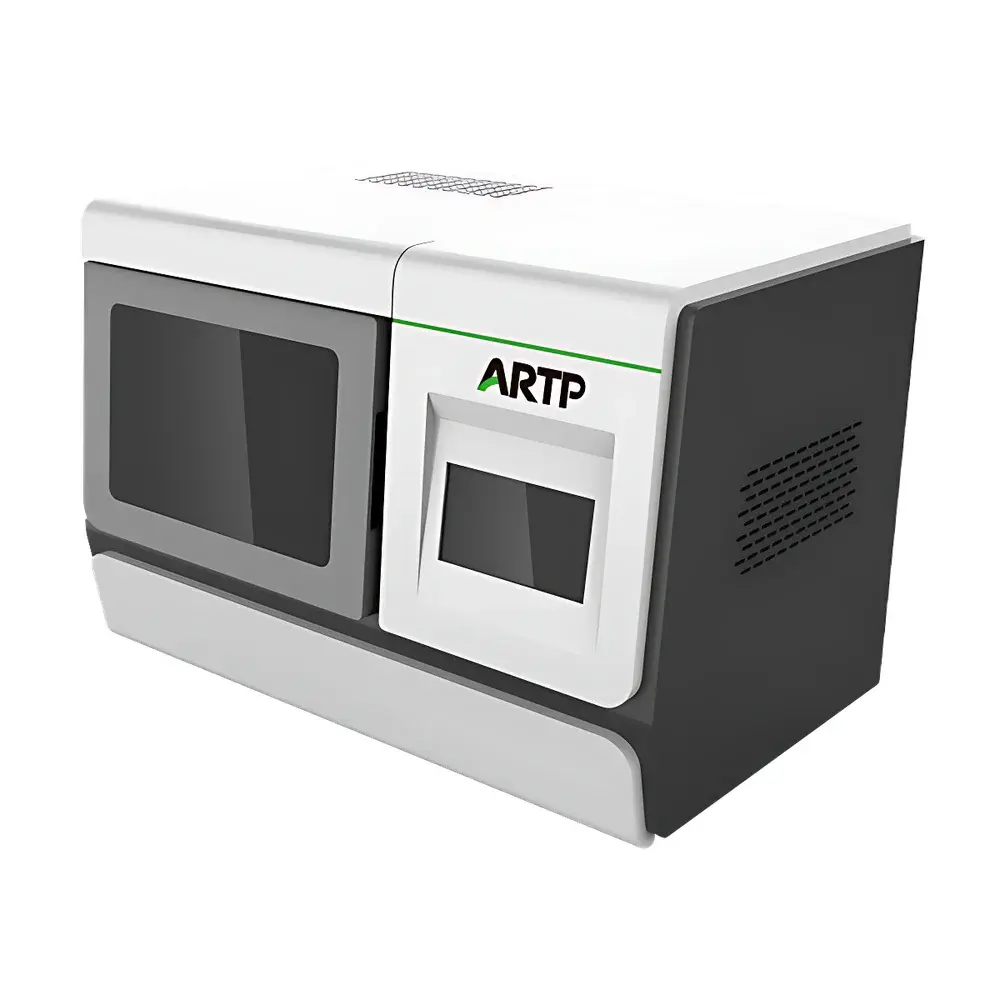
TMAXTREE ARTP-P Atmospheric-Pressure Room-Temperature Plasma Mutagenesis Instrument
| Brand | TMAXTREE |
|---|---|
| Origin | Jiangsu, China |
| Manufacturer Type | Direct Manufacturer |
| Product Category | Domestic |
| Model | ARTP-P |
| Instrument Type | Plasma-Based Mutagenic Breeding System |
| Primary Function | Biological Sample Irradiation & Mutagenesis |
| Discharge Technology | Atmospheric-Pressure Uniform Glow Discharge with Stable, Homogeneous Plasma Jet |
| Working Gas | Ultra-High-Purity Helium (≥99.999%) |
| Mutagenesis Mode | Atmospheric-Pressure Room-Temperature Plasma Mutagenesis |
| Gas Flow Control Range | 0–15 SLM (Standard Liters per Minute) |
| Gas Flow Accuracy | ±1.0% F.S. |
| Effective Treatment Distance | 2 mm |
| Power Adjustment Range | 120–360 W |
| Maximum Total Power | 1000 W |
| Sample Handling Platform | Large-Area Rotatable Carrier Plate |
| Exposure Time Range | 0–7200 s (Continuously Adjustable) |
| Sample Compatibility | Prokaryotes (e.g., bacteria, actinomycetes), Eukaryotes (e.g., fungi, yeasts, algae, higher fungi), Plant Materials (pollen, seeds, embryonic tissues), Animal Embryos (fertilized eggs), and Larval Stages |
Overview
The TMAXTREE ARTP-P Atmospheric-Pressure Room-Temperature Plasma Mutagenesis Instrument is an engineered platform for non-thermal, physical mutagenesis in life science research and applied breeding programs. Unlike conventional chemical (e.g., EMS) or radiation-based (e.g., γ-ray, UV-C) mutagenesis methods, the ARTP-P utilizes a stable, atmospheric-pressure uniform glow discharge plasma jet generated from ultra-high-purity helium gas. This process produces a reactive species-rich effluent—including excited atoms, metastable He*, atomic oxygen, nitrogen oxides, and short-lived radicals—capable of inducing DNA base modifications, strand breaks, and localized oxidative damage without requiring vacuum chambers or cryogenic cooling. The system operates at ambient temperature and pressure, eliminating thermal stress on sensitive biological targets and enabling high-throughput, reproducible mutagenesis across diverse genetic backgrounds. Its design reflects over a decade of collaborative development with Tsinghua University and has been validated in peer-reviewed studies involving model and non-model organisms.
Key Features
- Atmospheric-pressure uniform glow discharge architecture ensures spatially homogeneous plasma density and temporal stability—critical for inter-experimental reproducibility.
- High-precision mass flow controller (±1.0% F.S.) enables fine-tuned regulation of helium gas flow (0–15 SLM), directly influencing reactive species concentration and mutagenic intensity.
- Optimized 2 mm treatment distance balances plasma reactivity and sample viability—validated for intact pollen grains, hydrated seeds, fertilized fish eggs, and microbial cell suspensions.
- Adjustable RF power (120–360 W) allows systematic modulation of electron energy distribution and reactive species yield, supporting dose-response optimization for target organisms.
- Large-area rotating carrier plate accommodates heterogeneous sample formats—from microcentrifuge tubes to Petri dishes—facilitating parallel processing of multiple genotypes or developmental stages.
- Integrated exposure timer (0–7200 s, 1-s resolution) supports both acute and sub-lethal mutagenesis protocols aligned with established mutagenesis screening workflows.
Sample Compatibility & Compliance
The ARTP-P instrument is routinely deployed in academic, industrial, and regulatory-compliant breeding laboratories for mutagenesis of prokaryotic and eukaryotic systems. Validated applications include Escherichia coli, Streptomyces spp., Saccharomyces cerevisiae, Aspergillus niger, Chlorella vulgaris, maize pollen and germinating seeds, Coreopsis tinctoria achenes, and olive flounder (Paralichthys olivaceus) fertilized eggs and sperm. All protocols adhere to internationally recognized biosafety principles (WHO BSL-1/BSL-2 guidelines) and are compatible with GLP-aligned experimental recordkeeping. While not certified under ISO/IEC 17025, the system’s operational parameters—including gas purity traceability (certified He ≥99.999%), calibrated flow control, and documented power calibration—support audit-ready documentation for internal quality assurance and publication-grade data reporting.
Software & Data Management
The ARTP-P operates via an embedded industrial-grade microcontroller interface with local parameter logging (gas flow, power, exposure time, date/time stamp). No proprietary software installation is required; all settings are manually configured through tactile membrane buttons and an OLED display. Raw operational logs are exportable via USB-C to CSV format for integration into LIMS or ELN platforms (e.g., LabArchives, Benchling). The system supports 21 CFR Part 11–compliant metadata tagging when used within validated laboratory information management systems—enabling electronic signatures, audit trails, and version-controlled protocol archiving where required by GMP or regulatory submission frameworks.
Applications
The ARTP-P serves as a core tool in forward genetics, strain improvement, and functional genomics. Published case studies demonstrate its utility in generating loss-of-function and gain-of-function alleles with high mutation density (>0.06% genome-wide SNP rate in teleosts; >0.08% in maize), surpassing classical chemical mutagens in efficiency and spectrum breadth. Applications span metabolic engineering (enhanced flavonoid and chlorogenic acid biosynthesis in ornamental composites), agronomic trait enhancement (dwarfism, tillering, male sterility in cereal crops), and aquaculture genetics (growth heterosis and disease resistance segregation in flatfish). It is also employed in synthetic biology for rapid diversification of promoter libraries and CRISPR guide RNA off-target profiling under controlled mutagenic stress.
FAQ
What biological safety precautions are required when operating the ARTP-P?
Operators must wear ANSI-approved UV-blocking safety goggles and nitrile gloves; helium gas cylinders must be secured and leak-tested prior to use. The instrument emits low-intensity VUV radiation and ozone—operation requires a fume hood or dedicated ventilated enclosure meeting EN 14175 Class I standards.
Can the ARTP-P be integrated into automated liquid handling workflows?
Yes—its external TTL trigger input (opto-isolated) enables synchronization with robotic arms or autosamplers for unattended batch processing of multi-well plates or microtiter-format samples.
Is helium the only compatible working gas?
Helium is the validated and recommended gas due to its high ionization potential, low thermal conductivity, and predictable plasma chemistry. Argon and nitrogen have been tested experimentally but yield inconsistent reactive species profiles and reduced mutagenic efficiency.
How is mutagenesis efficiency quantified and validated post-treatment?
Efficiency is assessed via survival rate assays, followed by whole-genome resequencing or targeted amplicon sequencing. Published protocols recommend phenotypic screening across M1–M3 generations coupled with SNP/indel calling using GATK or FreeBayes pipelines.
Does the ARTP-P require routine calibration certification?
While no third-party calibration certificate is issued, users are advised to perform quarterly verification of gas flow accuracy using a NIST-traceable thermal mass flow meter and power output using a calibrated RF power sensor—records should be retained per institutional QA policy.
Related Products





