Top Cloud-agri TP-KCXW Insect Behavioral Analysis System
| Brand | Top Cloud-agri |
|---|---|
| Origin | Zhejiang, China |
| Manufacturer Type | Direct Manufacturer |
| Product Origin | Domestic (China) |
| Model | TP-KCXW |
| Pricing | Upon Request |
Overview
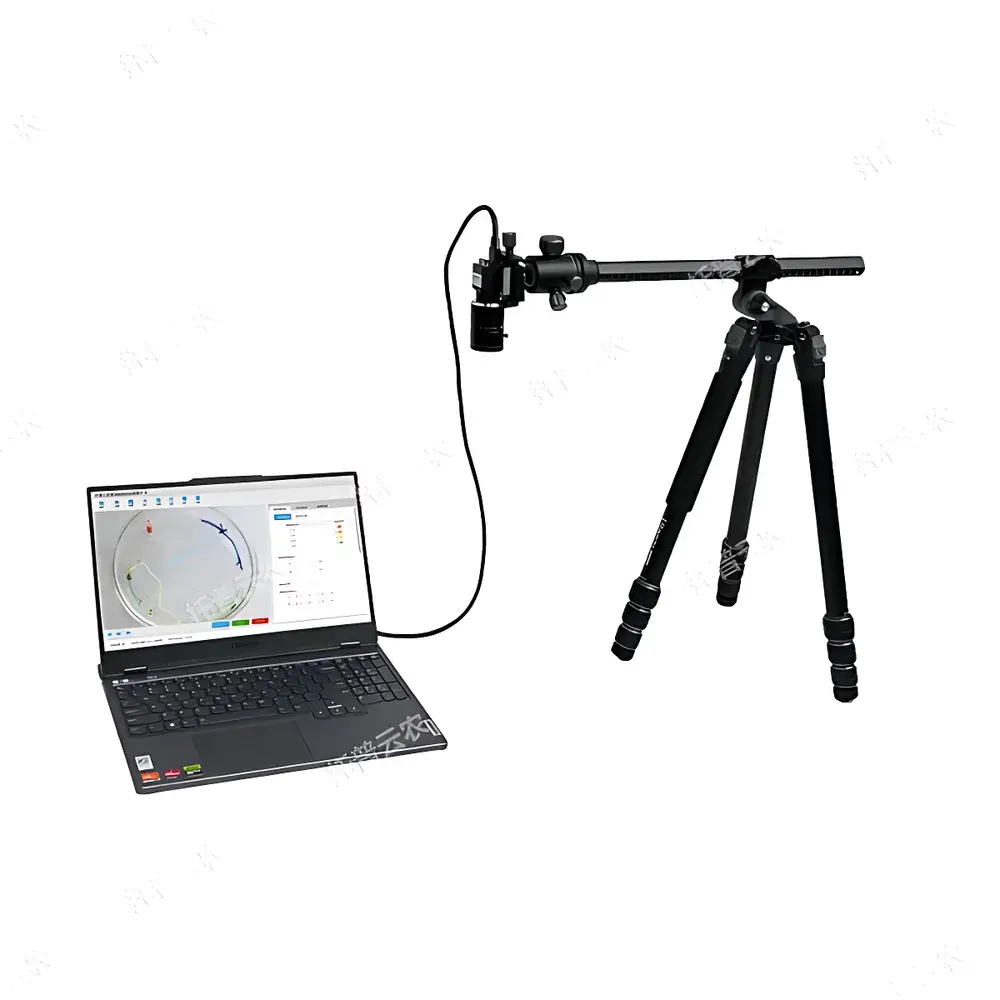
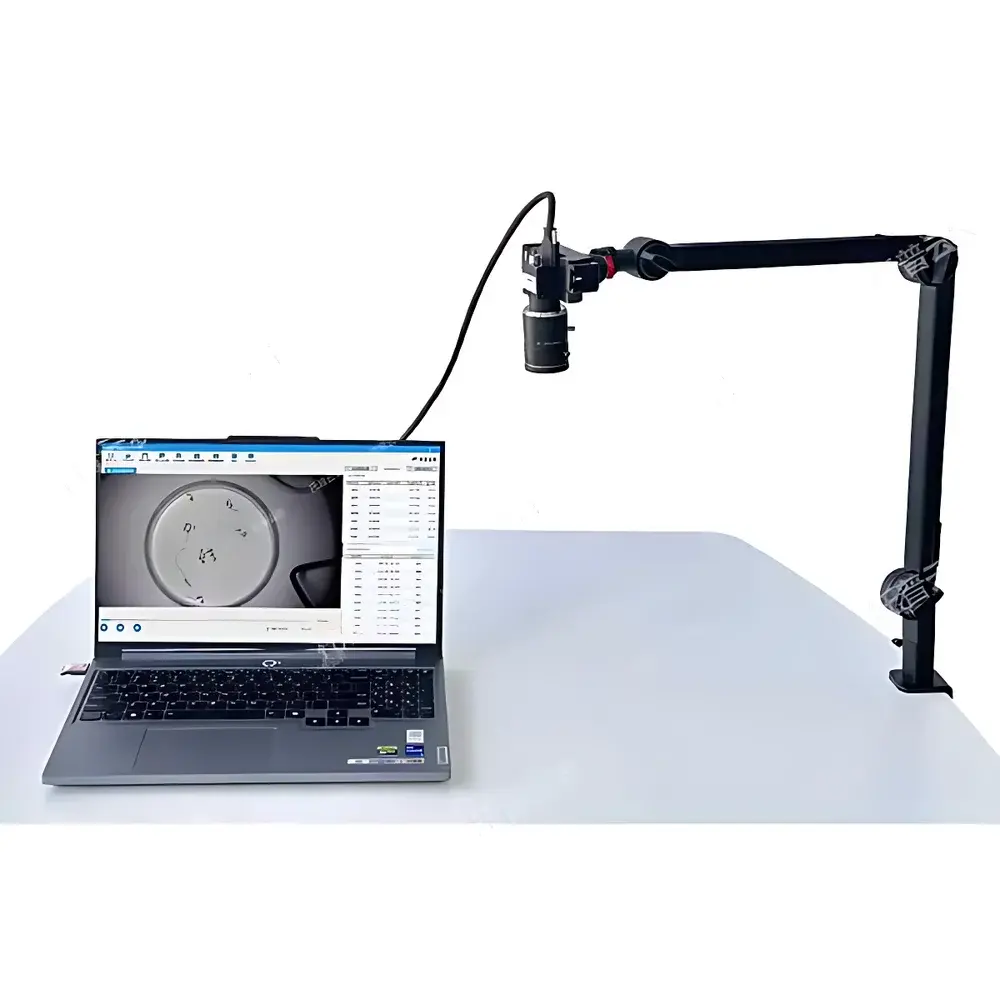
The Top Cloud-agri TP-KCXW Insect Behavioral Analysis System is a dedicated computer vision–based platform engineered for quantitative, high-temporal-resolution analysis of insect locomotion and behavioral responses in controlled laboratory environments. It operates on the principle of automated object detection and trajectory reconstruction using calibrated high-frame-rate industrial imaging combined with pixel-level motion segmentation algorithms. The system captures spatial–temporal dynamics—including position (X,Y), velocity, acceleration, path length, residence time, turning angle, pause frequency, and movement bout duration—enabling rigorous ethological quantification under standardized experimental paradigms. Designed specifically for entomological research, it supports reproducible behavioral assays aligned with established protocols in chemical ecology, neuroethology, and pest management science.
Key Features
- Dual-mode acquisition architecture: Real-time video streaming from synchronized industrial cameras (up to 120 fps) and post-hoc analysis of pre-recorded MP4/AVI files.
- Multi-target tracking engine: Capable of simultaneously detecting and tracking ≥8 individual insects with ≥95% detection accuracy and ≥95% trajectory continuity under optimal lighting and contrast conditions.
- Adaptive ROI configuration: Users define custom regions of interest (ROIs) via polygonal or rectangular masking; integrated scale calibration allows conversion from pixel to metric units (mm/cm) for absolute spatial quantification.
- Configurable morphological filters: Adjustable minimum/maximum target size thresholds (in pixels), aspect ratio constraints, and intensity-based segmentation parameters to optimize tracking fidelity across species (e.g., Drosophila melanogaster, Tribolium castaneum, Plutella xylostella).
- Behavioral annotation module: Manual event logging with timestamped entries for discrete behaviors (e.g., oviposition, feeding, grooming, aggression, mating initiation), supporting synchronized overlay with automated motion data.
- Real-time positional feedback: Live coordinate stream (X,Y,t) displayed during acquisition, with configurable alert thresholds for boundary crossing or proximity events.
- Automated trajectory visualization: Generation of heatmaps, path plots, occupancy grids, and velocity vector fields; exportable as PNG, SVG, or PDF for publication-ready figures.
Sample Compatibility & Compliance
The TP-KCXW system is validated for use with small- to medium-sized flying and crawling insects (body length: 1–15 mm), including but not limited to Diptera, Lepidoptera, Coleoptera, and Hymenoptera. Experimental chambers (e.g., Y-tube olfactometers, dual-choice arenas, oviposition dishes, wind tunnels) are compatible when mounted within the camera’s field of view and illuminated with uniform, non-flickering LED lighting (500–700 nm). While the system itself does not carry CE/FCC certification as a standalone medical device, its software architecture adheres to principles consistent with GLP-compliant data integrity: all raw video, processed coordinates, and user annotations are stored with immutable timestamps and version-controlled metadata. Exported datasets retain full traceability for audit purposes per ISO/IEC 17025 and OECD Test Guideline 223 (Daphnia sp. mobility) conceptual frameworks.
Software & Data Management
The proprietary analysis suite runs on Windows 10/11 (64-bit) and requires no cloud dependency—data remains local by default. Each experiment generates three synchronized output streams: (1) a CSV file containing time-series (X,Y,Vx,Vy,speed,acceleration,angle) at user-defined frame intervals; (2) annotated MP4 video with overlaid trajectories, ROIs, and event markers; and (3) PNG exports of statistical visualizations (e.g., dwell-time histograms, path tortuosity indices). Batch processing mode enables parallel analysis of multiple trials with consistent parameter sets. All exported files include embedded experiment metadata (date, operator ID, chamber ID, lighting condition code), facilitating integration into LIMS or ELN systems. The software supports direct import into MATLAB, Python (via pandas), and R for advanced statistical modeling (e.g., generalized linear mixed models, hidden Markov modeling of behavioral states).
Applications
- Olfactory preference assays (e.g., host-plant volatile response in moths or aphids)
- Oviposition site selection under variable substrate chemistry or texture
- Parasitoid host-searching efficiency in multi-host environments
- Feeding latency and consumption rate quantification in response to plant secondary metabolites
- Courtship sequence mapping and inter-individual interaction dynamics
- Neuropharmacological screening (e.g., locomotor effects of insecticide sublethal doses)
- Environmental stressor assessment (temperature, humidity, UV exposure)
FAQ
What camera specifications are recommended for optimal performance?
A monochrome CMOS industrial camera (≥1.3 MP resolution, global shutter, USB3.0 interface) with adjustable exposure (1–100 ms) and lens focal length matched to arena dimensions (e.g., 12 mm for 30 × 30 cm arena) is strongly advised.
Can the system distinguish between multiple insect species in the same assay?
Species-level discrimination is not automated; however, users may assign unique identifiers during manual annotation or leverage size/morphology filters to isolate cohorts prior to tracking.
Is FDA 21 CFR Part 11 compliance supported?
The current software version does not include electronic signature or audit trail modules required for regulated GxP environments; however, raw data immutability and metadata logging support retrospective validation.
How is calibration performed?
A physical reference ruler placed within the arena plane is used during setup; the software computes pixel-to-mm conversion factor and applies it uniformly across all subsequent analyses.
What is the minimum recommended lighting uniformity?
Illumination variation across the ROI should not exceed ±15% intensity (measured via grayscale histogram), with diffuse, shadow-free lighting to prevent tracking artifacts from specular reflection or motion blur.