
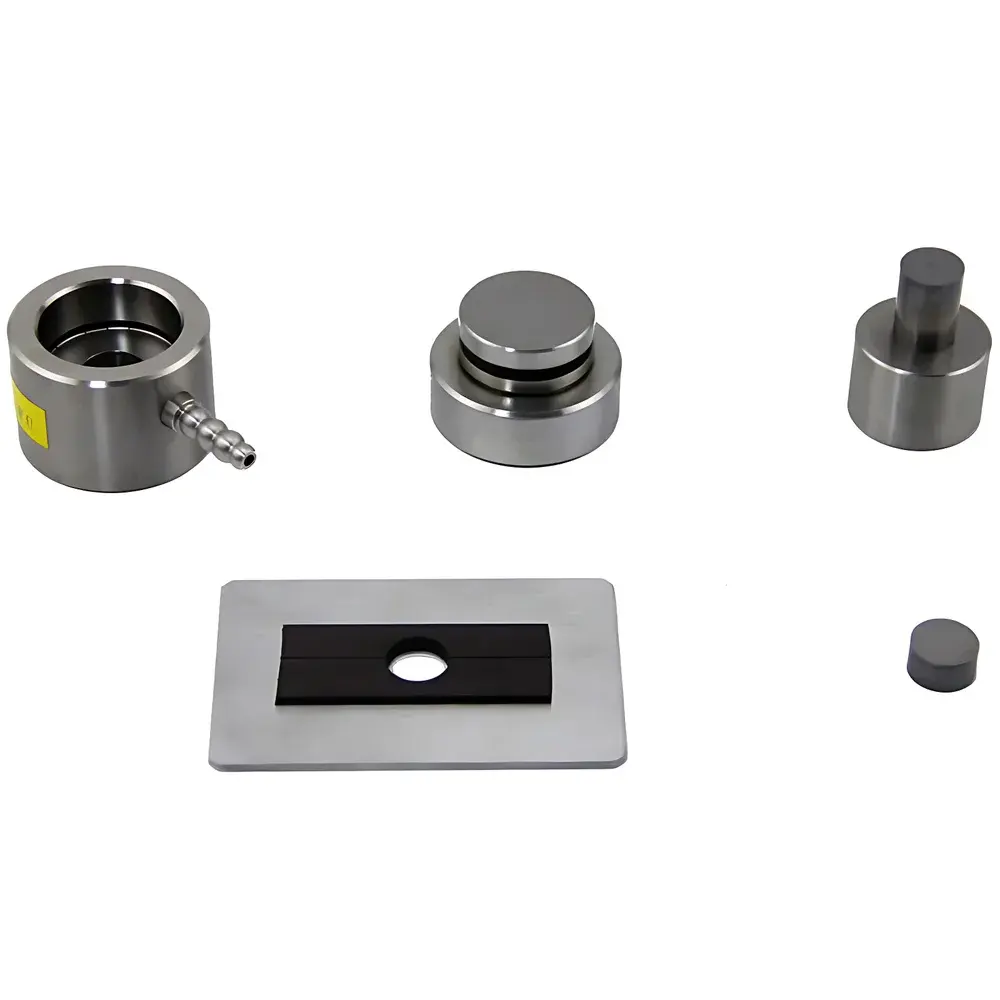
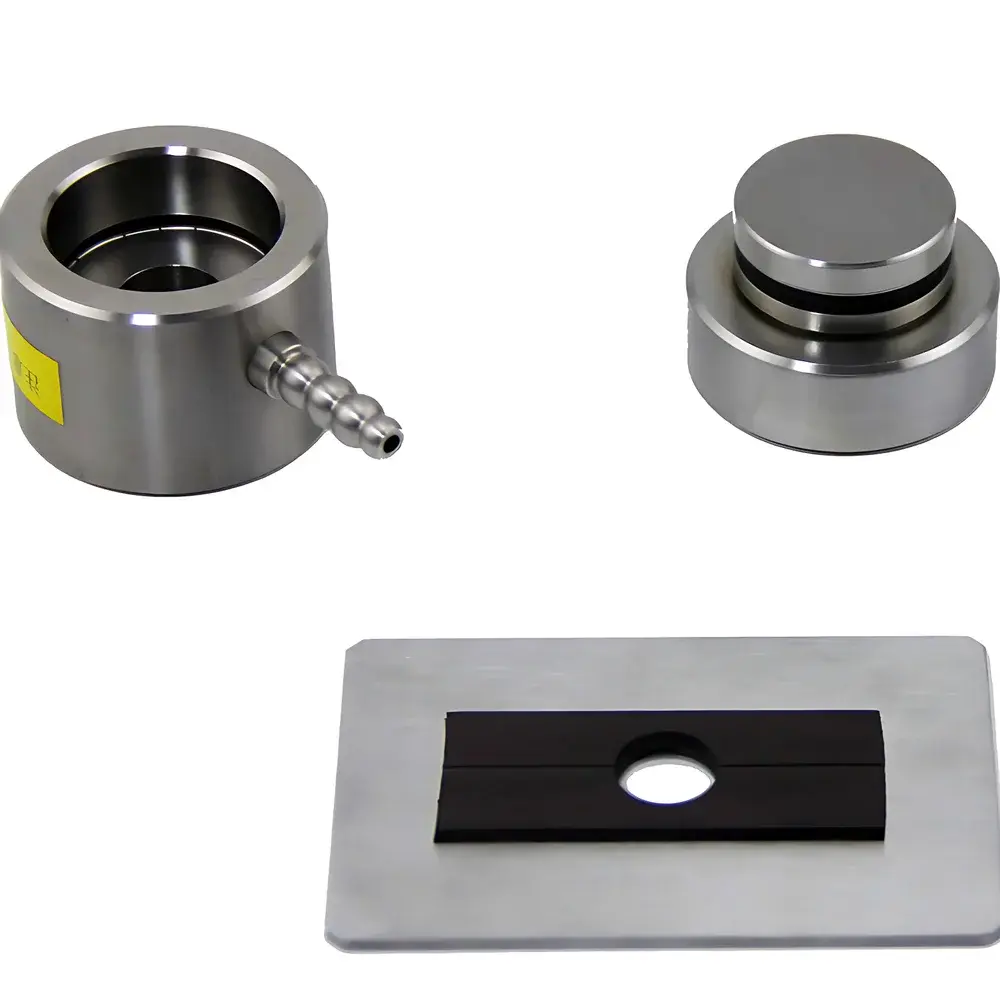
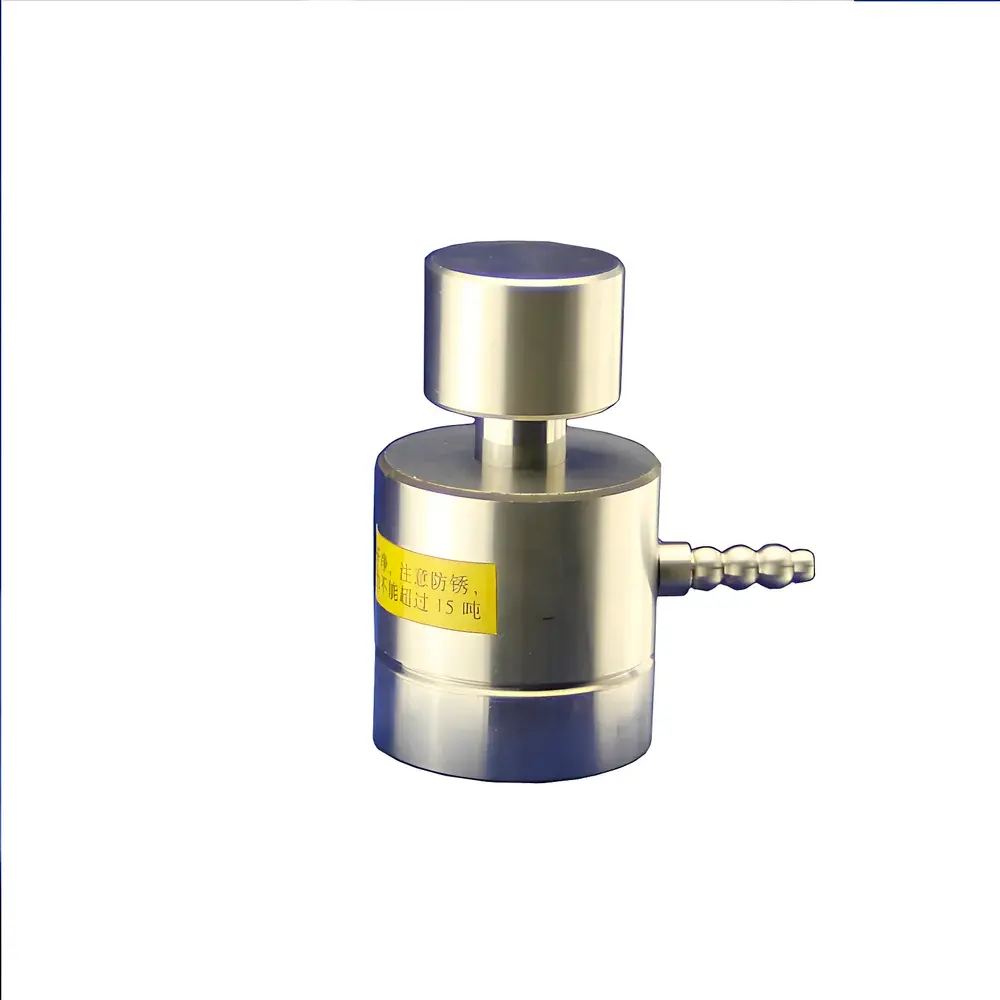
Topo HF-2B Tablet Press Die Set
| Brand | Topo (TP) |
|---|---|
| Origin | Tianjin, China |
| Manufacturer Type | Direct Manufacturer |
| Region | Domestic (China) |
| Model | HF-2B |
| Max. Applied Pressure | 15 t |
| Die Cavity Diameter | Φ13 mm |
| Punch Dimensions | Φ13 × 7 mm |
| Includes | Integrated Tablet Holder (1 pc) |
| Compatibility | FW-4A & FW-5 Hydraulic Presses |
| Application | FTIR Solid Sample Preparation |
Overview
The Topo HF-2B Tablet Press Die Set is a precision-engineered, manually operated die assembly designed specifically for the preparation of uniform, self-supporting potassium bromide (KBr) or polyethylene (PE) pellets used in Fourier Transform Infrared (FTIR) spectroscopy. It operates on the principle of uniaxial cold compaction under controlled hydraulic pressure—typically applied via compatible FW-4A or FW-5 manual hydraulic presses—to consolidate finely ground solid samples with IR-transparent matrices into optically homogeneous discs. The HF-2B is classified as a “breakaway” or “ejectable” die configuration: after compression, the pellet remains seated on the lower punch and is cleanly released upon upward withdrawal of the upper punch—enabling non-destructive retrieval and direct transfer to the spectrometer sample holder. Its compact physical footprint (overall height < 65 mm, diameter < 35 mm) ensures mechanical compatibility with standard benchtop IR spectrometers from Thermo Fisher (Nicolet), Bruker (Tensor series), Shimadzu (IRTracer), and PerkinElmer (Spectrum Two), without requiring custom adapters.
Key Features
- Ejectable die design ensures intact pellet removal post-compaction—critical for preserving spectral integrity and minimizing edge scattering in transmission-mode FTIR measurements.
- Integrated tablet holder (1 pc) is machined as a permanent component of the die body, eliminating the need for separate accessory procurement and reducing alignment variability during sample handling.
- High-tolerance stainless steel construction (AISI 420-grade hardened alloy) provides long-term dimensional stability and resistance to corrosion from halide-based matrices (e.g., KBr, CsI).
- Φ13 mm cavity diameter conforms to ISO 1833-1:2021 and ASTM E1252-98 standards for IR pellet geometry, ensuring reproducible optical path length and consistent absorbance calibration across laboratories.
- Rated for maximum static load of 15 metric tons (147 kN), supporting full-range operation of FW-4A (0–15 t) and FW-5 (0–20 t) presses while maintaining elastic deformation < 0.3 µm under rated load—verified per DIN 50109 hardness testing protocol.
Sample Compatibility & Compliance
The HF-2B die set is validated for use with common IR matrix materials including potassium bromide (KBr), cesium iodide (CsI), sodium chloride (NaCl), and low-density polyethylene (LDPE). It supports sample masses ranging from 100–200 mg for KBr pellets (target thickness: 0.7–1.2 mm) and 5–15 mg for micro-ATR-compatible PE films. All machining tolerances comply with ISO 2768-mK general tolerancing for metal parts, and surface roughness (Ra ≤ 0.4 µm on cavity walls) meets USP requirements for pharmaceutical solid-dose tooling. No regulatory certification (e.g., FDA 21 CFR Part 11) applies to passive mechanical tooling; however, the die’s traceable manufacturing origin (Tianjin, China) and material lot documentation support GLP-compliant lab recordkeeping when paired with calibrated press systems.
Software & Data Management
As a purely mechanical accessory, the HF-2B die set does not incorporate embedded electronics, firmware, or software interfaces. Its operation requires no driver installation or data synchronization. However, when used with FW-4A/FW-5 presses equipped with digital pressure transducers (e.g., optional 0.1 MPa resolution gauges), pressure-time profiles may be logged externally via USB-connected data acquisition modules (e.g., National Instruments USB-6009) and imported into LIMS or ELN platforms such as LabArchives or Benchling for audit-trail compliance. Calibration certificates for associated hydraulic presses should be retained per ISO/IEC 17025:2017 clause 6.4.10.
Applications
- Routine qualitative and quantitative FTIR analysis of pharmaceutical actives, excipients, and polymorphs in R&D and QC labs.
- Forensic identification of illicit substances (e.g., narcotics, explosives residues) using library-matching algorithms (Bio-Rad KnowItAll, Thermo OMNIC).
- Quality control of polymer additives, fillers, and degradation products in petrochemical and materials science workflows.
- Teaching laboratory demonstrations of Beer-Lambert law validation and spectral baseline correction techniques.
- Preparation of reference standards traceable to NIST SRM 1921b (KBr powder) for instrument performance verification.
FAQ
What is the maximum recommended operating pressure for the HF-2B die?
Do not exceed 15 metric tons (147 kN) during compaction. Sustained loading above this threshold risks plastic deformation of the punch faces and irreversible cavity distortion.
Can the HF-2B die be used with automated hydraulic presses?
Yes—provided the press features manual or programmable pressure hold functionality and mechanical stroke limits that prevent over-travel beyond the die’s 7 mm punch engagement depth.
How should the die be cleaned between runs?
Wipe cavity and punch surfaces with lint-free polyester wipes dampened with anhydrous ethanol; avoid ultrasonic cleaning or abrasive solvents that may degrade surface finish.
Is the integrated tablet holder replaceable?
No—the holder is a monolithic extension of the lower die body. Replacement requires full die set refurbishment through Topo’s authorized service channel.
Does the HF-2B meet ISO 8573-1 purity class requirements for compressed air tools?
Not applicable—this is a hand-operated, non-pneumatic tool. Air quality standards do not govern its use.





