
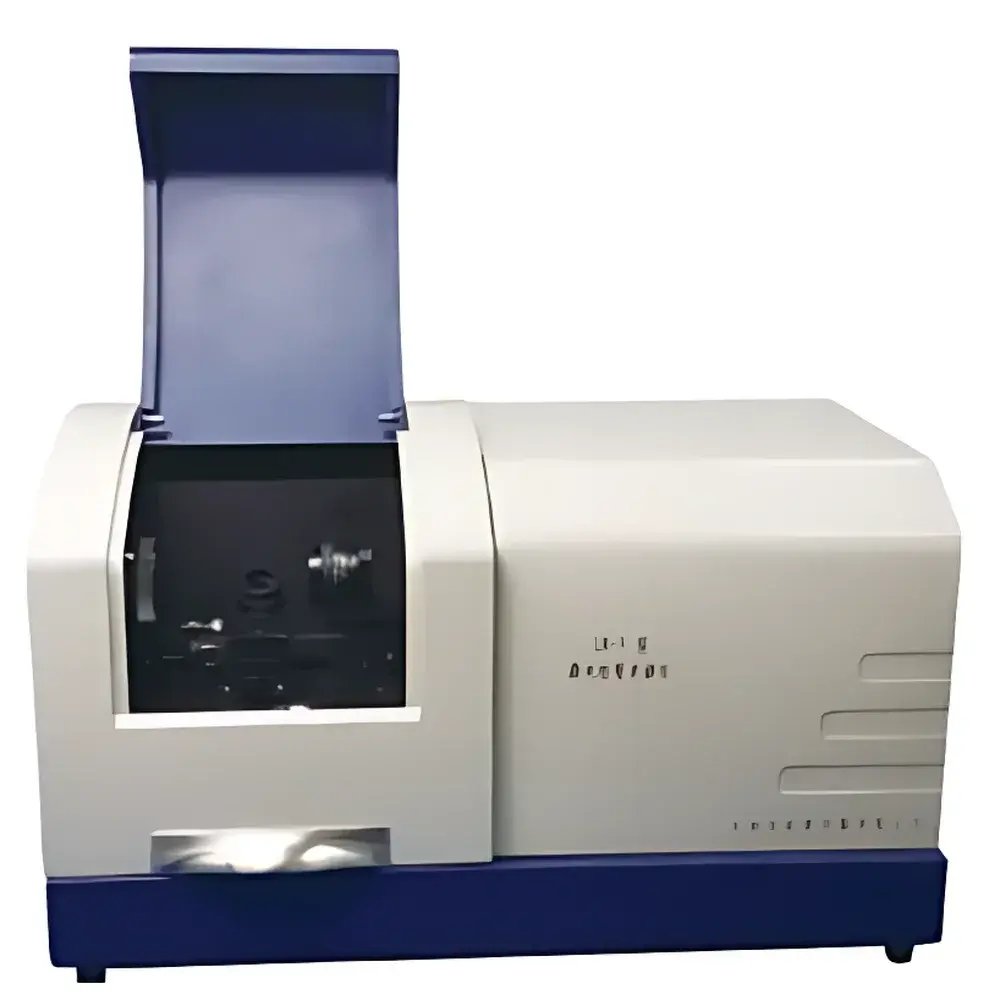
Topo LR-1/2 Advanced Educational Raman Spectrometer
| Brand | Topo (TP) |
|---|---|
| Origin | Tianjin, China |
| Manufacturer Type | OEM Manufacturer |
| Regional Classification | Domestic (China) |
| Model | LR-1 / LR-2 |
| Pricing | Upon Request |
| Spectral Repeatability | ≤0.2 nm |
| Wavelength Range (LR-1) | 300–650 nm |
| Wavelength Range (LR-2) | 300–800 nm |
| Wavelength Accuracy | ≤±0.4 nm |
| Stray Light | ≤0.3% T |
| Relative Aperture | f/5.5 |
| Grating Density | 1200 lines/mm |
| Slit Width Adjustment | 0–2 mm (continuous, motorized or manual) |
| Slit Position Resolution | 0.01 mm per division (max. 20 mm travel) |
| Spectral Bandwidth (FWHM @ 589 nm, 3 mm height × 0.2 mm width slit) | ≤0.2 nm |
| Detection Unit | Single-Photon Counting Module (SPCM) |
| Excitation Source (LR-1) | He–Ne Laser (632.8 nm, >40 mW, linearly polarized, external cavity) |
| Excitation Source (LR-2) | Tunable-Power Semiconductor Laser (532 nm, >40 mW) |
| Optional Accessories | Notch Filter, Sample Holders for Solids & Liquids, Polarizer/Analyzer Set, Calibration Standards (e.g., Silicon, Cyclohexane) |
Overview
The Topo LR-1/2 Advanced Educational Raman Spectrometer is a benchtop, research-grade dispersive Raman instrument engineered specifically for undergraduate and graduate-level spectroscopy laboratories. It operates on the principle of inelastic scattering of monochromatic light—typically from a stabilized laser source—where incident photons interact with molecular vibrational modes, resulting in energy-shifted scattered photons (Stokes and anti-Stokes). The system employs a Czerny–Turner optical layout with a high-efficiency 1200 lines/mm holographic grating, precision-adjustable slits, and a thermoelectrically cooled single-photon counting module to deliver high signal-to-noise ratio spectra across its operational range. Designed for pedagogical rigor, the LR-1/2 emphasizes optical transparency: all major components—including collimating mirrors, beam splitters, notch filters, and sample stages—are externally accessible and manually adjustable, enabling students to reconstruct the optical path, align components, and empirically verify spectral calibration and polarization effects.
Key Features
- Two configurable platform variants: LR-1 (632.8 nm He–Ne excitation) optimized for polarization-resolved Raman studies; LR-2 (532 nm diode laser) offering higher Raman cross-section sensitivity and tunable output power for broader sample compatibility.
- High spectral fidelity: wavelength repeatability ≤0.2 nm and accuracy ≤±0.4 nm ensure reliable inter-laboratory comparison and longitudinal experiment reproducibility—critical for student-led quantitative assignments.
- Modular slit mechanism with 0.01 mm resolution and 20 mm total travel enables precise control over spectral resolution vs. throughput trade-offs; slit height adjustment supports optimal light collection geometry for varied sample geometries.
- Dedicated polarization optics package (included with LR-1) allows acquisition of depolarization ratios (ρ = I⊥/I∥) for symmetry analysis of vibrational modes—directly supporting curriculum in group theory and molecular symmetry.
- Robust mechanical architecture with kinematic mounts and vibration-damped base minimizes thermal drift and mechanical misalignment during extended acquisition sessions typical in teaching labs.
- Integrated notch filter option (standard on LR-2, optional on LR-1) provides >OD6 Rayleigh rejection, essential for detecting weak Raman signals adjacent to intense elastic peaks.
Sample Compatibility & Compliance
The LR-1/2 accommodates solid powders, crystalline wafers, thin films, bulk liquids, and solution-phase samples via interchangeable holders—including magnetic sample stages, cuvette adapters, and reflective substrate mounts. All optical paths comply with Class 3B laser safety requirements (IEC 60825-1:2014), with integrated interlocks, key-switch enablement, and beam shutter controls. Instrument design adheres to general laboratory equipment standards under ISO/IEC 17025:2017 for test and calibration laboratories, supporting documented traceability through NIST-traceable calibration standards (e.g., silicon Raman peak at 520.7 cm−1). While not certified for GMP or FDA-regulated environments, the system’s stable wavelength calibration, audit-ready software logs, and exportable metadata (including acquisition time, slit settings, laser power, integration time) meet baseline GLP documentation expectations for academic and pre-clinical research workflows.
Software & Data Management
The proprietary Windows-based acquisition and analysis suite provides intuitive GUI-driven operation without requiring command-line proficiency. Core functions include real-time spectrum preview, multi-scan accumulation with cosmic-ray rejection, automatic baseline correction (Asymmetric Least Squares), peak fitting (Gaussian/Lorentzian convolution), and library search against embedded reference databases (e.g., RRUFF, SDBS). All raw data are stored in vendor-neutral HDF5 format with embedded metadata headers compliant with the ISA-Tab framework, ensuring long-term readability and interoperability with Python (NumPy, SciPy), MATLAB, or open-source tools like OriginLab or Igor Pro. Software supports 21 CFR Part 11–compatible user authentication, electronic signatures, and immutable audit trails for experimental records—configurable for institutional IT policy alignment.
Applications
- Undergraduate physical chemistry labs: Quantitative determination of vibrational mode symmetries via depolarization ratio measurements using the LR-1 platform.
- Materials science instruction: Identification of crystal phases (e.g., anatase vs. rutile TiO2), stress/strain mapping in semiconductors, and defect characterization in graphene and transition metal dichalcogenides.
- Pharmaceutical education: Polymorph screening of active pharmaceutical ingredients (APIs) such as carbamazepine or paracetamol, emphasizing spectral fingerprinting and peak shift interpretation.
- Forensic science modules: Non-destructive identification of dyes, pigments, and illicit substances (e.g., narcotics, explosives precursors) in trace quantities.
- Environmental chemistry labs: Detection of microplastics (PET, PE, PP) in environmental water filtrates using surface-enhanced Raman scattering (SERS) substrates (optional add-on).
FAQ
What laser safety class does the LR-1/2 operate under, and what protective measures are included?
The system operates as a Class 3B laser product per IEC 60825-1:2014. It incorporates a fail-safe mechanical shutter, dual-interlock circuitry on the laser housing and sample compartment, and a red warning LED that illuminates when the laser is active.
Can the LR-2 accommodate alternative excitation wavelengths beyond 532 nm?
Yes—the optical design supports modular laser coupling; users may integrate compatible fiber-coupled lasers (e.g., 785 nm for reduced fluorescence in biological samples) with appropriate notch filter recalibration and software wavelength mapping.
Is spectral calibration traceable to international standards?
Yes—each unit ships with a calibrated silicon wafer standard; users may perform daily validation using the 520.7 cm−1 Raman band, traceable to NIST SRM 2241.
Does the software support batch processing of multiple spectra for statistical analysis?
Yes—the analysis module includes scripting capability (via embedded Python API) for automated peak intensity normalization, PCA preprocessing, and clustering across datasets of up to 1,000 spectra.
What maintenance is required for long-term wavelength stability?
No routine optical realignment is needed; however, annual verification of grating encoder linearity and detector dark-current drift is recommended using the built-in diagnostic utility and provided calibration references.





