
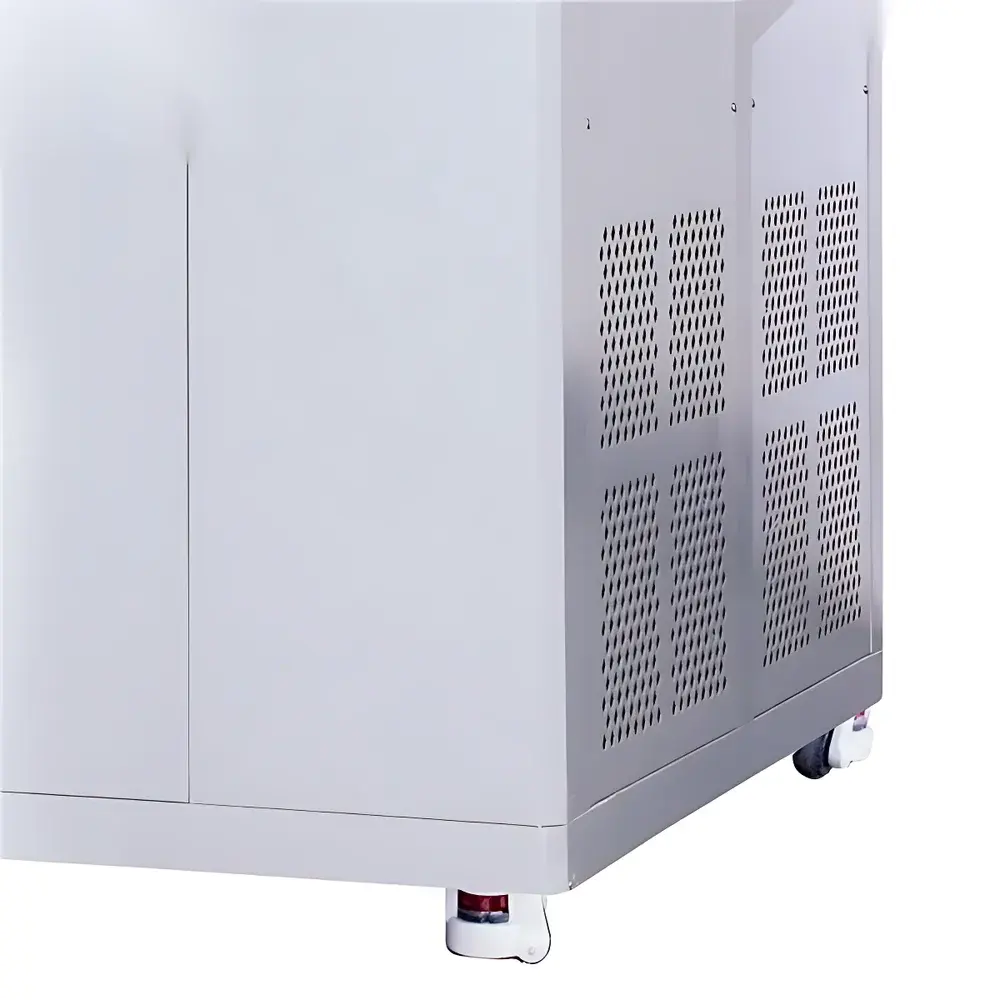
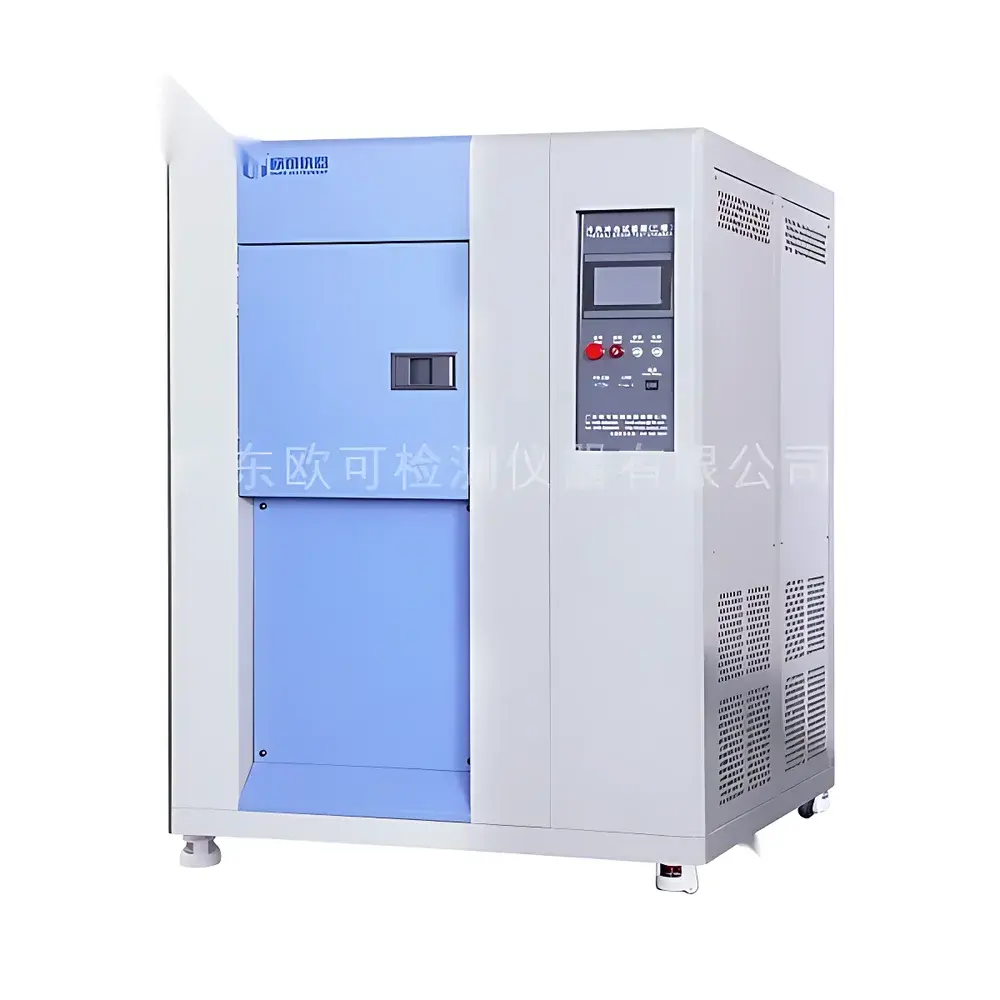
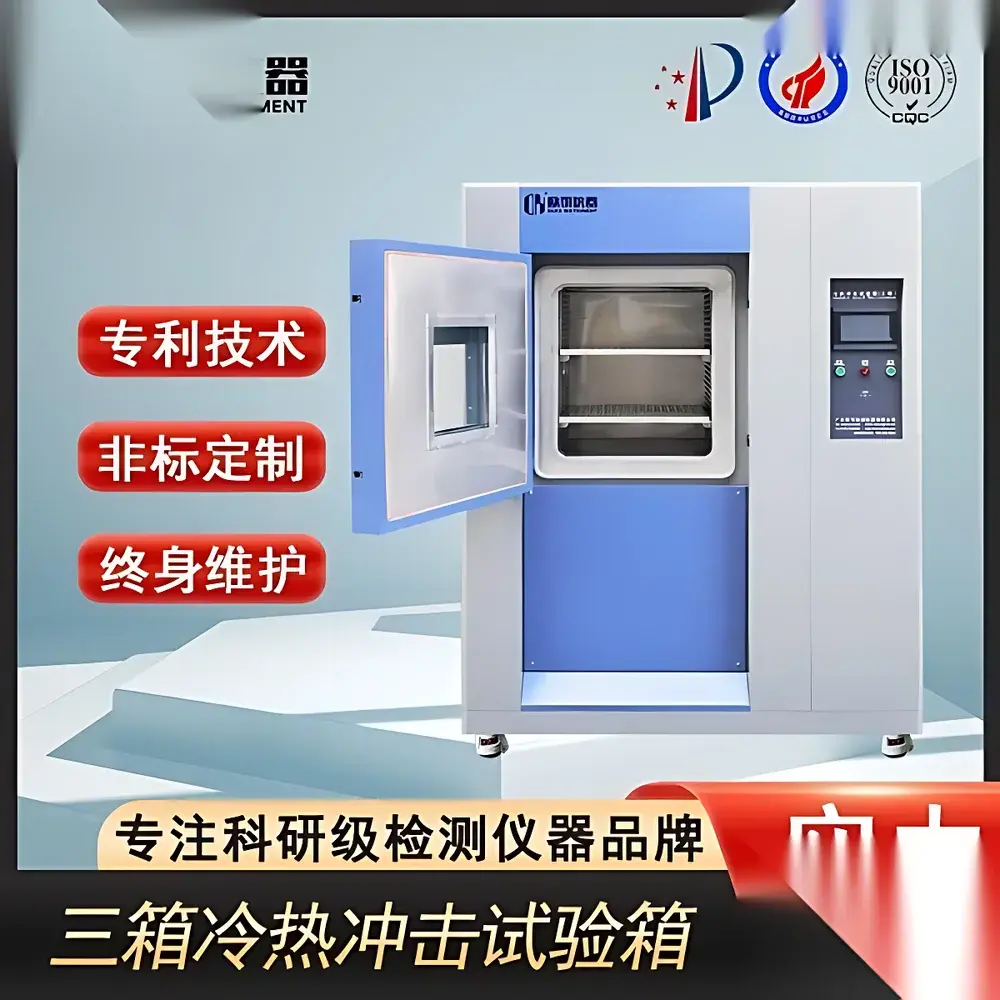
Touchscreen Thermal Shock Test Chamber OK-HH Series
| Key | Brand: Other Brands |
|---|---|
| Origin | Imported |
| Manufacturer Type | Authorized Distributor |
| Price | USD 12,500 (FOB) |
| Temperature Range (Hot Zone) | RT to +200 °C |
| Temperature Range (Cold Zone) | RT to −70 °C |
| Test Zone Range | +60 °C to +150 °C (hot shock), 0 °C to −45/−55/−65 °C (cold shock) |
| Switching Mechanism | Pneumatic air-door actuated static sample transfer |
| Recovery Time | ≤5 min |
| Temperature Uniformity | ±2.0 °C |
| Temperature Control Accuracy | ±0.5 °C |
| Refrigeration System | Dual-stage cascade with semi-hermetic compressors (R404A/R23) |
| Internal Construction | Mirror-finish SUS304 stainless steel |
| Insulation | High-density fire-retardant PU foam |
| Power Supply | AC 380 V ±5%, 50 Hz ±0.5 Hz, 3-phase 5-wire |
Overview
The Touchscreen Thermal Shock Test Chamber OK-HH Series is an engineered environmental test system designed to evaluate the reliability and structural integrity of materials and components under rapid, repetitive transitions between extreme high and low temperatures. Based on the principle of accelerated thermal stress induction—leveraging controlled, high-rate temperature cycling to simulate decades of field exposure in hours—the chamber subjects test specimens to defined thermal shock profiles per internationally recognized standards including IEC 60068-2-14 (Test N), MIL-STD-810G Method 503.5, and GJB 150.5A–2009. Unlike conventional temperature cycling chambers, this system implements a true two- or three-zone architecture to eliminate thermal inertia delays and ensure precise, repeatable transition rates (typically >10 °C/s within the test zone during door switching). The unit operates via pneumatic air-door isolation between thermally stabilized hot and cold reservoirs, enabling static sample positioning during testing—a configuration critical for maintaining mechanical stability, minimizing vibration-induced artifacts, and ensuring compliance with GLP-aligned test documentation requirements.
Key Features
- Intuitive 10.4-inch industrial-grade touchscreen HMI with multilingual interface (English, German, Chinese), real-time trend graphs, and programmable profile sequencing (up to 99 segments, 999 cycles)
- Triple-zone configuration (OK-HH-150/225 models): independent hot chamber (RT to +200 °C), cold chamber (RT to −70 °C), and insulated test chamber—enabling zero-load thermal drift and <5-minute recovery time between shocks
- Dual-stage cascade refrigeration system utilizing semi-hermetic compressors (imported German design), R404A (high-stage) and R23 (low-stage) refrigerants, and water-cooled condensation requiring external cooling tower (10 m³/h flow capacity)
- High-efficiency insulation: 150 mm thick polyurethane foam with flame-retardant grade ≥UL94 V-0 and thermal conductivity ≤0.022 W/m·K
- Structural integrity assurance: interior chamber fabricated from electropolished SUS304 mirror-finish stainless steel; exterior housing in powder-coated SUS304 or optional painted carbon steel
- Comprehensive safety architecture: overtemperature cutoff, refrigerant pressure monitoring, door interlock, emergency stop, and leak detection for refrigerant and cooling water circuits
Sample Compatibility & Compliance
The OK-HH Series accommodates a broad range of specimen geometries—from PCB assemblies and automotive sensors to aerospace composites and medical device housings—with internal volumes spanning 49 L to 225 L. Standard configurations include two-tier SUS304 adjustable shelves and a single 50 mm diameter cable port with silicone gasket. All models are certified to meet electromagnetic compatibility (EMC) per EN 61326-1 and safety per EN 61010-1. The chamber supports full traceability in regulated environments: integrated audit trail functionality logs all parameter changes, user logins, alarm events, and calibration actions—fully compliant with FDA 21 CFR Part 11 requirements when paired with validated software. It satisfies test method validation criteria per ISO/IEC 17025:2017 Annex A.2 and is routinely deployed in laboratories accredited to ISO/IEC 17025 for environmental testing services.
Software & Data Management
The embedded control firmware supports data export in CSV and XML formats, with timestamped records aligned to UTC. Optional PC-based software (OK-DataLink Pro v4.2) enables remote monitoring, multi-chamber fleet management, statistical process control (SPC) charting, and automated report generation compliant with ASTM E2918 and ISO 10012. All data—including setpoints, actual chamber temperatures, door status, compressor runtime, and alarm history—is stored locally on industrial-grade SD card (16 GB, locked write mode) with configurable retention policies (default: 180 days). Software modules support electronic signature workflows, role-based access control (RBAC), and integration with LIMS platforms via OPC UA or RESTful API.
Applications
This thermal shock chamber is routinely applied in qualification testing across multiple sectors: verification of solder joint reliability in automotive ECUs per QC/T 17–2021; validation of encapsulant adhesion in power electronics under JEDEC JESD22-A106; screening of polymer housing embrittlement in consumer IoT devices; assessment of coating delamination on turbine blades per AMS 2750E; and qualification of battery module thermal interface materials (TIMs) under UN 38.3 Section 4.4.1. Its reproducible shock profiles make it suitable for failure analysis root cause identification—particularly for identifying intermetallic growth, die attach cracking, or moisture-induced popcorning in hermetically sealed packages.
FAQ
What is the difference between two-box and three-box thermal shock configurations?
Two-box systems use a single test chamber that alternates exposure by moving the specimen between hot and cold zones via a motorized basket; three-box systems maintain static samples in a dedicated test chamber while rapidly transferring thermal energy via air doors—reducing mechanical stress and improving repeatability.
Is external cooling water infrastructure mandatory?
Yes. The dual-stage cascade refrigeration system requires a continuous supply of chilled water at 10 m³/h flow rate and ≤32 °C inlet temperature, delivered via an externally installed cooling tower. This is non-negotiable for achieving and sustaining −70 °C cold zone performance.
Can the chamber be validated for IQ/OQ/PQ protocols?
Yes. The system ships with a Factory Acceptance Test (FAT) report, sensor calibration certificates (NIST-traceable Pt100 probes), and a comprehensive URS-compatible validation protocol template aligned with ISO 13485 and ICH Q5C.
Does the controller support custom thermal shock profiles beyond standard test methods?
Yes. Users may define arbitrary ramp rates, dwell times, cycle counts, and conditional logic (e.g., “pause if cold zone temp > −68 °C”) using the built-in profile editor—without requiring third-party software.
What maintenance intervals are recommended for the refrigeration system?
Compressor oil analysis and filter-drier replacement every 2,000 operating hours; annual inspection of refrigerant charge balance and heat exchanger fouling; biannual verification of door seal compression force and pneumatic actuator response time.



