
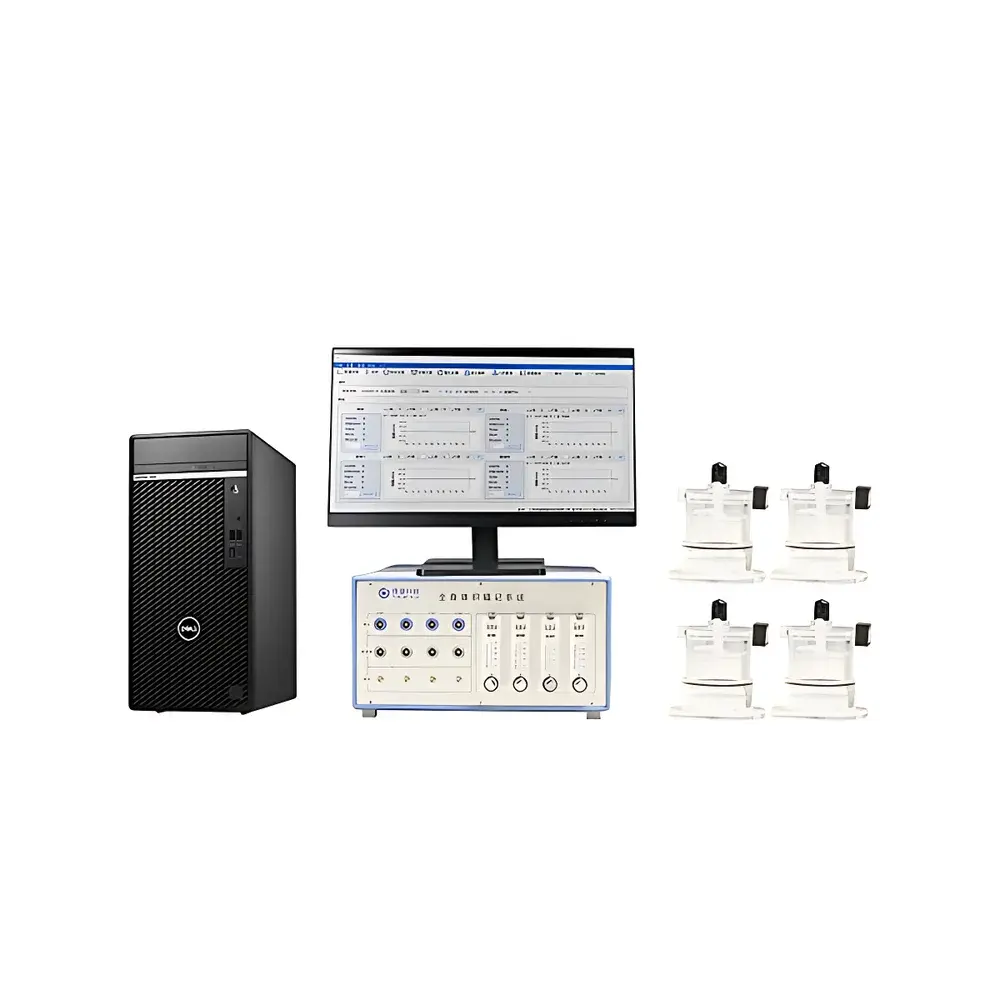
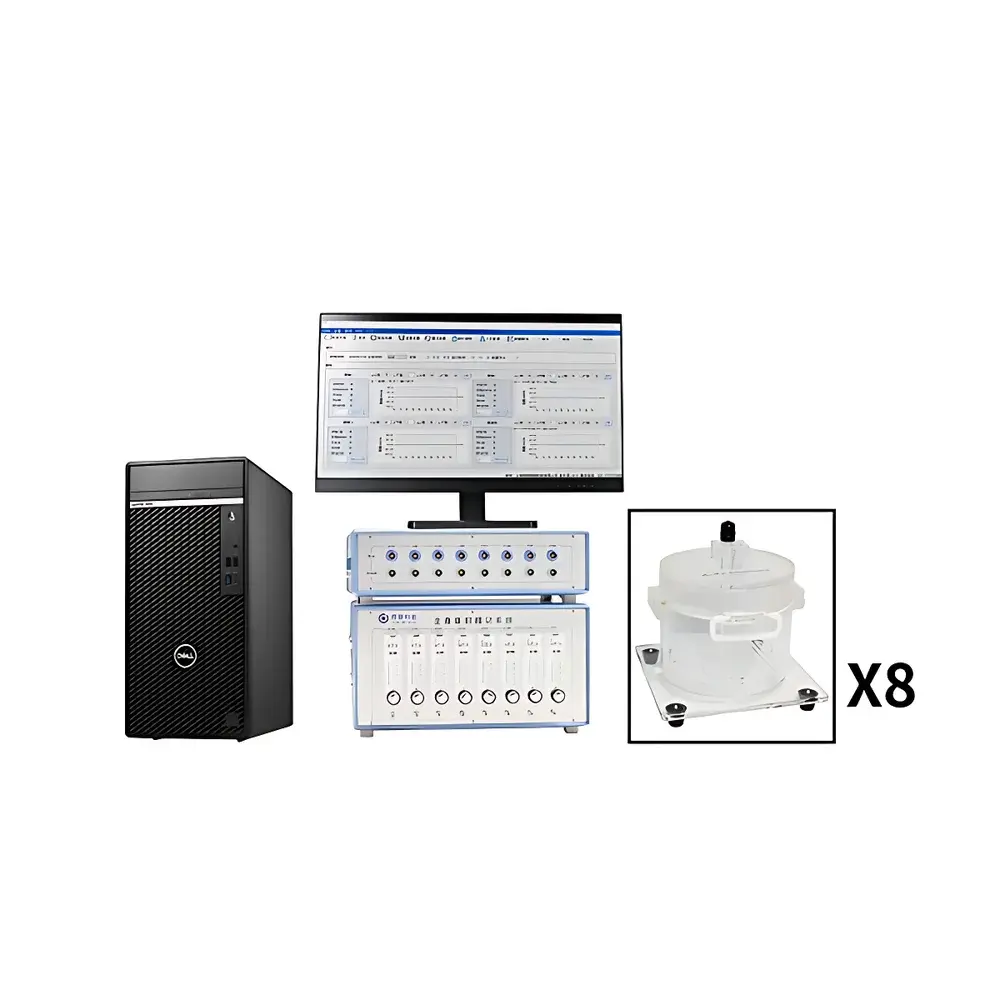
TOW-INT WBP Whole Body Plethysmography System
| Brand | TOW-INT |
|---|---|
| Origin | Shanghai, China |
| Manufacturer | Yes |
| Country of Origin | China |
| Model | WBP |
| Pricing | Upon Request |
Overview
The TOW-INT WBP Whole Body Plethysmography System is a non-invasive, unrestrained respiratory function assessment platform engineered for longitudinal, high-fidelity monitoring of conscious, freely moving small to medium-sized laboratory animals. Based on the principle of constant-volume (barometric) whole-body plethysmography, the system measures real-time pressure fluctuations within a sealed chamber induced by animal respiration—enabling derivation of key ventilatory parameters without surgical intervention, tracheal intubation, or general anesthesia. This methodology eliminates confounding physiological artifacts associated with anesthetic agents (e.g., suppression of central respiratory drive, modulation of airway smooth muscle tone, and interference with neuroimmune signaling), thereby preserving natural breathing patterns and enabling robust assessment of airway hyperresponsiveness (AHR), bronchoconstriction dynamics, and respiratory phenotyping in disease models—including viral pneumonitis (e.g., SARS-CoV-2, SARS-CoV, MERS-CoV), allergic asthma, COPD, pulmonary fibrosis, and hypoxia-induced respiratory dysfunction.
Key Features
- Modular multi-channel architecture supporting 1–64 independent chambers, scalable for high-throughput screening or longitudinal cohort studies.
- Integrated feeding and hydration ports enabling continuous, unattended recording over extended durations (≥72 h), critical for circadian rhythm analysis or chronic therapeutic intervention studies.
- Automated baseline drift compensation and real-time offset correction to maintain signal stability across prolonged sessions.
- High-frequency oscillatory nebulization interface compatible with aerosolized challenge agents (e.g., methacholine, histamine, allergens) for standardized AHR provocation testing.
- Acoustically damped chamber design with vibration-isolated mounting and active thermal buffering to minimize environmental noise coupling and enhance signal-to-noise ratio (SNR).
- Onboard auto-calibration routine using precision volume displacement actuators, eliminating manual calibration drift and reducing inter-operator variability.
- Gas-switching capability supporting up to four distinct gas mixtures (e.g., normoxic, hypoxic, hypercapnic, or pharmacologically enriched atmospheres) via integrated solenoid manifolds and mass flow controllers.
- Optional integration with external gas sources (e.g., medical-grade N₂, O₂, CO₂) for controlled hypoxia/reoxygenation paradigms per ISO 8573-1 and ASTM D6195 standards.
Sample Compatibility & Compliance
The WBP system accommodates a broad spectrum of preclinical species—including mice (C57BL/6, BALB/c, DBA/2), rats (Sprague-Dawley, Wistar), guinea pigs, rabbits, cats, dogs, minipigs, and non-human primates—with chamber configurations optimized for body mass, thermoregulatory behavior, and respiratory kinetics. All hardware components comply with IEC 61000-6-3 (EMC emission limits) and IEC 61000-6-2 (immunity to electrostatic discharge and RF fields). Software operation adheres to ALPAC (Association for Laboratory Animal Science) guidelines for humane endpoints and supports audit trails compliant with FDA 21 CFR Part 11 for electronic records and signatures. Data acquisition workflows are structured to align with GLP principles for regulatory submissions (e.g., OECD TG 412, ISO 10993-10).
Software & Data Management
The proprietary WBP Analysis Suite provides real-time waveform visualization, automated event detection (inspiratory/expiratory onset, peak flow identification), and batch processing of time-series data. Raw pressure traces are sampled at ≥1 kHz with 16-bit resolution and stored in HDF5 format for archival integrity. Derived parameters—including tidal volume (VT), minute ventilation (V̇E), peak inspiratory flow (PIF), peak expiratory flow (PEF), enhanced pause (PenH), EF50, respiratory frequency (f), and relaxation time (TR)—are computed using validated algorithms based on the Buxton–Macklem model and referenced against published murine normative databases (J Appl Physiol, 2017;122:1173–1185). Export options include CSV, Excel (.xlsx), and plain-text formats compatible with MATLAB, R, Python (pandas), and commercial biostatistics platforms (GraphPad Prism, SAS). Version-controlled software updates are delivered via secure HTTPS with SHA-256 hash verification.
Applications
- Longitudinal tracking of respiratory decline in SARS-CoV-2–infected murine models (e.g., K18-hACE2, BALB/c PR/8 vs. X31 strains) from day 2–15 post-infection.
- Quantification of therapeutic efficacy for antiviral agents (e.g., remdesivir), immunomodulators (e.g., LPV/RTV-IFNβ), or anti-fibrotics in bleomycin- or TGF-β–induced lung injury.
- Preclinical evaluation of inhaled biologics, siRNA nanoparticles, or mucolytic formulations targeting IL-11, STC2, or PHLPP1 pathways (Nat Commun 2025;16:8551; Cell Rep 2025;44:109218).
- Phenotypic characterization of genetically modified models (e.g., Trx2/Myo19/Drp1 pathway mutants) in ARDS, COPD, or sleep-disordered breathing (J Pharm Anal 2024;101039; Adv Sci 2025;12:e06182).
- Assessment of environmental toxicant impacts (PM2.5, arsenic, benzo[a]pyrene) on airway inflammation and neural control of breathing (Environ Pollut 2025;366:125467; Ecotox Environ Safe 2025;290:117764).
FAQ
What species and size ranges are supported?
The WBP system supports mice (15–35 g), rats (150–500 g), guinea pigs (300–800 g), rabbits (1–4 kg), cats (2–5 kg), dogs (5–15 kg), minipigs (15–30 kg), and juvenile non-human primates (2–8 kg), with chamber volumes ranging from 0.5 L to 25 L.
Can the system quantify cough or sneeze events?
Yes—optional cough detection module employs high-bandwidth acoustic signature analysis coupled with pressure transient morphology classification (sensitivity >92%, specificity >89% per J Appl Physiol 2020;129:1238–1249).
Is synchronization with telemetry systems possible?
Yes—integrated TTL pulse I/O enables hardware-synchronized acquisition of ECG, core temperature, locomotor activity, and video streams (via GenICam-compliant cameras) with sub-millisecond jitter.
Does the software support GLP-compliant data archiving?
Yes—the system generates immutable audit logs, user authentication tokens, electronic signatures, and version-stamped raw data packages meeting FDA 21 CFR Part 11 and EU Annex 11 requirements.
Can custom gas mixtures be delivered during recording?
Yes—up to four independently controlled gas lines (O₂, N₂, CO₂, medical air) can be sequenced programmatically with ramped transitions and dwell times configurable to ±0.1 s precision.
Related Products






