
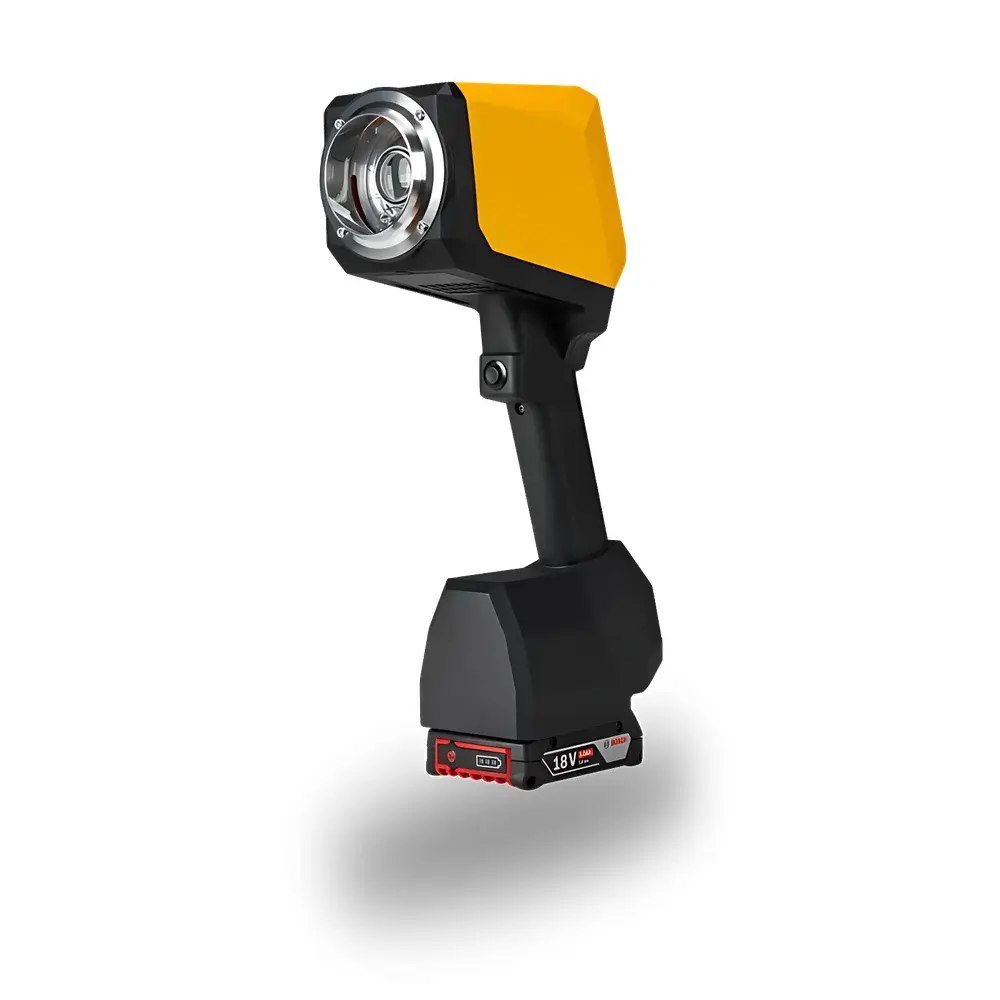
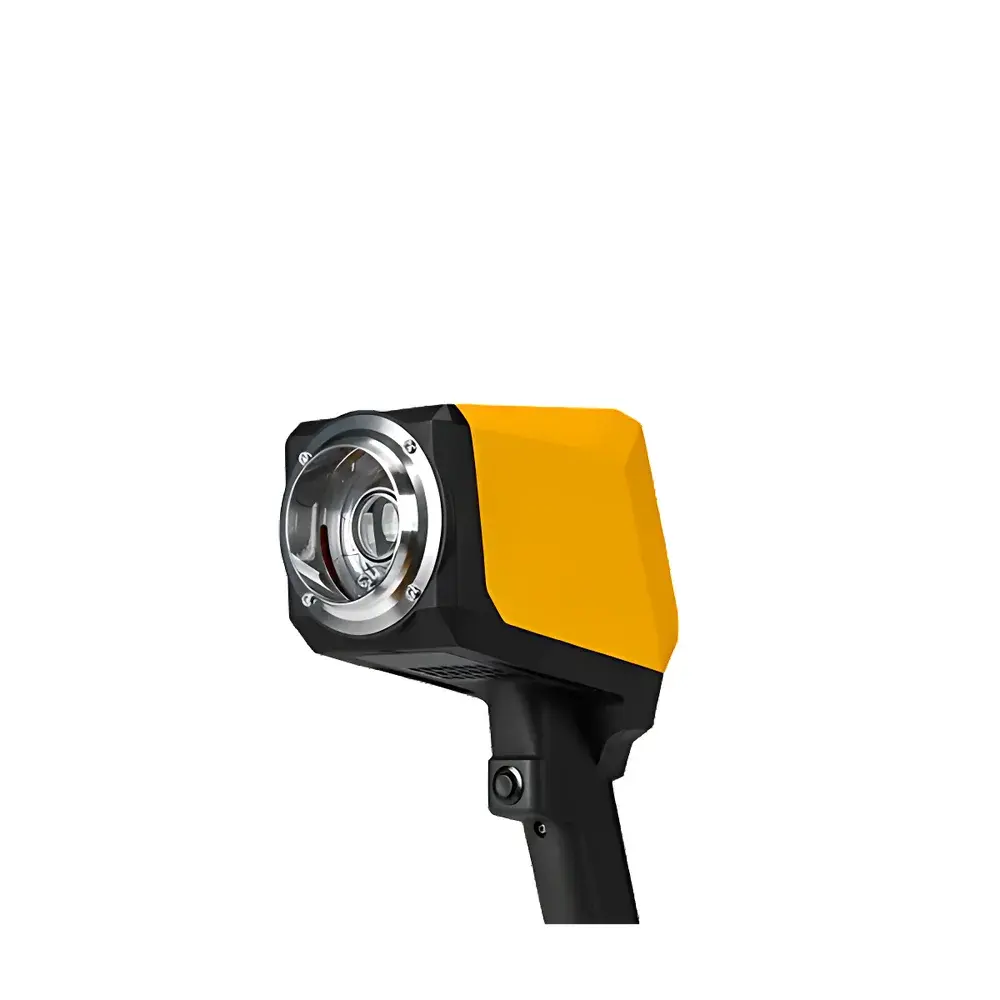
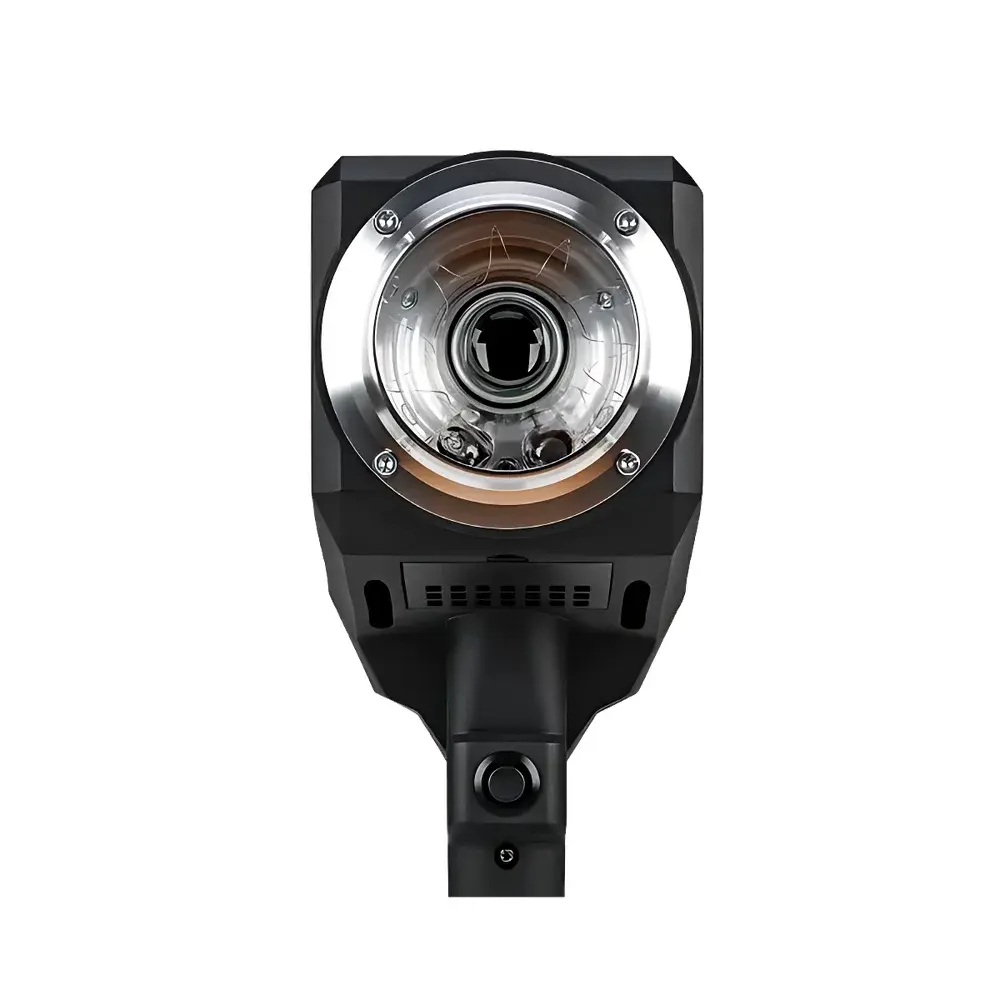
TQC Sheen CoatmasterFlex Non-Contact Coating Thickness Analyzer
| Brand | TQC Sheen |
|---|---|
| Origin | Netherlands |
| Model | CoatmasterFlex |
| Measurement Principle | Active Thermographic Optical (ATO) |
| Measurable Substrates | Metal, Rubber, Ceramic, Glass, Plastic, Wood |
| Wet Film Range | 1–400 µm |
| Dry/Powder Film Range | 1–1000 µm |
| Measurement Speed | ≥20 ms per reading |
| Standoff Distance Tolerance | 2–15 cm |
| Angular Tolerance | ±70° |
| Relative Standard Deviation (RSD) | <1% |
| Color Independence | Valid for all colors including white |
| Data Access | Real-time via ERP integration and web browser |
| Weight (without battery) | 1.3 kg |
| Dimensions | 374 × 91 × 203 mm |
| Compliance | DIN EN 15042-2 |
Overview
The TQC Sheen CoatmasterFlex is a handheld, non-contact coating thickness analyzer engineered for real-time process control in industrial finishing applications. It employs Active Thermographic Optical (ATO) measurement technology — a proprietary photothermal method that induces transient thermal excitation on the coating surface using pulsed LED illumination, then captures the resulting thermal decay signature with high-speed infrared detection. This principle enables direct, absolute thickness quantification without physical contact or calibration against reference standards, independent of substrate conductivity, roughness, or electromagnetic interference. Unlike eddy current or magnetic induction instruments, the CoatmasterFlex delivers reliable readings on non-metallic substrates including plastics, wood, glass, rubber, and ceramics — making it uniquely suited for multi-material production lines in automotive, aerospace, architectural coatings, and powder coating facilities.
Key Features
- True non-contact operation: No probe wear, zero risk of surface damage or contamination during inline or offline inspection.
- Wide dynamic range: Simultaneously supports wet film thickness (WFT) measurement from 1 to 400 µm and cured/powder film thickness (DFT) from 1 to 1000 µm — eliminating the need for separate wet/dry instruments.
- Robust geometric tolerance: Maintains measurement integrity at standoff distances between 2–15 cm and angular deviations up to ±70°, enabling rapid scanning of complex geometries, recessed areas, and curved surfaces without repositioning.
- Color-agnostic performance: Accurately measures white, metallic, fluorescent, and highly pigmented coatings — critical for quality assurance in decorative and functional finishes where optical reflectivity varies widely.
- High-speed acquisition: Delivers individual thickness readings in ≤20 ms, supporting continuous monitoring on conveyorized curing lines or robotic spray booths.
- Integrated traceability: Built-in timestamping, GPS tagging (optional), and unique test ID assignment ensure full audit readiness for ISO 9001, IATF 16949, and AS9100-compliant quality systems.
Sample Compatibility & Compliance
The CoatmasterFlex is validated for use across diverse industrial substrates and coating chemistries, including thermoset and thermoplastic powder coatings, waterborne and solvent-based liquid paints, UV-curable systems, and electrodeposited primers. Its ATO methodology eliminates interference from substrate conductivity, magnetism, or surface topography — a key advantage over conventional magnetic induction or eddy current gauges. The instrument complies with DIN EN 15042-2 for non-destructive thickness measurement of organic coatings on non-magnetic substrates and is routinely deployed in environments requiring adherence to ASTM D7091, ISO 2808, and SSPC-PA 2 protocols. All firmware and calibration routines are designed to support GLP/GMP data integrity requirements, including electronic signature capability and 21 CFR Part 11-compliant audit trails when integrated with validated LIMS or MES platforms.
Software & Data Management
The CoatmasterFlex operates natively with TQC’s CloudConnect platform, enabling secure, role-based access to measurement data via standard web browsers or enterprise ERP systems (e.g., SAP, Oracle). Raw readings include thickness value, confidence index, thermal decay curve metadata, ambient temperature, and operator ID. Batch reports can be auto-generated in PDF or CSV format with configurable pass/fail thresholds, statistical process control (SPC) charts (X̄-R, Cpk), and deviation heatmaps aligned to CAD part geometry. Data synchronization is encrypted (TLS 1.2+) and supports offline logging with automatic cloud sync upon network restoration. Firmware updates and calibration validation logs are version-controlled and digitally signed to maintain regulatory compliance throughout the device lifecycle.
Applications
- Pre-cure optimization: Quantify wet film or powder layer thickness prior to thermal curing to prevent under-film defects (e.g., orange peel, pinholes) or over-application (e.g., sagging, cratering).
- Process validation: Monitor consistency across spray gun parameters, booth airflow, and conveyor speed — reducing material waste by up to 30% compared to traditional gravimetric or destructive testing methods.
- First-article inspection: Verify coating uniformity on prototype parts with complex curvature or mixed-material assemblies where conventional probes fail.
- Supplier quality audits: Deploy portable units at Tier-1 supplier sites to enforce contractual thickness tolerances without requiring lab-grade infrastructure.
- Sustainability reporting: Generate auditable thickness reduction metrics for ESG documentation, supporting VOC emission targets and circular economy initiatives.
FAQ
Does the CoatmasterFlex require substrate-specific calibration?
No. The ATO method is inherently substrate-compensated; factory calibration is universal across metals, plastics, wood, and composites.
Can it measure on hot substrates exiting ovens?
Yes — operational range extends to +120°C surface temperature, with active thermal drift compensation enabled.
Is training required for operators?
Minimal. The intuitive touchscreen interface and guided workflow enable proficient use within 20 minutes; advanced SPC and reporting functions are accessible via optional certified training modules.
How is measurement uncertainty quantified?
Each reading includes a real-time confidence index derived from signal-to-noise ratio, thermal decay linearity, and spatial homogeneity — traceable to NIST-traceable reference standards.
What maintenance is required?
None beyond periodic lens cleaning and annual verification using TQC’s certified reference plaques; no consumables or recalibration intervals mandated.



