
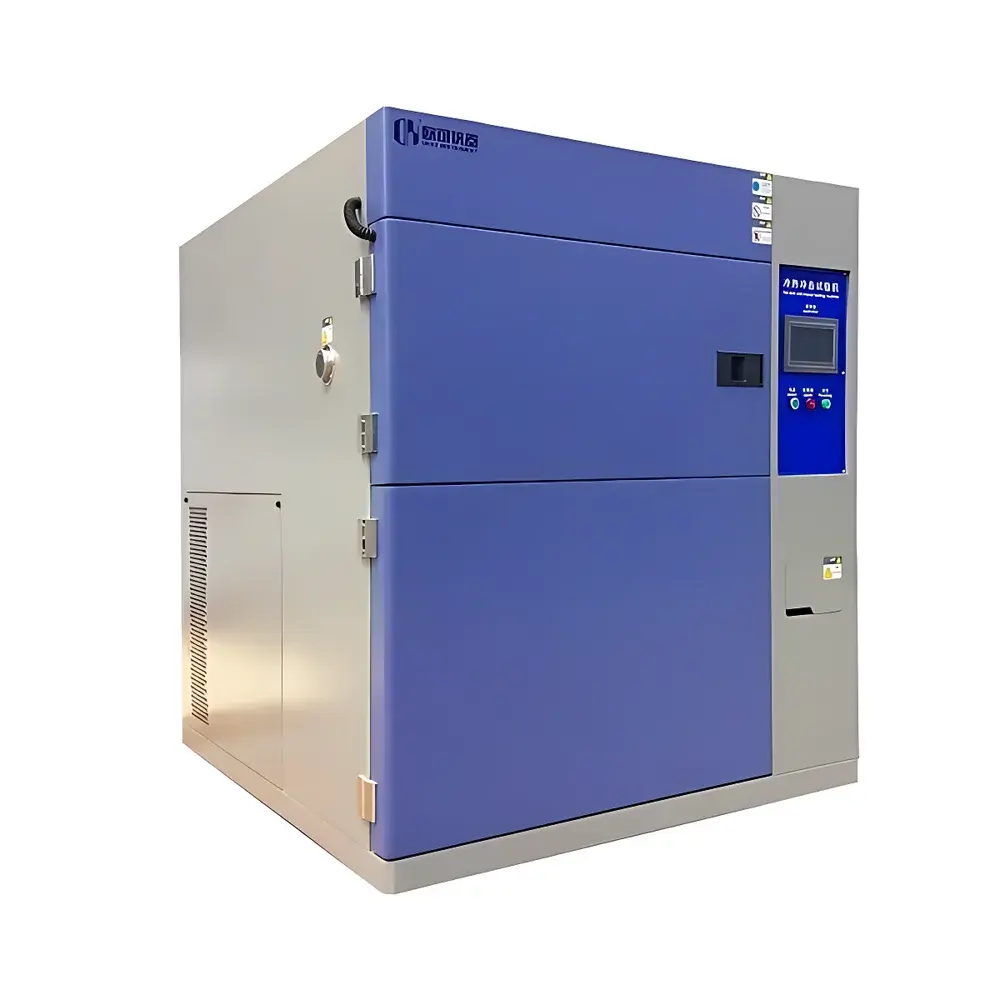
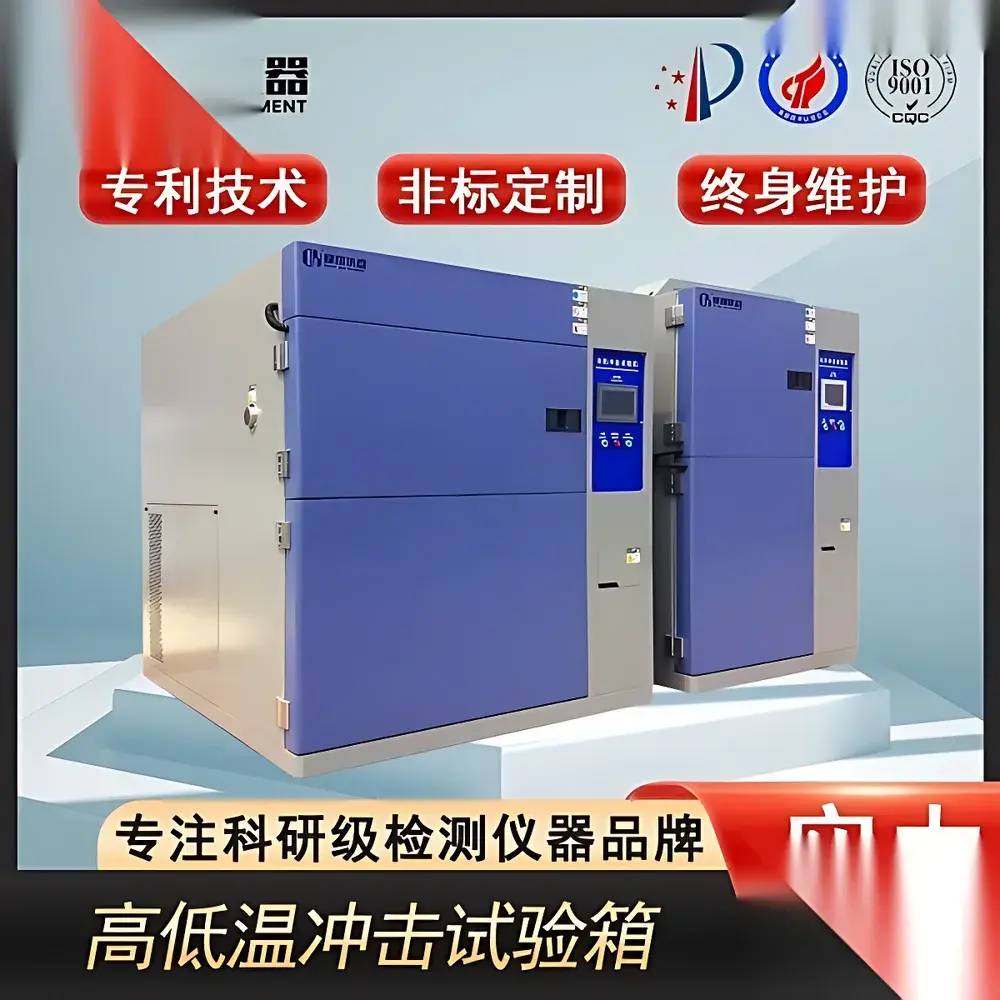
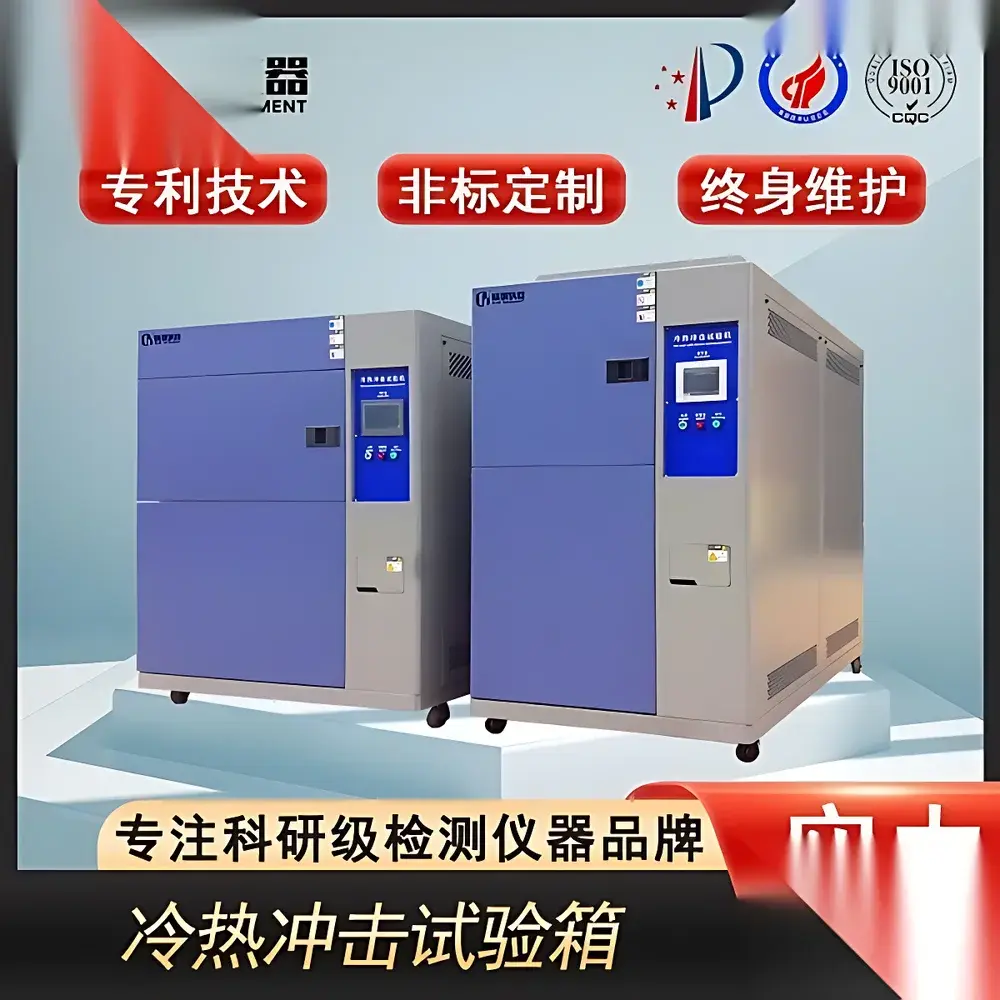
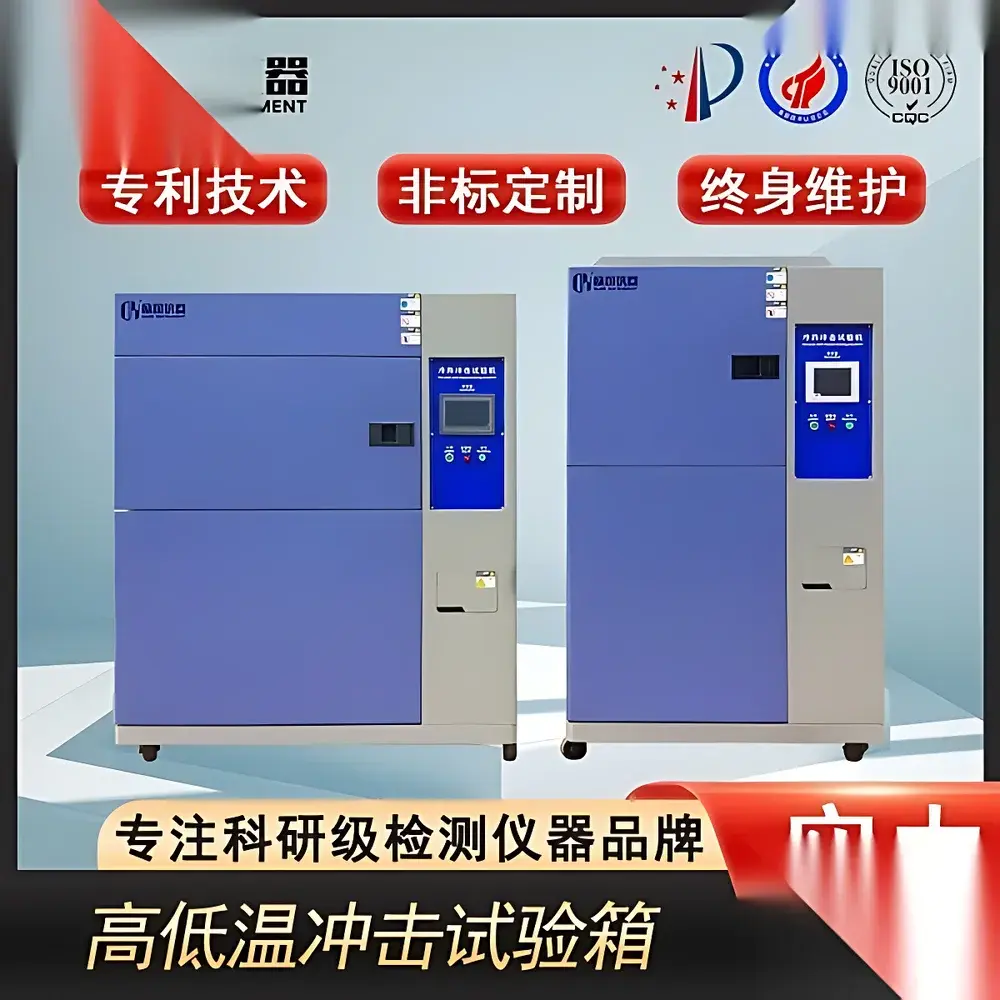
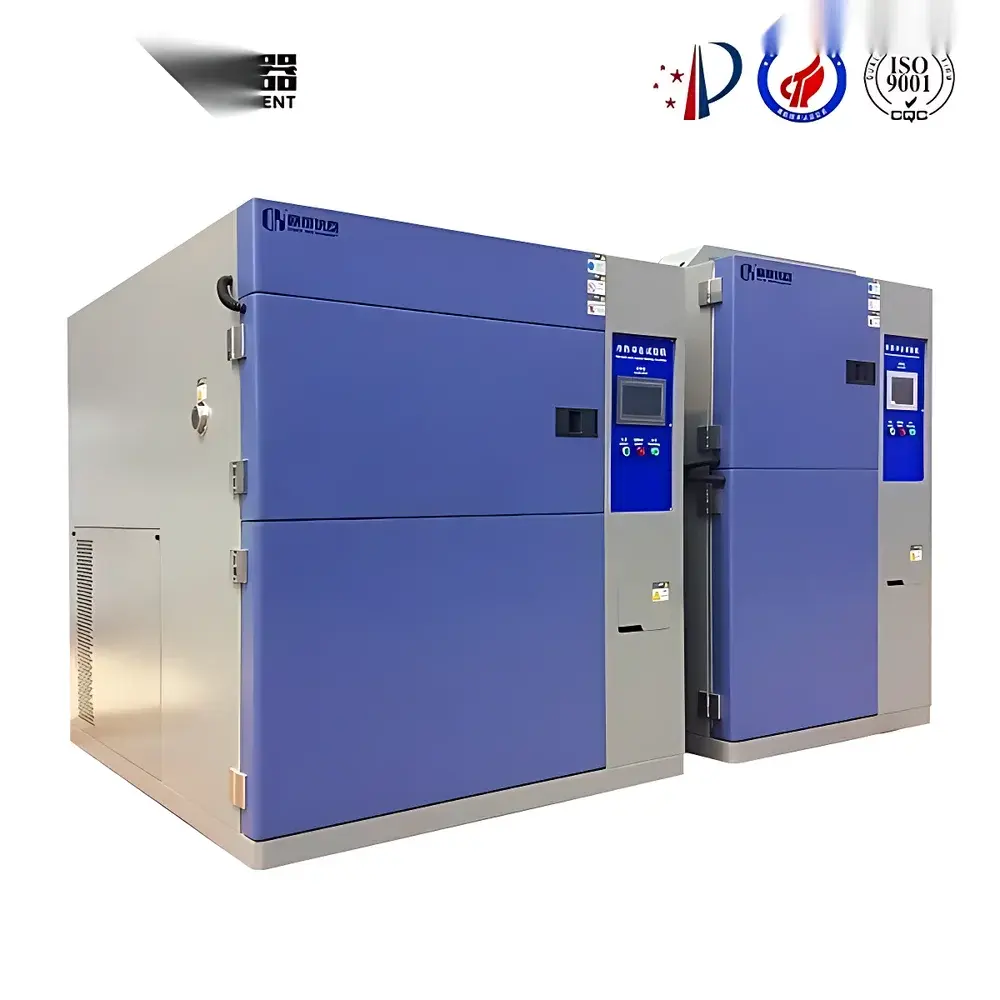
Tri-Sink Thermal Shock Test Chamber
| Brand | Other Brands |
|---|---|
| Origin | Imported |
| Manufacturer Type | Authorized Distributor |
| Price | USD 11,200 (FOB) |
Overview
The Tri-Sink Thermal Shock Test Chamber is a precision-engineered environmental test system designed to evaluate material and component resilience under rapid, extreme temperature transitions. Unlike single- or dual-chamber thermal shock systems, this tri-compartment configuration physically isolates high-temperature, low-temperature, and ambient zones—enabling true three-zone thermal separation and eliminating thermal cross-contamination during transfer cycles. It operates on the principle of mechanical basket transfer between independently controlled chambers, facilitating repeatable, high-fidelity thermal shock profiles with transition times typically under 15 seconds (measured per IEC 60068-2-14, Test N). The chamber is widely deployed in qualification testing for aerospace electronics, automotive ECUs, power semiconductor modules, PCB assemblies, and polymer-based structural components where thermomechanical fatigue, interfacial delamination, solder joint integrity, and coefficient-of-thermal-expansion (CTE) mismatch are critical failure modes.
Key Features
- Tri-compartment architecture: Independent high-temp (+150 °C to +200 °C), low-temp (−70 °C to −40 °C), and ambient (23 ±2 °C) chambers with sealed isolation doors and inert gas purge capability
- High-speed horizontal basket transfer mechanism with servo-controlled positioning and position feedback verification
- Industrial-grade PID temperature controller with touch-screen HMI interface, programmable ramp rates (0.5–15 °C/min), dwell time resolution of 1 second, and up to 999-cycle storage capacity
- Hermetically sealed refrigeration circuit using dual-stage cascade compressors with R404A/R23 refrigerant blend; electric heating via stainless steel sheathed tubular elements
- Structural chamber construction: SUS304 stainless steel interior and insulated outer casing with ≥100 mm polyurethane foam (thermal conductivity ≤0.022 W/m·K)
- Integrated safety monitoring: Over-temperature cut-off, compressor high-pressure/low-pressure switches, door interlock, and real-time alarm logging with event timestamping
Sample Compatibility & Compliance
The chamber accommodates standard test specimens up to 500 mm × 500 mm × 500 mm (W×D×H) and supports fixtures for PCBs, connectors, molded housings, and small subassemblies. It complies with internationally recognized thermal shock and temperature change standards including IEC 60068-2-14 (Test N), MIL-STD-810H Method 503.5, ASTM D6277-22 (for polymeric materials), GJB 150.5A-2009, GJB 360B-2009 Method 107, and ISO 16750-4:2010 (road vehicles – environmental conditions). All test profiles adhere to GLP-aligned execution protocols, with configurable pass/fail criteria and audit-ready cycle reports traceable to operator ID, timestamp, and environmental setpoints.
Software & Data Management
Equipped with optional PC-based control software compliant with FDA 21 CFR Part 11 requirements—including electronic signatures, role-based access control, and immutable audit trails—the system enables remote monitoring, automated report generation (PDF/CSV), and data export for statistical process control (SPC) analysis. Raw temperature logs are recorded at 1 Hz resolution with NIST-traceable calibration metadata embedded. Software supports custom profile sequencing, multi-step dwell/ramp definitions, and integration with enterprise LIMS or MES platforms via OPC UA or Modbus TCP.
Applications
- Qualification testing of avionics modules per DO-160 Section 4.5 (Temperature Shock)
- Accelerated life testing of SiC/GaN power devices subjected to repeated thermal cycling
- Evaluation of adhesive bond strength and encapsulant integrity in LED packages
- Validation of hermetic seal reliability in MEMS sensors and medical implant housings
- Thermal stress screening of automotive ADAS camera modules per ISO 16750-4 Level 3
- Material compatibility assessment for cryogenic-to-high-temperature optical coatings
FAQ
What distinguishes a tri-sink thermal shock chamber from two-chamber or single-chamber systems?
The physical separation of hot, cold, and ambient zones eliminates residual heat/cold carryover, enabling tighter control over transition timing and temperature stability—critical for high-reproducibility qualification testing.
Does the system support automated calibration verification?
Yes; optional integrated PT100 sensor arrays with external reference calibrators enable on-site verification per ISO/IEC 17025 guidelines, with full calibration certificate generation.
Can test data be exported for regulatory submission (e.g., FAA, IATF 16949)?
All generated reports include digital signatures, revision history, instrument identification, and environmental metadata—fully compliant with documentation requirements for AS9100 Rev D and IATF 16949 Clause 8.5.1.2.
Is nitrogen purge functionality available as a factory option?
Yes; optional dry nitrogen purge (dew point ≤−40 °C) is configurable for moisture-sensitive samples and oxidation-prone metallizations.



