
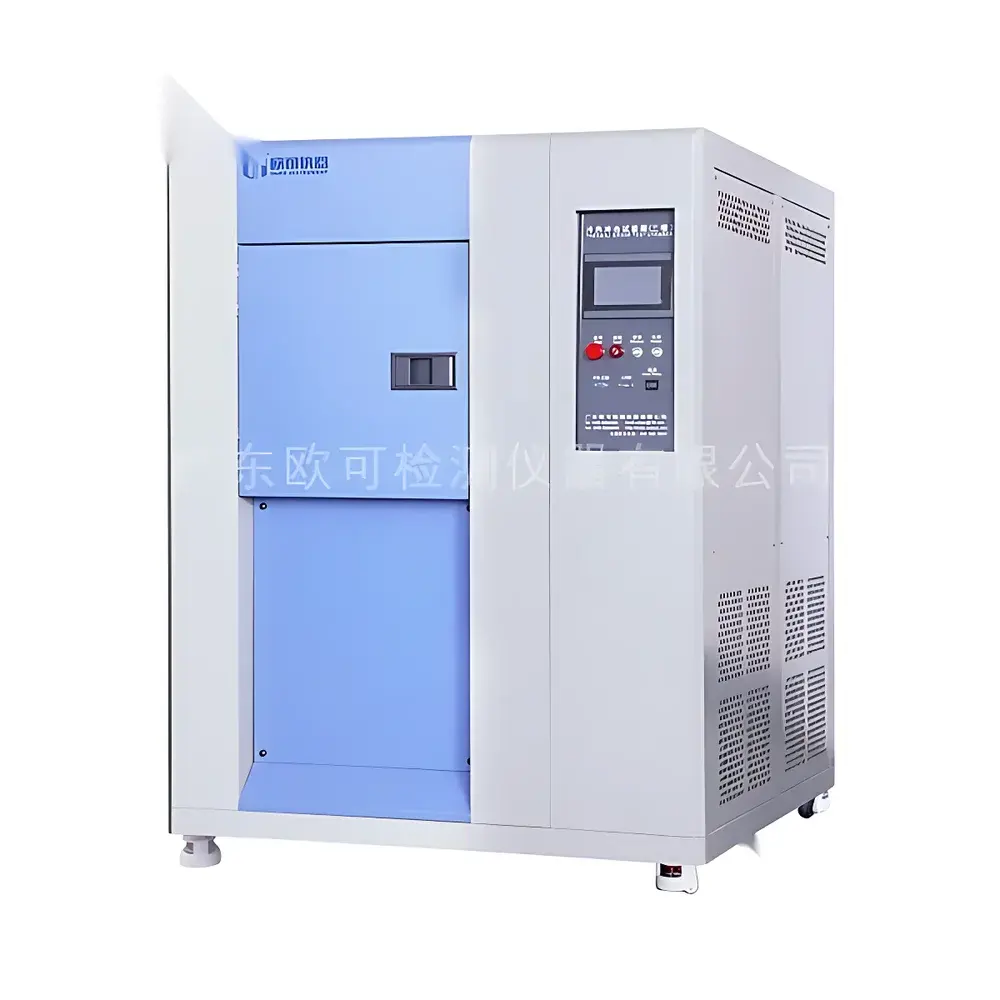
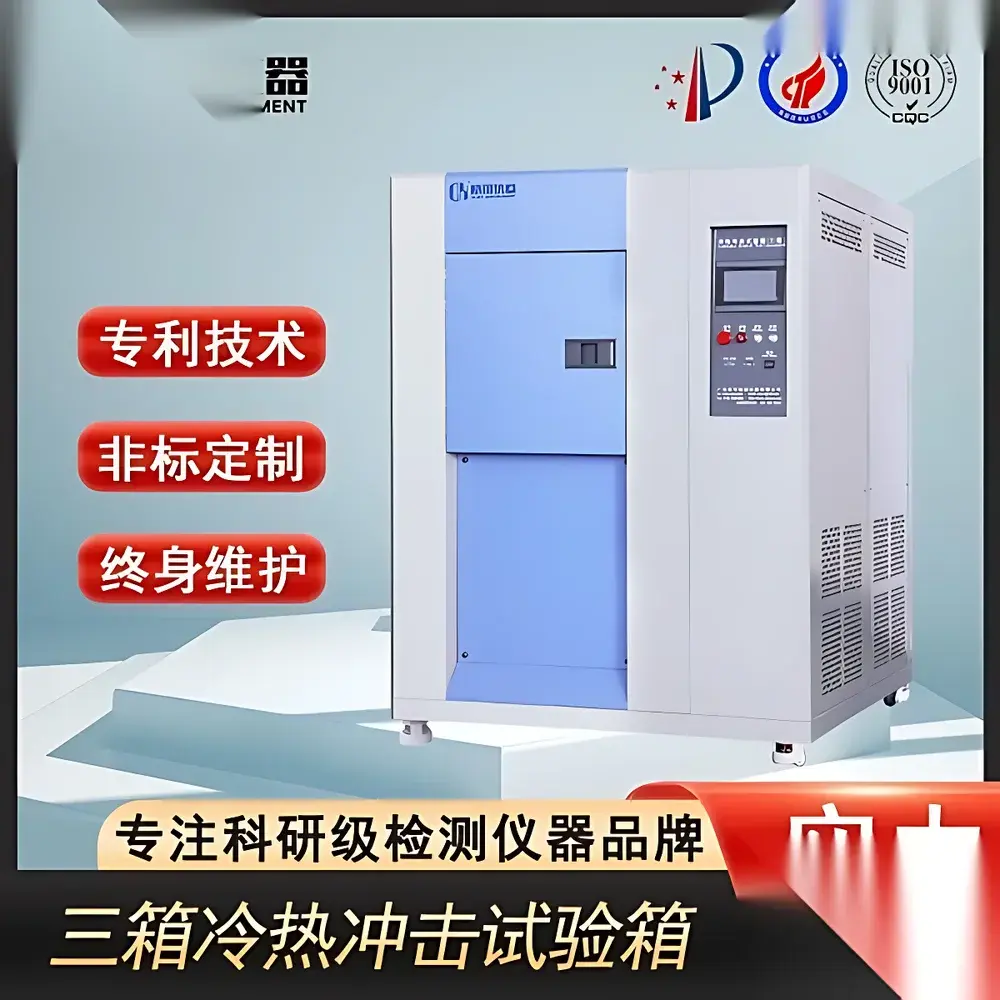
Tri-Stack Thermal Shock Test Chamber – Industrial-Grade Environmental Test System
| Brand | Other Brands |
|---|---|
| Origin | Imported |
| Manufacturer Type | Authorized Distributor |
| Price | USD 11,200 (FOB) |
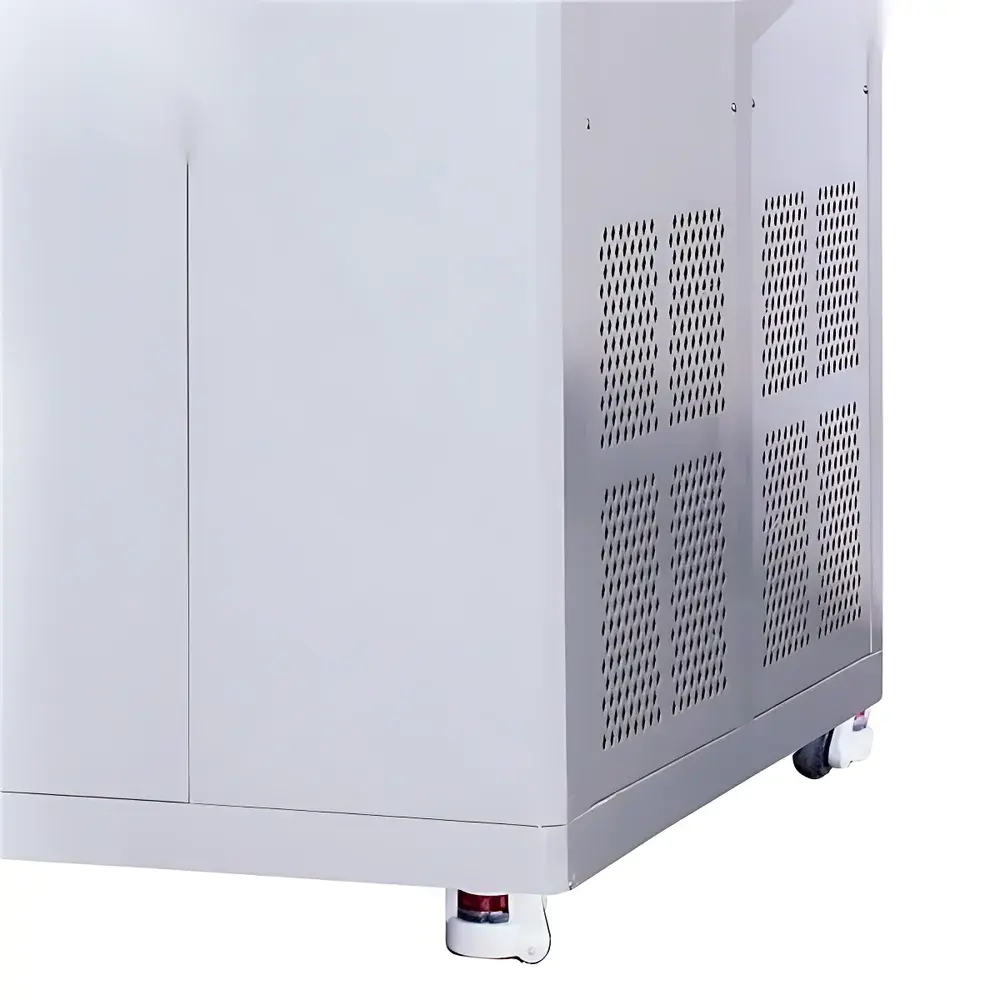
| Cooling Capacity | Dual-Stage Cascade Refrigeration System |
| Compressor | Imported Semi-Hermetic German Compressor |
| Cooling Water Requirement | 10 m³/h External Cooling Tower (User-Supplied) |
| Compliance | GB/T 2423.1–2001, GB/T 2423.2–2001, GB/T 2423.22–2002, GJB 150.5–86, IEC 60068-2-14, EIA-364-32, QC/T 17–92 |
Overview
The Tri-Stack Thermal Shock Test Chamber is an industrial-grade environmental test system engineered for high-fidelity thermal shock evaluation of electronic components, automotive modules, aerospace assemblies, and precision mechanical systems. Unlike two-chamber shuttle-type designs, this tri-compartment architecture isolates the test specimen in a stationary test chamber while independently maintaining extreme temperature conditions in dedicated hot and cold reservoirs. This structural separation eliminates mechanical stress induced by basket movement, ensures superior thermal stability during dwell phases, and delivers exceptional temperature transition repeatability—critical for validating product reliability under rapid thermal cycling per MIL-STD-810H Method 503.5 and IEC 60068-2-14. The system operates on a dual-stage cascade refrigeration principle: a high-temperature R404A loop interfaces with a low-temperature R23 loop via an evaporative condenser, enabling stable operation down to −70 °C and up to +180 °C with transition rates exceeding 15 °C/s between extremes.
Key Features
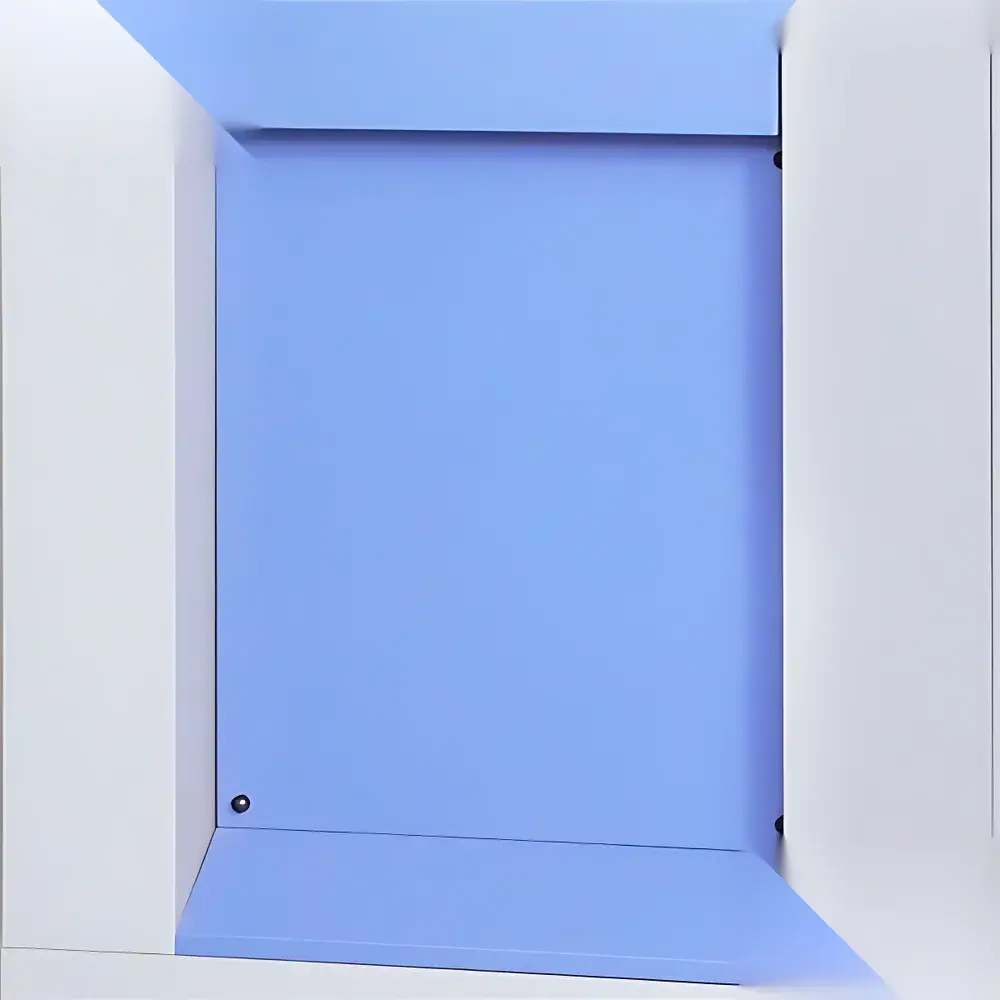
- Three independent thermally insulated compartments: hot soak zone (up to +180 °C), cold soak zone (down to −70 °C), and static test chamber—eliminating specimen displacement and vibration artifacts.
- Dual-stage cascade refrigeration system utilizing imported semi-hermetic compressors (Germany-sourced), optimized for long-term operational stability and energy efficiency.
- Integrated energy modulation control that dynamically adjusts refrigerant flow and compressor load to maintain precise setpoint accuracy (±0.5 °C) while minimizing power consumption and wear.
- Water-cooled condensing unit requiring external 10 m³/h cooling tower (user-provided); compatible with industrial HVAC infrastructure and suitable for continuous-duty validation labs.
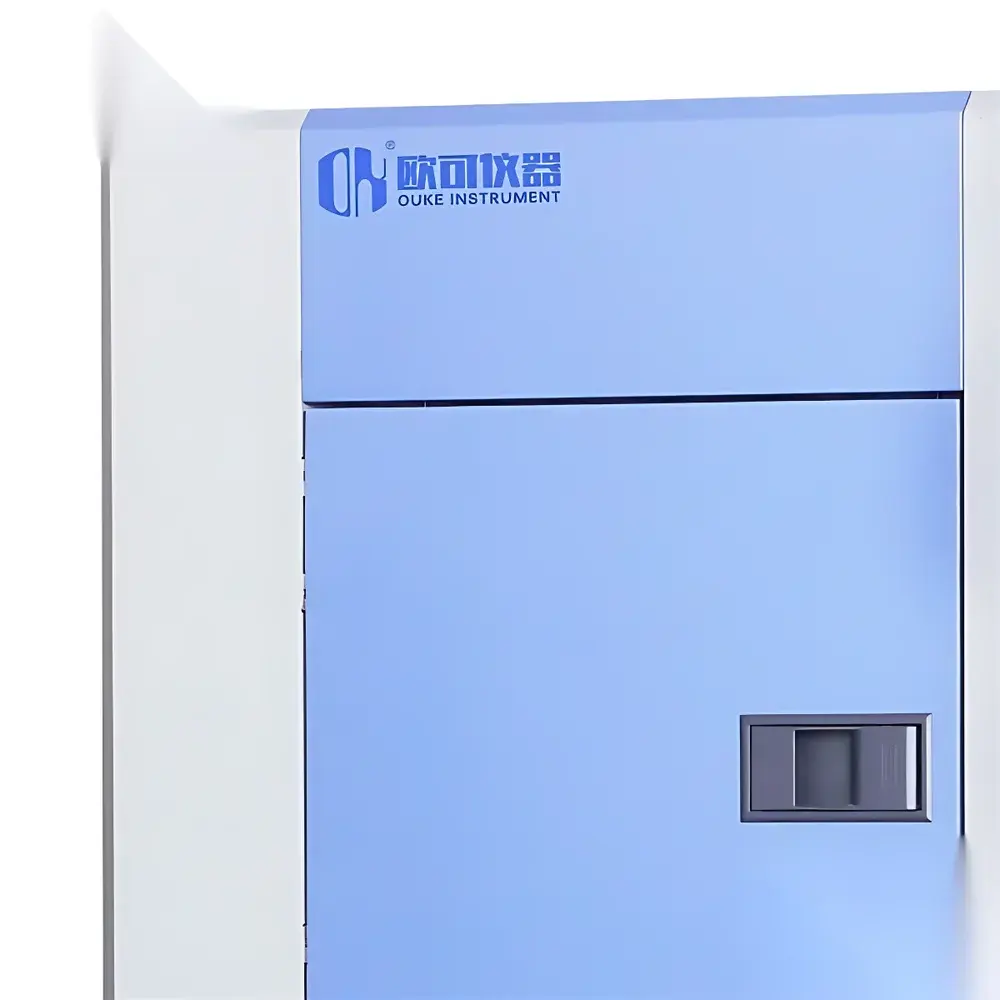
- Stainless-steel interior construction (SUS304), double-glazed observation window with anti-fog heating, and over-temperature/over-pressure safety interlocks compliant with IEC 61000-6-2 EMC requirements.
- Programmable controller with 100-segment ramp-soak profiles, real-time deviation logging, and hardware-based emergency shutdown circuitry.
Sample Compatibility & Compliance
This chamber accommodates specimens up to 500 mm × 500 mm × 500 mm (W×D×H) with maximum mass loading of 30 kg. It supports standardized thermal shock protocols across military, automotive, and consumer electronics sectors—including GJB 150.5–86 (China MIL-STD equivalent), EIA-364-32 for connector thermal cycling, QC/T 17–92 for automotive component durability, and IEC 60068-2-14 (Test Nb). All thermal profiles are traceable to NIST-calibrated Pt100 sensors (Class A tolerance), and system validation reports include uncertainty budgets per ISO/IEC 17025 requirements. The chamber meets structural safety provisions of EN 61000-6-4 and carries CE marking for EMC and LVD compliance.
Software & Data Management
Equipped with Windows-based control software supporting multi-user role management (operator, engineer, QA auditor), the system provides full audit trail functionality aligned with FDA 21 CFR Part 11 and GLP/GMP data integrity requirements. All temperature logs, alarm events, and calibration records are time-stamped, digitally signed, and exportable in CSV or PDF formats. Optional Ethernet/IP and Modbus TCP interfaces enable integration into centralized MES or LIMS platforms. Raw sensor data is sampled at 1 Hz with 16-bit ADC resolution and stored locally on redundant SSDs with automatic daily backup to network shares.
Applications
- Qualification testing of printed circuit board assemblies (PCBAs) subjected to solder joint fatigue under repeated thermal expansion mismatch.
- Validation of adhesive bond integrity in optoelectronic housings exposed to −55 °C to +125 °C cycling.
- Accelerated life testing of lithium-ion battery modules per UN 38.3 thermal shock criteria.
- Reliability screening of MEMS sensors and RF front-end modules prior to AEC-Q200 qualification.
- Process capability assessment of conformal coating adhesion after exposure to 500 cycles of −65 °C ↔ +150 °C transitions.
FAQ
What distinguishes tri-stack architecture from two-chamber shuttle systems?
Tri-stack configurations eliminate mechanical actuation of test specimens, reducing inertial stress and positional uncertainty—making them preferred for high-value, vibration-sensitive devices.
Is external cooling water mandatory?
Yes. The dual-stage cascade system requires a continuous 10 m³/h water flow at 25–32 °C inlet temperature, supplied via user-installed closed-loop cooling tower.
Does the system support automated compliance reporting?
Yes. Preconfigured report templates generate ISO/IEC 17025-compliant validation summaries, including temperature uniformity maps, transition rate verification, and sensor calibration certificates.
Can the chamber be integrated into an existing lab automation framework?
Absolutely. Native support for OPC UA, Modbus TCP, and RESTful API enables seamless orchestration with test sequence managers and enterprise quality systems.
What maintenance intervals are recommended for sustained accuracy?
Compressor oil analysis every 2,000 operating hours; refrigerant leak check and sensor recalibration annually; full system performance verification per ASTM E2209 every 12 months.



