
TRILOS Slurry Filtration System
| Brand | TRILOS |
|---|---|
| Origin | USA |
| Manufacturer Type | Authorized Distributor |
| Product Category | Imported Laboratory Equipment |
| Model | SLF-Series Vacuum Slurry Filtration Unit |
| Vacuum Pump Flow Rate | 15 L/s |
| Maximum Mesh Rating | 30,000 mesh |
| Construction Material | Optional 304 or 316 Stainless Steel |
| Filtration Capacity | 4–50 kg per batch |
| Surface Finish | Electropolished SS (Ra ≤ 0.4 µm) |
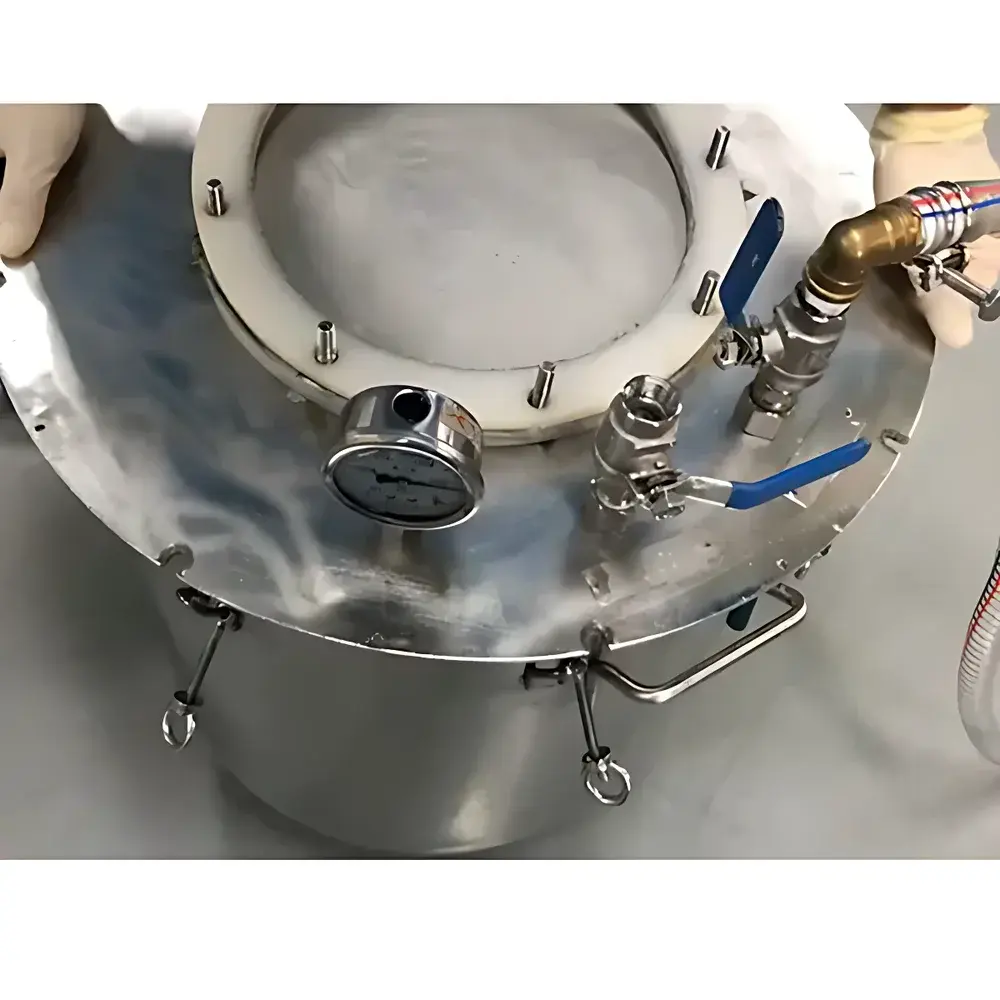
| Sealing | Dual O-ring gasket system with clamped flange interface |
| Assembly | Quick-release sanitary clamp joints with stainless steel toggle bolts |
Overview
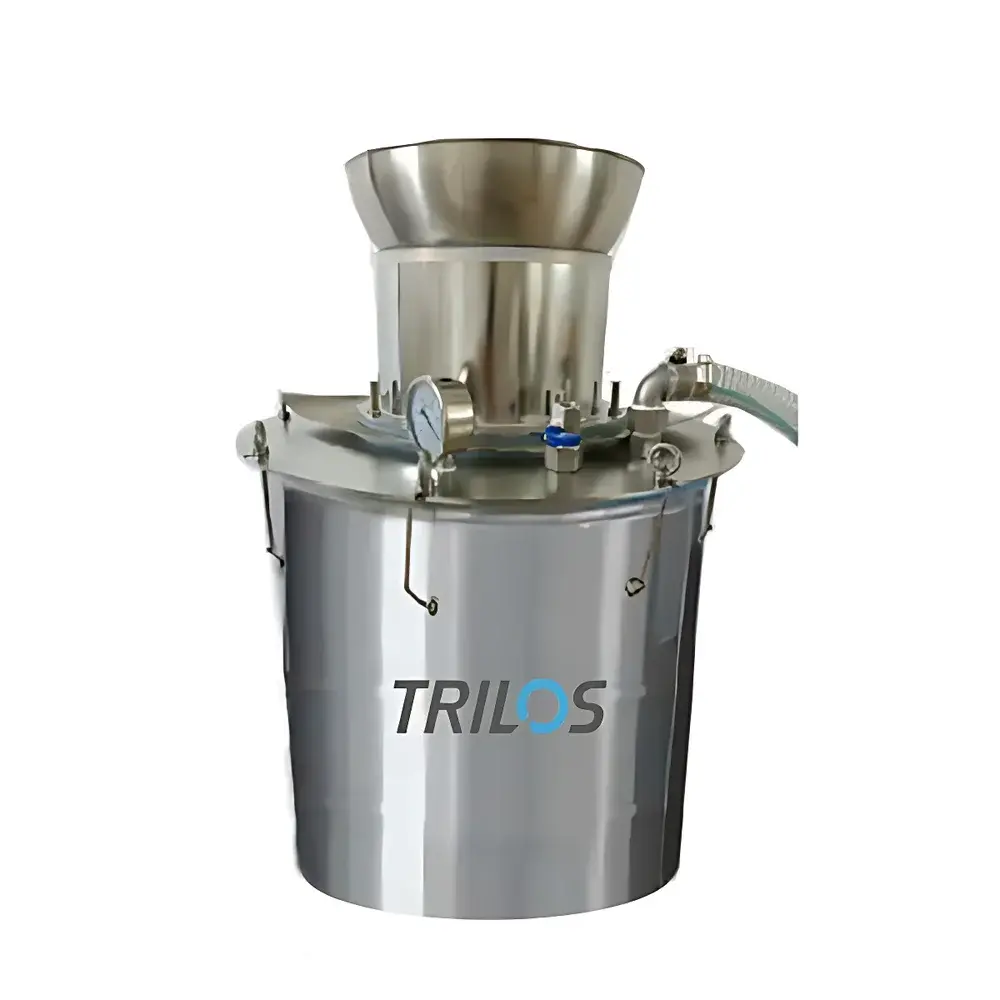
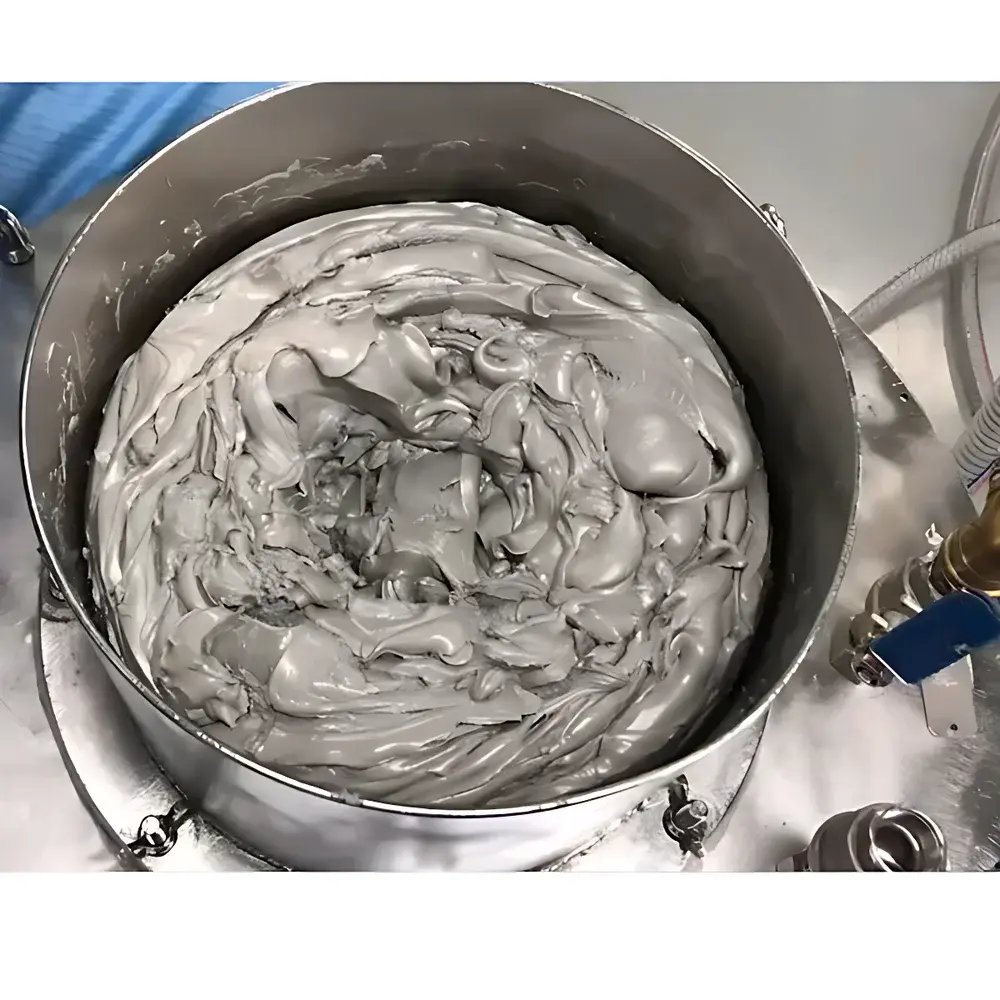
The TRILOS SLF-Series Vacuum Slurry Filtration System is an engineered solution for high-integrity particulate removal from conductive and functional pastes—particularly silver paste used in photovoltaic screen printing, thick-film electronics, and advanced ceramic substrate manufacturing. Designed around a controlled vacuum-driven cross-flow filtration principle, the system operates by applying negative pressure across a precision-tensioned mesh support plate, drawing slurry through selectable filter media while retaining submicron contaminants, agglomerates, and process-induced debris. Unlike gravity or pressure-based alternatives, this architecture minimizes shear-induced particle re-agglomeration and ensures consistent cake formation, critical for maintaining rheological fidelity and printability of high-value conductive inks. The unit meets baseline mechanical and material requirements for cleanroom-adjacent lab environments and pilot-scale production validation workflows.
Key Features
- Vacuum-driven filtration platform with integrated 15 L/s dry scroll vacuum pump—designed for stable, oil-free operation and low maintenance over extended duty cycles.
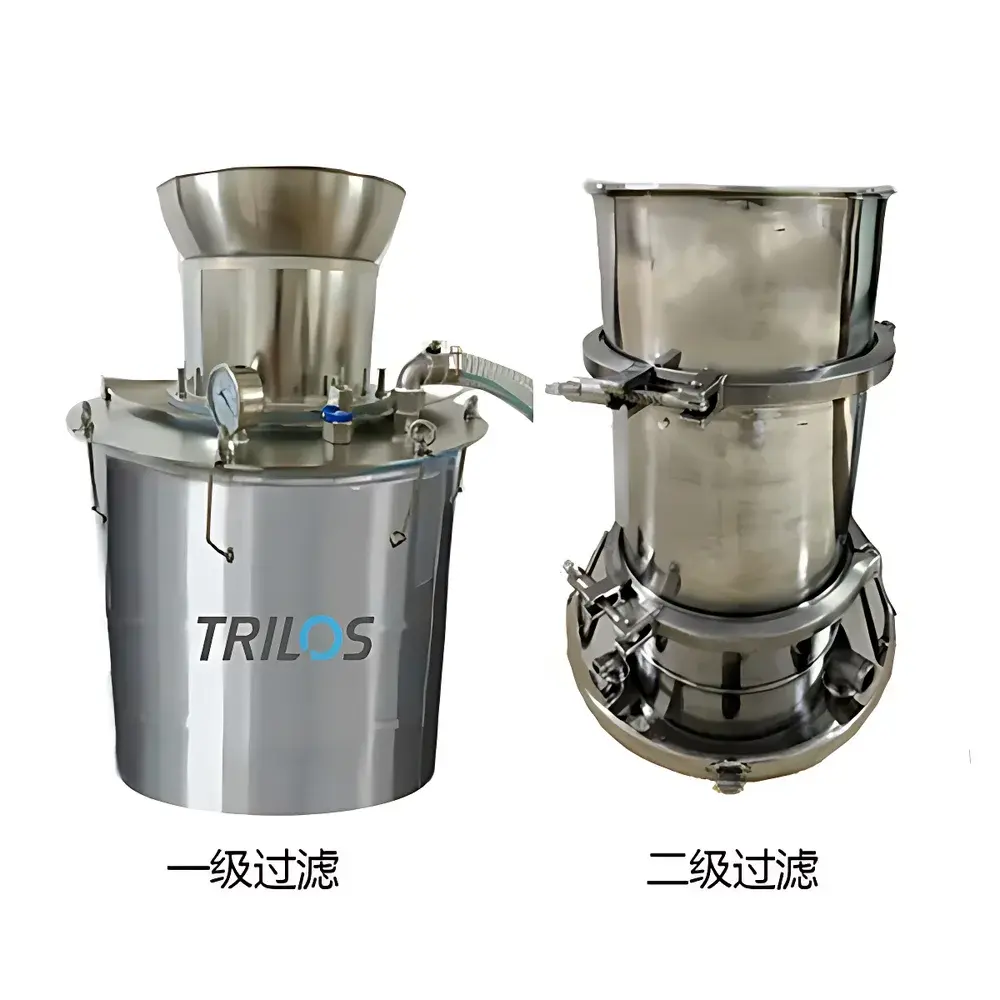
- Modular dual-vessel configuration: top feed hopper and bottom collection vessel joined via a center-mounted, removable filter disc assembly that supports rapid mesh changeover without tooling.
- Sanitary-grade construction using electropolished 304 or optional 316 stainless steel (ASTM A967 / ISO 15730 compliant surface finish), ensuring corrosion resistance and compatibility with aggressive solvents (e.g., terpineol, butyl carbitol, ethyl cellulose solutions).
- Double O-ring sealing interface between vessels, validated to hold ≥95 kPa vacuum for ≥10 minutes—verified per ASTM E493 leak test methodology.
- Quick-disconnect toggle-bolt flange system enables full disassembly in under 90 seconds for cleaning, inspection, or filter media validation per internal SOPs.
- Filter support disc precision-machined to ±0.02 mm flatness tolerance, ensuring uniform tension distribution across mesh up to 30,000 mesh (≈0.5 µm nominal pore size).
Sample Compatibility & Compliance
The SLF-Series accommodates Newtonian and weakly thixotropic slurries with viscosities ranging from 50 to 50,000 mPa·s (Brookfield LVT @ 25°C), including silver, copper, aluminum, and dielectric pastes formulated with organic vehicles and nanoparticle dispersions. It complies with mechanical safety provisions of ANSI B11.19-2022 (risk reduction standards) and incorporates grounding points meeting IEC 61000-6-4 EMC immunity criteria. While not certified as medical device or pharmaceutical equipment, its materials and design align with USP , ISO 10993-1 (biocompatibility screening basis), and GMP-aligned cleaning validation protocols (e.g., residue limits ≤10 ppm via swab HPLC assay). Filter mesh selection supports compliance with IPC-4552A (electroless nickel plating bath purity) and JEDEC J-STD-004B (flux residue control) reference thresholds.
Software & Data Management
This is a manually operated, non-instrumented filtration platform. No embedded controller, data logging, or digital interface is included. Process parameters—including vacuum level (monitored externally via analog gauge), batch mass, dwell time, and mesh specification—are recorded manually in laboratory notebooks or LIMS-compatible spreadsheets. For regulated environments requiring audit trails, users may integrate external pressure transducers (e.g., Validyne DP15) and log data via third-party SCADA platforms compliant with FDA 21 CFR Part 11 (electronic records and signatures) when paired with appropriate validation documentation.
Applications
- Pre-screening of silver paste prior to screen printing to prevent nozzle clogging and ensure line resolution consistency in solar cell metallization.
- Removal of metal oxide clusters and dispersant degradation byproducts during R&D formulation cycles in thick-film ink development labs.
- Final quality gate for lot release in pilot-line production of conductive pastes destined for automotive sensor substrates or RF antenna modules.
- Contamination control in recycling loops where reclaimed paste undergoes reconditioning before reuse.
- Validation of dispersion stability after high-shear mixing or three-roll milling steps via comparative particle count analysis (e.g., Malvern Mastersizer 3000 upstream/downstream).
FAQ
What mesh sizes are physically supported by the filter disc?
The support disc accepts woven wire meshes from 50 mesh (297 µm) up to 30,000 mesh (0.5 µm nominal aperture), provided the mesh is mounted on a compatible backing frame with ≥80% open area ratio.
Can the system be sterilized in place (SIP)?
No. SIP requires steam penetration and temperature validation; this unit lacks steam-rated seals, thermal sensors, or jacketing. Autoclaving of disassembled components is possible only for 316SS parts at 121°C/15 psi for ≤20 min, per ASTM F1980 accelerated aging guidance.
Is the vacuum pump suitable for continuous operation?
Yes—the scroll pump is rated for 100% duty cycle at ambient temperatures ≤35°C and relative humidity ≤70%, with recommended maintenance intervals every 2,000 operating hours.
How is filter integrity verified post-use?
Users perform visual inspection for tears or deformation, followed by bubble point testing (ASTM F316-03) using isopropyl alcohol at 3× rated differential pressure, or water intrusion testing for hydrophobic media.
Does TRILOS provide filter media?
TRILOS supplies stainless steel support discs and technical specifications for mesh sourcing; end-users procure certified mesh from ISO 9001-certified vendors (e.g., Sefar, Saint-Gobain) based on application-specific retention requirements.



