
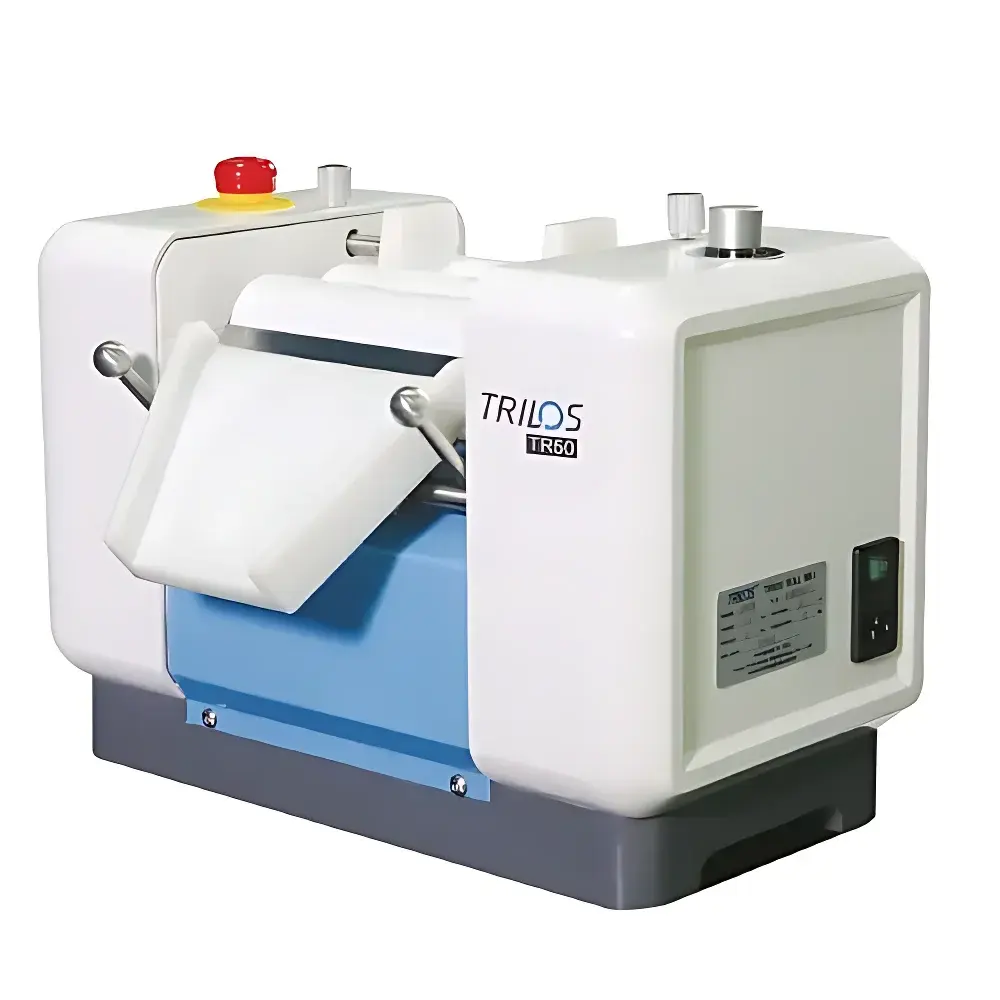
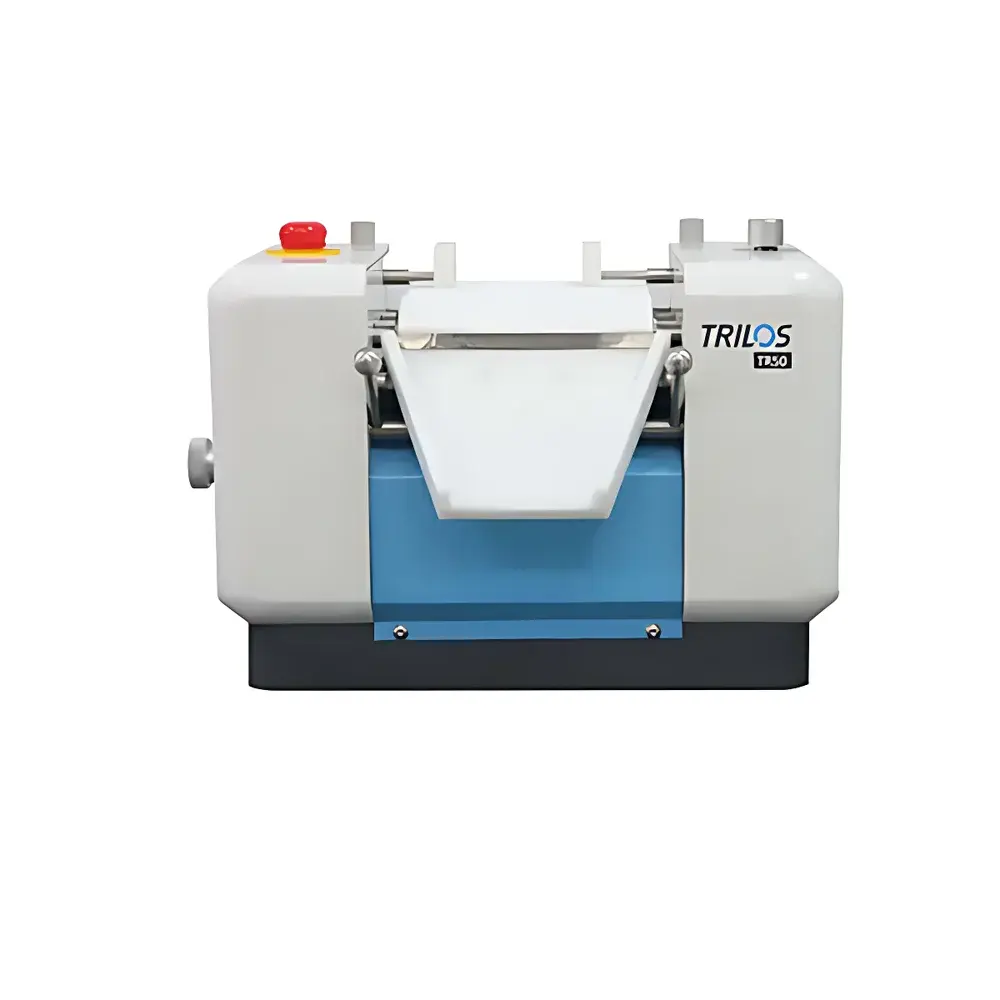
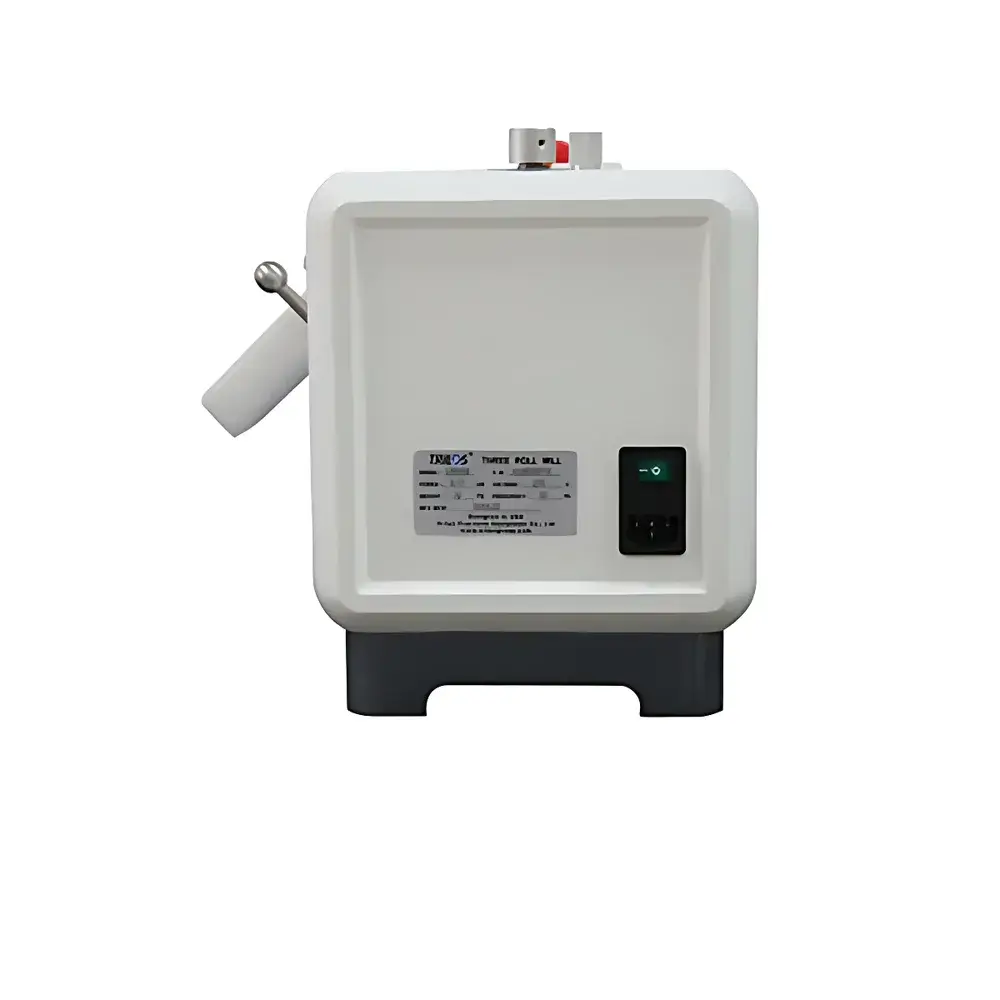
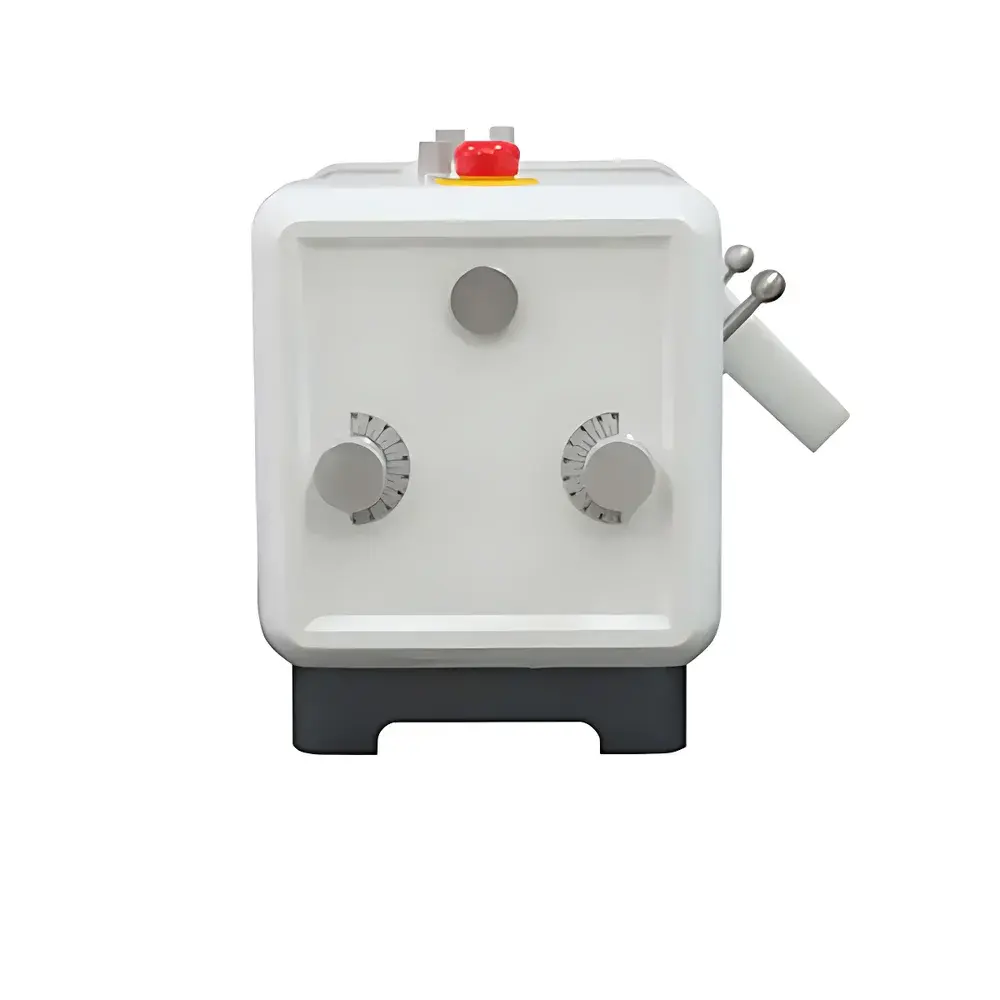
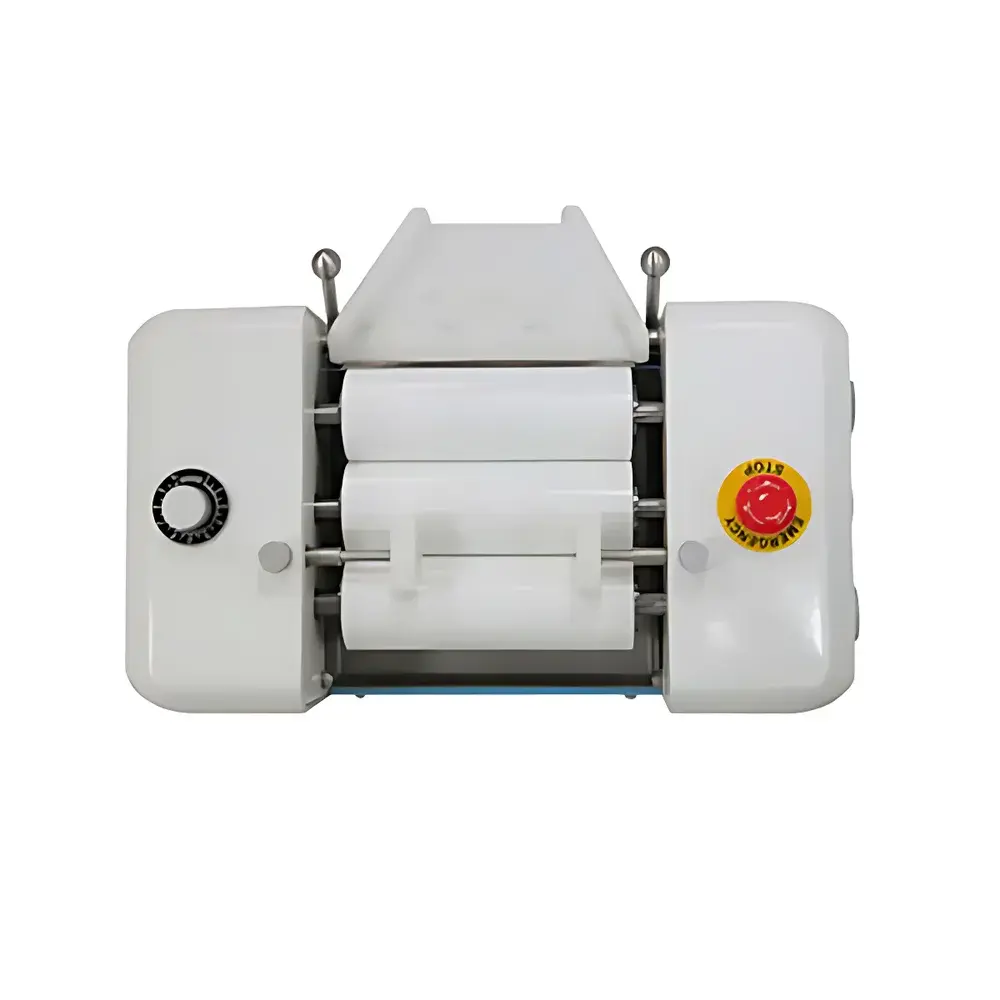
TRILOS TR50M Laboratory Three-Roll Mill
| Brand | TRILOS |
|---|---|
| Model | TR50M |
| Origin | USA |
| Equipment Type | Three-Roll Mill (Laboratory-Scale) |
| Roller Diameter | 50 mm |
| Roller Length | 150 mm |
| Roller Speed Ratio | 1:2:4 |
| Roller Material | Al₂O₃ / ZrO₂ / Stainless Steel |
| Doctor Blade Material | Al₂O₃ / ZrO₂ / Stainless Steel / PVC |
| Adjustable Gap | Manual |
| Speed Control | Stepless (Variable) |
| Feed Particle Size | >1 µm |
| Final Output Particle Size | <0.01 mm (10 µm) |
| Batch Throughput | 0.02–5 L/h |
| Motor Power | 0.12 kW |
| Dimensions (L×W×H) | 390 × 275 × 310 mm |
| Weight | 20 kg |
| Sample Compatibility | Soft, paste-like, and semi-viscous materials (e.g., polymer dispersions, ointments, pastes, conductive inks) |
Overview
The TRILOS TR50M is a compact, manually operated laboratory three-roll mill engineered for precision dispersion and particle size reduction of soft, high-viscosity materials. Operating on the principle of shear-induced comminution between three horizontally aligned, counter-rotating rollers with progressive speed ratios (1:2:4), the TR50M generates controlled hydrodynamic shear stress across the material film entrained between adjacent rolls. This mechanism enables effective deagglomeration, wet grinding, and homogenization—particularly suited for formulations where thermal sensitivity, batch reproducibility, and minimal contamination are critical. Designed for R&D environments rather than continuous production, the TR50M serves as a scalable process development tool for labs evaluating formulation behavior prior to pilot or industrial-scale milling.
Key Features
- Compact footprint (390 × 275 × 310 mm) and lightweight construction (20 kg), enabling benchtop integration in fume hoods or laminar flow cabinets.
- Three precision-ground rollers (50 mm diameter × 150 mm length) fabricated from chemically inert, wear-resistant materials—including alumina (Al₂O₃), zirconia (ZrO₂), and stainless steel—to ensure long-term dimensional stability and low metal leaching.
- Manually adjustable roll gap with fine-thread micrometer control, supporting repeatable gap settings from nominal contact up to ~1.5 mm—critical for tuning shear intensity and residence time.
- Stepless (infinitely variable) speed control of the feed roller, allowing precise regulation of material throughput and film thickness across the nip zone.
- Interchangeable doctor blades made from Al₂O₃, ZrO₂, stainless steel, or food-grade PVC—selected based on abrasion resistance, chemical compatibility, and regulatory requirements (e.g., USP Class VI for pharmaceutical applications).
- Low-power (0.12 kW), brushless DC motor drive optimized for quiet, vibration-damped operation—essential for shared lab spaces and metrology-sensitive environments.
Sample Compatibility & Compliance
The TR50M is validated for processing non-abrasive, low-to-medium hardness materials with yield stresses below 500 Pa and viscosities ranging from 10³ to 10⁶ mPa·s (e.g., polymer melts, cosmetic creams, pharmaceutical ointments, conductive pastes, battery electrode slurries, and UV-curable inks). It is not intended for dry powders, fibrous matrices, or highly abrasive particulates (e.g., SiC, tungsten carbide). The equipment complies with general electrical safety standards (IEC 61000-6-2/6-3) and supports GLP-aligned documentation practices. While not certified to ISO 22000 or FDA 21 CFR Part 11 out-of-the-box, its mechanical design allows full traceability of operational parameters (gap setting, speed, run duration) when integrated with external logging systems—a prerequisite for GMP-relevant process validation in pharma and medical device development.
Software & Data Management
The TR50M operates as a stand-alone mechanical system without embedded firmware or digital interface. All operational parameters—including roller speed (RPM), gap setting (mm), and runtime (min)—are recorded manually or via external data loggers. This analog architecture ensures electromagnetic compatibility (EMC) in sensitive instrumentation zones (e.g., near NMR, SEM, or mass spectrometers) and eliminates cybersecurity concerns associated with networked controllers. For regulated environments, users may pair the mill with calibrated torque sensors or inline rheometers (e.g., Anton Paar MCR series) to generate audit-ready dispersion performance datasets compliant with ASTM D2196 (viscosity of paints) or ISO 1133 (melt flow rate).
Applications
- Nanocomposite dispersion: Exfoliation and stabilization of graphene, CNTs, or metal oxides in polymer matrices.
- Pharmaceutical formulation: Homogenization of transdermal gels, topical suspensions, and mucoadhesive patches under low-shear conditions.
- Electrode slurry preparation: Uniform distribution of active material, conductive additive, and binder in Li-ion battery cathode/anode pastes.
- Cosmetic R&D: Refinement of pigment-loaded emulsions, sunscreen formulations, and silicone-based lubricants.
- Functional inks: Production of conductive silver pastes, piezoelectric inks, and dielectric layers for printed electronics.
- Adhesives & sealants: Deagglomeration of fillers (e.g., CaCO₃, fumed silica) in silicone, epoxy, and polyurethane systems.
FAQ
What is the minimum achievable particle size with the TR50M?
Under optimal conditions (e.g., well-wetted, low-viscosity dispersions; multi-pass operation; sub-5 µm initial agglomerates), the TR50M can achieve median particle sizes below 10 µm (D₅₀ < 0.01 mm), though final fineness depends strongly on material rheology and surface energy.
Can the TR50M be used for sterile or aseptic processing?
The unit itself is not autoclavable, but all wetted parts (rollers, blades, housing) are constructed from sterilizable materials (stainless steel, Al₂O₃, ZrO₂); post-process cleaning follows ISO 14644-1 Class 5 cleanroom protocols when paired with validated SOPs.
Is roll alignment calibration required before each use?
Roll parallelism is factory-set and mechanically locked; routine verification using feeler gauges at three axial positions is recommended after every 50 operating hours or following maintenance.
Does TRILOS provide application support for formulation optimization?
Yes—TRILOS offers technical consultation packages including shear-rate mapping, residence time distribution analysis, and comparative dispersion efficiency testing against alternative milling technologies (e.g., bead mills, ultrasonicators).



