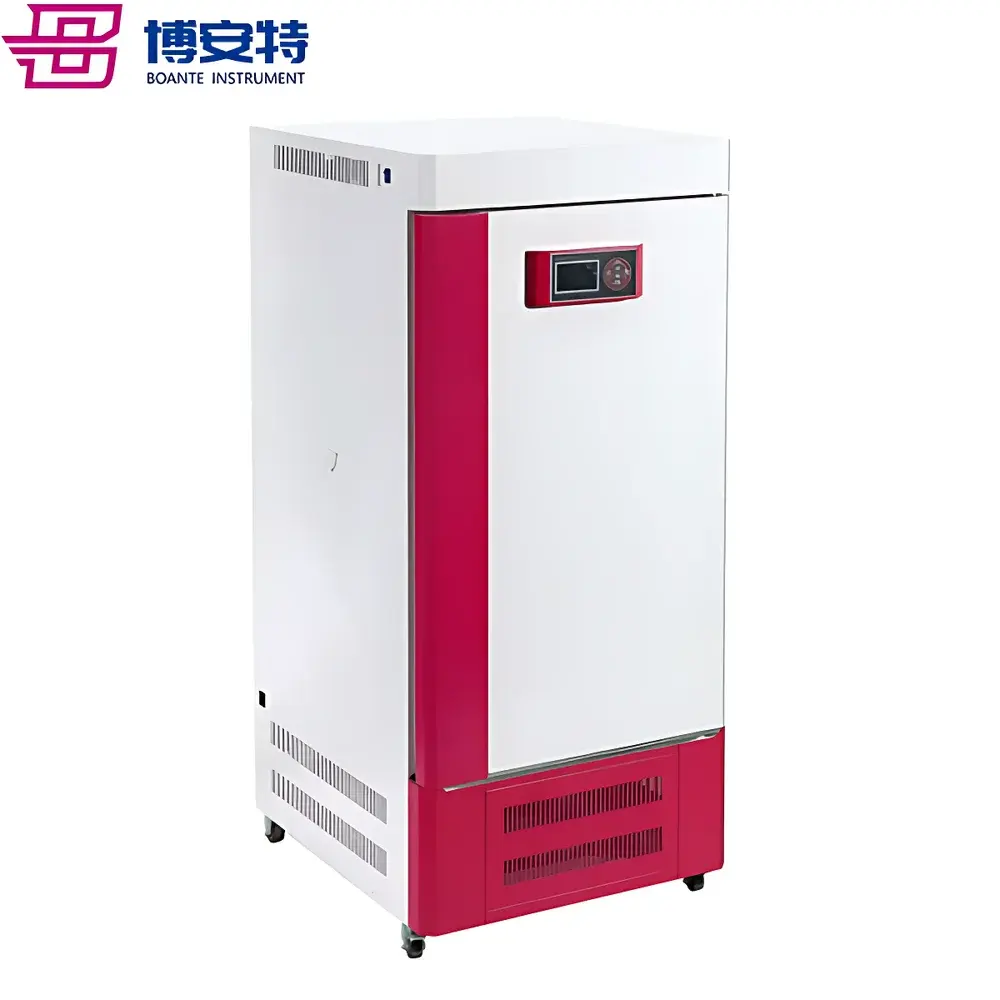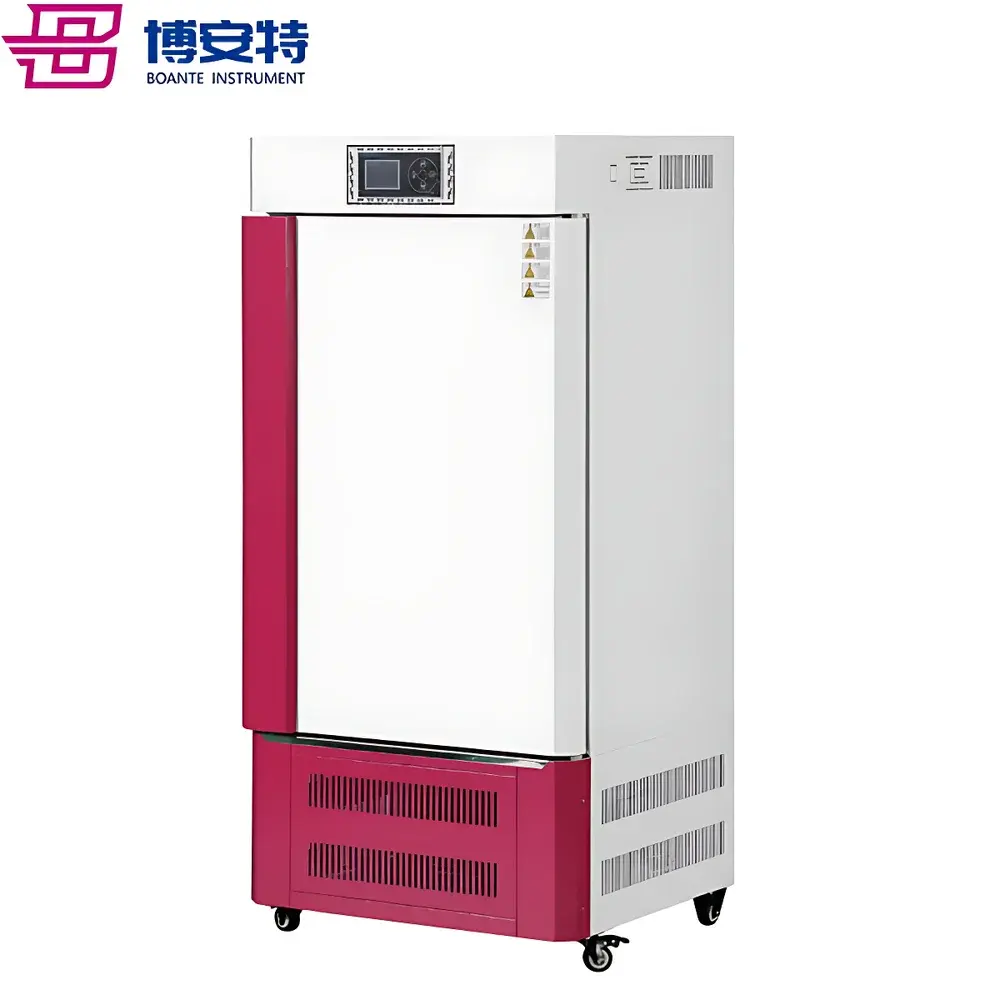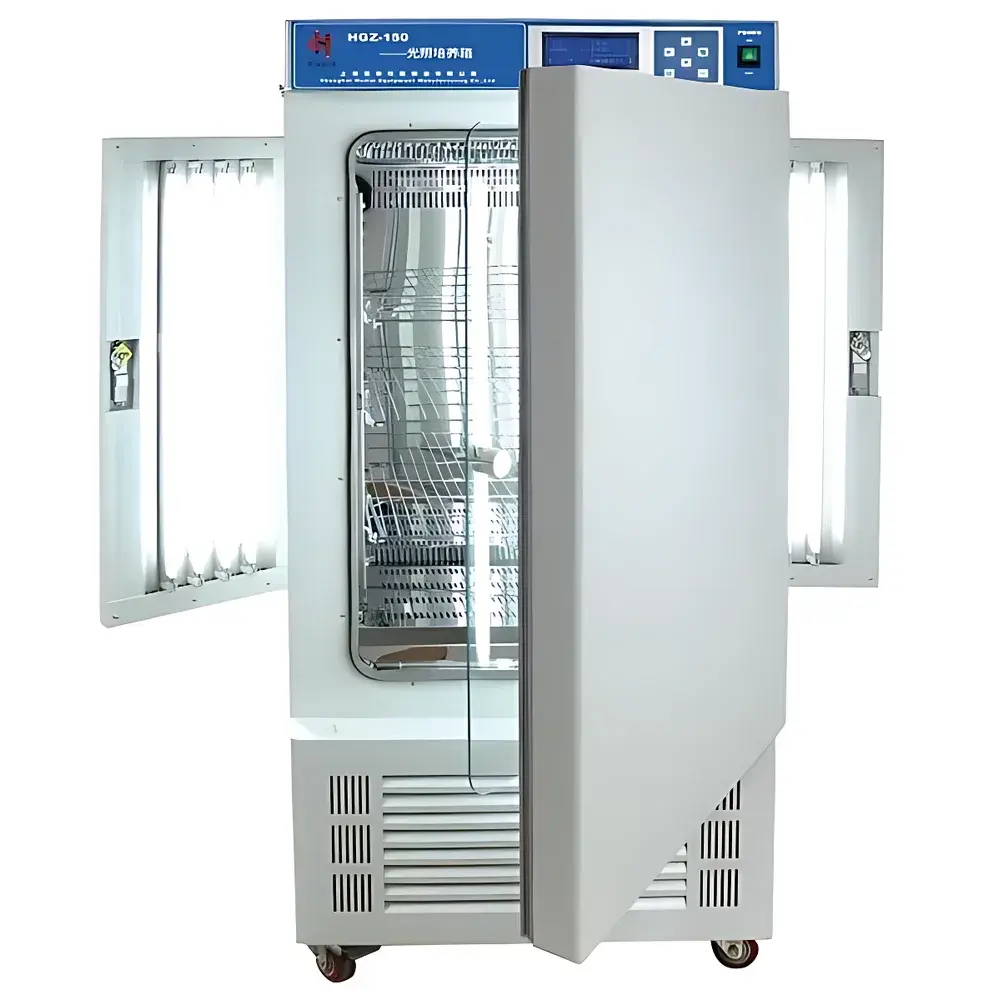
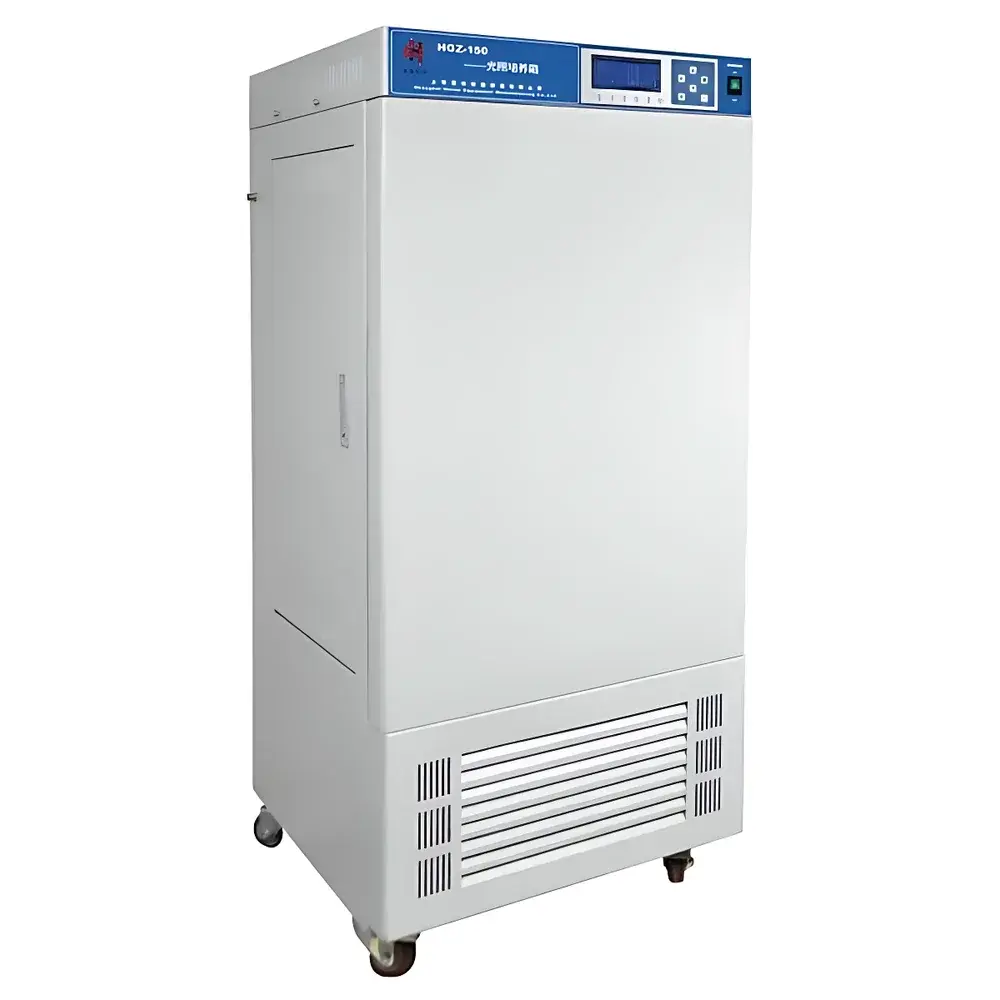
Truelab HQH Series Plant Growth Chambers (LCD Display, Eco-Friendly R134a/R406a Refrigerant) – HQH-150, HQH-250, HQH-400
| Brand | Truelab |
|---|---|
| Origin | Shanghai, China |
| Model | HQH-150, HQH-250, HQH-400 |
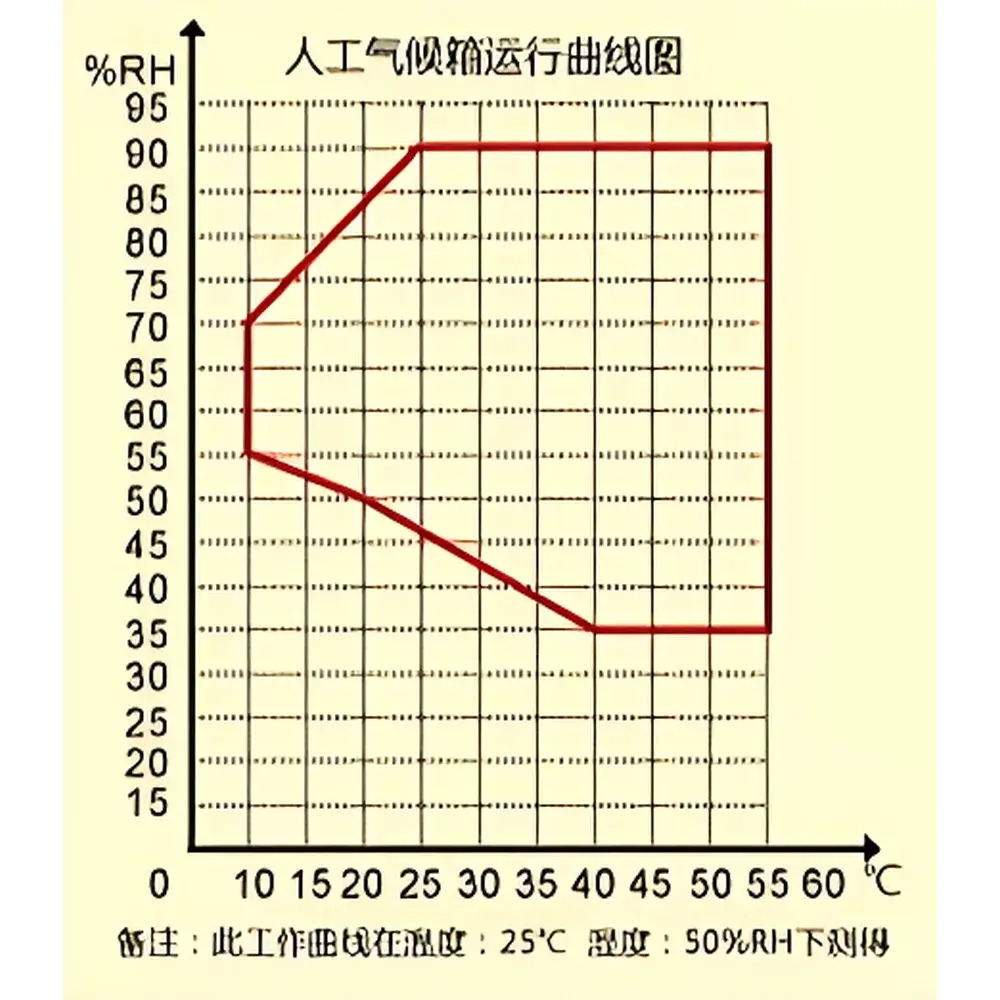
| Temperature Range (with light) | 10–50°C |
| Temperature Range (dark) | 4–50°C |
| Temperature Uniformity | ±1°C |
| Temperature Resolution | 0.1°C |
| Humidity Range | 50–90% RH |
| Humidity Deviation | ±5–7% RH |
| Light Intensity | 0–12,000 lx (HQH-150), 0–15,000 lx (HQH-250), 0–25,000 lx (HQH-400), 6-level adjustable |
| Power Input | 2300 W / 2500 W / 3200 W |
| Chamber Volume | 150 L / 250 L / 400 L |
| Internal Dimensions (W×D×H, mm) | 500×400×750 / 580×500×850 / 680×550×1050 |
| External Dimensions (W×D×H, mm) | 700×640×1480 / 780×745×1560 / 880×780×1810 |
| Standard Shelves | 3 pcs |
| Continuous Operation Capability | ≥360 h |
| Ambient Operating Conditions | 5–30°C, ≤80% RH |
Overview
The Truelab HQH Series Plant Growth Chambers are precision-engineered environmental simulation systems designed for reproducible, long-term cultivation of photosynthetic organisms and model organisms under tightly controlled temperature, humidity, and photoperiod conditions. Based on the principle of active thermoelectric and compressor-assisted climate regulation—combined with triple-sided T4 fluorescent illumination and closed-loop humidity feedback control—these chambers provide stable, programmable environments essential for plant physiology studies, seed germination assays, tissue culture incubation, entomological rearing, and small-animal housing in academic, agricultural, and pharmaceutical research settings. The system integrates a microprocessor-based PID controller with dual-stage cooling (R134a/R406a refrigerant), mirror-finish 304 stainless steel interior, and optimized air circulation architecture to ensure spatial uniformity and temporal stability across all operational parameters.
Key Features
- Triple-sided lighting configuration with T4 fluorescent lamps delivering uniform, shadow-free illumination up to 25,000 lx (HQH-400 model); six-step intensity adjustment enables precise photobiological dosing.
- Intelligent day/night temperature programming: independent setpoints for light-on and light-off phases, supporting circadian rhythm studies and diurnal growth modeling.
- High-efficiency refrigeration system using ozone-friendly R134a and R406a refrigerants—compliant with Montreal Protocol requirements and aligned with global green lab initiatives.
- Robust thermal management: high-performance international-brand hermetic compressor paired with proprietary heat dissipation design ensures ≥360 hours of uninterrupted operation under load.
- Optimized airflow architecture featuring JAKEL centrifugal fans and engineered duct geometry achieves ≤±1°C temperature uniformity throughout the chamber volume (measured at nine standard points per IEC 60068-3-5).
- Integrated humidity control via stainless-steel internal water reservoir, submerged heating element, and calibrated capacitive RH sensor (±3% accuracy at 25°C, 50% RH).
- Large backlit LCD interface displaying real-time temperature, humidity, light intensity, and program status; menu-driven navigation supports intuitive multilevel parameter entry and recall.
- Advanced 99-cycle programmable logic: each cycle supports up to 30 segments, with segment duration configurable to 99 h 59 min—enabling complex multi-phase environmental protocols (e.g., vernalization → photoperiod induction → stress acclimation).
Sample Compatibility & Compliance
The HQH chambers accommodate standard petri dishes, Magenta boxes, multi-well plates, hydroponic trays, insect rearing cages, and small rodent enclosures (up to 200 g). Interior dimensions and shelf adjustability support flexible experimental layouts. All models comply with IEC 61000-6-3 (EMC emission limits), IEC 61000-6-2 (immunity), and GB/T 2423.1–2008 / GB/T 2423.2–2008 (environmental testing standards for temperature/humidity). Optional configurations support GLP-compliant data integrity: USB/RS485 interfaces enable traceable parameter logging compatible with 21 CFR Part 11–enabled LIMS or ELN platforms when used with validated software drivers.
Software & Data Management
Standard firmware includes non-volatile memory for program retention during power loss and automatic restart recovery. Optional RS485 communication module (with Modbus RTU protocol) allows integration into centralized building management systems (BMS) or laboratory automation networks. The included PC software provides time-stamped CSV export of temperature, humidity, and light intensity histories; audit trails record user login events, parameter modifications, and alarm triggers. For regulated environments, optional validation packages include IQ/OQ documentation templates aligned with ISO/IEC 17025 and ASTM E2500-13 guidelines.
Applications
- Plant phenotyping under controlled photoperiods and temperature gradients
- Seed viability and germination kinetics (ISTA-compliant protocols)
- In vitro propagation of medicinal herbs and crop biotech lines
- Developmental biology studies in Arabidopsis thaliana, rice, maize, and legumes
- Entomological research: Drosophila melanogaster life-cycle synchronization, mosquito rearing
- Microbial co-culture experiments requiring defined light exposure (e.g., cyanobacteria–heterotroph interactions)
- Pre-clinical toxicology: zebrafish embryo development under variable light-dark cycles
- Environmental stress response profiling (heat shock, drought-mimic dehydration, photoinhibition)
FAQ
What refrigerants are used in the HQH series, and why are they environmentally preferable?
The HQH chambers utilize R134a and R406a—zero-ozone-depletion-potential (ODP = 0) hydrofluorocarbon (HFC) and zeotropic blend refrigerants. These replace legacy CFCs and HCFCs, aligning with Kigali Amendment phase-down schedules and institutional sustainability mandates.
Can the chamber maintain humidity during extended dark cycles?
Yes. The sealed internal reservoir and PID-controlled heating element operate independently of lighting status, ensuring stable 50–90% RH across both photophase and scotophase intervals.
Is the lighting spectrum suitable for photosynthetic efficiency measurements?
T4 fluorescent tubes emit broad-spectrum white light (400–700 nm PAR range) with peak irradiance near 550 nm. While not tunable like LED arrays, this output is sufficient for routine growth studies and compatible with quantum sensor calibration per ISO 17025.
What validation support is available for GxP-regulated labs?
Truelab provides IQ/OQ protocol templates, calibration certificates for onboard sensors (NIST-traceable), and electronic signature-ready software modules meeting ALCOA+ data integrity principles.
Are custom chamber volumes supported beyond the standard 150/250/400 L options?
Yes. Engineering teams support OEM customization for 500 L, 800 L, and 1000 L configurations—including reinforced structural framing, expanded lighting arrays, and enhanced HVAC capacity—subject to lead-time and qualification review.