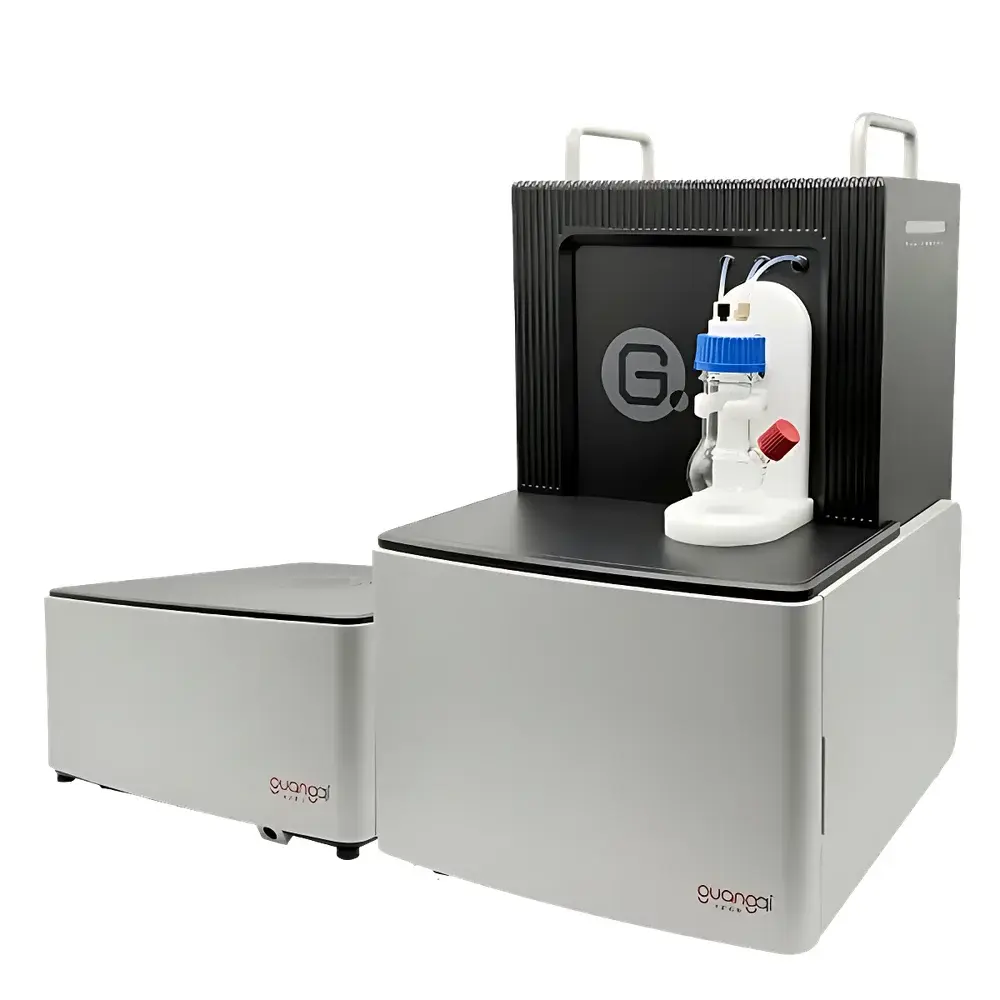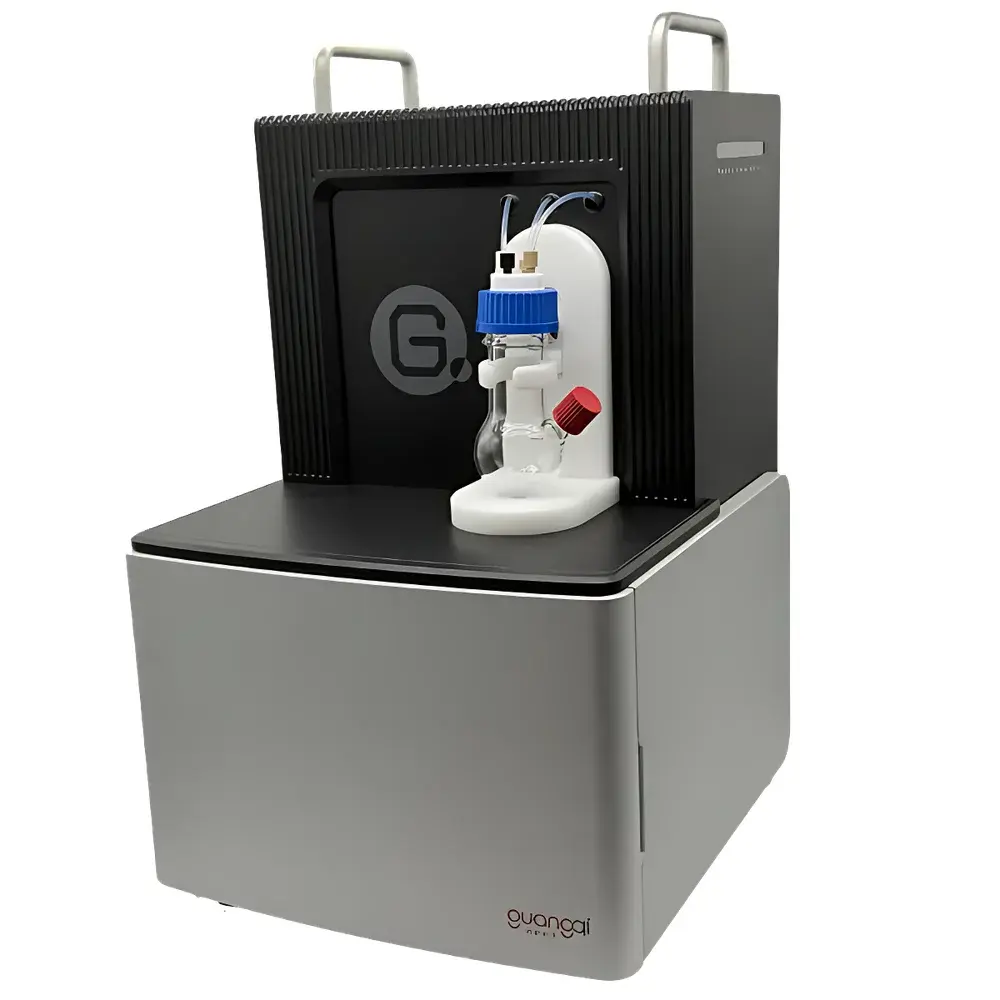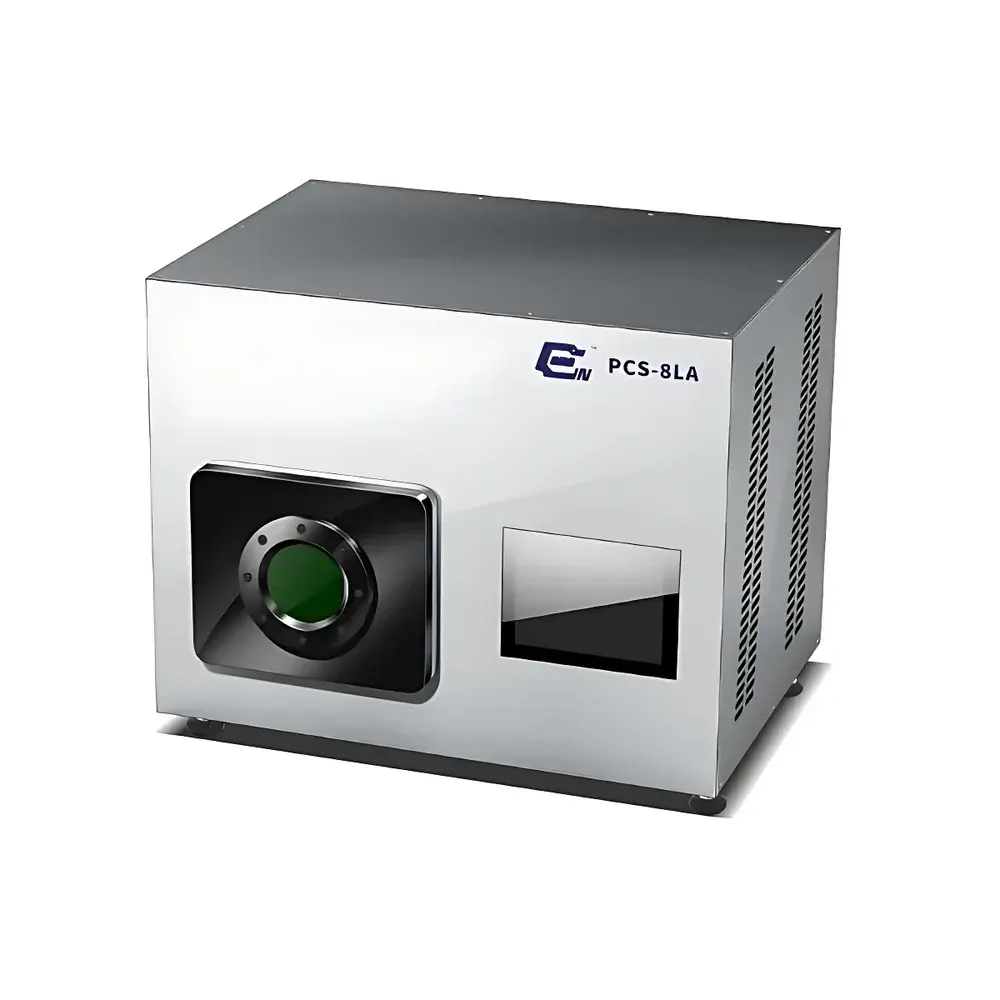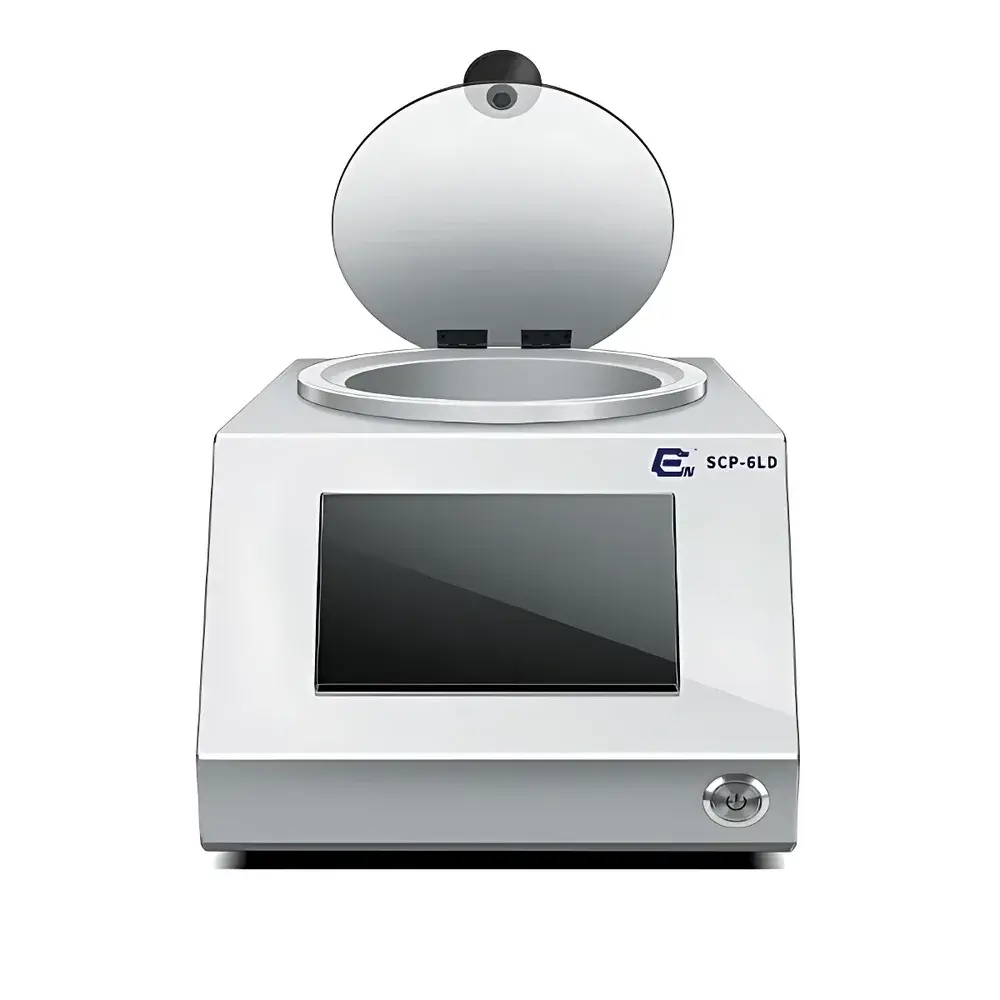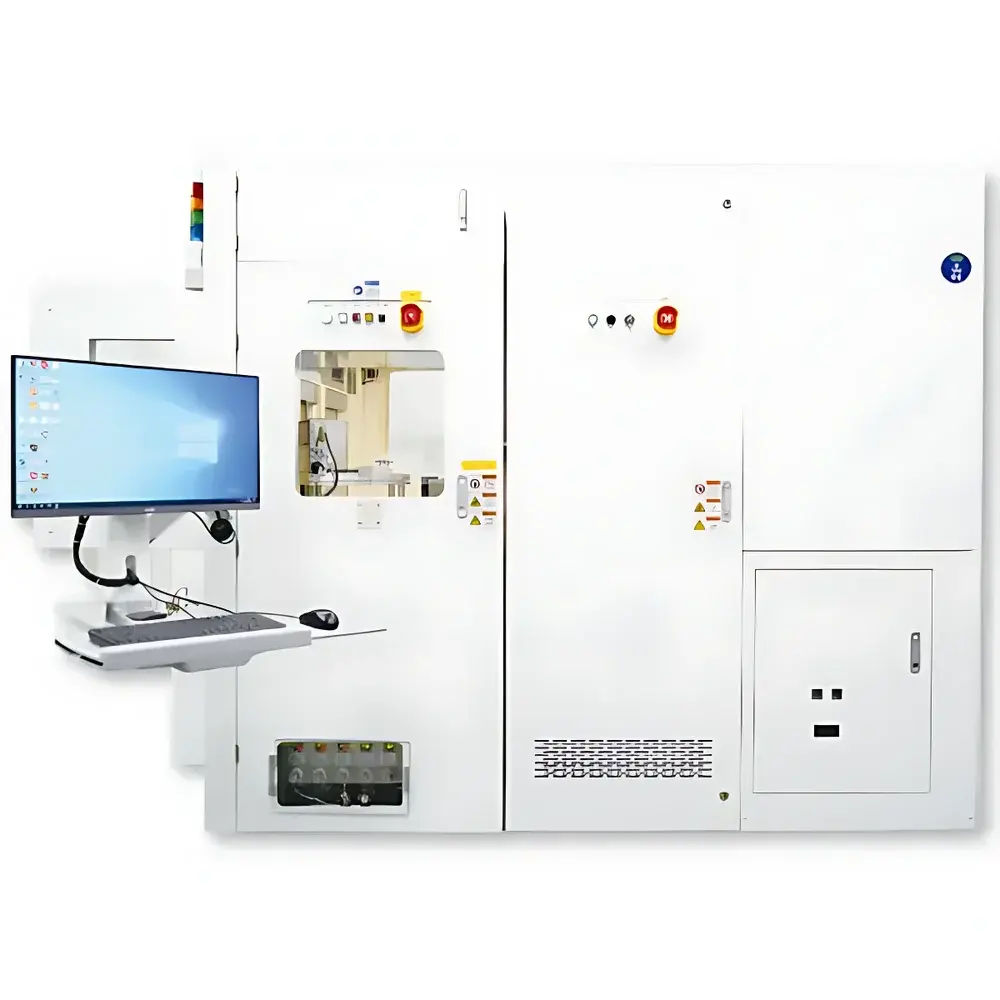
Truth Instruments Wafer-MOKE Wafer-Level Magneto-Optic Kerr Effect (MOKE) Measurement System
| Brand | Truth Instruments Company Limited |
|---|---|
| Origin | Shandong, China |
| Manufacturer Type | Authorized Distributor |
| Country of Origin | China |
| Model | Wafer-MOKE |
| Pricing | Available Upon Request |
| Sample Size | Up to 300 mm (12-inch) wafers, downward compatible with fragments |
| Vertical Field Range | ±2.4 T |
| In-Plane Field Range | ±1.3 T |
| Field Resolution | 0.01 mT |
| Field Uniformity | Better than ±1% over Ø1 mm |
| Kerr Rotation Resolution | 0.3 mdeg (RMS) |
| Throughput | 12 WPH (9 sites, 200 mm wafer, ±1.3 T) |
| Sample Repositioning Accuracy | <10 µm |
| Uptime | ≥90% |
| EFEM Integration | Optional |
Overview
The Truth Instruments Wafer-MOKE is a fully integrated, wafer-level magneto-optic Kerr effect (MOKE) measurement system engineered for high-throughput, non-destructive magnetic characterization of thin-film stacks in semiconductor manufacturing and advanced memory R&D. Based on the polar and longitudinal MOKE configurations, the system detects minute changes in polarization rotation (Kerr rotation) induced by magnetization reversal under precisely controlled external magnetic fields. This enables quantitative, spatially resolved mapping of key magnetic parameters—including coercivity (Hc), exchange bias (Hex), saturation magnetization (Ms), and anisotropy orientation—across full 200 mm and 300 mm wafers without physical contact or sample modification. The system supports both pre-patterning process verification and post-lithography device-level validation, making it essential for process development, yield ramp-up, and inline quality control in spintronic device fabrication—particularly for perpendicular magnetic tunnel junctions (p-MTJs) used in STT-MRAM and SOT-MRAM technologies.
Key Features
- High-field electromagnet configuration delivering ±2.4 T vertical and ±1.3 T in-plane magnetic fields, sufficient to saturate high-anisotropy CoFeB/MgO-based p-MTJ stacks and induce deterministic switching of free and reference layers.
- Sub-millidegree Kerr rotation resolution (0.3 mdeg RMS) enabled by low-noise lock-in detection, high-stability HeNe laser source (632.8 nm), and optimized optical path design with active vibration isolation.
- Multi-mode scanning architecture supporting spiral, raster, radial, and user-defined coordinate patterns—enabling adaptive sampling density for defect localization, edge analysis, or statistical process monitoring.
- Automated hysteresis loop acquisition across up to 9 sites per wafer at 12 wafers per hour (WPH) under ±1.3 T field conditions, with real-time curve fitting and parameter extraction (Hc, Hex, Ms, squareness ratio).
- Mechanical repeatability better than 10 µm for wafer repositioning—critical for cross-process correlation and time-series tracking of magnetic uniformity drift.
- Modular vacuum-compatible chamber design; optional EFEM integration for cluster tool compatibility and cleanroom deployment (Class 100/ISO 5 compliant environments).
Sample Compatibility & Compliance
The Wafer-MOKE accommodates standard semiconductor substrates from 100 mm to 300 mm diameter, including blanket films, patterned arrays, and fragmented test wafers. It is compatible with common MRAM stack architectures: Ta/CoFeB/MgO/CoFeB/Ta, IrMn/CoFe/CoFeB/MgO, and synthetic antiferromagnetic (SAF) reference layers. All magnetic field calibration and Kerr signal normalization procedures follow traceable protocols aligned with ASTM F3073 (Standard Guide for Magnetic Characterization of Spintronic Devices) and ISO/IEC 17025 requirements for measurement uncertainty reporting. Data audit trails—including operator ID, timestamp, field sweep sequence, and environmental logs—are maintained in accordance with FDA 21 CFR Part 11-compliant software architecture when configured with electronic signature modules.
Software & Data Management
The proprietary TRUTH-MOKE Control Suite provides a unified interface for instrument control, scan planning, real-time visualization, and batch analysis. Raw Kerr rotation vs. field curves are stored in HDF5 format with embedded metadata (wafer ID, site coordinates, field axis, temperature, laser power). Automated report generation exports CSV and PDF deliverables containing wafer-level magnetic uniformity maps (e.g., Hc distribution heatmaps), statistical summaries (mean ± 3σ), and outlier flagging per die. The software supports GLP/GMP audit mode with role-based access control, change history logging, and electronic signatures. API access (Python SDK) enables integration into factory MES systems and AI-driven yield prediction pipelines.
Applications
- Process window qualification for sputtering, annealing, and capping steps in MRAM backend integration.
- Quantitative assessment of interfacial Dzyaloshinskii–Moriya interaction (DMI) strength via asymmetric loop shifts in synthetic antiferromagnets.
- Mapping of local variations in perpendicular magnetic anisotropy (PMA) energy density across wafer radius—correlating with film thickness, oxygen partial pressure, or substrate temperature gradients.
- Screening of pinning layer integrity through exchange bias field (Hex) stability under thermal cycling or ion irradiation.
- Root-cause analysis of write-error-rate (WER) excursions via spatial correlation between Kerr-derived Hc non-uniformity and electrical tester failure clusters.
FAQ
What magnetic film stacks can be characterized with the Wafer-MOKE?
The system is optimized for transition-metal multilayers (e.g., CoFeB/MgO, NiFe/IrMn, Co/Pd, FePt) and synthetic antiferromagnets used in MRAM, spin-orbit torque devices, and domain-wall racetrack memories.
Is cryogenic operation supported?
Standard configuration operates at ambient temperature (23 ± 2 °C); optional liquid-nitrogen-cooled stage (77 K) and closed-cycle cryostat (4–300 K) are available for low-T magnetic phase studies.
Can the system measure dynamic magnetization switching?
Yes—when paired with external pulse generators and fast photodetectors, the platform supports time-resolved MOKE (TR-MOKE) measurements with sub-nanosecond temporal resolution.
How is data traceability ensured for production audits?
All measurement sessions generate immutable digital records with cryptographic hashing, synchronized NTP timestamps, and configurable retention policies meeting ISO 9001 and IATF 16949 documentation requirements.
What maintenance intervals are recommended?
Laser alignment verification every 6 months; magnet coil calibration annually; optical component cleaning per SEMI E10 standards during scheduled tool downtime.