
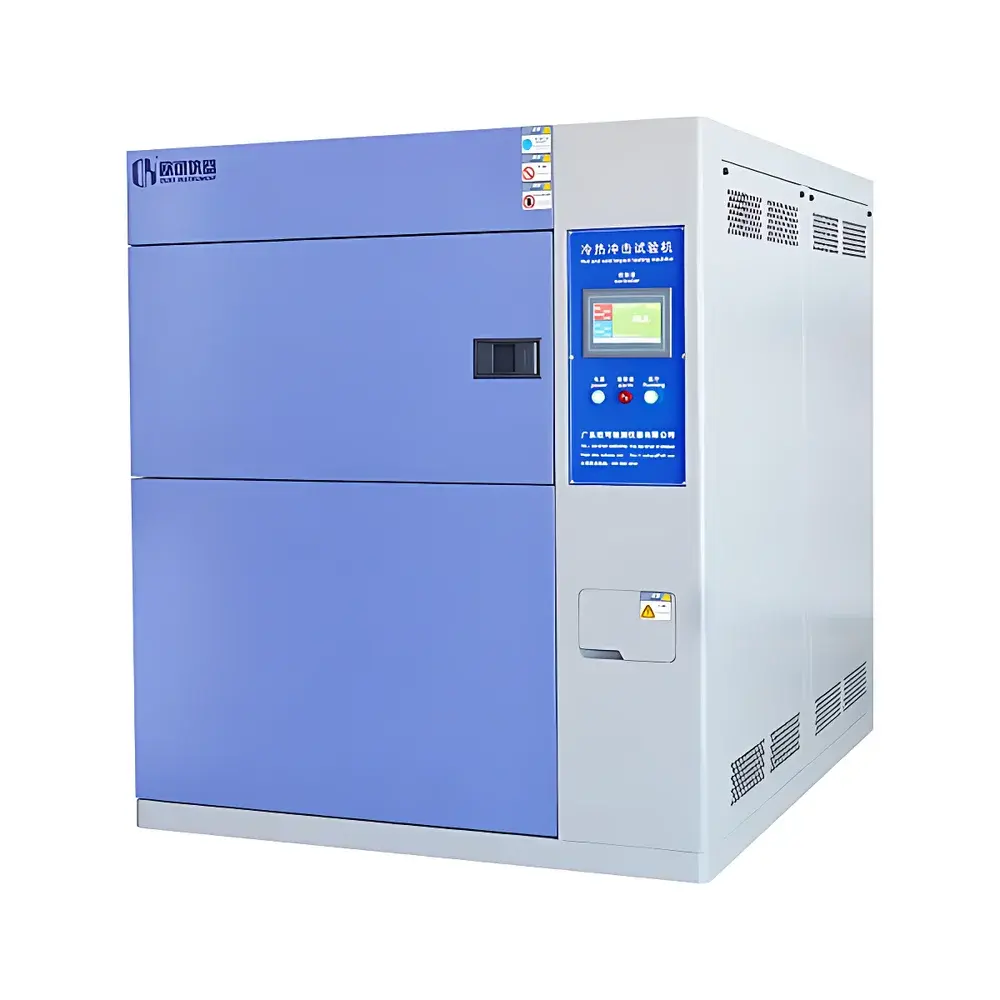
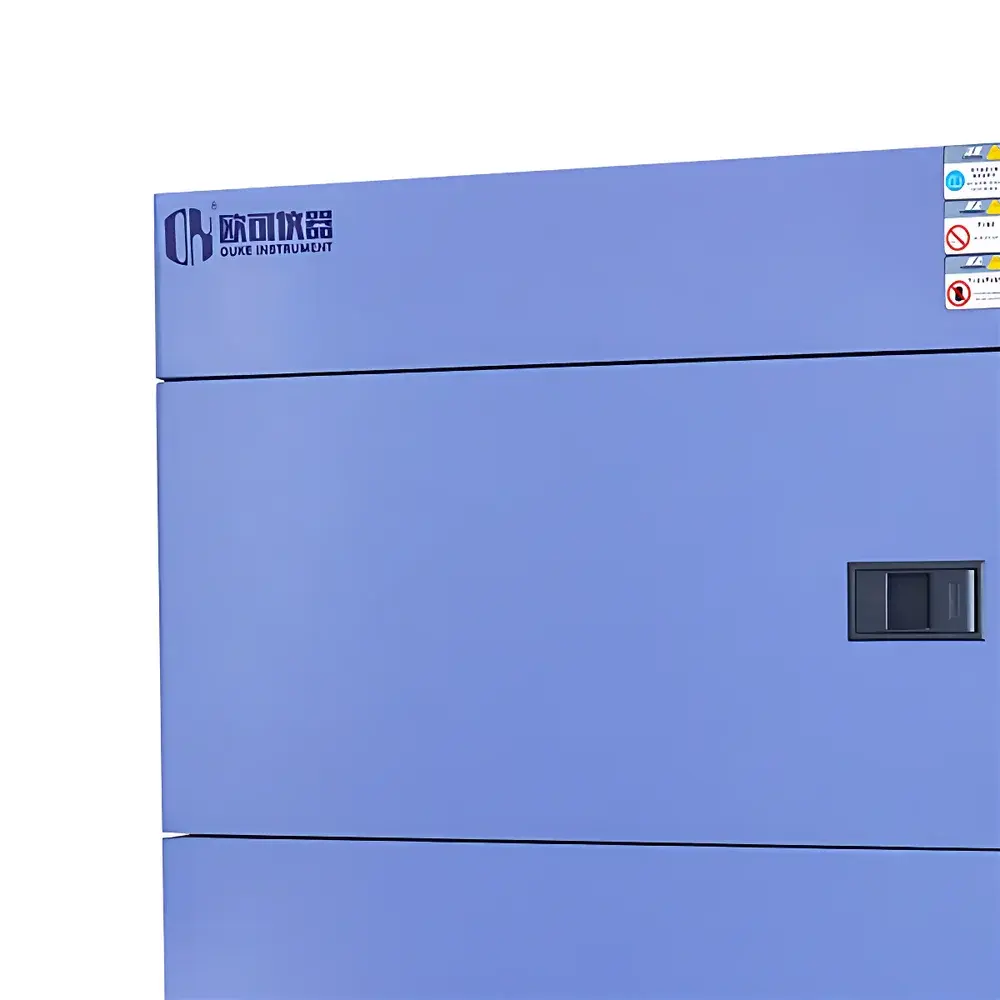
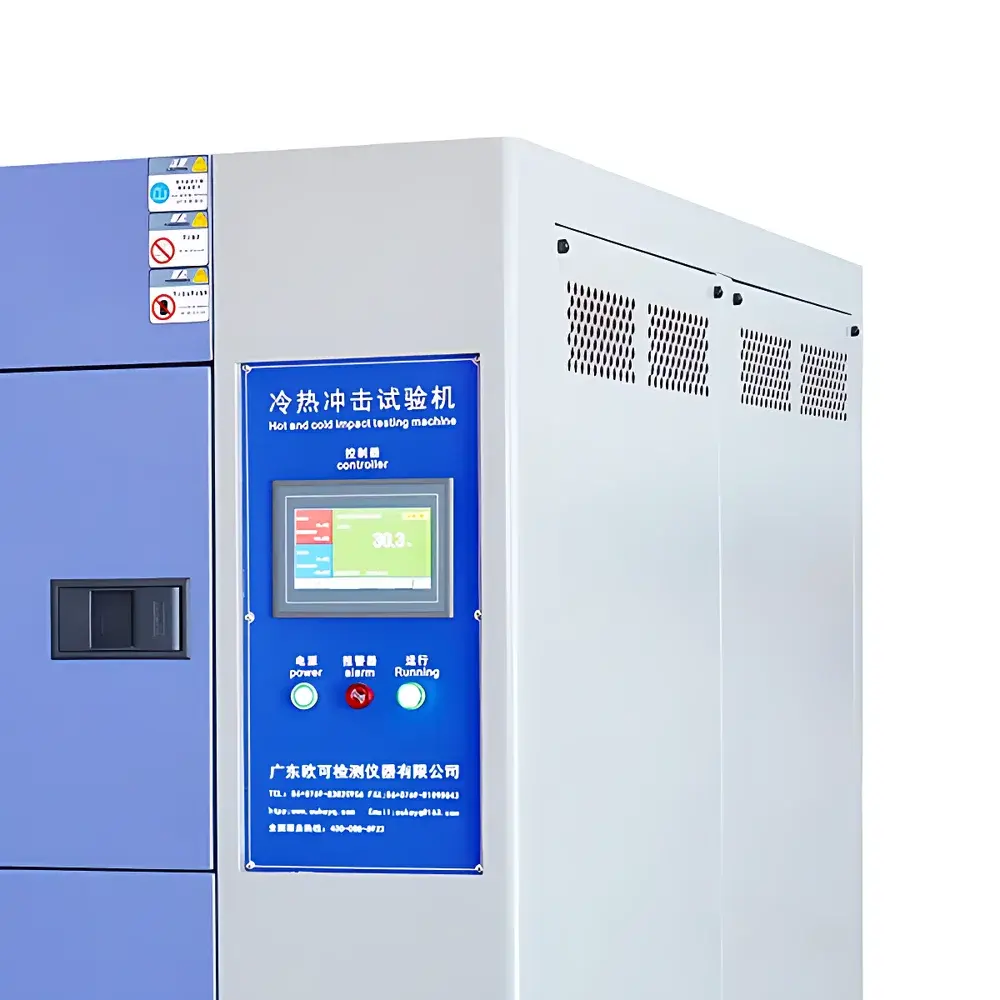
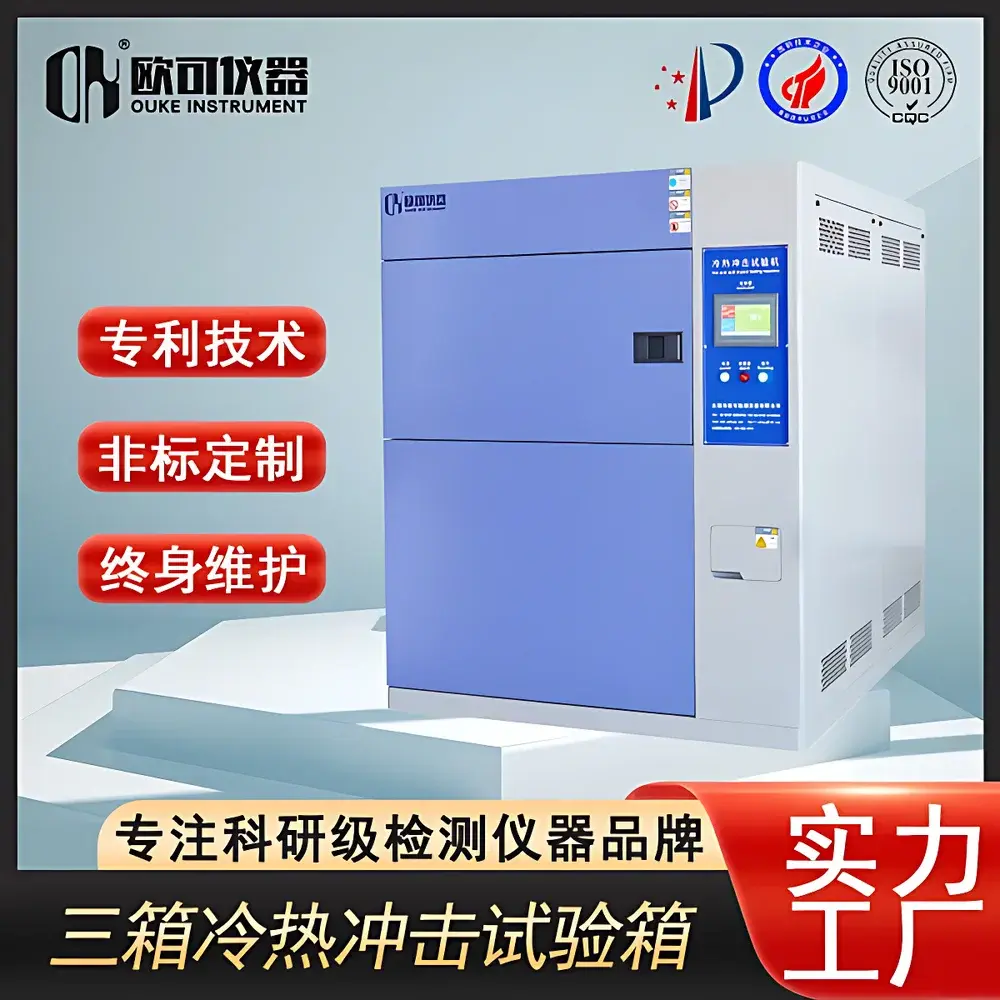
OK-TS-1 Thermal Shock Test Chamber
| Brand | OK Instruments |
|---|---|
| Origin | Guangdong, China |
| Manufacturer Type | OEM/ODM Manufacturer |
| Country of Origin | China |
| Model | OK-TS-1 |
| Price | USD 11,200 (FOB Guangdong) |
| High-Temperature Range | +150 °C |
| Low-Temperature Range | −50 °C |
| Thermal Shock Range | −50 °C to +150 °C |
| Temperature Stability | ±2 °C |
| Heating Rate | 10 °C/min |
| Cooling Rate | 10 °C/min |
Overview
The OK-TS-1 Thermal Shock Test Chamber is a precision-engineered environmental reliability testing system designed to evaluate product resilience under rapid, extreme temperature transitions. It operates on the principle of accelerated thermal stress induction—subjecting test specimens to abrupt shifts between high- and low-temperature environments to expose latent defects arising from differential thermal expansion, interfacial delamination, solder joint fatigue, or material embrittlement. Unlike standard temperature cycling chambers, which impose gradual thermal gradients, the OK-TS-1 delivers true thermal shock per IEC 60068-2-14, MIL-STD-810H Method 503.7, and GB/T 2423.22. Its dual-chamber lift-basket architecture enables reproducible, sub-10-second transfer times—critical for simulating real-world operational stresses such as aerospace re-entry, automotive under-hood transients, or cold-start electronics activation.
Key Features
- Dual-zone chamber design with independent high-temperature (+150 °C) and low-temperature (−50 °C) compartments, thermally isolated by vacuum-insulated stainless-steel walls and multi-layer reflective barriers.
- Motorized lift-basket transport mechanism with servo-controlled positioning, achieving ≤8 s transfer time between extreme zones under no-load conditions—validated per ASTM E1545-20 Annex A1.
- High-efficiency cascade refrigeration system using R404A/R23 mixed-refrigerant stages, paired with PID-controlled electric heating elements delivering consistent 10 °C/min ramp rates in both directions.
- Integrated 12-bit platinum RTD sensor array (PT100 × 6) distributed across work zone corners and center, enabling real-time spatial temperature profiling and closed-loop stability control (±2 °C over full range).
- Industrial-grade programmable logic controller (PLC) with Ethernet/IP interface, supporting up to 999 programmable test cycles, dwell time customization (1 min–999 h), and automatic fault logging with timestamped event history.
- Compliance-ready safety architecture: dual independent over-temperature cutoffs, phase-loss protection, refrigerant pressure monitoring, door interlock with forced-air purge, and Class I, Division 2 electrical certification (optional ATEX/IECEx).
Sample Compatibility & Compliance
The OK-TS-1 accommodates standard test specimens up to 400 mm × 400 mm × 400 mm (W×D×H) within its stainless-steel interior (304 SS, passivated finish). It supports both powered and unpowered device-under-test (DUT) configurations via optional feedthrough ports (12× M20, IP65-rated). The chamber meets structural and operational requirements of multiple international standards: IEC 60068-2-14 (Test Nc), MIL-STD-810H Method 503.7 (Thermal Shock), GJB 150.5A-2012, ISO 16750-4 (Road Vehicles), and DO-160G Section 4 (Environmental Conditions). All thermal performance data—including transfer time, recovery time, and uniformity—are traceable to NIST-calibrated reference sensors and documented in factory acceptance test (FAT) reports provided with each unit.
Software & Data Management
The OK-TS-1 ships with OK-TestSuite™ v3.2—a Windows-based control and analysis platform compliant with FDA 21 CFR Part 11 (electronic signatures, audit trail, role-based access). It enables full-cycle scripting, real-time graphing of up to eight channels (chamber temps, DUT thermocouples, power status), automated report generation (PDF/CSV), and seamless integration with LIMS via OPC UA or Modbus TCP. Audit trails record all user actions, parameter changes, alarm events, and calibration interventions with immutable timestamps—supporting GLP/GMP validation protocols. Optional cloud synchronization allows remote monitoring and predictive maintenance alerts via secure TLS 1.3 encrypted connection.
Applications
- Electronics reliability screening: IC packages (QFN, BGA), PCBAs, battery modules, OLED displays, and RF front-end components subjected to JEDEC JESD22-A104E qualification.
- Automotive electronics validation: ECUs, ADAS sensors, infotainment head units, and EV battery management systems per ISO 16750-4 and IATF 16949 clause 8.3.4.2.
- Aerospace component qualification: Avionics boxes, satellite thermal control materials, and optical housings tested per RTCA DO-160G Section 4 and ESA ECSS-Q-ST-70-02C.
- Materials science research: Thermomechanical characterization of polymer composites, thermal barrier coatings, elastomeric seals, and adhesive bonds under cyclic shock loading.
- Defense & industrial equipment: Ruggedized communication gear, missile guidance subsystems, and medical imaging hardware requiring MIL-STD-810H compliance.
FAQ
What is the difference between thermal shock and temperature cycling?
Thermal shock applies instantaneous, high-rate temperature transitions (typically >30 °C/min) between extremes to induce mechanical stress failure modes; temperature cycling uses slower ramps (5–15 °C/min) to assess cumulative thermal fatigue and aging effects.
Does the OK-TS-1 support three-zone (static) configuration?
No—the OK-TS-1 implements a two-zone lift-basket architecture optimized for speed and thermal isolation. For static-test applications, OK Instruments offers the OK-TS-3 series with separate hot/cold/test zones and pneumatic air-valve switching.
Can the chamber be validated for IQ/OQ/PQ protocols?
Yes. Factory-provided IQ/OQ documentation includes installation verification checklists, operational boundary testing, sensor calibration certificates (NIST-traceable), and software validation summary per GAMP 5 guidelines.
Is remote diagnostics supported?
Yes. Embedded Ethernet module enables secure remote login for firmware updates, log retrieval, and real-time parameter adjustment—subject to customer network security policies.
What maintenance intervals are recommended?
Compressor oil and filter replacement every 2,000 operating hours; refrigerant leak inspection annually; RTD calibration verification semiannually or per internal QA schedule.



