
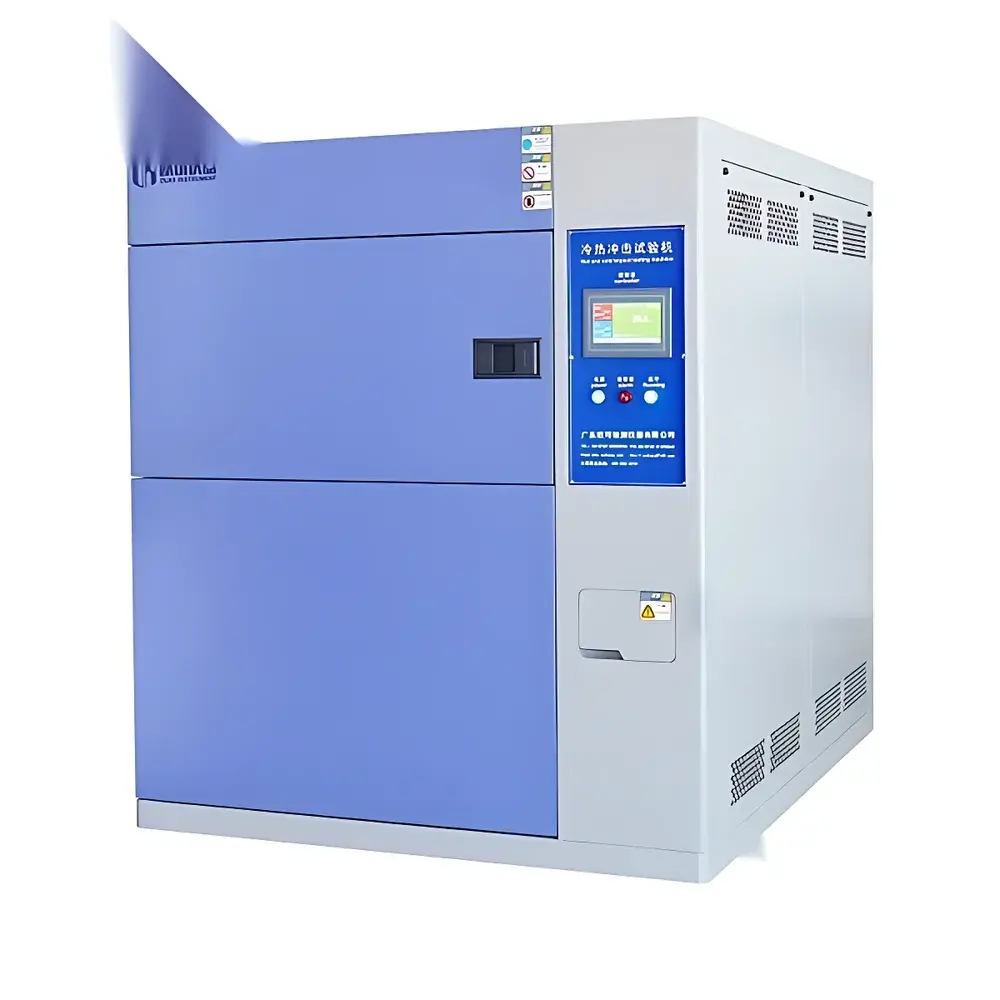
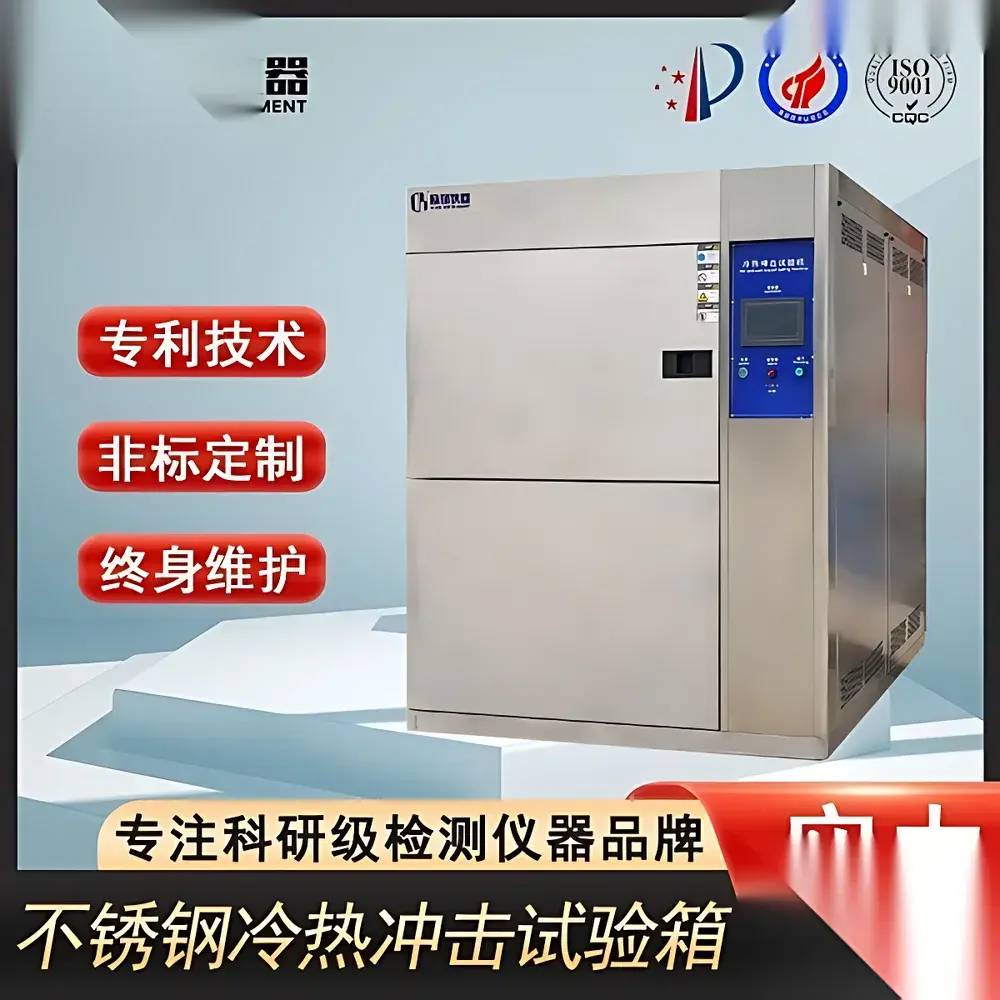
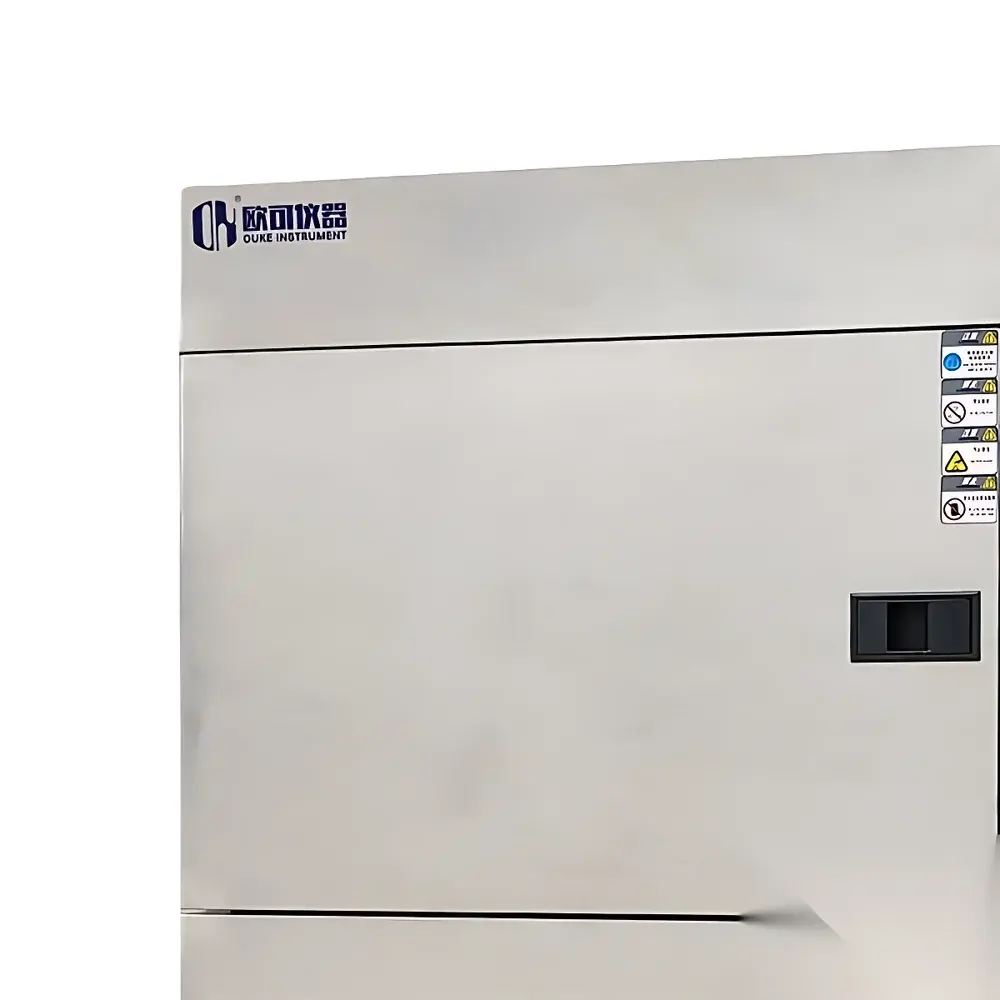
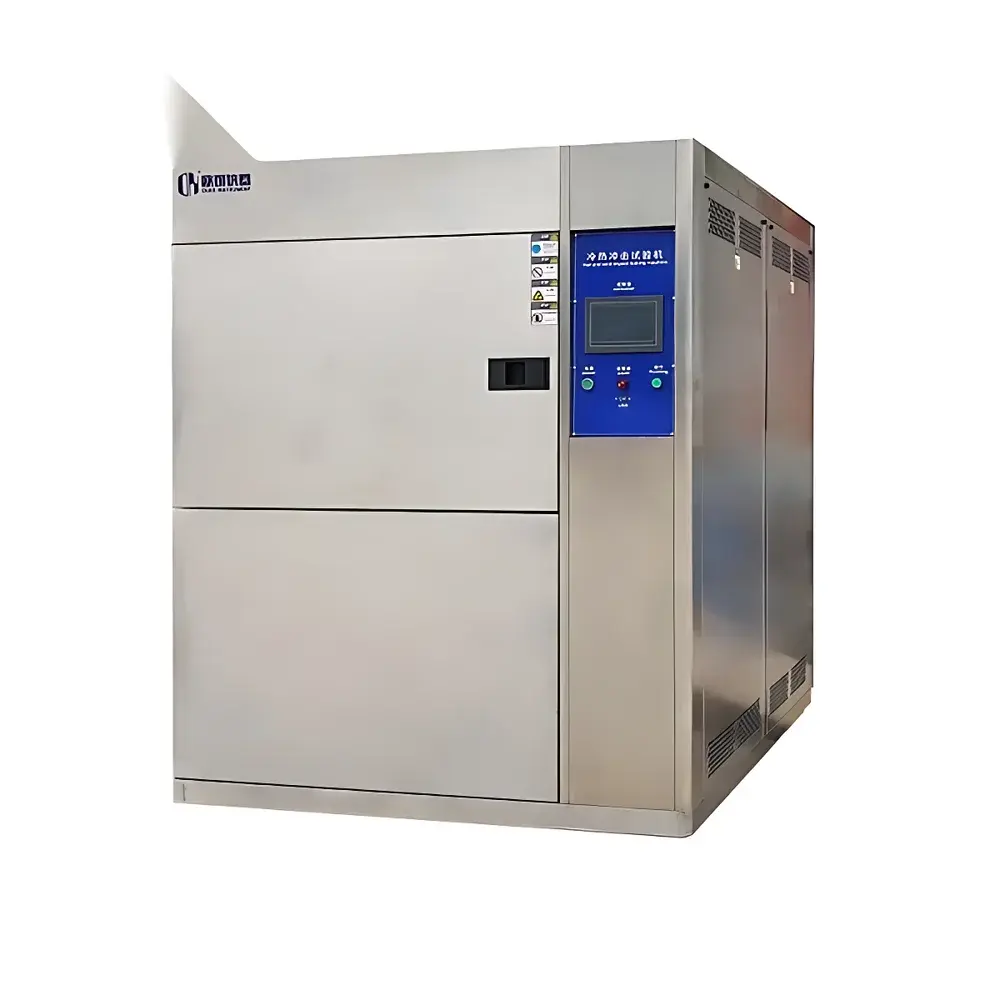
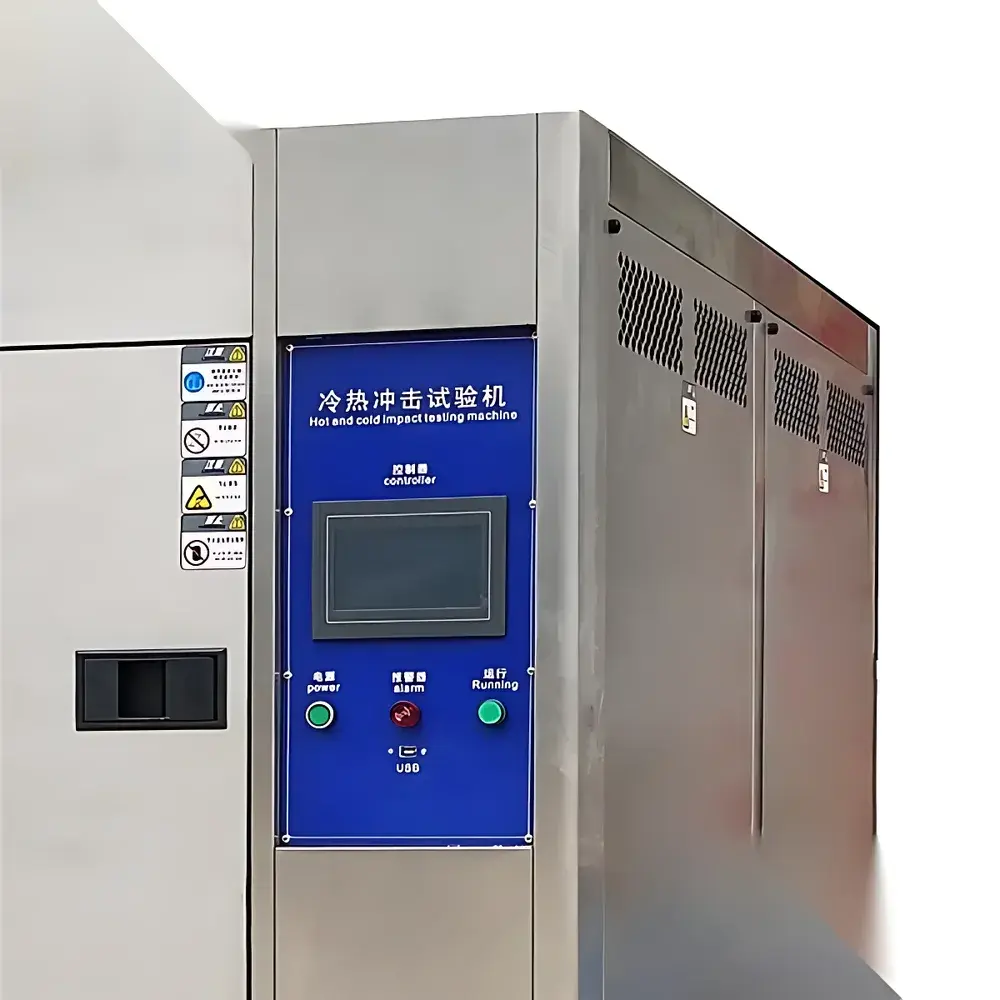
OK-TS-150 Dual-Zone Thermal Shock Test Chamber
| Brand | Other Brands |
|---|---|
| Origin | Imported |
| Manufacturer Type | Authorized Distributor |
| Temperature Range (High Zone) | +80 °C to +200 °C |
| Temperature Range (Low Zone) | −10 °C to −55 °C |
| Operational Test Range | +60 °C to +150 °C / 0 °C to −40 °C |
| Control Accuracy | ±2 °C |
| Resolution | 0.01 °C |
| High-Temp Ramp Time (RT → +150 °C) | ~60 min |
| Low-Temp Ramp Time (RT → −40 °C) | ~80 min |
| Test Zone Temperature Recovery Time | 3–5 min |
| Internal Dimensions (W×H×D) | 500 × 400 × 400 mm |
| Construction Material | SUS#304 Stainless Steel (Interior & Exterior) |
| Insulation | High-Density Glass Wool + Rigid Polyurethane Foam |
| Refrigeration System | Imported European/US High-Efficiency Compressor |
| Cooling Medium | Eco-Friendly Refrigerant (R404A or equivalent) |
| Heating System | High-Speed Calibrated Electric Heaters |
| Air Circulation | Japanese Multi-Wing Centrifugal Fan with Horizontal Diffusion & Vertical Heat Exchange Arc Pattern |
| Controller | OYO 8226 Intelligent Touchscreen PID Controller (7″ Color LCD, English UI) |
Overview
The OK-TS-150 Dual-Zone Thermal Shock Test Chamber is an engineered solution for accelerated reliability assessment of electronic components, aerospace materials, automotive assemblies, and polymer-based products subjected to rapid thermal transitions. Based on the two-chamber (hot/cold) air-transfer principle, it enables precise, repeatable thermal shock testing by physically moving test specimens between isolated high-temperature and low-temperature zones via a pneumatic or servo-driven transfer mechanism. This architecture eliminates thermal inertia limitations inherent in single-chamber systems and ensures true step-change exposure—critical for evaluating interfacial delamination, solder joint fatigue, coating adhesion loss, and coefficient-of-thermal-expansion (CTE) mismatch failure modes. Designed to meet the functional requirements of MIL-STD-810H Method 503.6, JEDEC JESD22-A104F, IEC 60068-2-14, and ASTM D5229/D5229M, the chamber supports both static soak and dynamic cycling protocols under controlled ambient conditions. Its robust mechanical layout, calibrated thermal mass management, and closed-loop feedback control architecture deliver high reproducibility across thousands of shock cycles.
Key Features
- Dual-zone independent temperature control: Separate +80 °C to +200 °C hot zone and −10 °C to −55 °C cold zone, each equipped with dedicated refrigeration and heating circuits.
- Test zone with rapid thermal recovery: Achieves ≤5-minute temperature stabilization after specimen transfer, verified per IEC 60068-3-10 Annex B calibration procedures.
- SUS#304 stainless steel construction: Interior and exterior panels finished with mirror-grade polish; corrosion-resistant, non-outgassing, and compatible with cleanroom-class environments.
- High-efficiency refrigeration system: Features imported scroll compressors, Japanese solenoid valves, fin-tube evaporators, and eco-friendly refrigerant (R404A or R507 compliant with EU F-Gas Regulation).
- Intelligent OYO 8226 controller: 7-inch color touchscreen interface supporting up to 100 programmable profiles (1000 segments/profile), infinite loop execution, real-time graphical trend display, and event-triggered data logging.
- Comprehensive safety architecture: Includes over-temperature cut-off, compressor high/low pressure switches, phase failure detection, emergency stop circuitry, and auto-fault diagnosis with LCD error code reporting.
- Modular airflow design: Japanese multi-wing centrifugal fan with stainless steel extended shaft ensures uniform thermal distribution (±1.5 °C within test volume per IEC 60068-3-5).
Sample Compatibility & Compliance
The OK-TS-150 accommodates standard test specimens up to 30 kg total load, with internal dimensions of 500 × 400 × 400 mm (W×H×D). It supports mounting fixtures, DUT carriers, and custom jigs via two adjustable stainless steel trays. The chamber complies with electromagnetic compatibility (EMC) requirements per EN 61326-1 and meets electrical safety standards per EN 61010-1. All control logic and data handling functions are structured to support GLP/GMP-aligned validation protocols—including IQ/OQ/PQ documentation templates, audit trail generation (via optional RS-232/RS-485 or Ethernet add-on), and 21 CFR Part 11-compliant user access control when integrated with validated laboratory information management systems (LIMS). Calibration certificates traceable to NIST or UKAS-accredited laboratories are available upon request.
Software & Data Management
The embedded OYO 8226 controller provides native data logging at user-selectable intervals (1–60 sec), storing time-stamped temperature readings from up to four independent thermocouple inputs (T-type or K-type). Logged data exports directly to CSV format via USB memory stick or serial transmission. Optional PC-based software (OK-LogView Pro) enables remote monitoring, multi-chamber fleet management, statistical process control (SPC) charting, and automated report generation compliant with ISO/IEC 17025 clause 7.8. All program edits, parameter changes, and manual overrides are timestamped and logged with operator ID—satisfying ALCOA+ principles (Attributable, Legible, Contemporaneous, Original, Accurate, Complete, Consistent, Enduring, Available) for regulated environments.
Applications
- Qualification testing of PCBAs, IC packages, and MEMS devices per JEDEC A104F and IPC-9701.
- Validation of adhesive bonds, conformal coatings, and encapsulants used in EV battery modules.
- Reliability screening of optical sensors, laser diodes, and fiber-optic connectors exposed to extreme diurnal cycles.
- Material characterization of composites, elastomers, and shape-memory alloys under cyclic thermal stress.
- Pre-conditioning of medical device housings prior to sterilization validation (ISO 11135, ISO 11137).
- Environmental stress screening (ESS) in high-reliability manufacturing per MIL-HDBK-344A.
FAQ
What is the maximum thermal transition rate achievable between zones?
The system achieves nominal transfer times of ≤10 seconds between zones, enabling thermal shock rates exceeding 15 °C/s for small-mass samples under defined load conditions.
Can the chamber operate continuously for extended qualification runs?
Yes—the dual-circuit refrigeration system includes automatic defrost cycles, redundant safety interlocks, and continuous compressor load monitoring to support unattended operation for >1,000 hours.
Is third-party calibration and validation support available?
Yes—factory-trained field service engineers provide on-site IQ/OQ execution, as well as annual calibration services aligned with ISO/IEC 17025-accredited providers.
Does the controller support integration with SCADA or MES platforms?
Standard RS-232 is included; optional RS-485 Modbus RTU or Ethernet/IP interfaces enable seamless integration with industrial automation infrastructures.
What maintenance intervals are recommended for optimal performance?
Compressor oil and refrigerant analysis every 2,000 operating hours; filter dryer replacement every 12 months; full system leak check and sensor recalibration annually.



