
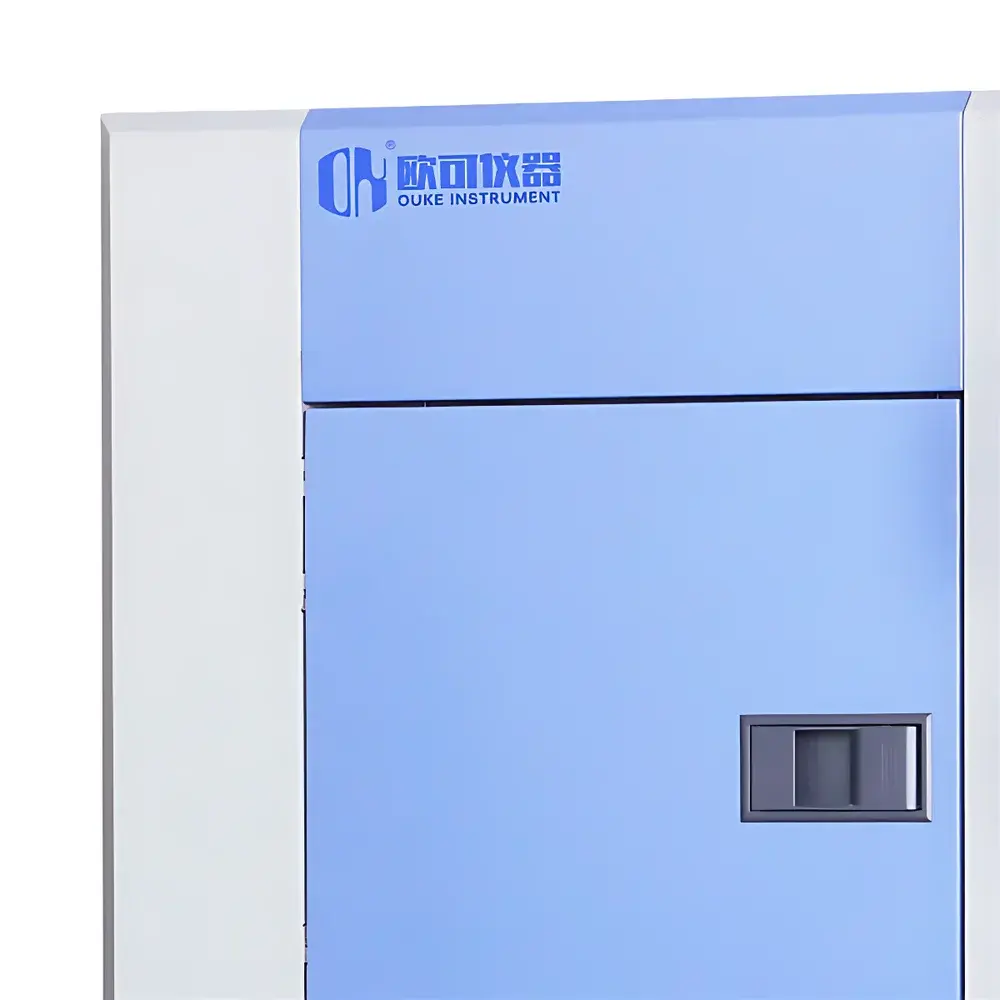
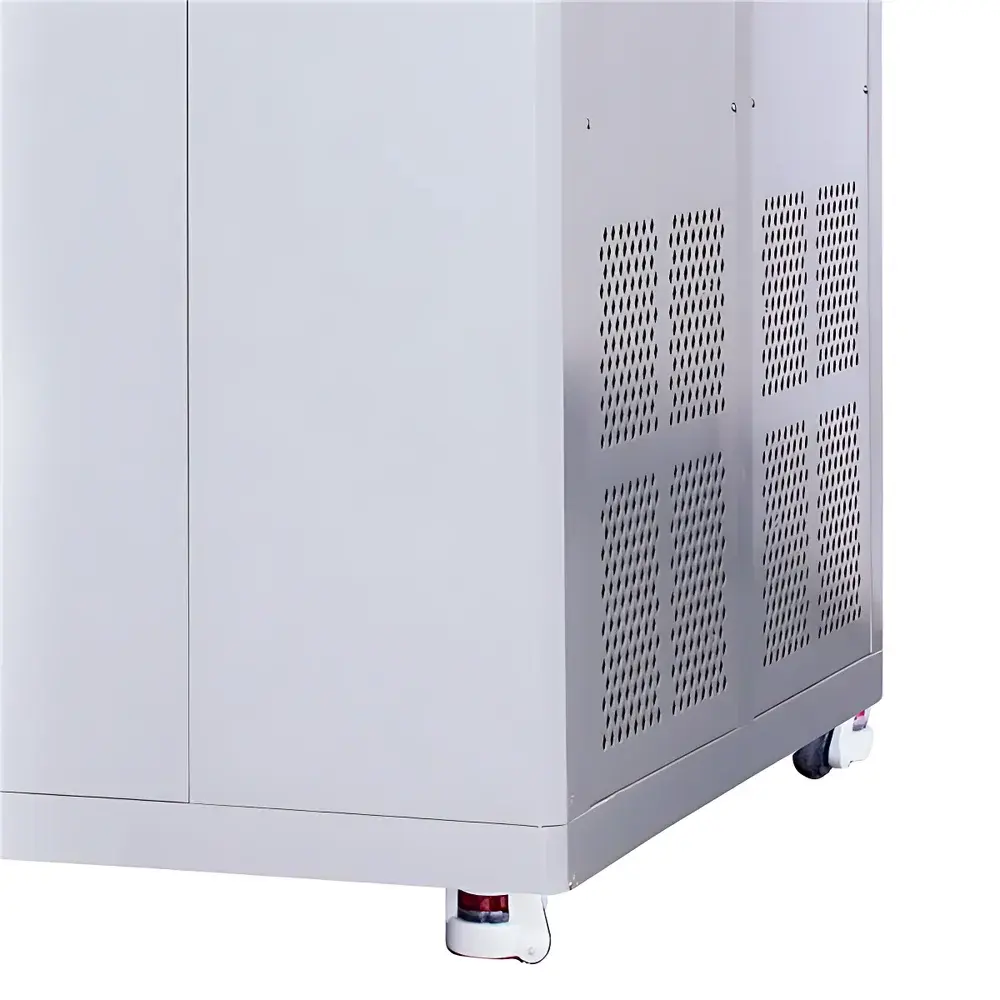
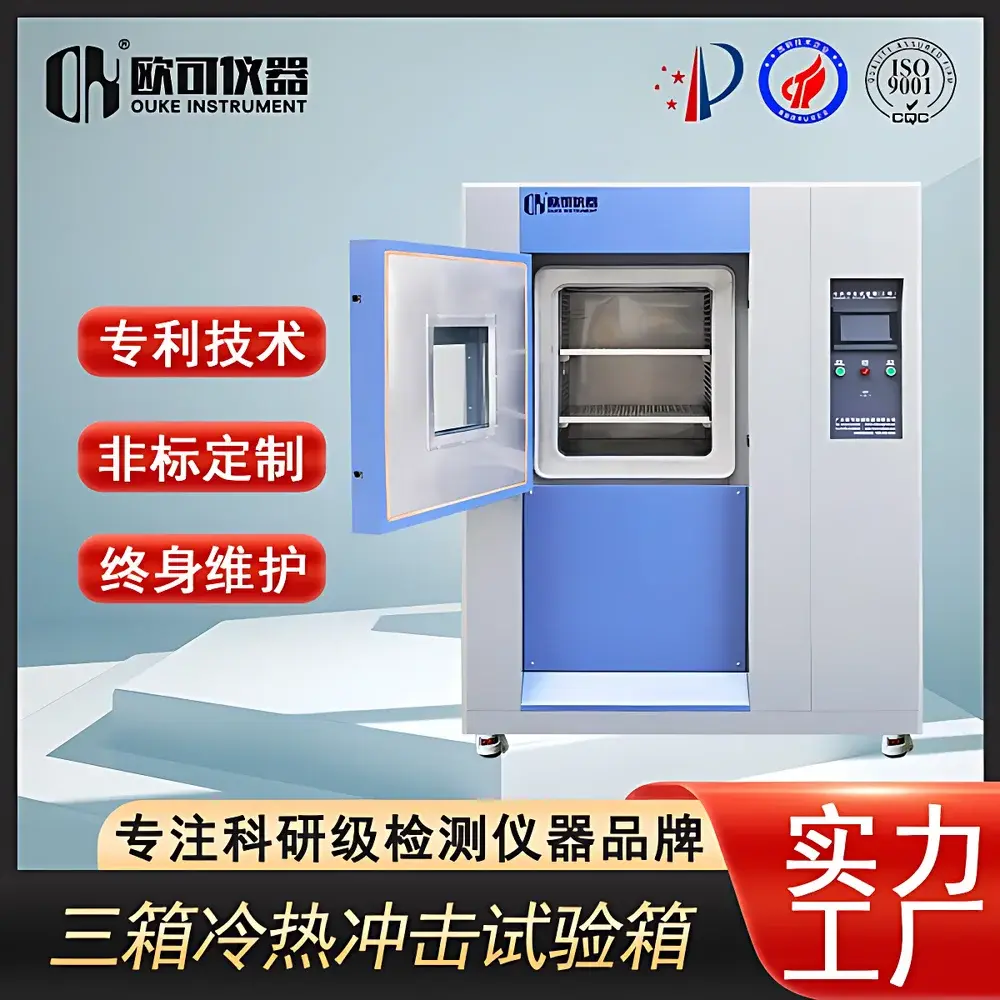
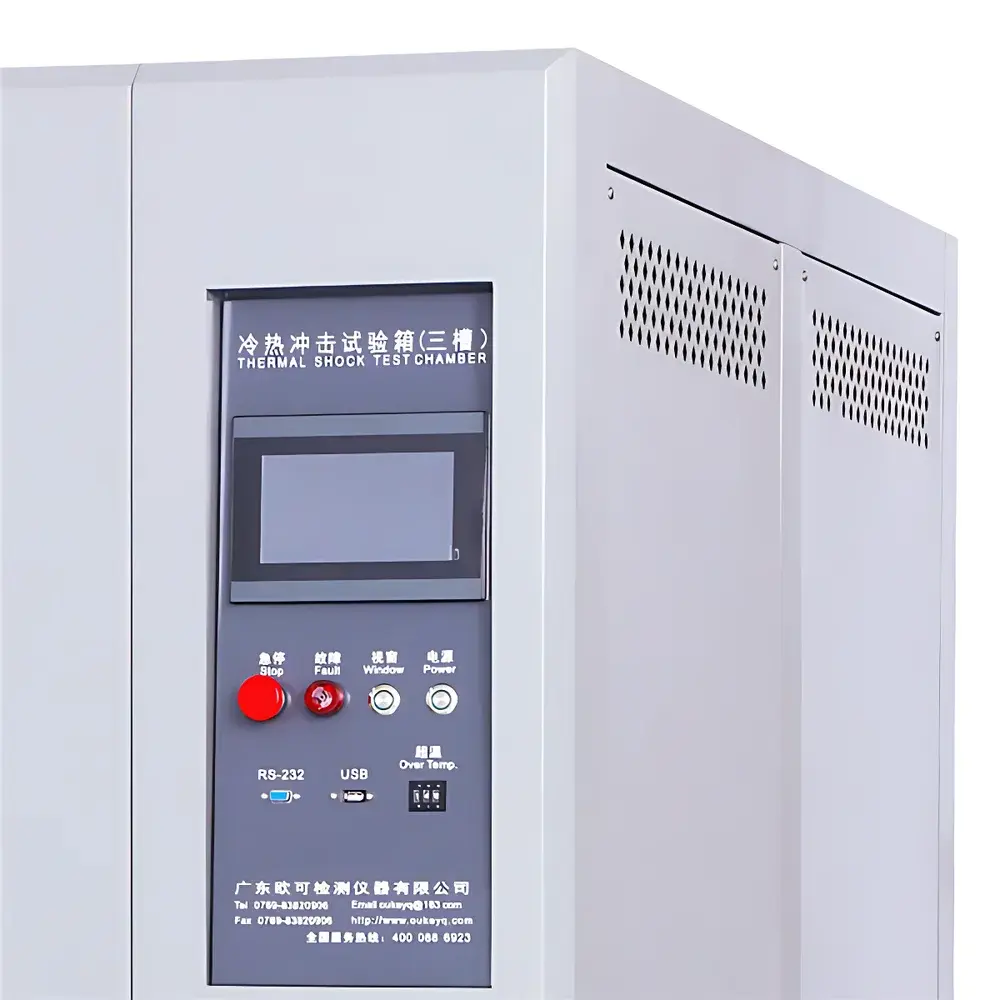
OK-TS-80.0..0 Triple-Bath Low-Temperature Impact Testing System
| Brand | OK Instruments |
|---|---|
| Origin | Guangdong, China |
| Manufacturer Type | Direct Manufacturer |
| Model | OK-TS-80.0..0 |
| High-Temperature Range | 150 °C |
| Low-Temperature Range | −50 °C |
| Thermal Shock Range | −50 °C to 150 °C |
| Temperature Stability | ±2 °C |
| Heating Rate | 10 °C/min |
| Cooling Rate | 10 °C/min |
Overview
The OK-TS-80.0..0 Triple-Bath Low-Temperature Impact Testing System is an integrated materials testing platform engineered for precise determination of ductile-to-brittle transition behavior in metallic specimens under controlled thermal conditions. It operates on the principle of Charpy or Izod impact testing—where a pendulum-driven striker delivers a single high-energy blow to a notched specimen—and combines this mechanical measurement with rigorously stabilized low-temperature conditioning across three independent cryogenic baths. Unlike conventional single-bath systems, the triple-bath architecture enables concurrent conditioning of identical specimens at three discrete temperatures (e.g., −20 °C, −40 °C, and −60 °C), eliminating sequential cooldown cycles and minimizing thermal drift during transfer. The system complies with core international test standards including ASTM E23, ISO 148-1, and GB/T 229, supporting standardized V-notch and U-notch specimen geometries. Its design prioritizes metrological integrity: temperature uniformity within each bath is maintained via refrigerant-circulated ethanol or methanol media, PID-controlled chillers, and vacuum-insulated stainless-steel chambers.
Key Features
- Three independently controlled low-temperature baths with individual refrigeration circuits and digital PID temperature regulation
- Integrated pendulum impact tester with calibrated energy range (typically 300 J / 150 J dual-range configuration) and optical encoder-based energy measurement
- Automated specimen transfer mechanism with ≤5-second dwell time from bath exit to anvil contact—meeting ASTM E23’s requirement for minimal thermal recovery
- Real-time monitoring of bath temperatures, impact energy, fracture surface appearance (via optional digital image capture), and specimen identification
- Rugged structural frame with vibration-dampened base and safety interlocked guarding compliant with EN ISO 13857 and OSHA 1910.212
- Modular control architecture supporting both standalone panel operation and PC-based software integration via RS-232/USB/Ethernet interfaces
Sample Compatibility & Compliance
The OK-TS-80.0..0 accommodates standard Charpy V-notch (10 mm × 10 mm × 55 mm) and U-notch specimens per ASTM E23 Annex A1 and ISO 148-1 Clause 6. Specimen holders are precision-machined stainless steel fixtures with repeatable positioning tolerances <±0.1 mm. Each bath holds up to 12 specimens simultaneously, enabling batch processing without manual repositioning. All thermal and mechanical subsystems are validated against traceable NIST-traceable reference standards. The system supports full audit trails—including operator ID, timestamped temperature logs, impact energy values, and fracture classification notes—required for GLP-compliant laboratories and FDA 21 CFR Part 11–aligned environments. Calibration certificates for temperature sensors (Class A Pt100) and pendulum energy verification (per ISO 17025 accredited procedures) are provided with delivery.
Software & Data Management
The embedded control software (OK-IMPACT v3.2) provides full sequence programming: users define multi-step test protocols—including soak duration per bath (15–30 min typical), transfer priority order, impact energy threshold alerts, and pass/fail criteria based on absorbed energy or lateral expansion. Raw data export is supported in CSV, XML, and PDF formats with embedded metadata (test standard, specimen ID, environmental conditions). Optional database modules enable integration with LIMS platforms via ODBC drivers. Software validation documentation—including IQ/OQ protocols, change control records, and electronic signature workflows—is available upon request to support regulated QA/QC operations in aerospace, nuclear, and pressure vessel manufacturing sectors.
Applications
- Determination of ductile-to-brittle transition temperature (DBTT) in carbon steels, low-alloy steels, and weld metal deposits
- Qualification testing of pipeline materials per API RP 5L3 and ASME B31.4/B31.8
- Material acceptance testing for offshore structures, shipbuilding plates, and cryogenic storage vessels
- Research into temper embrittlement, neutron irradiation effects, and hydrogen-induced cracking susceptibility
- Validation of heat treatment processes and welding procedure specifications (WPS)
- Support for failure analysis investigations where low-temperature fracture morphology correlates with service performance
FAQ
What is the minimum achievable temperature in each bath?
The system achieves and maintains −50 °C continuously in all three baths using cascade refrigeration; optional liquid nitrogen assist modules can extend the lower limit to −196 °C.
Does the system comply with ASTM E23’s specimen transfer timing requirement?
Yes—the automated transfer arm completes specimen relocation from bath to anvil in ≤4.2 seconds under nominal load, verified via high-speed thermal imaging and synchronized motion capture.
Can the system be integrated into an existing laboratory network for centralized data archiving?
Yes—standard Ethernet connectivity supports TCP/IP communication with enterprise-level data servers and allows remote monitoring via secure HTTPS interface.
Is calibration documentation included with shipment?
Yes—factory calibration reports for temperature sensors, pendulum energy verification, and dimensional verification of specimen fixtures are supplied digitally and in hard copy.
What electrical and facility requirements must be met for installation?
The system requires a dedicated 380 VAC ±10%, 50 Hz, three-phase supply with minimum 32 A circuit protection, floor loading capacity ≥800 kg/m², and ambient room temperature stability between 15–30 °C with adequate ventilation for chiller exhaust.



