
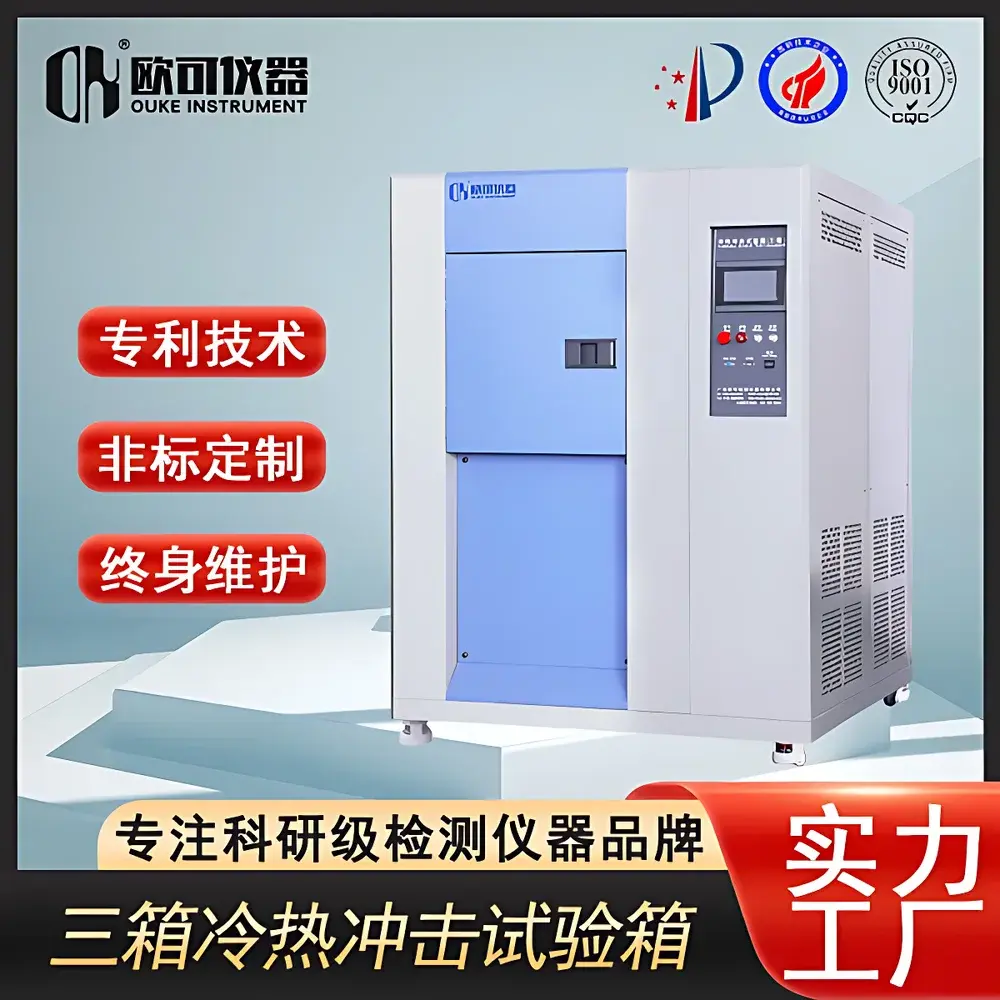
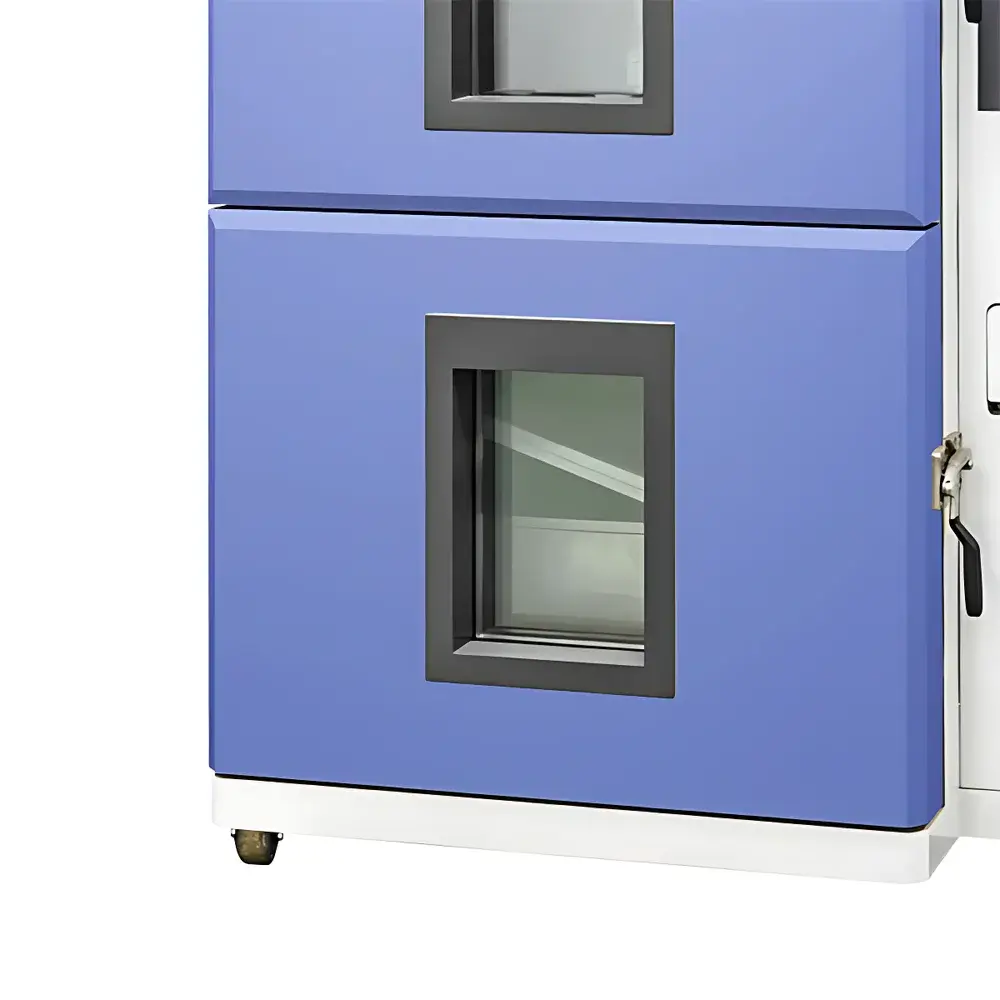
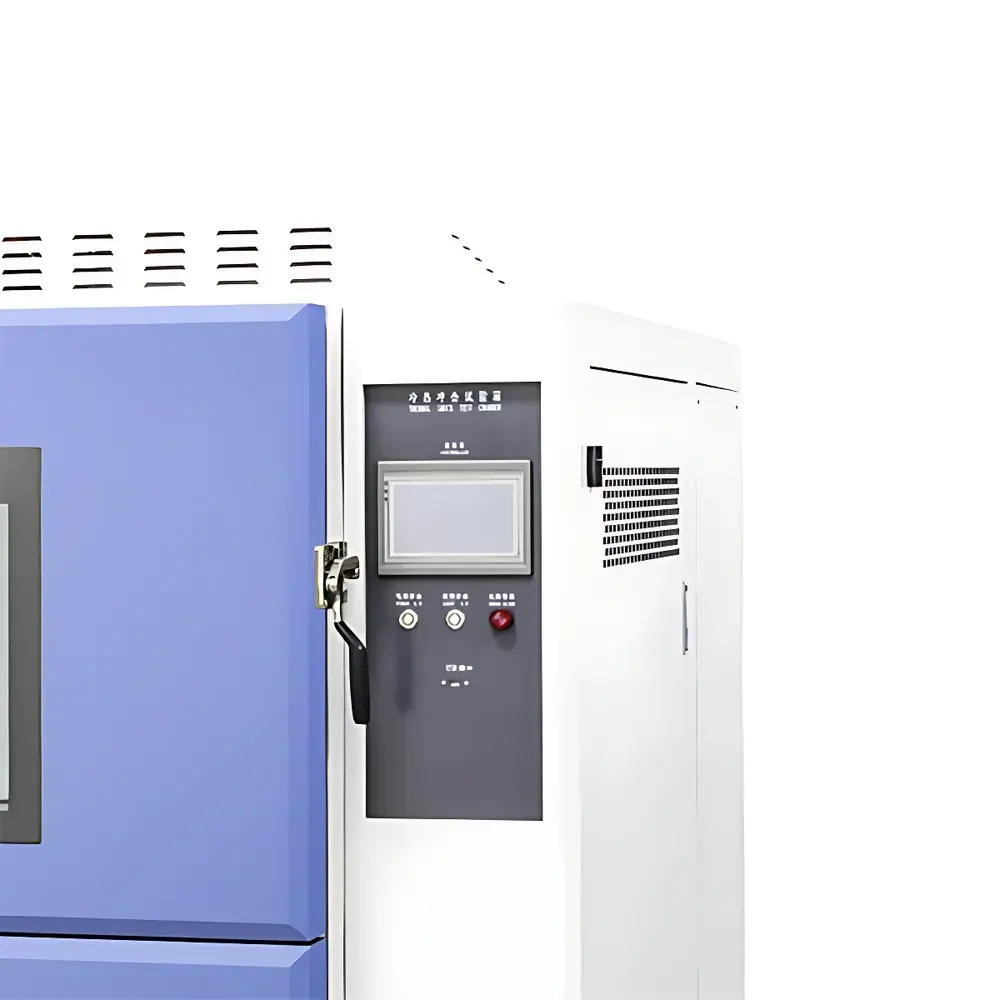
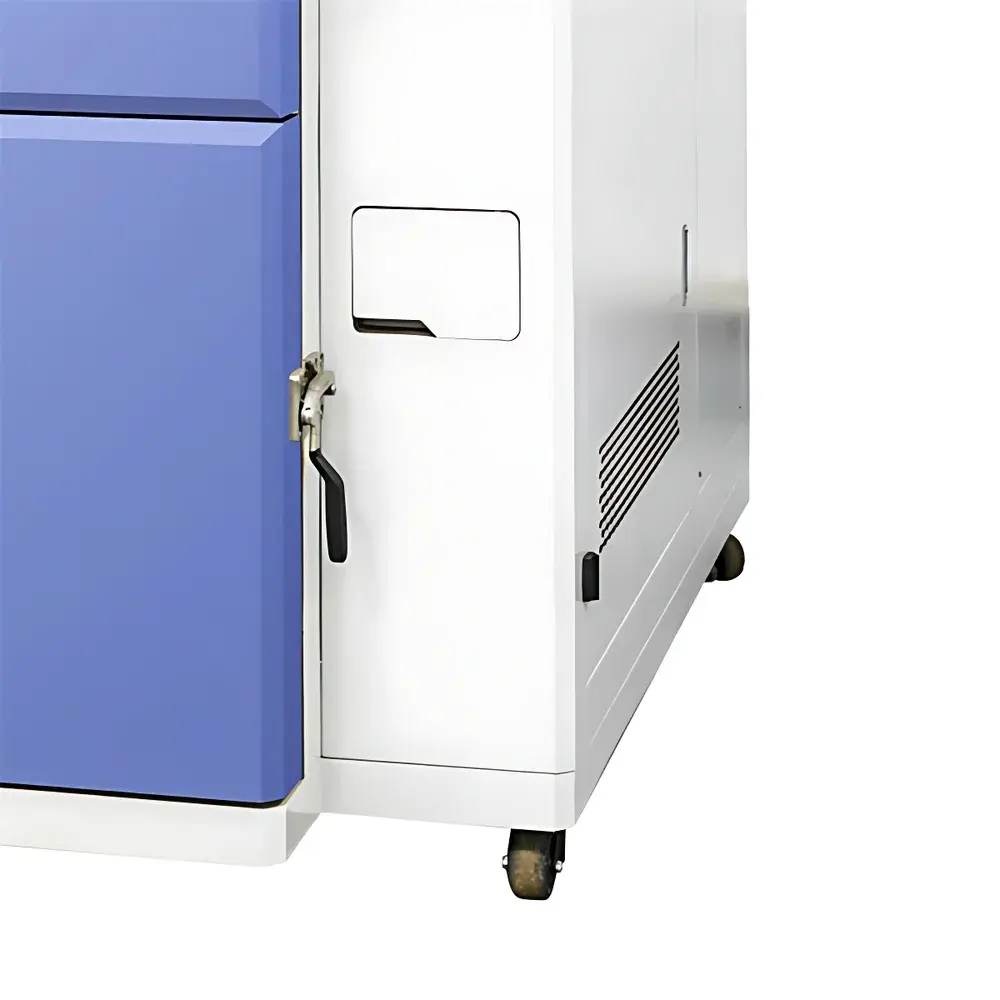
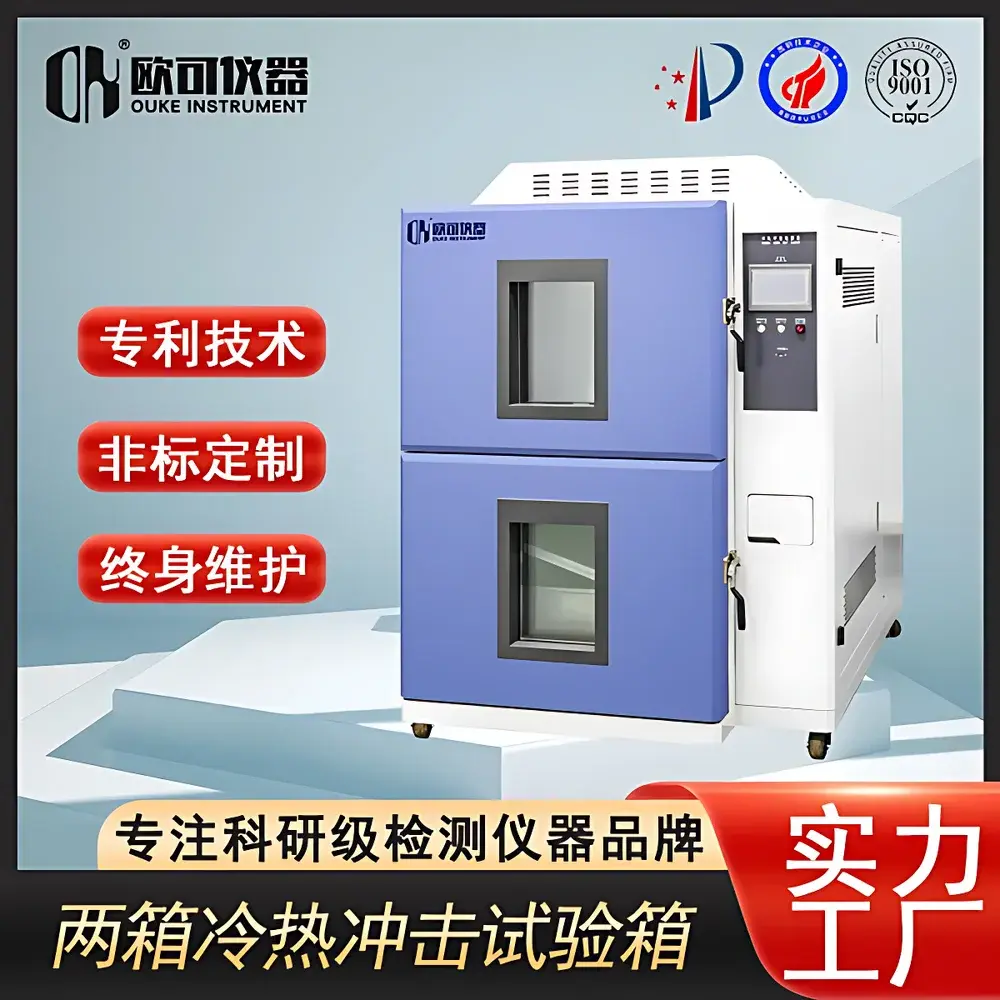
OK-TS-80.22 Thermal Shock Test Chamber
| Brand | OK Instruments |
|---|---|
| Origin | Guangdong, China |
| Manufacturer Type | Direct Manufacturer |
| Product Origin | Domestic (China) |
| Model | OK-TS-80.22 |
| High Temperature Range | +150 °C |
| Low Temperature Range | −40 °C |
| Thermal Shock Range | −40 °C to +150 °C |
| Temperature Stability | ±2 °C |
| Heating Rate | 20 s (to reach target temperature after transfer) |
| Cooling Rate | 20 s (to reach target temperature after transfer) |
Overview
The OK-TS-80.22 Thermal Shock Test Chamber is an engineered environmental test system designed to subject electronic components, automotive modules, aerospace assemblies, and polymer-based enclosures to rapid, repetitive transitions between extreme high- and low-temperature environments. Unlike temperature cycling or rapid thermal transition chambers—which impose gradual, linear thermal gradients—this chamber implements true thermal shock per IEC 60068-2-14, MIL-STD-883 Method 1010.8, and JESD22-A104. Its operational principle relies on either dual-chamber basket transfer (two-zone configuration) or air-stream redirection via fast-acting dampers (three-zone configuration), enabling specimen exposure to step-change thermal profiles with minimal dwell time in transitional zones. The system’s primary function is to accelerate failure mechanisms rooted in differential thermal expansion (CTE mismatch), interfacial delamination, solder joint fracture, hermetic seal leakage, and die-attach degradation—failures that remain undetected under static or slowly varying thermal conditions.
Key Features
- Dual-zone configuration with independent high-temperature (+150 °C) and low-temperature (−40 °C) chambers, thermally isolated by vacuum-insulated stainless steel walls and high-efficiency sealing gaskets.
- Programmable transfer mechanism achieving ≤10-second specimen transition time between temperature extremes—verified per IEC 60068-2-14 Clause 6.2 for “time to temperature” compliance.
- Temperature stability maintained within ±2 °C across the full working volume during steady-state dwell phases, monitored by redundant Pt100 sensors with NIST-traceable calibration certificates.
- Integrated pneumatic actuation system for basket movement (two-zone mode) or motorized damper bank for airflow routing (three-zone mode), both synchronized with chamber control logic to minimize overshoot and ensure repeatability.
- Touchscreen HMI with embedded real-time data logging, user-defined test profiles (up to 99 segments), and password-protected parameter locking to support GLP/GMP audit readiness.
- Compliance-ready architecture: supports optional 21 CFR Part 11-compliant electronic signatures, audit trail generation, and export of CSV/Excel-formatted test reports with timestamps, sensor readings, and event markers.
Sample Compatibility & Compliance
The OK-TS-80.22 accommodates specimens up to 300 mm × 300 mm × 300 mm (W×D×H) and 25 kg payload in two-zone mode; three-zone mode supports larger or fixed-mount units—including those requiring live electrical biasing, optical access, or external signal monitoring—without mechanical disturbance. It meets the essential performance criteria defined in:
- IEC 60068-2-14 / GB/T 2423.22: Environmental testing – Part 2-14: Tests – Test N: Change of temperature
- MIL-STD-883 Method 1010.8: Thermal shock testing for microelectronic devices
- JESD22-A104D: Accelerated Moisture Resistance – Temperature Cycling
- ISO 16750-4: Road vehicles – Environmental conditions and testing for electrical and electronic equipment – Part 4: Climatic loads
All thermal profiles are traceable to national metrology institutes via factory-installed calibrated reference sensors. Optional liquid nitrogen assist is available for extended low-temperature capability (−65 °C) upon request.
Software & Data Management
The embedded controller runs OK-TestSuite™ firmware v3.2, supporting ISO/IEC 17025-aligned uncertainty estimation for temperature measurements and automated pass/fail evaluation against user-specified tolerance bands. Data is stored locally on industrial-grade SSD with RAID 1 redundancy and exported via USB or Ethernet to external LIMS or MES platforms. Each test record includes: timestamped chamber zone temperatures, basket position status, door/damper actuation events, alarm history, and operator ID. Audit trails comply with FDA 21 CFR Part 11 requirements when configured with digital signature modules and role-based access controls.
Applications
- Qualification testing of PCBAs prior to automotive AEC-Q200 certification
- Reliability screening of MEMS sensors, power modules, and optoelectronic housings
- Failure analysis root cause isolation for field-return units exhibiting intermittent opens or parametric drift
- Validation of conformal coating integrity and adhesive bond strength under CTE-induced shear stress
- Pre-compliance verification for space-grade components per ECSS-Q-ST-60-13C
FAQ
What distinguishes thermal shock testing from temperature cycling?
Thermal shock applies instantaneous, step-function temperature transitions (≤10 s transfer time) to induce mechanical stress failure; temperature cycling imposes controlled ramp rates (e.g., 10 °C/min) to assess cumulative fatigue over hundreds of cycles.
Is the OK-TS-80.22 suitable for powered-in testing?
Yes—especially in three-zone configuration, where the test specimen remains stationary and electrically isolated from motion-related EMI or vibration.
Does the system support custom profile scripting beyond standard standards?
Yes—users may define multi-step sequences with variable dwell times, asymmetric ramp durations, and conditional branching based on real-time sensor feedback.
How is temperature uniformity validated across the test volume?
Per IEC 60068-3-5, a 9-point mapping procedure using calibrated thermocouples is performed during factory acceptance testing (FAT), with results documented in the final IQ/OQ report.
Can this chamber be integrated into an automated test line?
Yes—it provides Modbus TCP and RS-485 interfaces for PLC-level synchronization with robotic handlers, barcode readers, and downstream functional testers.



