
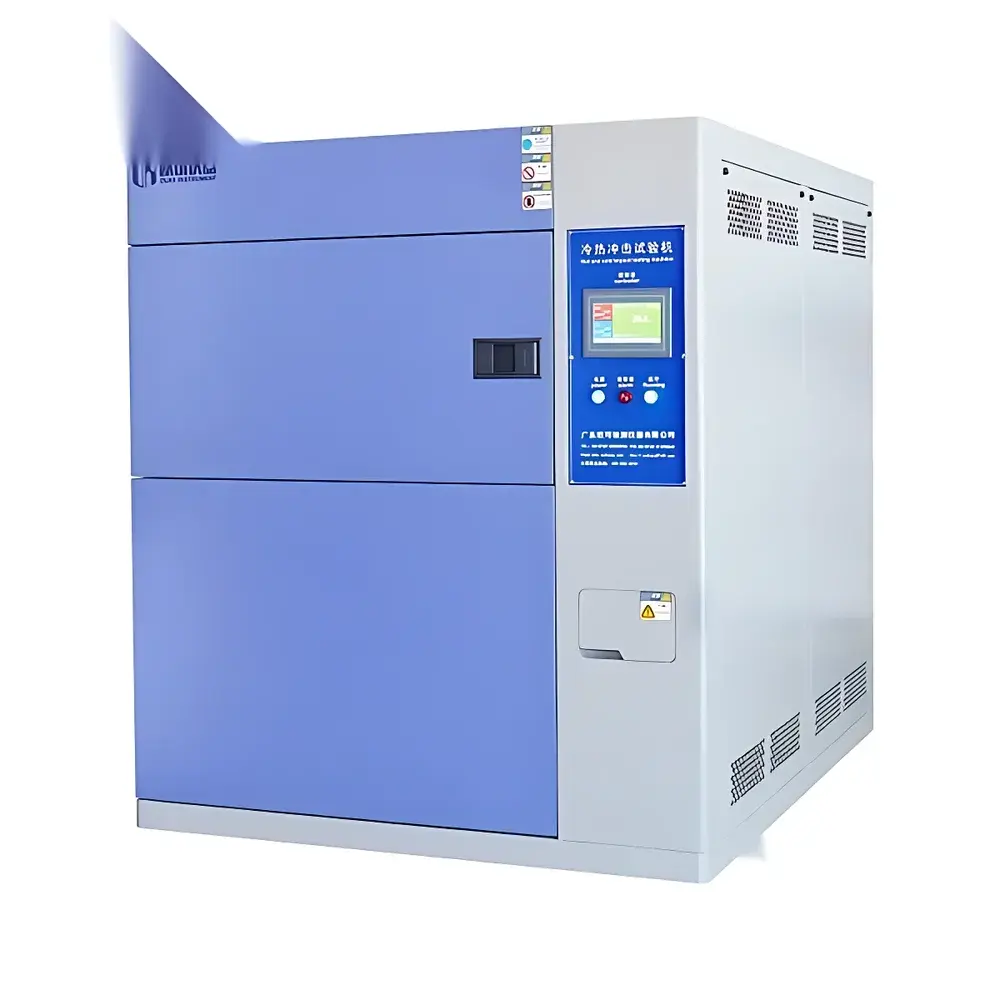
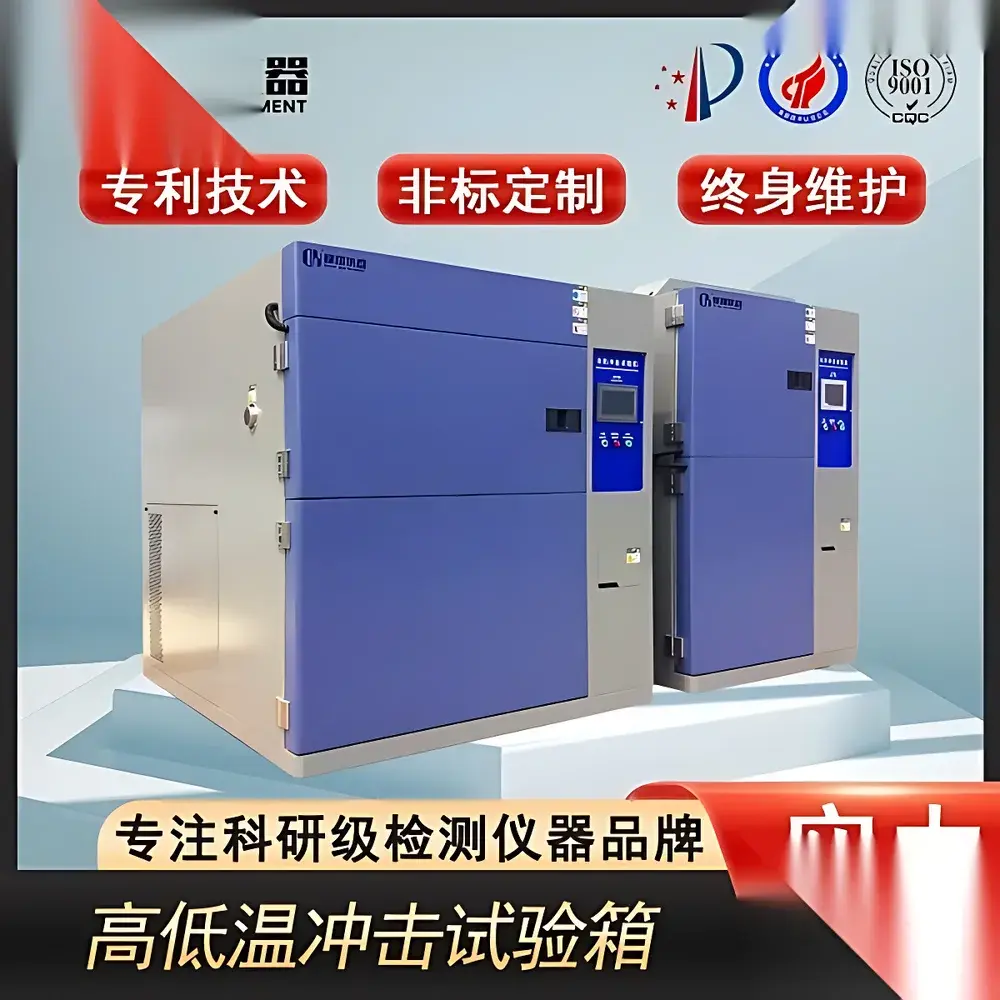
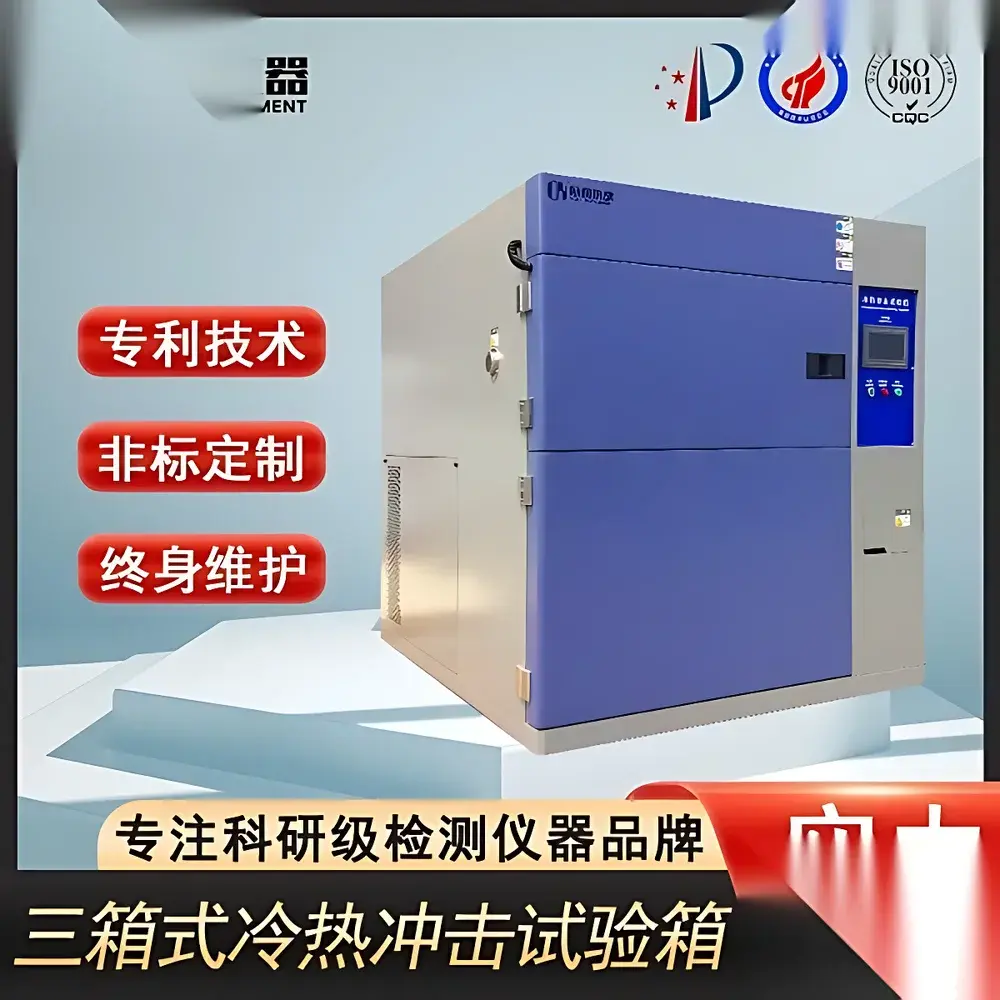
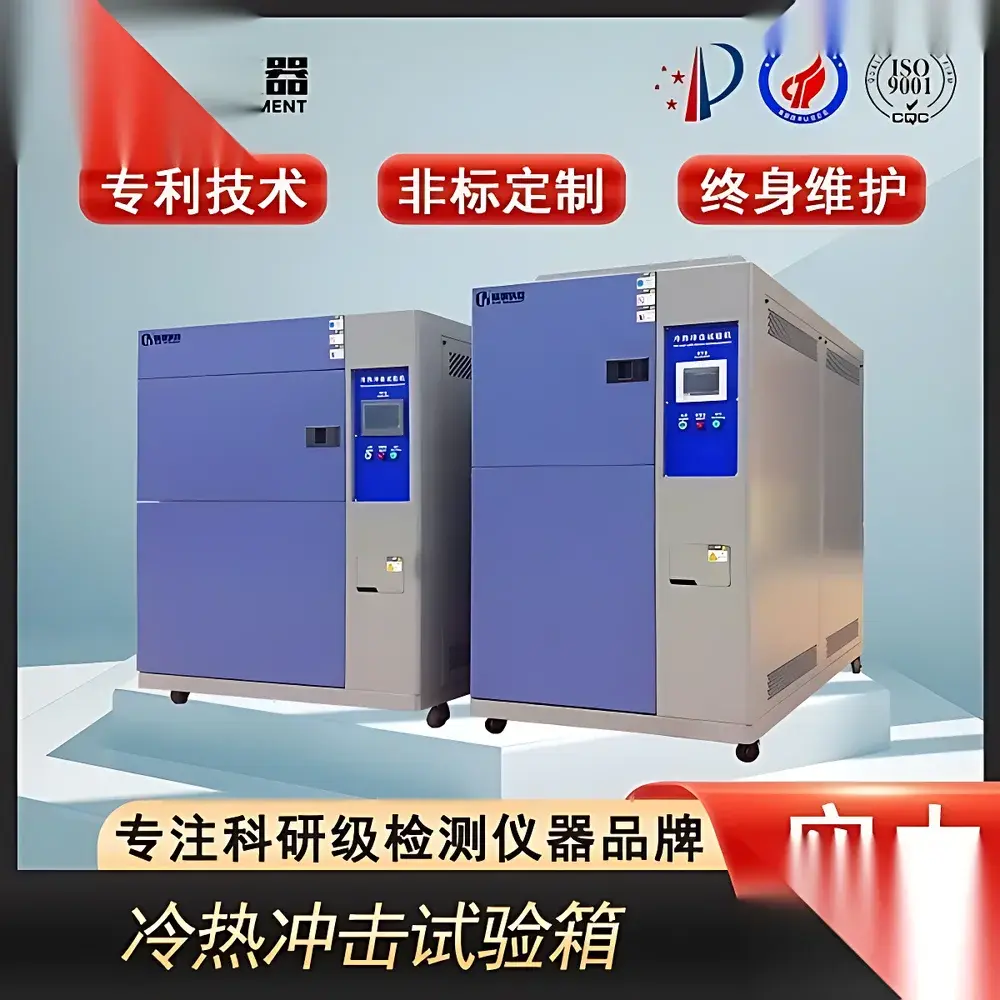
OK-TS Series Thermal Shock Test Chamber
| Brand | Other Brands |
|---|---|
| Origin | Imported |
| Manufacturer Type | Authorized Distributor |
| Compliance | GB/T 2423.1–2001, GB/T 2423.2–2001, GB 10589, GB 11158 |
| Working Chamber Dimensions (W×H×D) | 400×450×400 mm (OK-TS-80) |
Overview
The OK-TS Series Thermal Shock Test Chamber is an engineered environmental simulation system designed to evaluate material and component reliability under rapid, repetitive transitions between extreme high- and low-temperature conditions. Operating on the two-chamber (hot/cold) or single-chamber (air-shuttle) thermal shock principle, the chamber subjects test specimens to controlled, high-rate temperature changes—typically exceeding 10 °C/s in transition—enabling accelerated stress testing of electronic assemblies, automotive components, aerospace hardware, and polymer-based materials. Unlike standard temperature cycling chambers, this system isolates thermal mass from the test zone via independent hot and cold reservoirs, minimizing thermal lag and ensuring precise dwell time control at each temperature extreme. It is purpose-built for qualification per IEC 60068-2-14 (Test N: Change of Temperature) and supports test profiles defined in MIL-STD-810H Method 503.7 and JEDEC JESD22-A104.
Key Features
- Independent dual-zone architecture with separate high-temperature (up to +150 °C) and low-temperature (down to −70 °C) chambers, enabling rapid thermal transfer without cross-contamination of ambient conditions
- Precision-controlled pneumatic or mechanical shuttle mechanism for specimen transfer, achieving typical transfer times ≤ 10 seconds between zones
- High-stability PID-controlled heating and refrigeration systems using cascade R404A/R23 refrigerant circuits for deep sub-zero capability
- Insulated stainless-steel interior with seamless welding and anti-condensation heater strips on viewing windows and door seals
- Programmable controller with 32-step profile storage, real-time deviation monitoring, and automatic safety cutoff upon sensor fault or over-temperature event
- Compliance-ready design supporting audit trails, password-protected parameter locking, and optional 21 CFR Part 11-compliant software modules for regulated industries
Sample Compatibility & Compliance
The OK-TS series accommodates a broad range of sample geometries—from PCB assemblies and semiconductor packages to molded plastic housings and metal enclosures—within standardized working chambers ranging from 80 L to 1000 L volume. Each model maintains uniformity of ±2 °C across the test space during dwell phases, verified per IEC 60068-3-5. The system meets mandatory requirements of GB/T 2423.1–2001 (cold testing), GB/T 2423.2–2001 (dry heat), GB 10589 (low-temperature chamber specifications), and GB 11158 (high-temperature chamber specifications). Optional calibration certificates traceable to national metrology institutes (e.g., NIM, NIST) are available for GLP/GMP validation protocols.
Software & Data Management
Equipped with embedded industrial-grade controllers featuring USB and Ethernet interfaces, the OK-TS chamber supports local data logging (temperature, time, cycle count, alarm status) at user-defined intervals (1–60 s resolution). Optional PC-based software enables remote operation, multi-chamber synchronization, automated report generation (PDF/CSV), and integration into enterprise quality management systems (QMS). All data files include timestamped metadata, operator ID fields, and configurable digital signatures—fully aligned with FDA 21 CFR Part 11 requirements when configured with audit trail and electronic signature modules. Historical test logs are retained for ≥12 months and exportable for root cause analysis or regulatory submission.
Applications
This thermal shock system is routinely deployed in R&D labs and production QA environments for: solder joint fatigue assessment in surface-mount electronics; evaluation of coefficient-of-thermal-expansion (CTE) mismatch in multilayer ceramic capacitors (MLCCs); validation of conformal coating integrity on automotive ECUs; qualification of battery module encapsulation under cyclic thermal stress; and verification of sealant adhesion in medical device housings. It serves as a critical tool for failure mode identification—including intermetallic growth, die attach delamination, and microcrack propagation—prior to field deployment or certification against AEC-Q200, IPC-9701, or ISO 16750-4 standards.
FAQ
What is the maximum temperature transition rate achievable in the OK-TS chamber?
Typical transfer rates between hot and cold zones exceed 10 °C/s, depending on specimen mass, fixture configuration, and selected dwell duration.
Does the system support custom test profiles beyond standard GB/T 2423 sequences?
Yes—users may define up to 32-step profiles with variable dwell times, ramp rates, and cycle counts, including hold-at-temperature, ramp-and-hold, and repeat-loop configurations.
Is third-party calibration and IQ/OQ documentation available?
Yes—factory-installed calibrated sensors (Class II PT100) are provided with NIST-traceable certificates; IQ/OQ protocols compliant with ISO/IEC 17025 are offered as optional service packages.
Can the chamber be integrated into a centralized lab automation network?
Yes—via Modbus TCP or OPC UA communication protocols, enabling interoperability with LIMS, MES, and SCADA platforms for end-to-end test data traceability.
What maintenance intervals are recommended for long-term operational stability?
Refrigeration oil and filter replacement every 2,000 operating hours; annual verification of door gasket integrity, sensor drift, and chamber uniformity per IEC 60068-3-5.



