
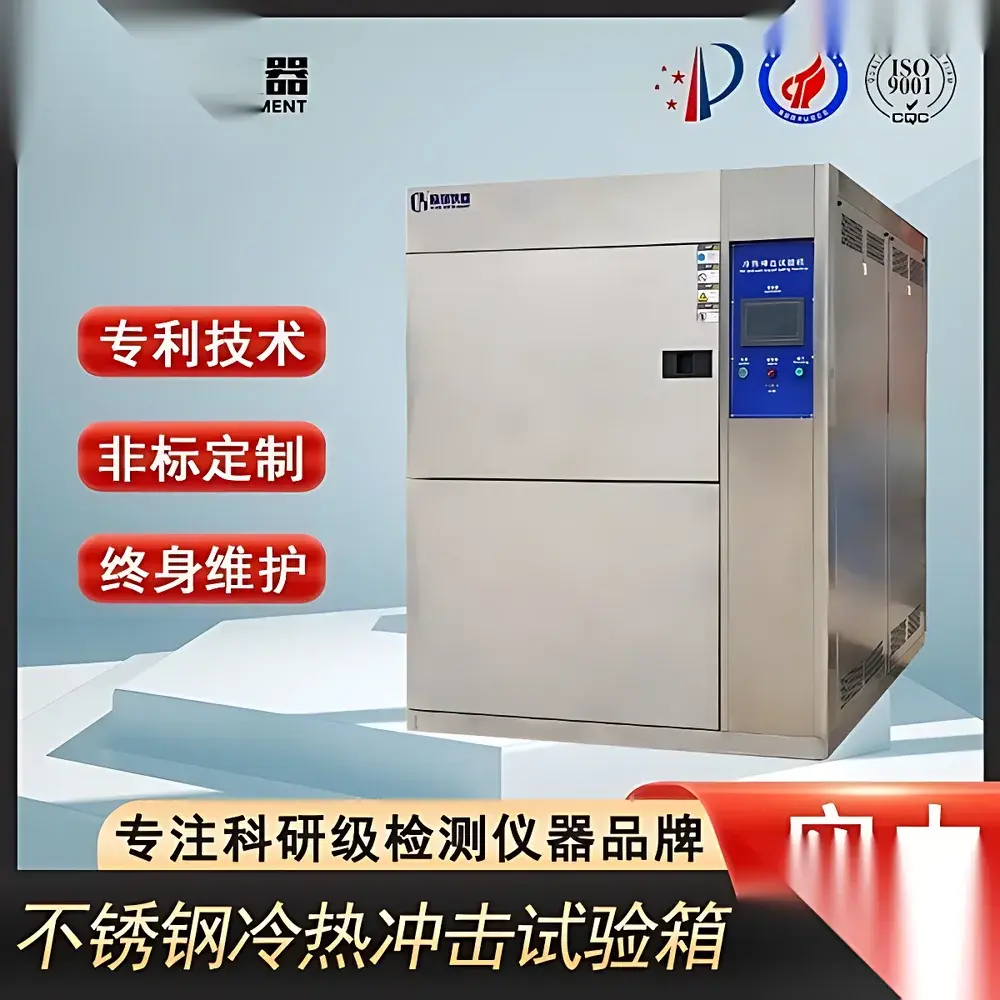
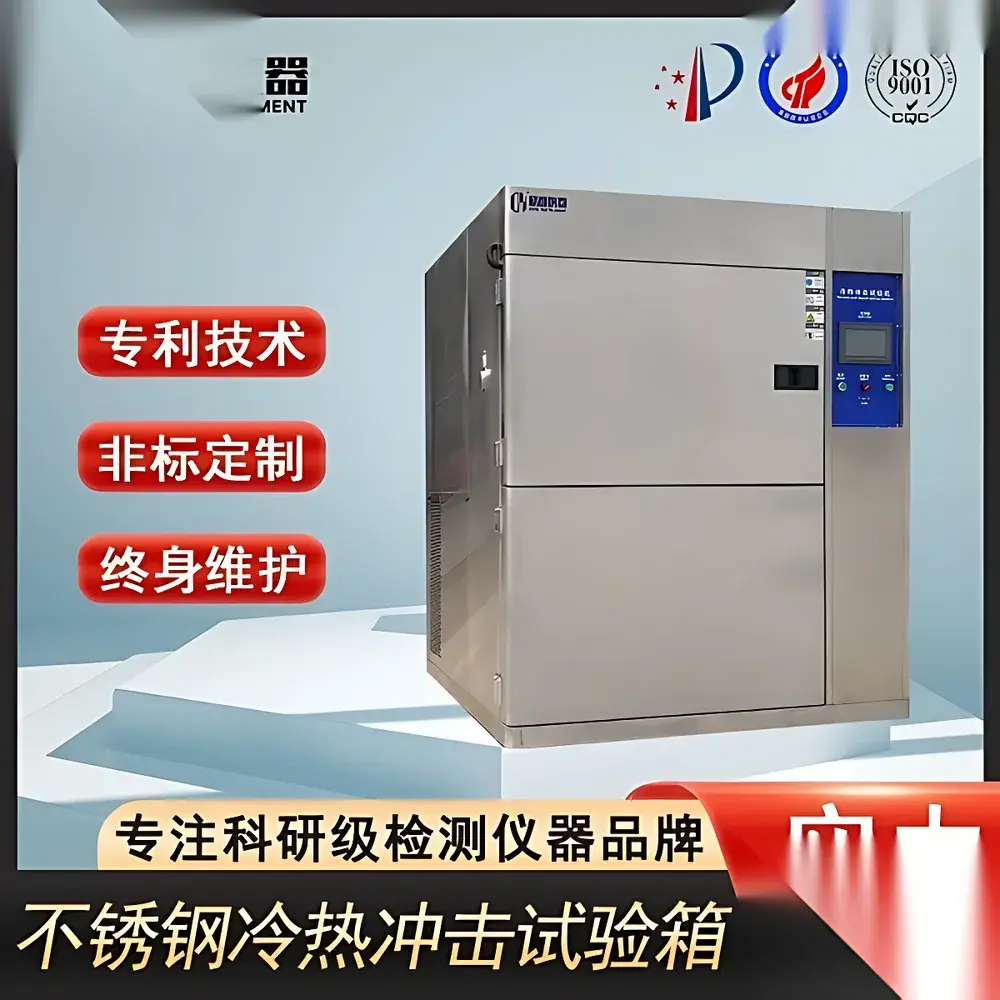
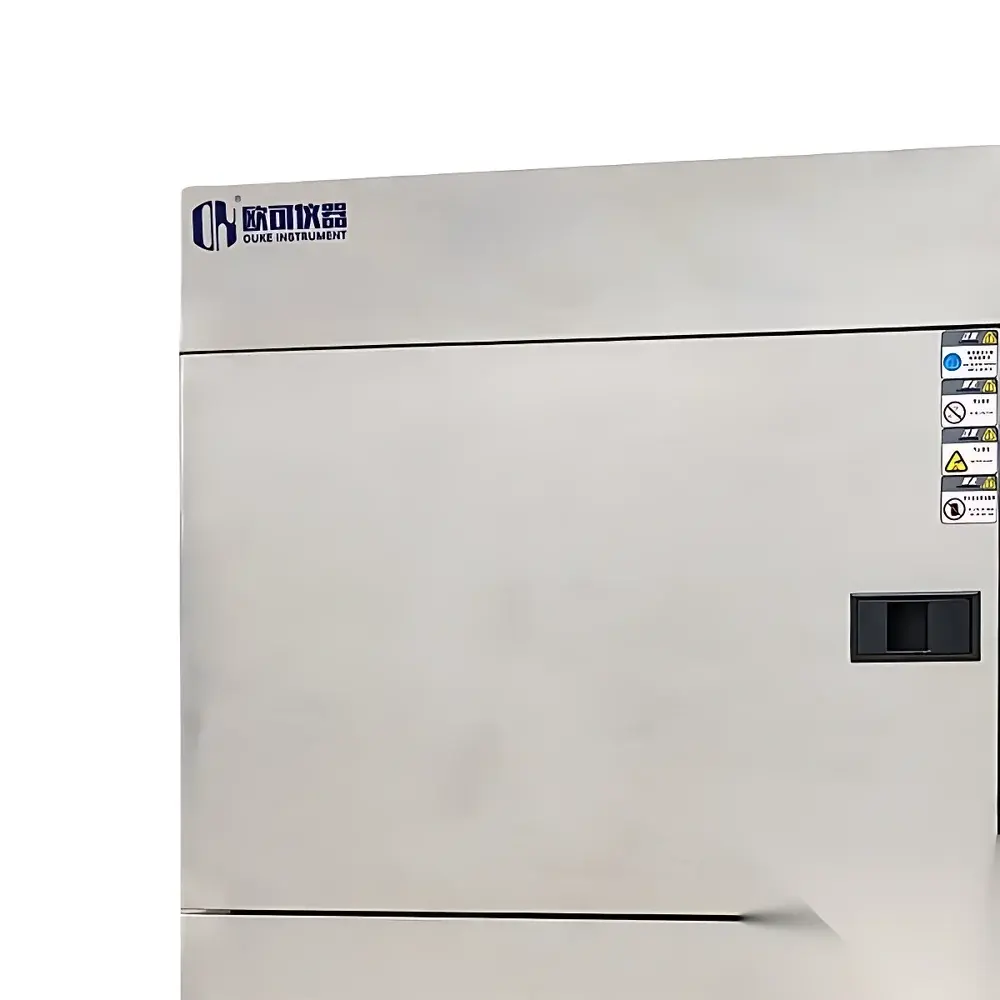
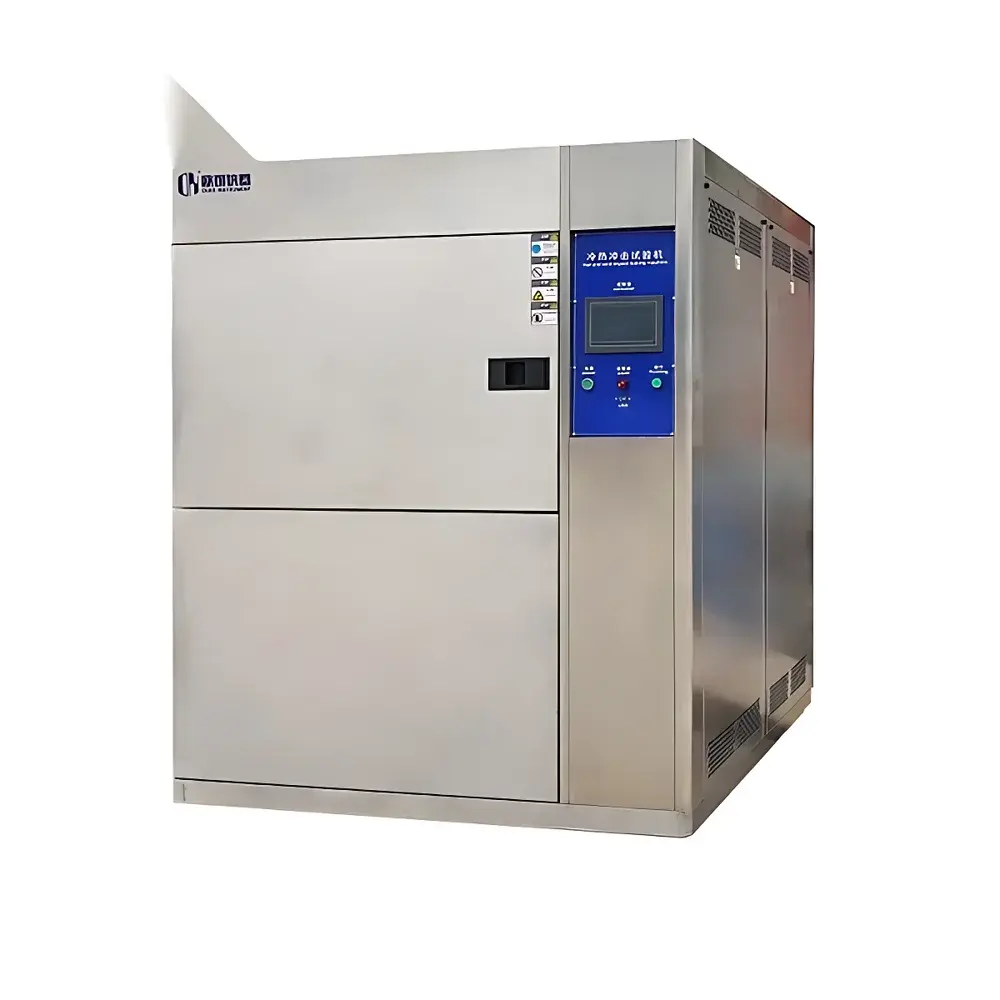
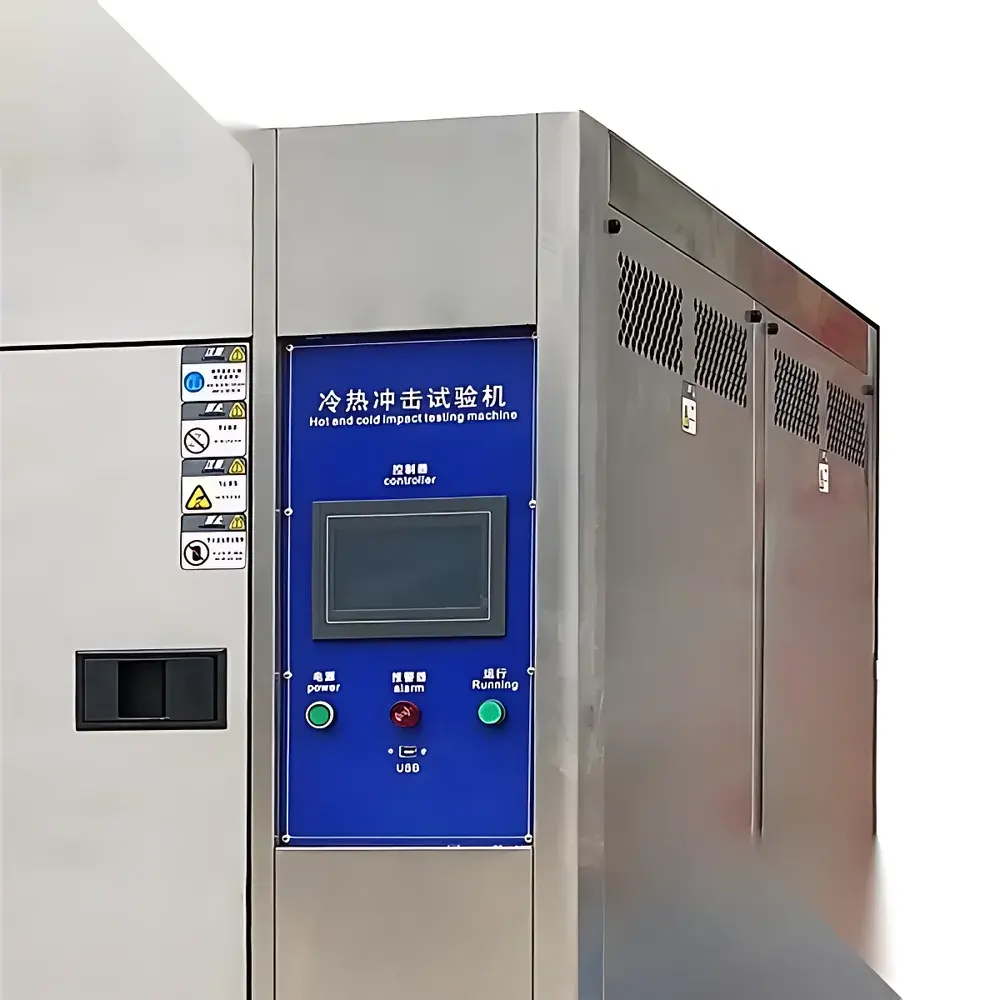
OK-TS Series Thermal Shock Test Chamber
| Brand | OK |
|---|---|
| Model | OK-TS-80 to OK-TS-1000 |
| Temperature Range (Test Zone) | -65 °C to +150 °C |
| High-Temp Zone | +60 °C to +150 °C |
| Low-Temp Zone | -10 °C to -65 °C |
| Transition Time | ≤10 s |
| Temperature Recovery Time | ≤5 min |
| Temp. Control Accuracy | ±0.5 °C |
| Temp. Uniformity | ±2.0 °C |
| Heating System | Ni-Cr Alloy Wire Heater |
| Cooling System | Dual-Stage or Single-Stage Cascade Refrigeration (French Tecumseh Hermetic Compressor) |
| Humidity Control | Surface Evaporation Type |
| Air Circulation | Wide-Band Forced Convection (Top-Out/Bottom-In) |
| Insulation | Rigid Polyurethane Foam + Ultra-Fine Glass Fiber |
| Interior Material | SUS304 Stainless Steel |
| Exterior Material | Cold-Rolled Steel with Electrostatic Powder Coating or SUS304 Brushed Finish |
| Controller Options | TEMI880 Color Touchscreen (Bilingual), TEMI300 Membrane Keypad (English Only) |
| Compliance | Designed for ASTM D5229, ISO 11357-5, IEC 60068-2-14, MIL-STD-810H Method 503.7 |
Overview
The OK-TS Series Thermal Shock Test Chamber is an engineered environmental stress screening system designed to evaluate material and component reliability under rapid, repetitive transitions between extreme high- and low-temperature conditions. Based on the two-chamber (hot/cold) or single-chamber (air-shutter) thermal shock principle, it subjects test specimens to controlled, high-rate temperature excursions—enabling accelerated detection of interfacial delamination, solder joint fatigue, seal failure, and coefficient-of-thermal-expansion (CTE) mismatch in electronic assemblies, aerospace composites, automotive sensors, and polymer-based packaging. Unlike standard thermal cycling chambers, the OK-TS series achieves sub-10-second transfer times and ≤5-minute temperature stabilization via optimized airflow dynamics, dual-stage refrigeration architecture, and microprocessor-driven P.I.D. + S.S.R. balanced temperature control (BTSC). Its design adheres to fundamental thermodynamic constraints of transient heat transfer, ensuring repeatable thermal gradients across standardized test zones per IEC 60068-2-14 and MIL-STD-810H Method 503.7.
Key Features
- Two-zone independent temperature control: High-temp zone (+60 °C to +150 °C) and low-temp zone (-10 °C to -65 °C), each equipped with dedicated heating and refrigeration circuits
- Cascade refrigeration system using original French Tecumseh hermetic compressors, minimizing oil carryover and extending service life
- Wide-band forced convection airflow (top-out/bottom-in configuration) with multi-wing centrifugal blower ensures ±2.0 °C uniformity across full test volume
- Dual-layer tempered safety observation window with anti-fog coating and integrated LED illumination for real-time visual monitoring
- Standard 50-mm diameter test port (left-side mounted) with silicone gasket and removable cap for sensor feedthrough or external load control
- Adjustable stainless-steel sample racks (two sets included) supporting variable specimen height and weight distribution up to 30 kg per shelf
- Comprehensive safety interlocks: compressor overheat/overcurrent/overpressure protection, dry-run prevention for heaters and humidifiers, chamber over-temperature cutoff, and low-water-level alarm
- Optional data logging and remote supervision via RS-485/USB interface compatible with Windows-based PC software (included)
Sample Compatibility & Compliance
The OK-TS chamber accommodates a broad range of physical configurations—from printed circuit board assemblies (PCBAs), semiconductor packages (QFN, BGA, CSP), and molded interconnect devices (MIDs) to metallic fasteners, elastomeric seals, and laminated battery cells. Internal dimensions span 400 × 450 × 400 mm (OK-TS-80) to 1000 × 1000 × 1000 mm (OK-TS-1000), permitting both small-batch qualification and large-scale production validation. All models meet structural and operational requirements for ISO/IEC 17025-accredited laboratories. The BTSC control system supports audit-ready operation under GLP and GMP environments, with optional password-protected parameter locking, event logging, and user-defined alarm thresholds. While not inherently 21 CFR Part 11 compliant, the embedded controller firmware allows integration with validated third-party LIMS or ELN platforms for electronic signature and change tracking.
Software & Data Management
Bundled PC software enables full remote setup, real-time monitoring, and post-test analysis. Users define multi-step thermal shock profiles—including dwell time at extremes, transition duration, cycle count, and ramp rate—with automatic calibration compensation for thermal mass effects. Data export is supported in CSV and XLSX formats; time-stamped logs include chamber setpoints, actual temperatures (hot/cool zones + test zone), humidity (if equipped), alarm history, and controller status flags. Firmware updates are performed via USB stick, and version control metadata is retained in non-volatile memory. For regulated industries, optional add-ons include PDF report generation with digital signature fields and encrypted database archiving aligned with Annex 11 principles.
Applications
- Qualification testing of avionics modules per DO-160 Section 4.5 (Temperature Shock)
- Reliability screening of automotive ECUs exposed to under-hood thermal transients
- Failure mode analysis of MEMS accelerometers and pressure sensors during thermal cycling
- Process validation of conformal coating adhesion on flexible PCB substrates
- Accelerated aging studies of lithium-ion battery pouch cells under thermal abuse protocols
- Material compatibility assessment for medical device housings subjected to sterilization-cooling cycles
FAQ
What is the difference between thermal shock and thermal cycling?
Thermal shock involves near-instantaneous transfer between extreme temperature zones (typically <10 s), inducing high thermal strain rates; thermal cycling uses slower, continuous ramps (e.g., 1–10 °C/min) across a defined range without abrupt transitions.
Can this chamber perform humidity-controlled thermal shock?
Standard OK-TS models are dry-shock systems. Optional surface-evaporation humidification is available but not recommended for true thermal shock due to condensation risks and control instability during rapid transitions.
Is calibration traceability provided with shipment?
Each unit ships with a factory calibration certificate referencing NIST-traceable standards for temperature sensors (PT100 class A). On-site ISO/IEC 17025 calibration services are available upon request.
What maintenance intervals are recommended for the refrigeration system?
Compressor oil and refrigerant charge verification should occur every 24 months; air filter cleaning every 3 months; and door seal integrity inspection prior to each qualification run.
Does the chamber support custom test profile scripting beyond the built-in GUI?
Yes—via ASCII command protocol over RS-485, enabling integration with LabVIEW, Python, or PLC-based test automation frameworks for complex multi-sequence protocols.
Related Products



