
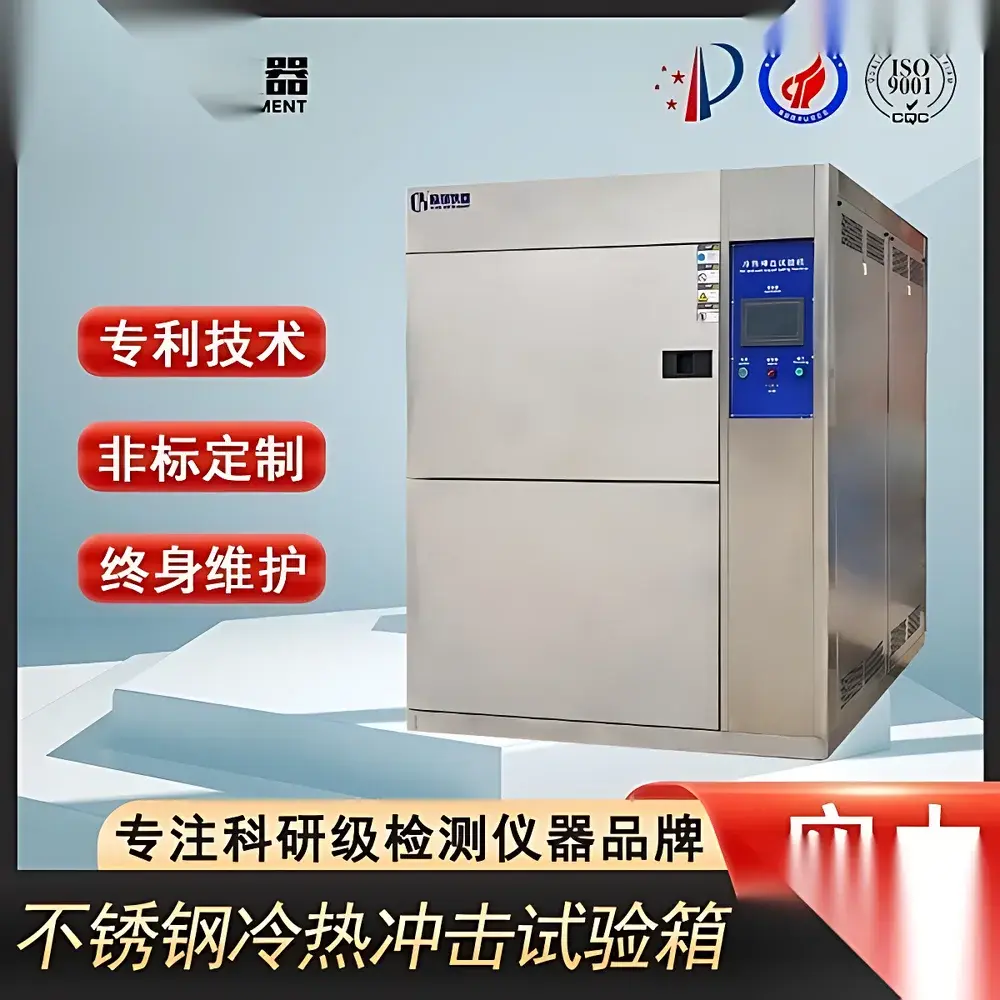
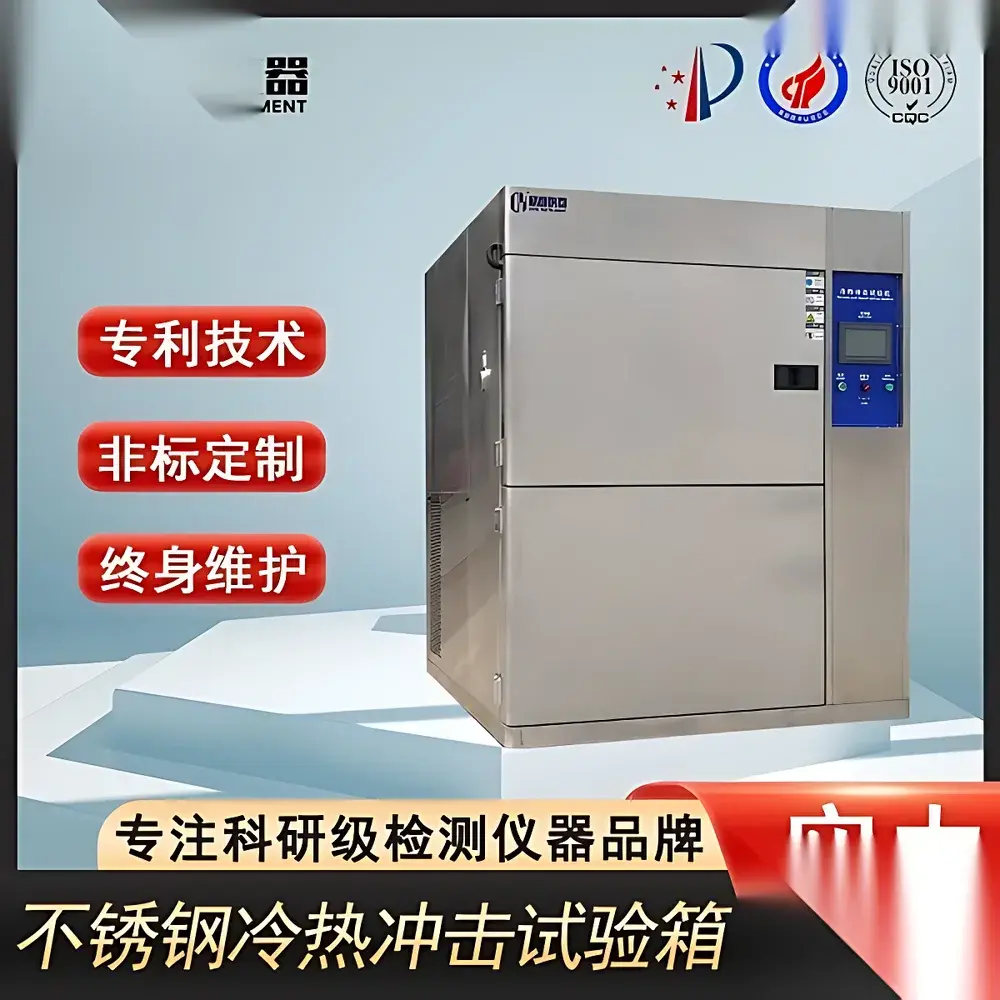
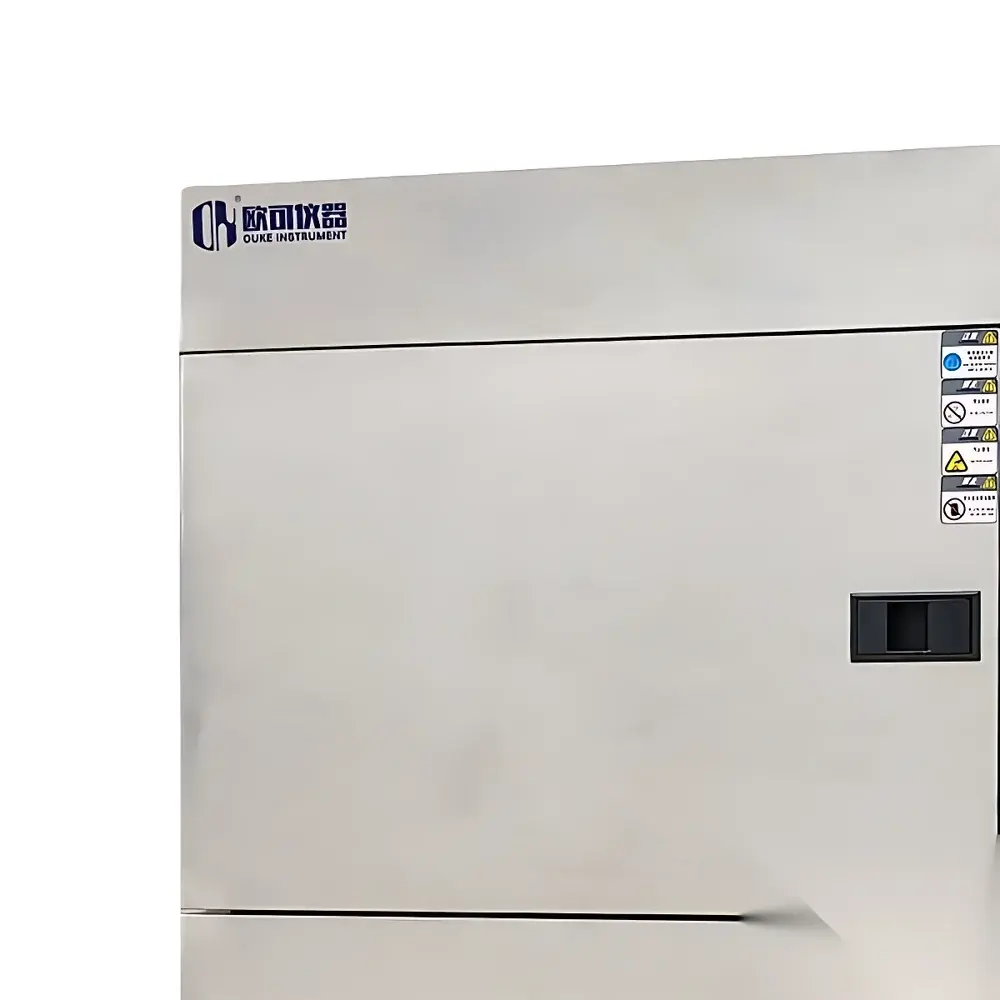
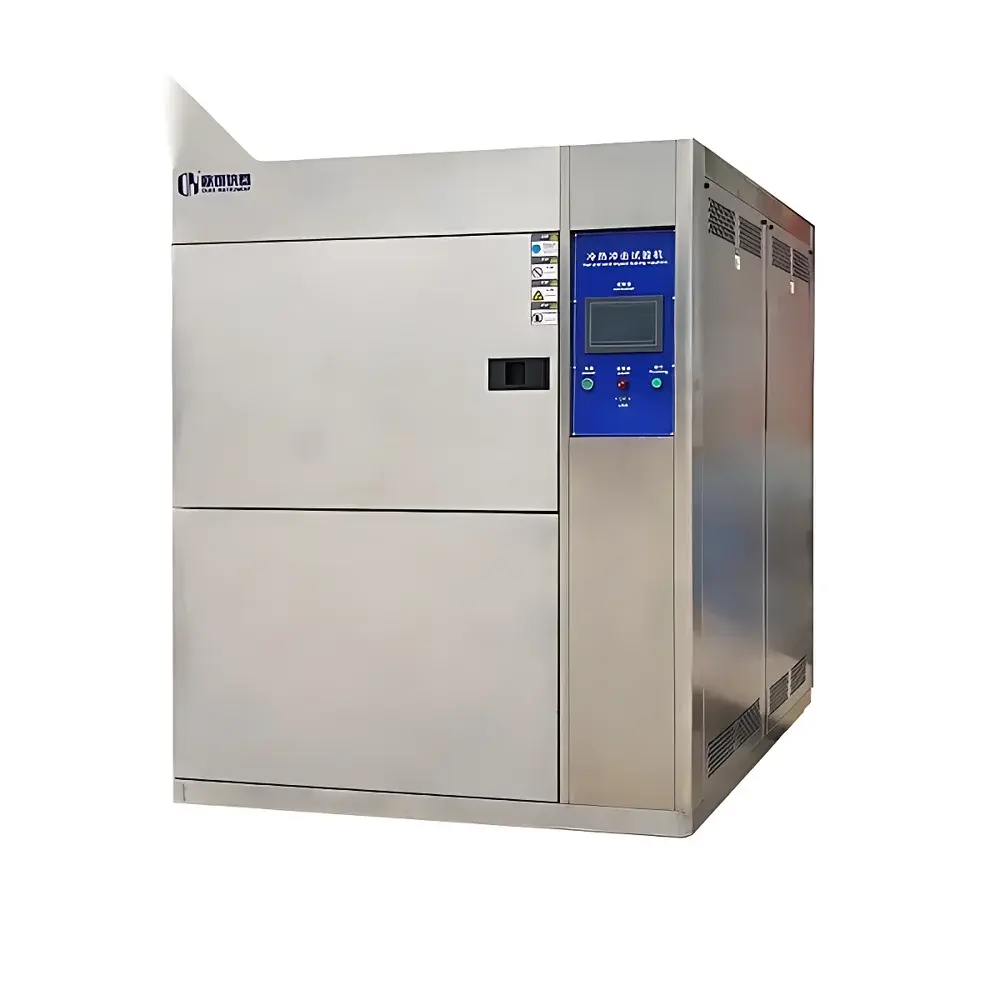
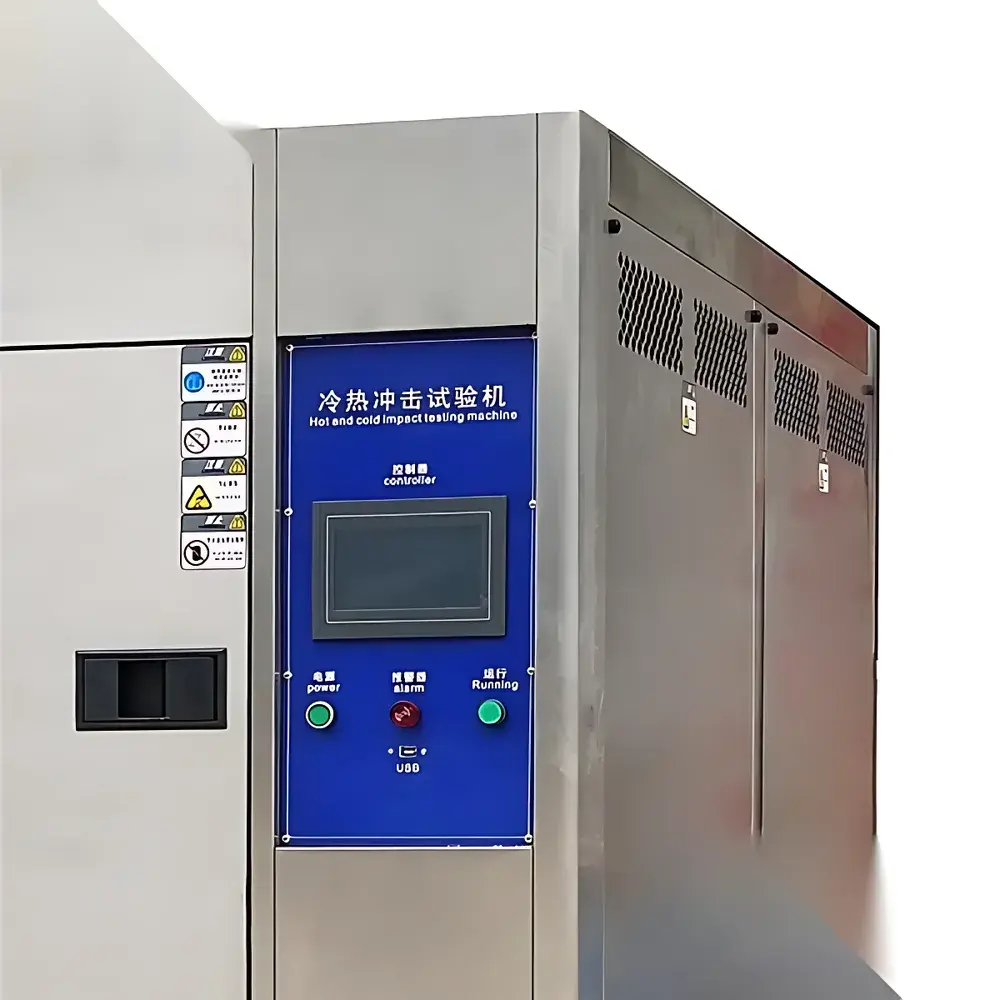
OK-TS Series Thermal Shock Test Chamber
| Brand | Other Brands |
|---|---|
| Origin | Imported |
| Manufacturer Type | General Distributor |
| Price | USD 12,500 (FOB) |
| Chamber Volume Options | 80 L / 150 L / 225 L / 408 L / 800 L / 1000 L |
| Internal Dimensions (W×H×D) | 400×450×400 mm to 1000×1000×1000 mm |
| Inner Liner Material | SUS304 Stainless Steel Mirror Finish |
| Outer Casing | A3 Steel with Powder Coating |
| Viewing Window | Reinforced Heated Tempered Glass with LED Illumination |
| Test Port | Ø50 mm Left-Side Penetration Port |
| Controller | Touchscreen PID Temperature Controller with Parameter Lock & Auto-Tuning |
| Electrical Components | Schneider Electric & Merlin Gerin (Legrand) Industrial Grade |
Overview
The OK-TS Series Thermal Shock Test Chamber is an electromechanical environmental stress screening (ESS) system engineered for rapid, repeatable transitions between extreme high- and low-temperature zones. It operates on a two-zone or three-zone thermal shock principle—typically employing separate hot and cold chambers with a transfer mechanism (e.g., lift-type or rotary basket)—to subject test specimens to abrupt temperature changes within seconds. Designed in accordance with IEC 60068-2-14 (Test N: Change of Temperature), MIL-STD-810H Method 503.5, and JIS Z 8704, the chamber enables accelerated evaluation of thermal expansion mismatch, interfacial delamination, solder joint fatigue, and material embrittlement in electronic components, automotive ECUs, aerospace composites, and polymer-based assemblies. Its robust architecture supports both storage-type (static soak) and transition-type (dynamic shock) protocols, delivering controlled thermal ramp rates up to 15 °C/s between −70 °C and +180 °C operational ranges (depending on configuration).
Key Features
- Precision-machined chamber structure fabricated via CNC processing, ensuring dimensional stability and long-term thermal integrity.
- Double-wall insulated construction with high-efficiency polyurethane foam (≥120 mm thickness) and vacuum-sealed joints to minimize thermal leakage and cross-contamination between zones.
- SUS304 stainless steel interior liner (mirror-finish) resistant to oxidation, corrosion, and cleaning agent degradation—compliant with ISO 14644-1 Class 8 cleanroom compatibility requirements.
- Externally coated A3 carbon steel enclosure with electrostatic powder coating for mechanical durability and chemical resistance in industrial laboratory environments.
- Large-diameter heated observation window (reinforced tempered glass with embedded heating element) prevents condensation and ensures uninterrupted visual monitoring during sub-zero operation.
- Dedicated Ø50 mm cable/port access on the left side, fitted with silicone gasket and brass compression collar for secure feedthrough of power, thermocouple, or data lines under thermal cycling conditions.
- Industrial-grade touchscreen controller featuring auto-tuned PID algorithms, multi-segment programmability, real-time deviation alarms, and parameter lockout to prevent unauthorized modification during qualification runs.
- Critical electrical subsystems built using Schneider Electric contactors, circuit breakers, and Merlin Gerin (Legrand) solid-state relays—certified to IEC 61000-4 immunity standards and rated for continuous duty at ambient temperatures up to 40 °C.
Sample Compatibility & Compliance
The OK-TS Series accommodates test specimens ranging from surface-mount device (SMD) packages and PCBAs to full automotive control modules and structural composite coupons. Standard chamber volumes (80–1000 L) support MIL-STD-750D Device Test Method 1037 (thermal shock endurance) and IPC-9701A (performance qualification of solder interconnects). All models comply with CE marking requirements under the EU Machinery Directive 2006/42/EC and Low Voltage Directive 2014/35/EU. Optional validation packages include IQ/OQ documentation per ASTM E2500-13 and traceable calibration certificates aligned with ISO/IEC 17025-accredited reference standards.
Software & Data Management
The integrated controller supports RS485/Modbus RTU and optional Ethernet TCP/IP communication for integration into centralized lab management systems. Logged data—including chamber setpoints, actual zone temperatures, transfer timing, and alarm events—is timestamped and exportable in CSV format. When configured with optional PC-based software, users gain access to graphical trend analysis, deviation mapping, and automated report generation compliant with FDA 21 CFR Part 11 audit trail requirements. Data retention intervals are configurable up to 36 months; all firmware updates follow IEC 62443-3-3 cybersecurity guidelines for industrial control systems.
Applications
- Qualification testing of semiconductor packages (QFN, BGA, CSP) per JEDEC JESD22-A104E.
- Thermal cycle validation of lithium-ion battery cells and module housings under UN 38.3 Section 38.3.4.
- Material compatibility assessment of adhesives, conformal coatings, and encapsulants used in avionics enclosures.
- Reliability screening of medical device PCBs prior to ISO 13485-certified production release.
- Research-grade investigation of phase transformation kinetics in shape-memory alloys and metallic glasses.
- Accelerated aging studies for optical lens assemblies subjected to diurnal thermal gradients in outdoor deployment scenarios.
FAQ
What is the typical temperature transition time between zones?
Transition times range from 5–15 seconds depending on chamber volume and selected temperature extremes (e.g., −55 °C ↔ +125 °C), verified per IEC 60068-2-14 Annex B.
Can the chamber operate in single-zone mode for static temperature soak tests?
Yes—controller firmware supports independent hot- or cold-chamber operation for extended dwell testing without mechanical transfer activation.
Is third-party validation support available for GMP/GLP-regulated environments?
Yes—qualified vendors provide IQ/OQ documentation, sensor calibration certificates (NIST-traceable), and 21 CFR Part 11-compliant electronic record packages upon request.
What maintenance intervals are recommended for compressor and heater systems?
Compressor oil and filter replacement every 2,000 operating hours; heater element resistance verification quarterly; door gasket inspection biannually.
Are custom port configurations or internal mounting fixtures available?
Yes—engineering team provides CAD-supported customization including additional feedthroughs, vibration-isolated sample trays, and liquid nitrogen cooling augmentation kits.



