
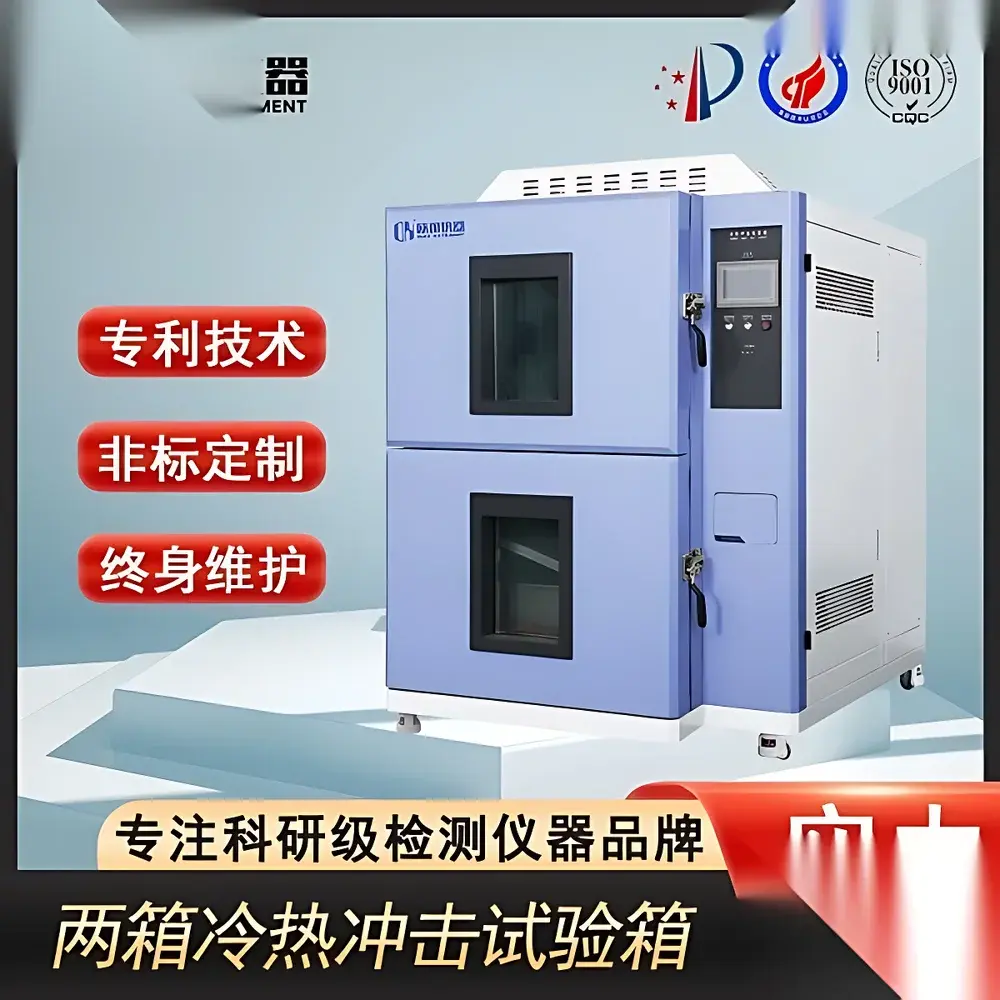
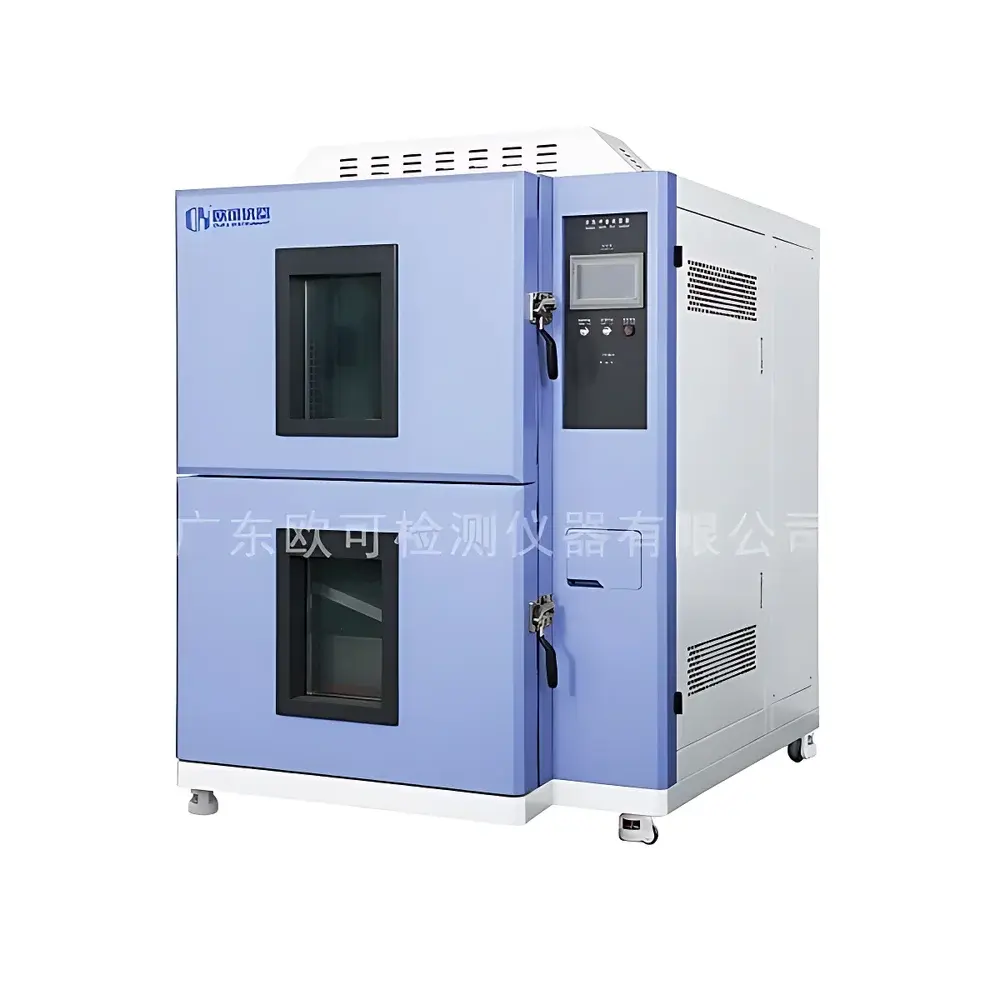
OK-TS Series Thermal Shock Test Chamber (OK-TS-49 / OK-TS-80 / OK-TS-150)
| Brand | OK Instruments |
|---|---|
| Temperature Range | −70 °C to +150 °C (optional +200 °C) |
| Accuracy | ±1.5 °C |
| Control System | Microprocessor-based PID Controller |
| Internal Dimensions (W×D×H, cm) | 40×35×30 |
| External Dimensions (W×D×H, cm) | 140×180×135 |
| Interior Material | SUS#304 Stainless Steel, 1.0 mm, Matte Finish |
| Exterior Material | 1.2 mm Cold-Rolled Steel with Powder Coating |
| Shelving | Two Adjustable Stainless Steel Trays |
| Power Supply | 220 V AC, 2.5 kW / 5 kW / 7 kW |
| Compliance | GB 10589, GB 11158, GB 10586 |
Overview
The OK-TS Series Thermal Shock Test Chamber is an engineered environmental test system designed to evaluate material and component resilience under rapid, repetitive transitions between extreme low and high temperatures. Based on the principle of thermal shock—inducing mechanical stress through differential thermal expansion coefficients across heterogeneous materials or interfaces—the chamber subjects specimens to controlled, high-rate temperature excursions to accelerate failure mechanisms such as interfacial delamination, solder joint fatigue, coating cracking, and microstructural phase instability. Unlike conventional temperature cycling chambers, the OK-TS series employs a dual-chamber (hot/cold) or single-chamber with rapid air transfer architecture to achieve transition times ≤15 seconds between −70 °C and +150 °C, meeting the accelerated stress screening requirements defined in MIL-STD-883 Method 1010.8 and JEDEC JESD22-A104.
Key Features
- Triple-model configuration (OK-TS-49, OK-TS-80, OK-TS-150) offering scalable internal volumes (42 L, 80 L, 150 L) to accommodate diverse sample footprints—from PCB assemblies and semiconductor packages to automotive sensors and polymer composites.
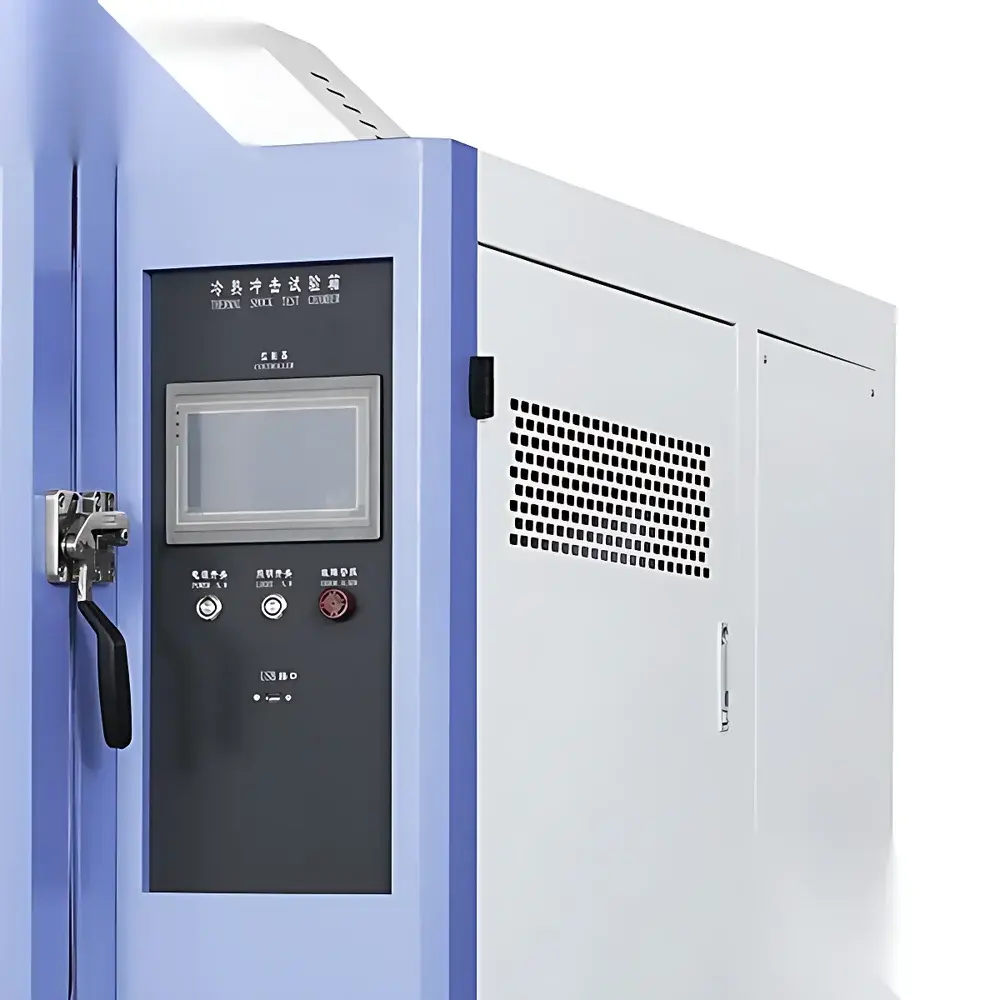
- High-stability microprocessor PID controller with programmable ramp rates (0.5–15 °C/min), soak time definition per zone, and cycle repetition logic for multi-step thermal profiles.
- Double-wall insulated construction with vacuum-sealed polyurethane foam (≥120 mm thickness) and vapor-tight stainless steel inner chamber (SUS#304, 1.0 mm, matte electropolished finish) ensuring long-term corrosion resistance and thermal uniformity (±1.5 °C across working volume).
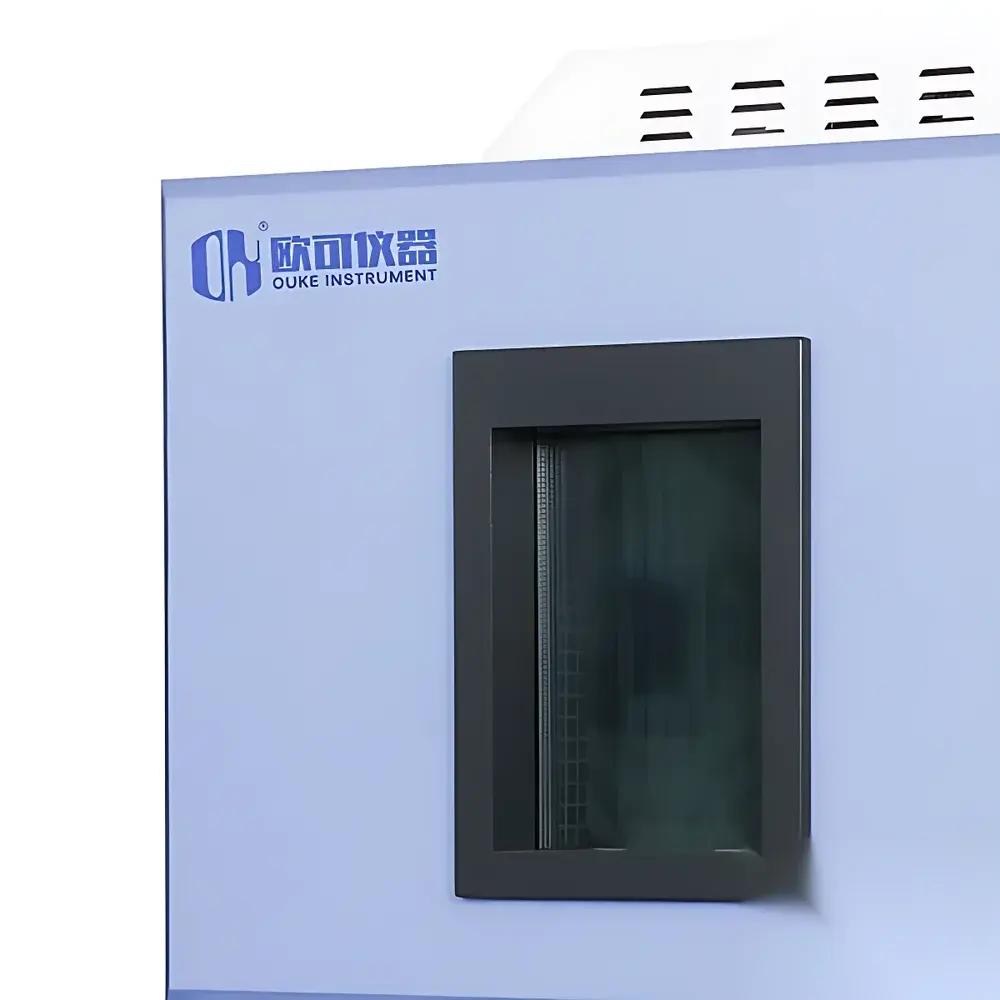
- Integrated observation window with tempered double-glazed quartz glass and LED interior lighting enables real-time visual monitoring without compromising thermal integrity.
- Intelligent refrigeration management: automatic selection of active cooling circuit (single-stage or cascade) based on setpoint, minimizing compressor wear and optimizing energy use across operational ranges.
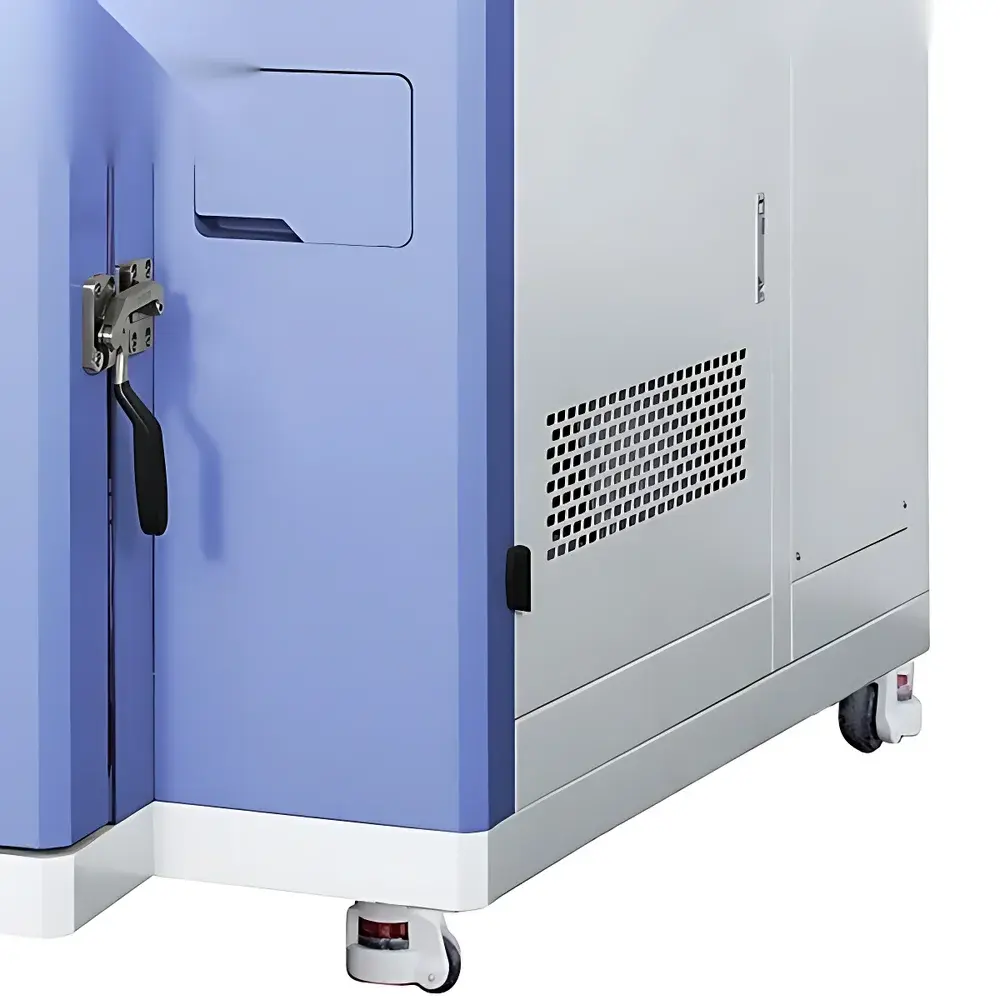
- Front-access maintenance design with removable filter banks, accessible condenser coils, and modular electrical panels compliant with IEC 60204-1 safety standards.
Sample Compatibility & Compliance
The OK-TS chamber accommodates rigid and semi-rigid specimens up to 30 kg per shelf, including metallic alloys (Al, Cu, Ti), thermoplastics (PBT, PEEK), elastomers (silicone, EPDM), printed circuit boards, MEMS devices, and hermetically sealed optoelectronic modules. Its internal geometry supports standard test fixtures (e.g., JEDEC trays, DIN 50017 racks) and custom mounting brackets. The system conforms to national and international environmental testing standards including GB/T 10589 (Low-Temperature Test Chambers), GB/T 11158 (High-Temperature Test Chambers), GB/T 10586 (Damp Heat Test Chambers), and aligns with the test condition definitions in ISO 16750-4 (Road vehicles — Environmental conditions and testing for electrical and electronic equipment) and IEC 60068-2-14 (Environmental testing — Part 2-14: Tests — Test N: Change of temperature).
Software & Data Management
Equipped with RS-485/Modbus RTU and optional Ethernet (TCP/IP) interface, the chamber integrates with laboratory-wide data acquisition systems. The embedded controller logs timestamped temperature readings at user-defined intervals (1–60 s), stores ≥10,000 cycles of profile history, and exports CSV-formatted reports compatible with statistical process control (SPC) platforms. Audit trail functionality—including operator ID, parameter modification timestamps, and alarm event logs—supports GLP/GMP documentation requirements. Optional PC-based software provides graphical profile editing, remote supervision, and automated report generation aligned with FDA 21 CFR Part 11 electronic record compliance when paired with validated digital signature modules.
Applications
- Qualification testing of aerospace avionics against rapid altitude-induced thermal transients.
- Reliability screening of automotive power electronics (IGBT modules, DC-DC converters) prior to AEC-Q100 stress qualification.
- Failure mode analysis of wafer-level chip-scale packages (WLCSP) and fan-out wafer-level packages (FOWLP) under thermal-mechanical load.
- Validation of adhesive bond strength in hybrid battery enclosures subjected to EV charge/discharge thermal cycling.
- Accelerated aging studies of optical coatings on laser diode housings exposed to desert-to-alpine ambient shifts.
- Process development support for reflow soldering profile optimization and cold-solder-joint detection methodology.
FAQ
What is the typical temperature transition time between −70 °C and +150 °C?
Standard transition time is ≤15 seconds for the OK-TS-80 and OK-TS-150 models when operating under nominal load conditions (≤70% chamber volume occupied, ambient ≤25 °C). Transition performance is verified per IEC 60068-3-10 Annex B.
Does the chamber support programmable dwell times at each temperature extreme?
Yes. Users can define independent soak durations (1–9999 minutes) at both high- and low-temperature setpoints within a single cycle, enabling simulation of real-world thermal hold scenarios such as engine-off soak or solar radiation absorption periods.
Is calibration traceability available?
Factory calibration is performed using NIST-traceable platinum resistance thermometers (PRTs) at three spatial points per chamber zone. Optional annual recalibration services include ISO/IEC 17025-accredited certificates with uncertainty budgets.
Can the system be integrated into an existing MES or QMS platform?
Yes. Native Modbus TCP support allows direct integration with Siemens SIMATIC, Rockwell FactoryTalk, or custom SCADA environments. API documentation and OPC UA gateway compatibility are available upon request for enterprise-level interoperability.
What safety protections are built into the system?
Dual redundant over-temperature cutouts (mechanical and electronic), door interlock switches, refrigerant high-pressure shutdown, phase-loss detection, and ground-fault circuit interruption (GFCI) are standard. All safety circuits comply with EN 61000-6-2 (EMC immunity) and EN 61000-6-4 (EMC emissions).



