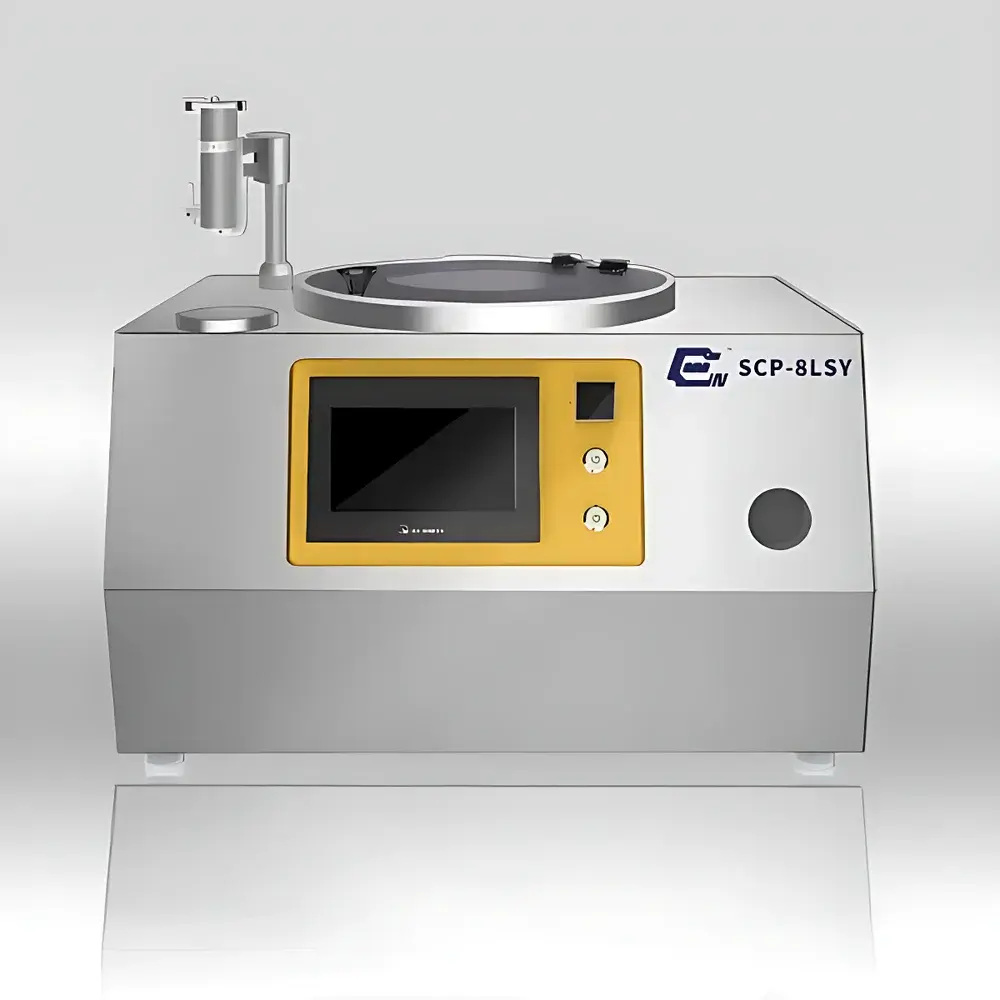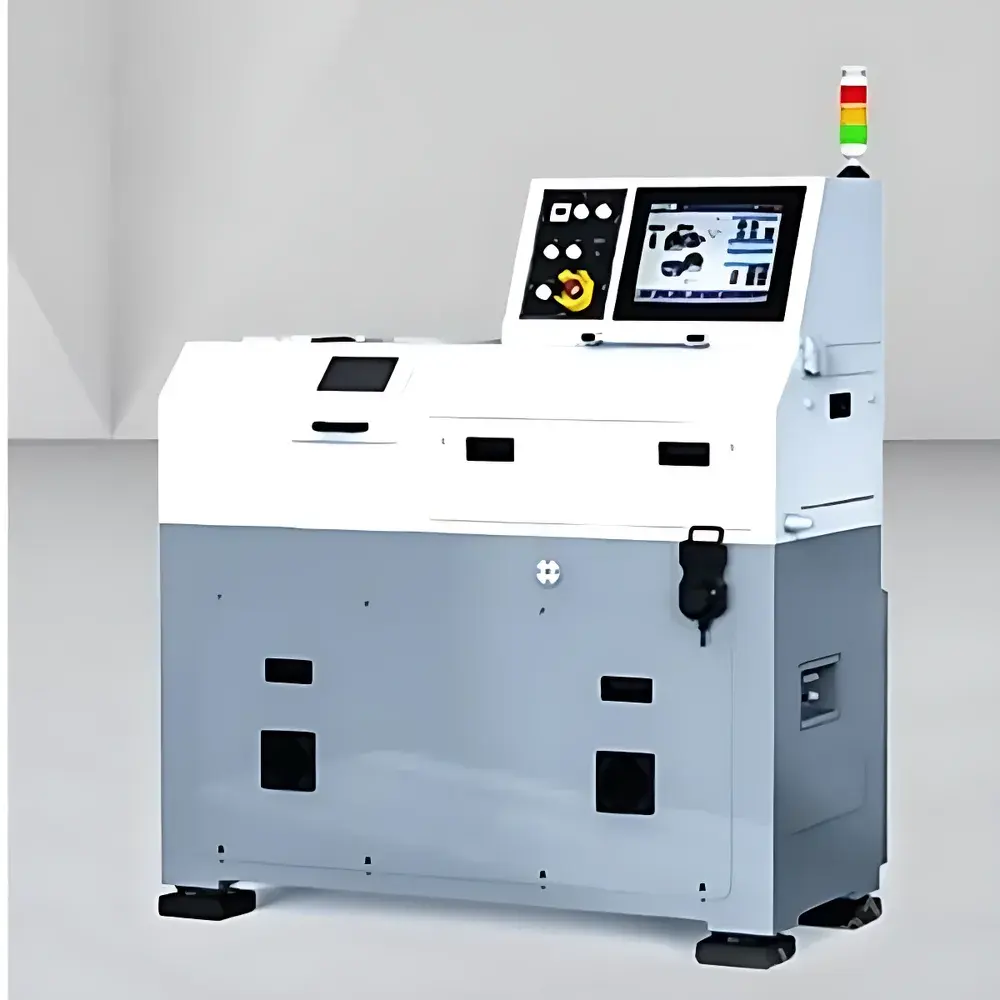
TSD IHG-2010 Horizontal Wafer Thinning Machine
| Brand | TSD |
|---|---|
| Origin | Beijing, China |
| Manufacturer Type | Authorized Distributor |
| Country of Origin | China |
| Model | IHG-2010 |
| Price | Upon Request |
| Maximum Wafer Size | 6-inch (150 mm) |
| Grinding Wheel OD | Ø200 mm |
| Spindle Speed Range | 0–3000 rpm |
| Chuck Table Speed | 0–400 rpm |
| Z-Axis Travel | 70 mm |
| Z-Axis Feed Rate | 0.1–1000 µm/sec (optional high-resolution mode: 0.01 µm/sec) |
| Industry Compliance Options | SECS/GEM interface, MES integration support |
Overview
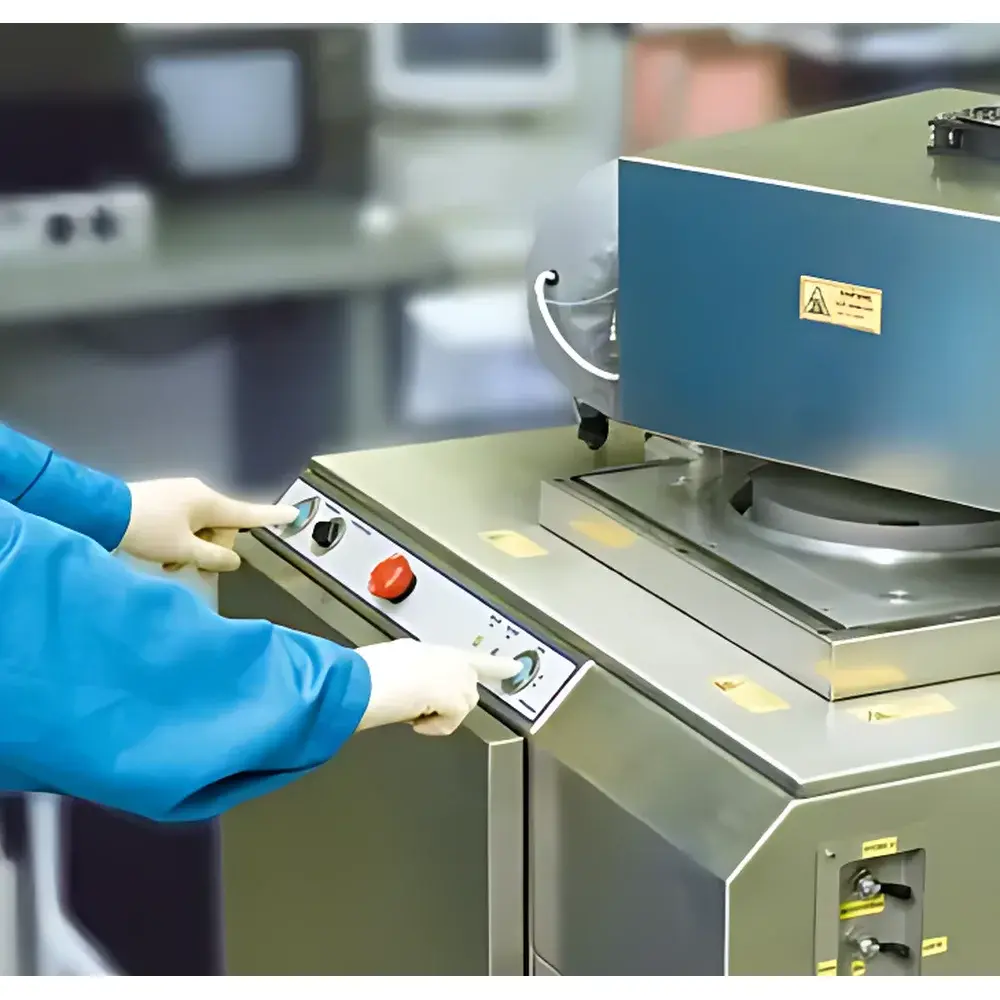
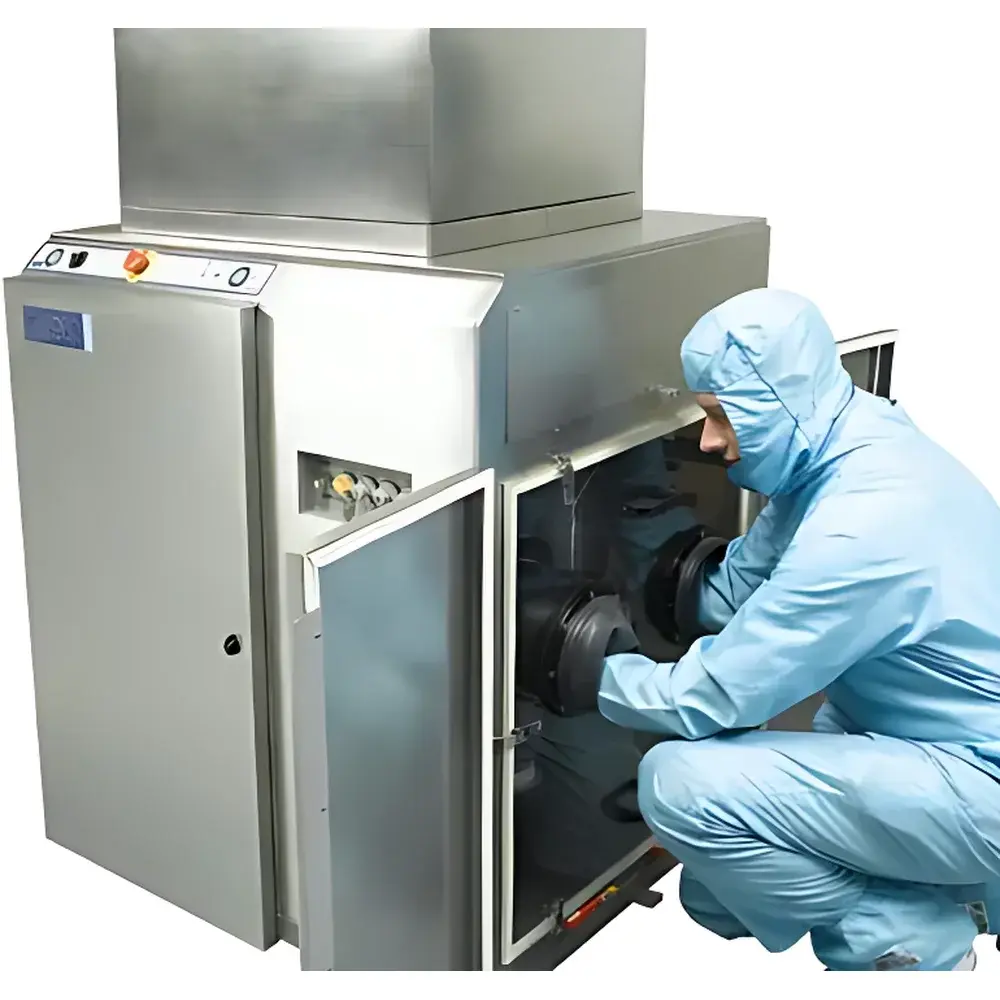
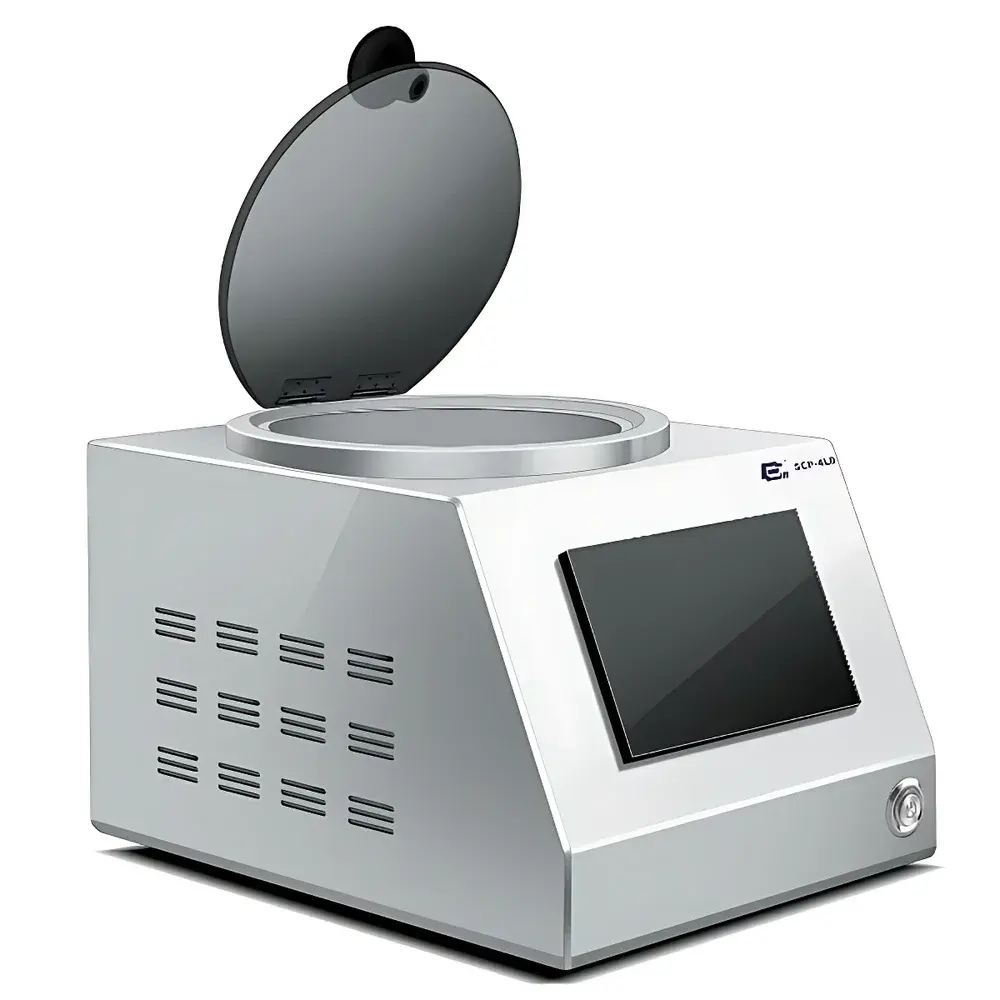
The TSD IHG-2010 Horizontal Wafer Thinning Machine is a precision-engineered lapping and grinding system designed for controlled mechanical thinning of semiconductor wafers, compound semiconductor substrates, and optical-grade brittle materials. Unlike vertical-axis thinning platforms, this horizontal configuration positions the grinding spindle parallel to the worktable—enabling improved thermal stability, reduced vibration coupling, and enhanced accessibility during manual loading/unloading. The machine operates on a deterministic material removal principle: controlled abrasive contact between a rotating diamond or silicon carbide grinding wheel and a rotating wafer mounted on a vacuum chuck, with feed motion precisely regulated along the Z-axis. It is engineered for process repeatability in R&D labs, pilot lines, and low-to-medium volume production environments where flexibility, operator control, and compatibility with non-standard substrates are critical.
Key Features
- Horizontal Spindle Architecture: Minimizes gravitational deflection of the grinding wheel and chuck assembly, contributing to improved thickness uniformity (TTV) and surface flatness across 6-inch wafers.
- Multi-Stage Grinding Program Control: Supports up to five independently configurable grinding stages per recipe—including roughing, semi-finishing, and finishing passes—with programmable spindle speed, table rotation, Z-feed rate, and dwell time.
- High-Resolution Z-Axis Motion System: Standard feed resolution of 0.1 µm/sec; optional ultra-fine mode delivers 0.01 µm/sec incremental control for sub-micron thickness targeting and endpoint-sensitive applications.
- Load-Monitoring Protection Logic: Real-time torque feedback from the grinding spindle motor triggers automatic feed rate reduction or process suspension when load thresholds exceed user-defined limits—preventing wheel glazing, wafer chipping, or chuck deformation.
- Modular Chuck Table Design: Vacuum-compatible chuck plates are interchangeable and customizable for non-circular substrates (e.g., rectangular GaAs wafers, sapphire blanks, or MEMS carriers), accommodating both standard 6-inch round wafers and specialty geometries.
Sample Compatibility & Compliance
The IHG-2010 accommodates silicon (Si), silicon carbide (SiC), gallium arsenide (GaAs), indium phosphide (InP), sapphire (Al₂O₃), and fused silica substrates ranging from 50 mm to 150 mm in diameter or equivalent planar area. Surface finish post-thinning typically achieves Ra < 5 nm (as measured by AFM) under optimized finishing parameters. The system supports integration with industry-standard automation protocols: SECS/GEM communication (SEMI E30/E37 compliant) enables host-based recipe management and status reporting, while optional MES gateway modules allow traceability logging aligned with ISO 9001 and IATF 16949 quality management frameworks. Though not certified for Class 100 cleanroom operation out-of-the-box, the unit may be retrofitted with HEPA-filtered coolant mist extraction and grounded static-dissipative enclosures per customer specification.
Software & Data Management
Control is executed via an embedded industrial PC running real-time deterministic motion firmware. The HMI provides intuitive recipe creation, manual jog controls, and live monitoring of spindle current, Z-position, and feed velocity. All process parameters—including timestamped start/stop events, actual vs. target thickness deviation, and load history—are logged in CSV format with UTC timestamps. Audit trails comply with basic GLP documentation requirements; optional 21 CFR Part 11-compliant software add-ons provide electronic signature capability, role-based access control, and immutable log archiving—suitable for qualification in regulated packaging development workflows.
Applications
- Pre-packaging wafer thinning for flip-chip and wafer-level chip-scale packaging (WLCSP)
- R&D-scale backgrinding of SiC power device wafers prior to dicing and metallization
- Thickness calibration of optical window substrates used in UV/VIS/NIR sensor assemblies
- Controlled thinning of piezoelectric ceramics (e.g., PZT, AlN) for resonator and MEMS actuator fabrication
- Substrate preparation for TEM sample cross-sectioning and focused ion beam (FIB) lift-out
FAQ
What wafer materials can be processed on the IHG-2010?
Silicon, SiC, GaAs, InP, sapphire, quartz, and other brittle crystalline or ceramic substrates up to 6 inches in diameter.
Is coolant delivery integrated into the system?
Yes—the machine includes a recirculating deionized water-based coolant circuit with adjustable flow rate and temperature stabilization (±0.5°C), compatible with standard wafer grinding fluids.
Can the system be integrated into an automated fab environment?
Via optional SECS/GEM interface and digital I/O expansion modules, enabling handshake with AMHS carriers, robotic handlers, and central MES systems.
Does the IHG-2010 support in-situ thickness measurement?
No native interferometric or eddy-current sensor is included; however, the Z-axis position encoder resolution and repeatable feed control enable highly accurate open-loop thickness targeting when calibrated against offline metrology (e.g., optical profilometry or XRF).
What maintenance intervals are recommended for the grinding spindle?
Spindle bearing inspection and grease replenishment are advised every 1,000 operational hours; full preventive maintenance—including coolant filter replacement and vacuum line integrity verification—is scheduled quarterly under typical lab usage conditions.