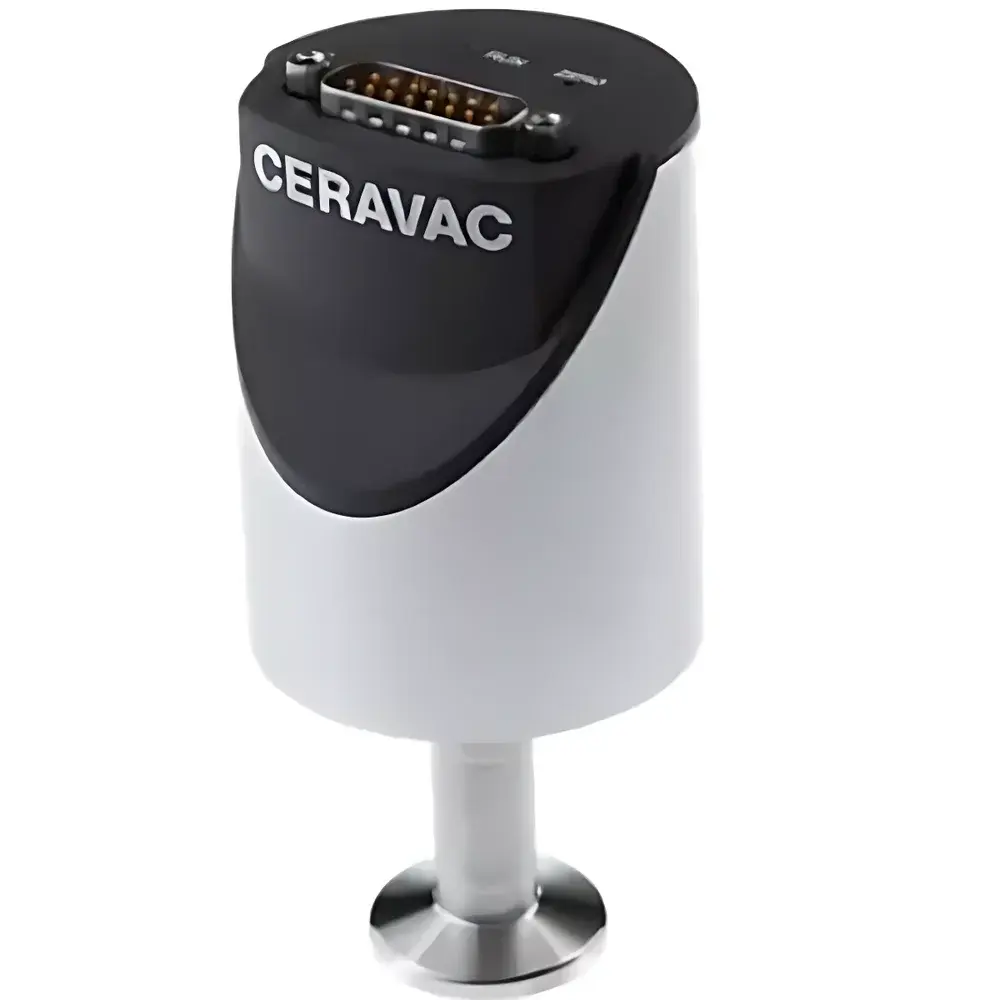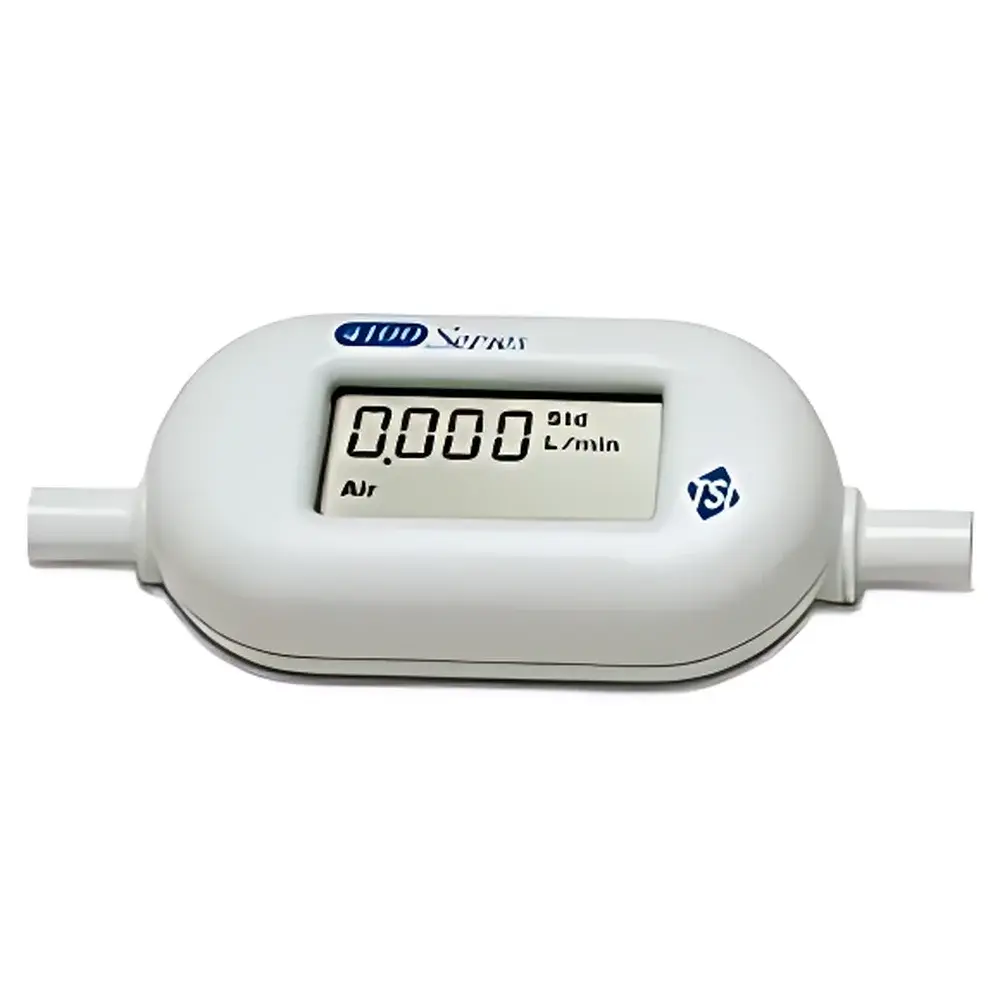
TSI Model 4146/4046 Primary Flow Calibrator
| Brand | TSI |
|---|---|
| Origin | USA |
| Model | 4146 / 4046 |
| Calibration Level | Primary (NIOSH-Recognized) |
| Flow Measurement Principle | Critical Orifice (Restriction-Type) |
| Accuracy | ±2% of reading |
| Certifications | NIST-traceable calibration certificate included |
| Power Source | Rechargeable battery |
| Portability | Handheld, lightweight design for field use |
| Compliance | Recognized as a Primary Reference Instrument by NIOSH for personal sampling pump calibration |
Overview
The TSI Model 4146 and 4046 Primary Flow Calibrators are precision-engineered, portable reference instruments designed to meet the stringent requirements of occupational hygiene and environmental air monitoring programs. These devices operate on the critical orifice (restriction-type) flow measurement principle, leveraging laminar flow physics under controlled pressure differentials to deliver highly reproducible volumetric flow measurements across a defined range. As NIOSH-recognized primary calibration standards, they serve as the foundational traceability link between field-deployed personal sampling pumps and national metrological standards—specifically NIST-traceable reference values. Their primary function is to verify, adjust, and document the actual volumetric flow rate delivered by low-flow sampling pumps (e.g., those used with sorbent tubes, filter cassettes, or passive badges) prior to, during, and after sample collection. This ensures that time-integrated exposure assessments—critical for OSHA, ACGIH, and ISO 8519-compliant workplace evaluations—are based on metrologically sound volume determinations.
Key Features
- NIST-traceable calibration certificate provided with each unit, establishing direct traceability to the National Institute of Standards and Technology.
- Real-time, continuous volumetric flow readout in standard liters per minute (SLPM) or milliliters per minute (mL/min), enabling immediate pump adjustment without external data logging.
- Battery-powered operation with extended runtime, supporting full-shift field calibration campaigns without AC dependency.
- Compact, ergonomic handheld form factor (< 0.8 kg) optimized for technician mobility and one-handed operation in confined or remote sampling locations.
- Robust mechanical architecture resistant to dust, humidity, and moderate temperature fluctuations typical of industrial and outdoor environments.
- Compliance with NIOSH Manual of Analytical Methods (NMAM) Chapter 2.1.1 requirements for primary flow calibration instrumentation.
Sample Compatibility & Compliance
The 4146/4046 calibrators are validated for use with all common personal sampling media—including charcoal tubes, silica gel cartridges, mixed-bed sorbents, PVC and polycarbonate filter cassettes, and polyurethane foam (PUF) samplers. They maintain accuracy across the standard low-flow range of 1–5000 mL/min, covering applications from respirable dust (e.g., 1.7–2.0 L/min for cyclone-based sampling) to volatile organic compound (VOC) collection (e.g., 0.01–0.2 L/min for thermal desorption tubes). The instrument’s classification as a NIOSH-recognized primary reference device satisfies regulatory expectations under OSHA 1910.1200 (Hazard Communication), EPA Method TO-17, and ISO 8519:2021 (Workplace air — Performance criteria and validation procedures for measuring devices). Each unit ships with documentation supporting GLP-aligned calibration records and audit-ready traceability logs.
Software & Data Management
While the 4146/4046 operates as a standalone analog-digital hybrid instrument with no embedded firmware or cloud connectivity, its output supports integration into laboratory quality management systems (QMS) via manual entry or optional RS-232 interface (with compatible TSI accessories). All calibration events—including date/time stamp, measured flow value, operator ID, and pump model—can be documented in accordance with 21 CFR Part 11–compliant electronic record practices when entered into validated LIMS or ELN platforms. The NIST certificate includes uncertainty budgets, reference conditions (25°C, 101.3 kPa), and correction factors for local barometric pressure and temperature—enabling technically defensible corrections per ISO/IEC 17025:2017 Clause 7.6.1.
Applications
- Pre- and post-sampling verification of personal air sampling pumps in occupational health surveys.
- Field validation of fixed-location area monitors and indoor air quality (IAQ) samplers.
- Performance auditing of pump fleets in industrial hygiene laboratories accredited to ISO/IEC 17025.
- Training and competency assessment for certified industrial hygienists (CIHs) and safety professionals.
- Supporting method validation studies required by ASTM D7142 and EN 13725 for emission source testing.
FAQ
What distinguishes a primary flow calibrator from a secondary or transfer standard?
A primary calibrator—such as the TSI 4146/4046—derives its accuracy directly from fundamental physical constants (e.g., orifice geometry, gas properties, and thermodynamic conditions) and is independently certified against NIST standards. Secondary standards require periodic recalibration against a primary device.
Is this instrument suitable for calibrating high-flow pumps (>5 L/min)?
No. The 4146/4046 is engineered specifically for low-flow applications (1–5000 mL/min). High-flow calibration requires dedicated sonic nozzle or piston provers compliant with ISO 6789-2.
Does the unit require annual recalibration?
Yes. To maintain NIST traceability and regulatory acceptability, annual recalibration by an ISO/IEC 17025-accredited laboratory is recommended—and mandated under many corporate QMS protocols.
Can it be used with reactive or corrosive gases?
The internal orifice and sensor path are constructed of stainless steel and anodized aluminum; however, direct exposure to halogenated, acidic, or solvent-saturated streams may affect long-term stability and is not covered under warranty.
How is atmospheric pressure compensated during field use?
The NIST certificate provides pressure/temperature correction equations. Field operators apply these manually—or integrate them into custom spreadsheets—to adjust raw readings to standard conditions (e.g., 25°C, 101.325 kPa) per ISO 8519 Annex B.