TTech-ISO9705 Large-Scale Lithium Battery Module & Rack-Level Fire Propagation Test System
| Brand | TESTech |
|---|---|
| Origin | Jiangsu, China |
| Manufacturer Type | Direct Manufacturer |
| Country of Origin | China |
| Model | TTech-ISO9705 |
| Price Range | USD 1,400 – 2,800 (FOB) |
| Compliance Basis | ISO 9705:2023, UL 9540A Annex D, GB/T 36276–2018, NFPA 855 Annex B |
| Max Fire Load | 10 MW |
| Chamber Dimensions (L×W×H) | Up to 18 m × 35 m × 15 m |
| Exhaust Flow Rate | ≥15,000 m³/h |
| Gas Analysis | H₂ + Total Hydrocarbons (THC) + FTIR Multi-Gas Quantification (CO, CO₂, HF, HCl, SO₂, NOₓ, CH₄, C₂H₄, etc.) |
| Smoke Measurement | Optical Density (Ds), Specific Optical Density (Ds/m), Mass Loss Rate (MLR), Heat Release Rate (HRR) via Oxygen Consumption Calorimetry |
| Data Acquisition | 100 Hz synchronized sampling across thermal, gas, optical, and mass loss channels |
Overview
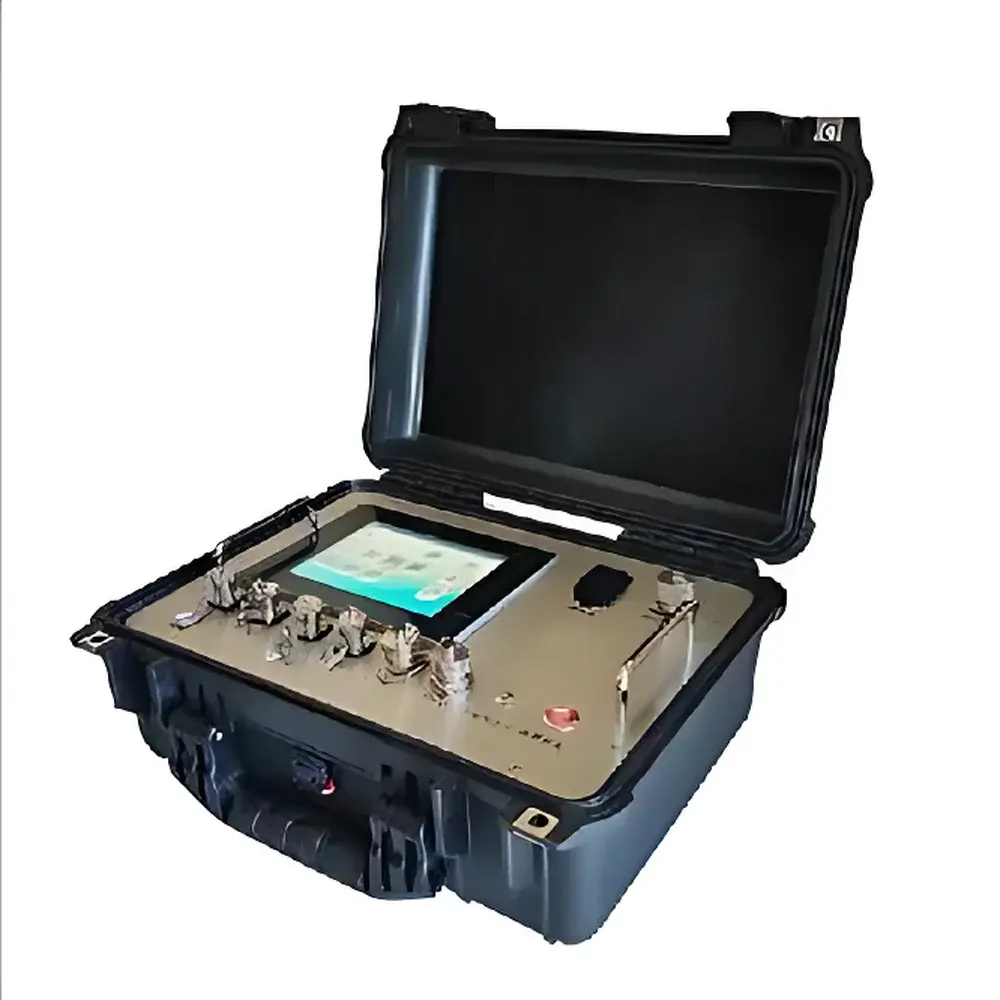
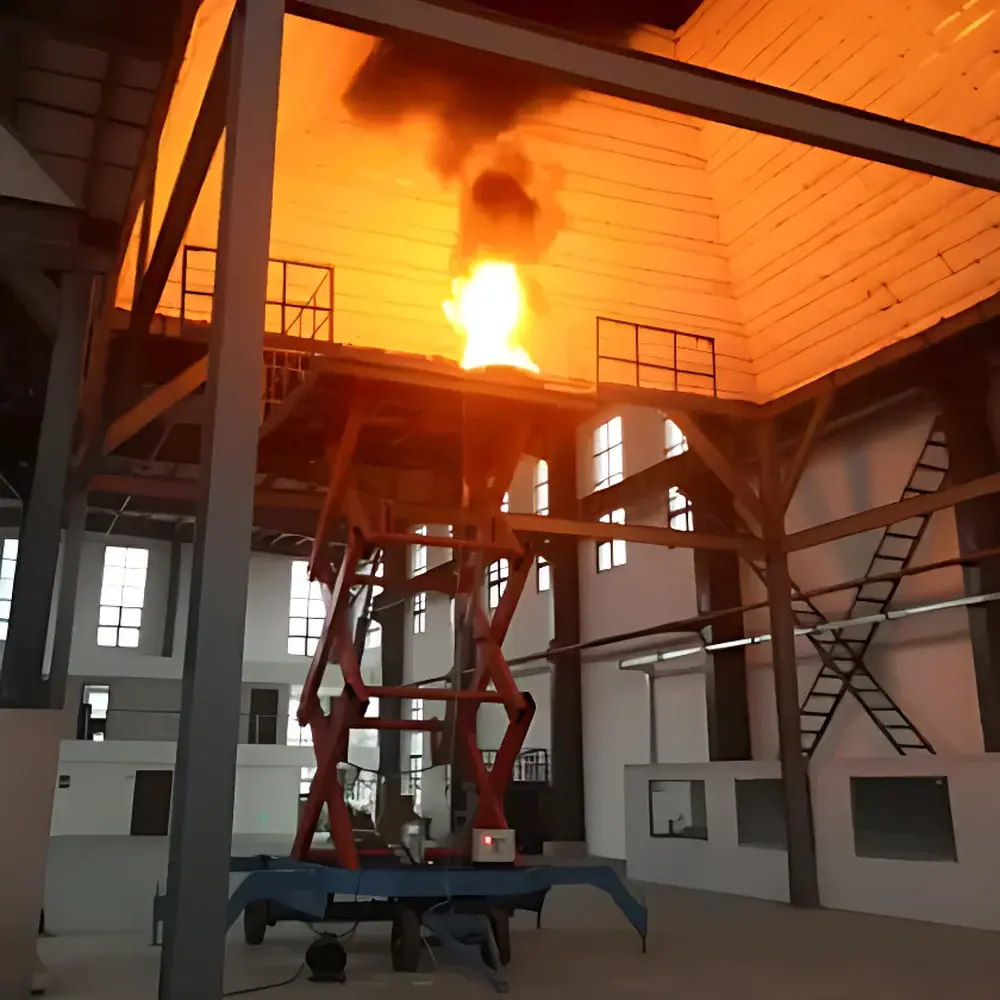
The TTech-ISO9705 Large-Scale Lithium Battery Module & Rack-Level Fire Propagation Test System is an engineered platform for standardized, full-scale fire behavior evaluation of lithium-ion battery energy storage systems (BESS) under realistic thermal runaway escalation scenarios. Designed in strict alignment with ISO 9705:2023 — “Fire tests — Full-scale room corner test for surface products” — and functionally extended to meet the structural and instrumentation requirements of UL 9540A Annex D (thermal runaway propagation testing), this system enables quantitative assessment of flame spread dynamics, heat release characteristics, toxic gas evolution, and smoke obscuration across module, rack, containerized, and vehicle-integrated configurations. Unlike small-scale or single-cell calorimetry, the TTech-ISO9705 operates on the principle of oxygen consumption calorimetry combined with real-time multi-spectral gas analysis and high-resolution optical density monitoring. It replicates worst-case thermal coupling conditions—such as adjacent cell venting, jet flame impingement, and cascading thermal feedback—to generate reproducible, benchmark-grade fire performance data required for safety certification, hazard modeling (e.g., CFD input), and regulatory submission to authorities including UL, TÜV, CNAS, and the U.S. DOE’s Energy Storage Safety Consortium (ESSSC).
Key Features
- Modular chamber architecture supporting four scalable fire load tiers: 1 MW (large prismatic cells & small modules), 3 MW (standard racks & residential ESS cabinets), 5 MW (commercial-scale BESS racks and installation-level arrays), and 10 MW (prefabricated energy storage containers and EV battery packs).
- Integrated FTIR-based gas analysis subsystem with NIST-traceable calibration, capable of simultaneous quantification of ≥12 combustion species—including HF, HCl, CO, CO₂, NO, NO₂, SO₂, CH₄, C₂H₄, H₂, formaldehyde, and acetaldehyde—at sub-ppm detection limits and 1-second temporal resolution.
- Dual-path hydrogen and total hydrocarbon (THC) measurement using catalytic bead sensors and FID detection, compliant with IEC 62619 and UN 38.3 thermal runaway gas emission reporting protocols.
- Full-spectrum smoke characterization: calibrated optical density (Ds) measurement per ASTM E662, specific optical density (Ds/m) calculation, and time-resolved transmittance tracking through dual-beam 532 nm laser photometry.
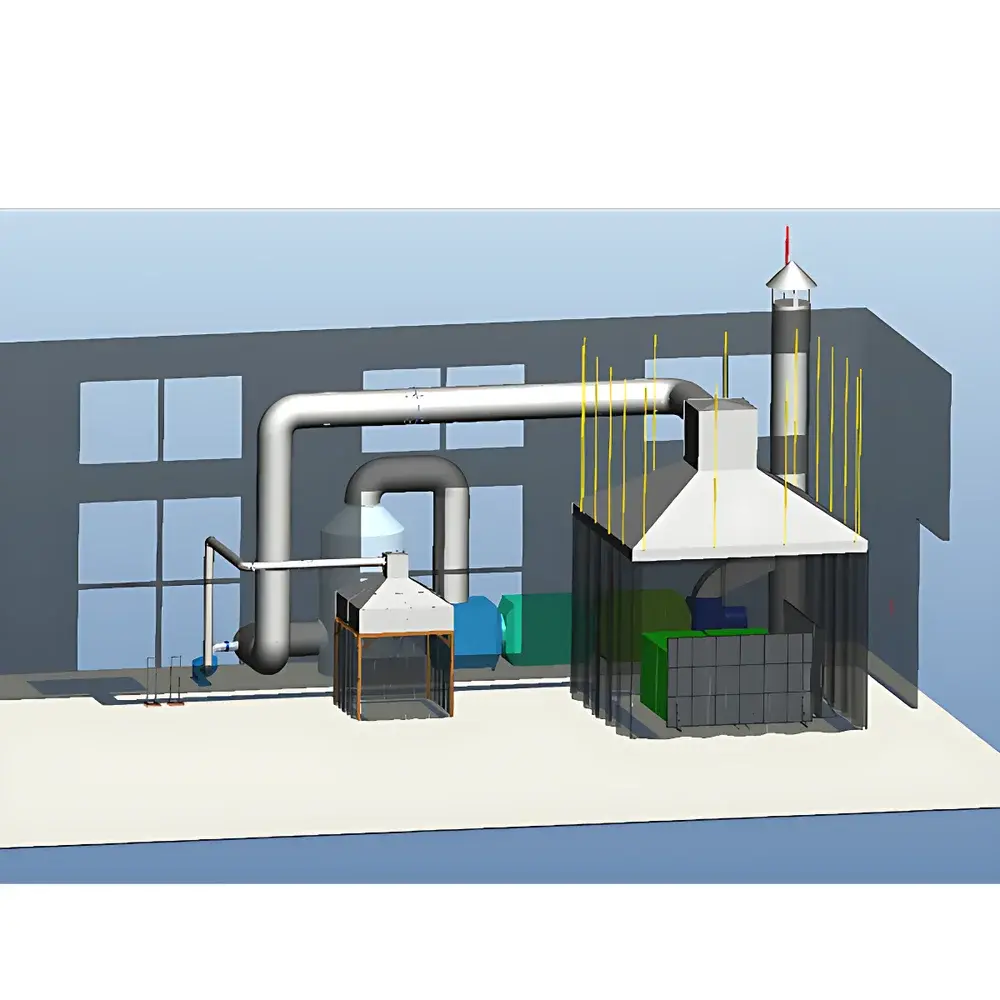
- Robust exhaust treatment train comprising quench tower, alkali scrubber (NaOH/H₂O₂), activated carbon adsorption, and HEPA filtration—ensuring compliance with local environmental discharge limits (e.g., EPA Method 26A, EN 15259).
- Real-time, synchronized data acquisition at 100 Hz across thermocouple arrays (Type K, 32-channel), mass loss instrumentation (0.1 g resolution), oxygen depletion sensors (paramagnetic), and gas concentration outputs—exportable in .csv and .tdms formats for traceability.
Sample Compatibility & Compliance
The TTech-ISO9705 accommodates physical samples ranging from 20 Ah pouch modules (1U height) up to 2.5 m × 1.2 m × 2.3 m prefabricated energy storage units and full electric vehicle battery trays. Mounting fixtures, thermal isolation interfaces, and electrical isolation provisions are configurable per IEC 62660-3, GB/T 31467.3, and UL 1973 Annex J. All test protocols adhere to GLP-aligned documentation standards: audit-ready test logs include operator ID, calibration certificate references, ambient condition stamps (T/RH/pressure), pre-test baseline verification records, and raw channel metadata. The system supports 21 CFR Part 11-compliant electronic signatures and audit trails when integrated with optional LIMS modules.
Software & Data Management
The proprietary FireTrace™ v4.2 software provides unified control, visualization, and post-processing. It features automated ISO 9705 curve fitting (peak HRR, TTI, THR, MARHE), dynamic gas speciation heatmaps, and smoke obscuration time-series overlays. Exported datasets conform to ASTM E1354 and ISO 5660-1 metadata schemas. Raw files retain embedded timestamps, sensor serial numbers, and calibration expiration dates—enabling third-party validation per ISO/IEC 17025 accreditation requirements. Optional API integration supports direct ingestion into Siemens Desigo, Honeywell Experion, or Ansys Fluent for coupled fire simulation workflows.
Applications
- Qualification testing of battery enclosures, fire barriers, and thermal runaway suppression systems per UL 9540A Section 7 and NFPA 855 Section 14.4.
- Generation of input parameters for CFD fire modeling (e.g., pyrolysis mass flux, species yield functions, radiation fractions) used in facility siting studies and ventilation design.
- Comparative evaluation of cathode chemistries (LFP vs. NMC vs. NCA) and cell formats (prismatic, cylindrical, pouch) under identical thermal runaway initiation conditions.
- Supporting technical due diligence for insurance underwriting (e.g., FM Global Property Loss Prevention Data Sheets 7-125, 8-100) and grid interconnection safety reviews.
- Validation of fire detection algorithm training datasets for AI-powered early-warning systems deployed in utility-scale BESS facilities.
FAQ
Does the TTech-ISO9705 comply with UL 9540A for BESS certification?
Yes. The system implements all mandatory instrumentation, spatial layout, and data reporting requirements specified in UL 9540A Annex D for module-to-module and rack-to-rack propagation testing.
Can it be used for testing battery systems with active thermal management?
Yes. The chamber integrates provisions for routing coolant lines, embedding temperature-controlled plenums, and synchronizing HVAC shutdown sequences to replicate failure modes in liquid-cooled BESS.
Is FTIR calibration traceable to international standards?
All FTIR calibrations are performed using NIST-certified multi-gas standards (SRM 1622, SRM 2690), with certificates issued per ISO/IEC 17025:2017 by an ILAC-MRA accredited lab.
What level of technical support is provided post-installation?
TESTech offers on-site commissioning, ISO 9705 operator certification training, annual metrological verification, and remote diagnostics with <48-hour response SLA for critical instrumentation faults.
Are test reports generated by this system accepted by EU Notified Bodies?
Yes. Reports follow EN 50699 and EN 62619 Annex A formatting conventions and include uncertainty budgets per GUM (JCGM 100:2008), enabling direct submission to TÜV Rheinland, DEKRA, and SGS for CE marking support.