
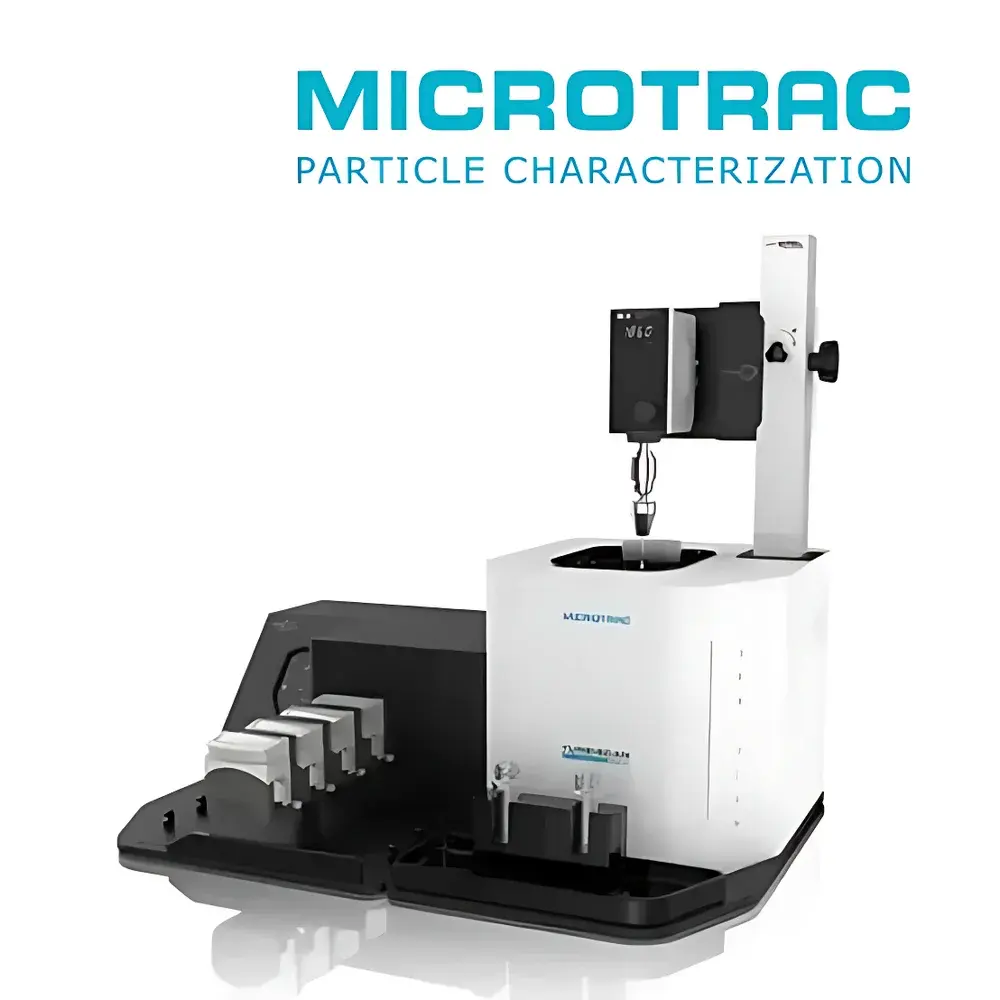
TURBISCAN DNS Static Multiple Light Scattering (SMLS) Particle Dispersion Analyzer by Formulaction
| Brand | Formulaction |
|---|---|
| Origin | France |
| Model | TURBISCAN DNS |
| Measurement Principle | Static Multiple Light Scattering (SMLS) |
| Detection Modes | Transmittance (T) and Backscattering (BS) |
| Sample Volume | 1.5–30 mL |
| Concentration Range | 0.0001–95% v/v |
| Particle Size Range | 10 nm–1 mm |
| Spatial Resolution | Vertical scanning with high-frequency acquisition |
| In-situ Options | T-MIX (stirred mode), T-LOOP (circulation mode) |
| Output Metric | Turbiscan Stability Index (TSI) |
Overview
The TURBISCAN DNS is a benchtop static multiple light scattering (SMLS) analyzer engineered for quantitative, non-invasive assessment of particle dispersion uniformity and physical stability in colloidal and heterogeneous liquid systems. Unlike conventional ensemble-averaging techniques such as dynamic light scattering (DLS) or laser diffraction, SMLS operates on the principle of measuring local variations in light intensity—both transmitted (T) and backscattered (BS)—as a function of vertical position within a stationary sample cell. This spatially resolved optical profiling enables direct detection of particle migration (creaming, sedimentation, flocculation), size evolution (coalescence, Ostwald ripening), and concentration gradients over time—without dilution, labeling, or phase separation. The instrument’s dual-detector architecture, coupled with a motorized vertical scanning head, delivers high-resolution kinetic profiles under static, stirred (T-MIX), or circulating (T-LOOP) conditions—making it uniquely suited for formulation development, process validation, and accelerated shelf-life prediction across R&D and QC environments.
Key Features
- True static measurement: No sample preparation, dilution, or centrifugation required—preserves native dispersion state.
- Dual optical detection: Simultaneous acquisition of transmittance (T) and backscattering (BS) signals at 850 nm, enabling discrimination between particle size changes and concentration shifts.
- High spatial resolution: Vertical scanning with 20 µm step resolution over 40 mm sample height, capturing localized instability events (e.g., interface formation, layering).
- Extended concentration compatibility: Validated performance from ultra-dilute dispersions (10⁻⁴ % v/v) to highly concentrated pastes and emulsions (up to 95 % v/v).
- Multi-modal operation: Supports static stability monitoring, real-time stirred dispersion analysis (T-MIX), and closed-loop circulation studies (T-LOOP) with external reactors or pipelines.
- Quantitative stability metric: Automated calculation of Turbiscan Stability Index (TSI) based on normalized variance of T/BS profiles—enabling objective, operator-independent comparison across formulations.
Sample Compatibility & Compliance
The TURBISCAN DNS accommodates opaque, colored, and highly viscous samples—including paints, inks, pharmaceutical suspensions, food emulsions, agrochemical concentrates, and battery slurries—without signal saturation or calibration drift. Its optical design eliminates reliance on Mie theory assumptions, ensuring robustness across broad particle size distributions (10 nm–1 mm). The system complies with GLP documentation requirements through full audit trail logging (user actions, parameter changes, raw data timestamps) and supports 21 CFR Part 11-compliant software configurations when deployed with validated Formulaction TURBISCAN Lab software. All measurements adhere to ISO 13321 (light scattering particle sizing) and ASTM D7865 (stability evaluation of colloidal dispersions) methodological frameworks.
Software & Data Management
TURBISCAN Lab software provides integrated acquisition, visualization, and statistical analysis modules. Raw T/BS profiles are stored in vendor-neutral HDF5 format with embedded metadata (instrument ID, date/time, user, protocol). Time-series analysis includes automatic TSI computation, kinetic modeling (exponential decay, linear drift), and comparative overlay of up to 16 formulations. Export options include CSV, PDF reports, and XML for LIMS integration. Version-controlled method templates ensure inter-laboratory reproducibility, while password-protected user roles support SOP enforcement in regulated environments (e.g., pharmaceutical QC labs operating under ICH Q5C or USP ).
Applications
- Formulation optimization: Screening surfactants, rheology modifiers, and co-solvents for improved dispersion homogeneity in drug nanosuspensions or pigment dispersions.
- Shelf-life prediction: Accelerated stability testing under controlled temperature/humidity; correlation of TSI kinetics with real-time storage data per ICH Q1A(R2).
- Process monitoring: Inline dispersion quality control during milling, homogenization, or mixing via T-LOOP coupling to pilot-scale reactors.
- Regulatory submission support: Generating stability datasets compliant with FDA guidance for topical suspensions (CDER Guidance, 2022) and EMA reflection papers on nanomedicines.
- Fundamental colloid science: Quantifying creaming velocity, flocculation rate constants, and interfacial energy effects using Hansen solubility parameter mapping.
FAQ
Can the TURBISCAN DNS measure particle size distribution directly?
No—it does not output classical PSD histograms. Instead, it detects relative changes in scattering behavior correlated with size evolution and spatial redistribution, validated against reference methods (e.g., TEM, sedimentation field-flow fractionation).
Is calibration required before each measurement?
A single blank reference scan (air or solvent) suffices for baseline normalization; no daily recalibration is needed due to thermally stabilized diode lasers and drift-compensated detectors.
How does TURBISCAN differentiate between sedimentation and coalescence?
By analyzing opposing trends in T and BS signals: sedimentation increases BS at the bottom while decreasing T uniformly; coalescence elevates both T and BS locally due to enlarged scatterers.
Can data be exported for statistical process control (SPC)?
Yes—TSI values, profile variances, and kinetic parameters export to CSV or connect directly to JMP, Minitab, or Python-based SPC dashboards via API.
What sample cell types are supported?
Standard 10 mm pathlength cylindrical glass cells (1.5–30 mL); optional quartz cells for UV-transparent formulations or high-pressure cells for reactive systems.



