
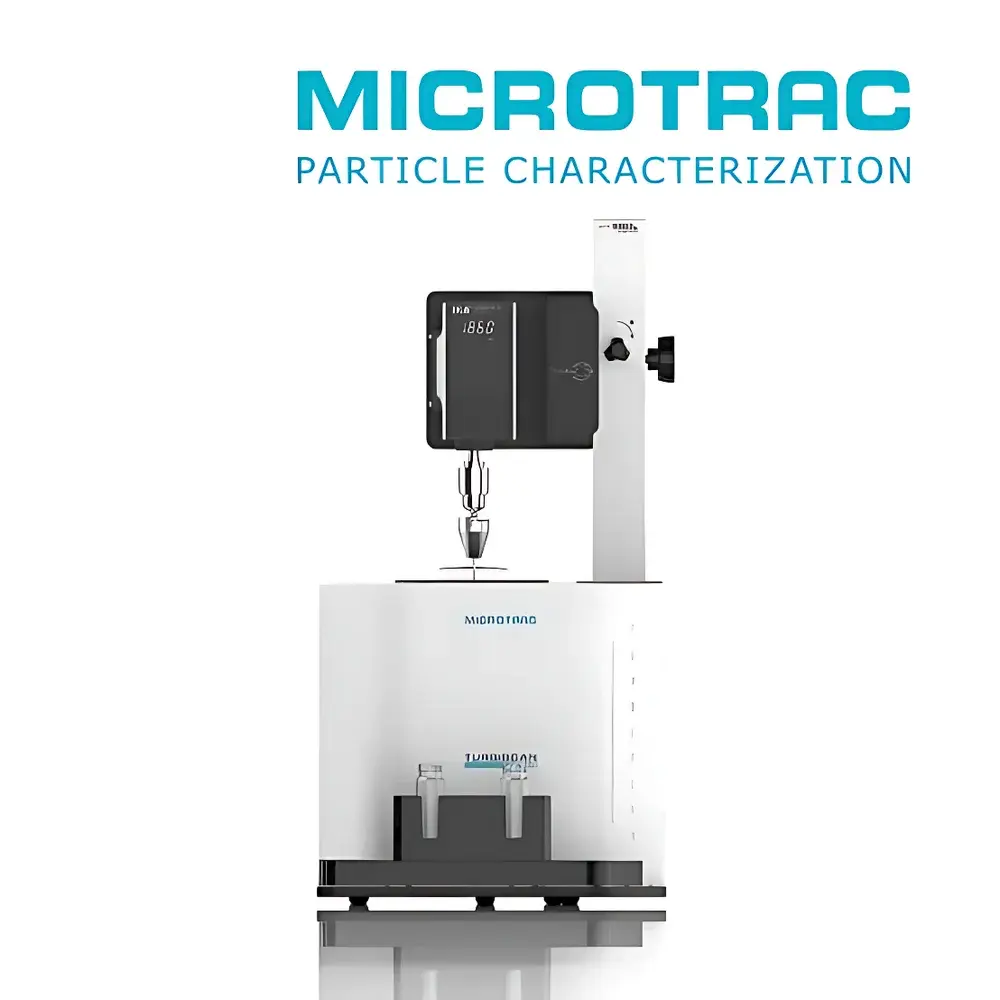
Turbiscan TMIX Foam Analyzer by Formulaction
| Brand | Formulaction |
|---|---|
| Origin | France |
| Model | Turbiscan TMIX |
| Measurement Range | 0.05–1000 µm |
| Repeatability | ≤1% |
| Accuracy | ≤1% |
| Measurement Interval | 20 s |
| Spatial Resolution | 40 µm |
Overview
The Turbiscan TMIX Foam Analyzer is a benchtop static multiple light scattering (SMLS) instrument engineered for the quantitative, non-invasive, and time-resolved characterization of foam structure and stability. Unlike conventional optical or image-based methods, the TMIX employs patented backscattering and transmission detection across a vertical sample cell (10 mm path length), enabling simultaneous acquisition of destabilization kinetics—driven by coalescence, Ostwald ripening, drainage, and disproportionation—at high temporal resolution (as low as 20-second intervals). The system operates on the principle that changes in local particle/bubble concentration and size distribution induce measurable variations in scattered light intensity profiles along the cell height. By scanning the entire sample column at 40 µm spatial resolution, the TMIX delivers full-height, real-time maps of foam evolution—from initial generation through aging to collapse—without dilution, sampling, or mechanical perturbation.
Key Features
- Static multiple light scattering (SMLS) platform with dual-detection (backscattering + transmission) for comprehensive foam profiling
- Automated, programmable foam generation module integrated with precision syringe pump and gas dispersion control
- High-resolution vertical scanning (40 µm step size) over 0–80 mm sample height, capturing drainage dynamics and lamella thinning
- Measurement interval configurable from 20 seconds to hours, supporting both rapid screening and long-term stability studies
- Quantitative derivation of six core foam parameters: total foam height, liquid phase height, bubble size distribution (0.05–1000 µm), half-life (t1/2), expansion ratio, and stability index
- Robust architecture compliant with ISO 13321 (light scattering particle sizing) and aligned with ASTM D7421 (foam stability testing standards)
Sample Compatibility & Compliance
The TMIX accommodates aqueous, non-aqueous, and viscous foams—including surfactant solutions, protein-stabilized systems, polymer-laden formulations, and oil-based foams—within standard 10 mL cylindrical glass cells. Its non-destructive measurement protocol preserves sample integrity throughout analysis, eliminating artifacts associated with centrifugation, filtration, or imaging artifacts. Data acquisition and reporting are designed to support GLP and GMP environments: audit trails, user access control, electronic signatures, and raw data export comply with FDA 21 CFR Part 11 requirements. Instrument calibration is traceable to NIST-certified reference materials, and method validation protocols align with ICH Q5C and USP <729> for colloidal stability assessment.
Software & Data Management
Turbiscan Analysis Software (v9.x) provides an intuitive interface for method setup, real-time visualization, and automated parameter extraction. Time-series profiles are exported in CSV and HDF5 formats for integration with MATLAB, Python (Pandas/NumPy), or LIMS platforms. Advanced modules include kinetic modeling (first-order decay fitting), comparative stability ranking (ΔBS, ΔT), and multivariate correlation of formulation variables (pH, ionic strength, shear history) against foam metrics. All raw scattering profiles, metadata, and processing logs are stored with timestamped versioning, ensuring full traceability during regulatory submissions or internal QA reviews.
Applications
- Food & Beverage: Optimization of beer head retention, dairy foam texture, plant-based milk frothing, and coffee crema stability
- Oilfield Chemistry: Evaluation of foaming agents for enhanced oil recovery (EOR), foam fracturing fluids, and drilling muds under reservoir-relevant salinity and temperature conditions
- Mineral Processing: Screening of frothers and collectors for selective flotation performance and froth phase mobility
- Coatings & Ceramics: Quantification of air entrainment, defoamer efficacy, and bubble removal kinetics in latex paints and ceramic slips
- Pharmaceuticals & Cosmetics: Stability assessment of topical foams, shaving gels, and microemulsion-based delivery systems
- Academic Research: Fundamental studies of interfacial rheology, Marangoni flows, and coarsening mechanisms in confined foam structures
FAQ
How does the TMIX distinguish between foam drainage and coalescence?
The system resolves these mechanisms via differential analysis of transmission (sensitive to liquid film thickness and lamella rupture) and backscattering (dominated by bubble surface area and size distribution) profiles across the cell height over time.
Can the TMIX analyze opaque or highly pigmented foams?
Yes—the SMLS technique is insensitive to color or opacity; it relies on intensity gradients rather than spectral absorption, making it suitable for carbon-black-loaded or titanium-dioxide-containing systems.
Is sample preparation standardized?
Formulaction provides validated SOPs for gas injection rate, agitation protocol, and cell conditioning; deviations are logged automatically to ensure method reproducibility across labs.
Does the instrument support temperature-controlled measurements?
An optional Peltier-controlled cell holder (±0.1 °C) is available for studies requiring thermal ramping or isothermal aging at 5–60 °C.
What validation documentation is supplied?
Each unit ships with Factory Acceptance Test (FAT) report, IQ/OQ documentation templates, and a certified calibration certificate referencing ISO/IEC 17025-accredited procedures.



