
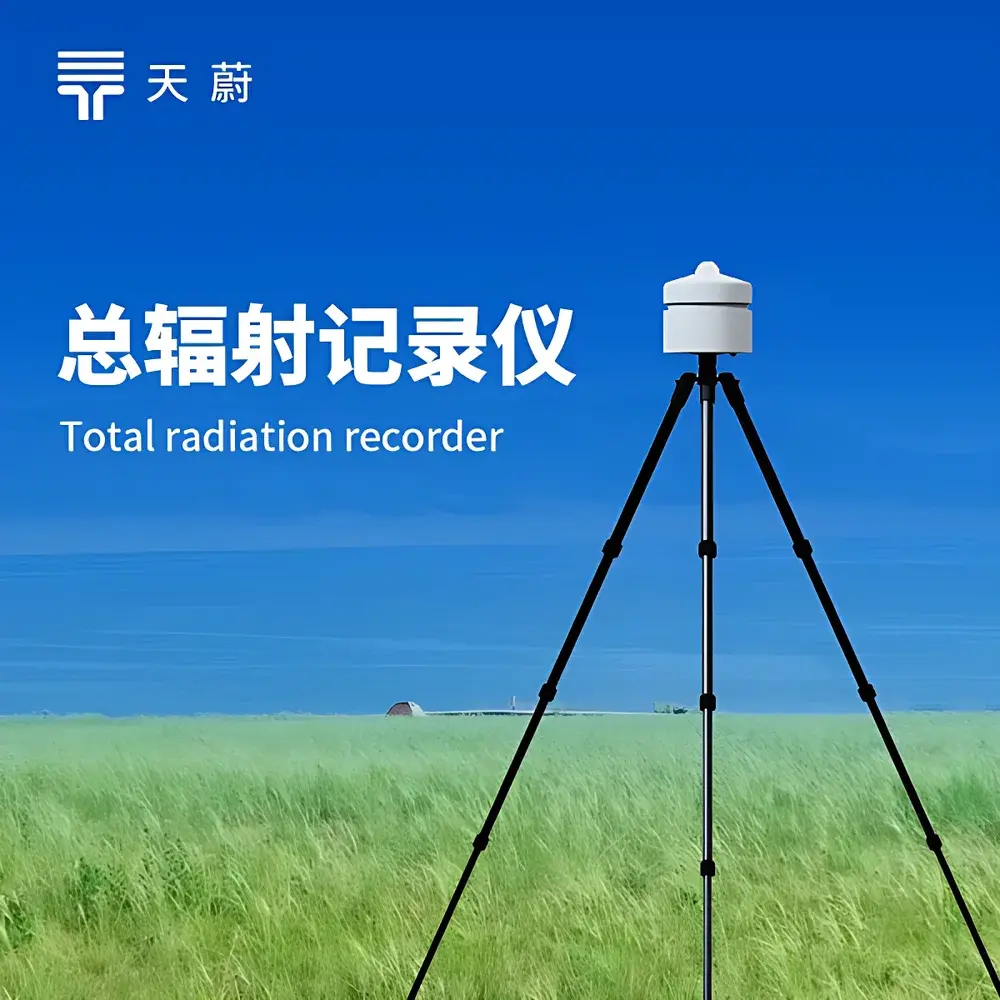
TW-BF1 Total Solar Radiation Sensor by Tianwei Environmental
| Brand | Tianwei Environmental (TW) |
|---|---|
| Origin | Shandong, China |
| Manufacturer Type | Direct Manufacturer |
| Model | TW-BF1 |
| Power Consumption | 1.75 W |
| Battery Capacity | 12,000 mAh (≥50 h runtime) |
| Spectral Range | 280–3000 nm |
| Response Time (95%) | 13 s |
| Zero Offset (Thermal) | ±10 W/m² |
| Zero Offset (Temperature) | ±3 W/m² |
| Nonlinearity | ±1% |
| Stability (1 year) | ±2% |
| Cosine Response Error | ≤±5% at 30° solar elevation |
| Directional Response Error | ±18 W/m² |
| Spectral Error | ±3% |
| Temperature Response (−10 to +40 °C) | ±3% |
| Tilt Error | ±1% |
| Sensitivity | 7–14 µV/(W·m⁻²) |
| Internal Resistance | ≤800 Ω |
| Operating Temperature | −40 to +85 °C |
| Operating Humidity | 5–90% RH |
| Data Storage Capacity | ≥500,000 records |
| Weight | ≤5 kg |
| Deployment Time | ≤2 min (single operator) |
| Compliance | ISO 9060:2018 (First Class), WMO CIMO Guide, GB/T 19565–2017 |
Overview
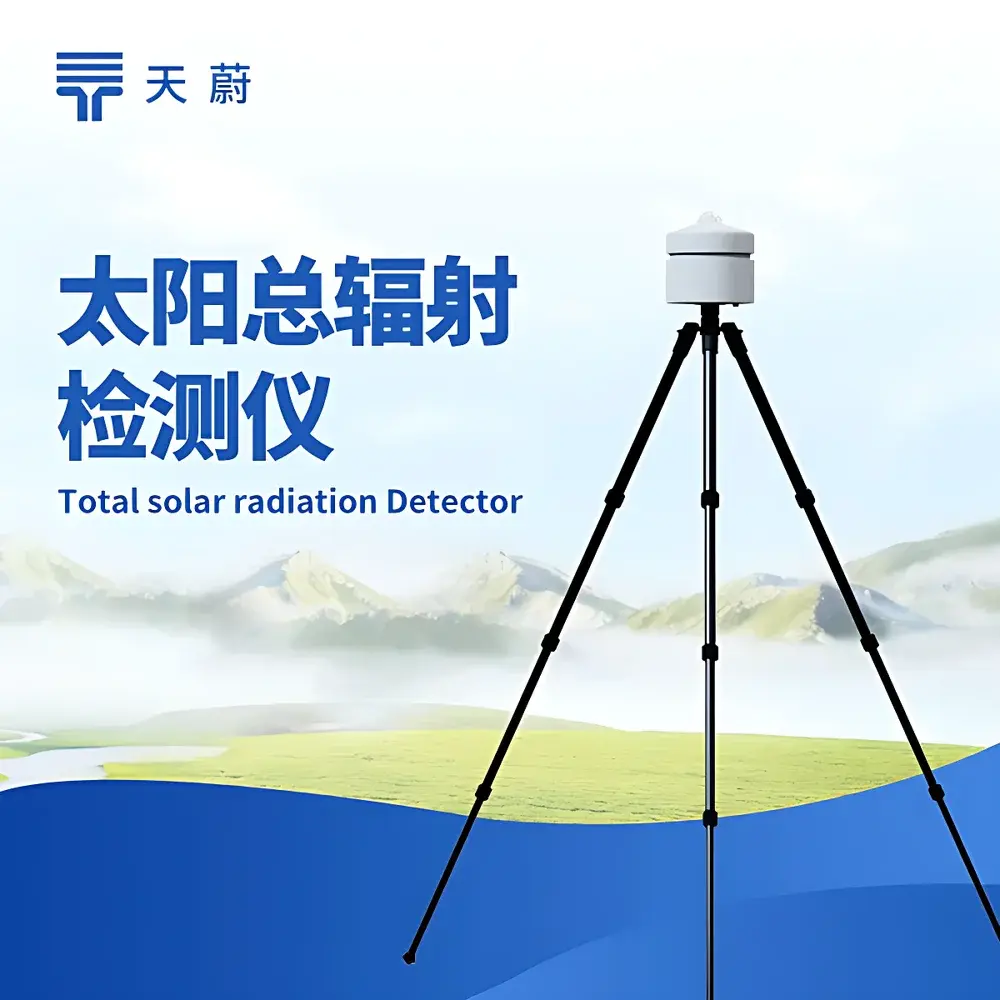
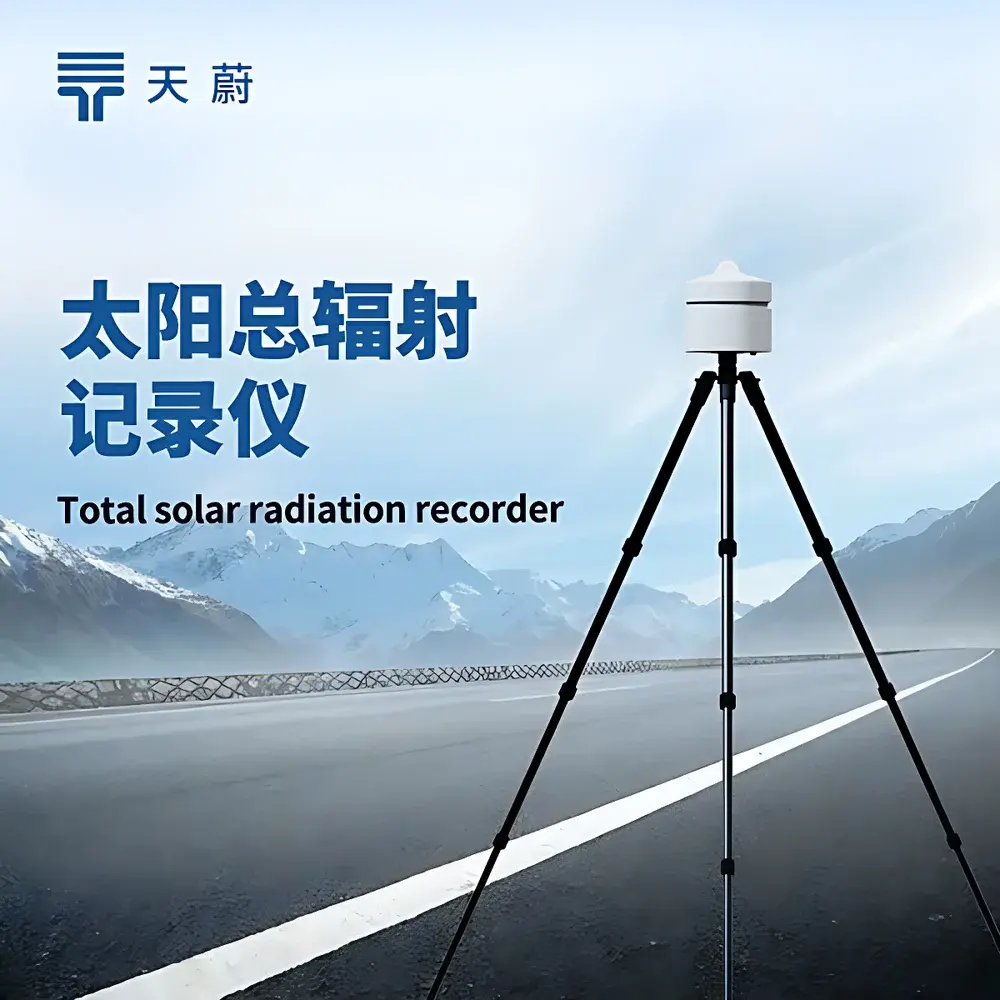
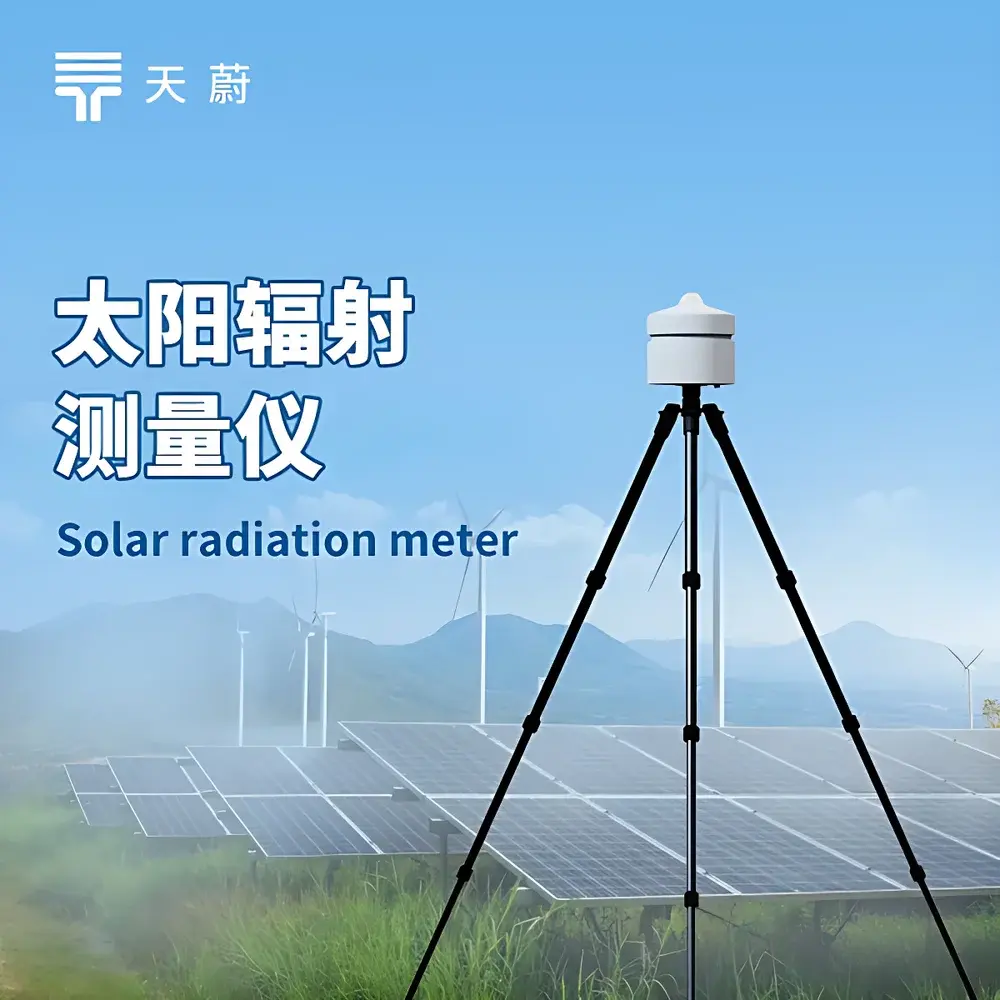
The TW-BF1 Total Solar Radiation Sensor is a high-precision, field-deployable pyranometer engineered for continuous, autonomous measurement of global horizontal irradiance (GHI) — the total solar radiation flux received on a horizontal surface from the entire hemisphere (180° field of view), including both direct beam and diffuse components. Based on thermopile detection technology with a blackened thermal sensor element and precision-ground quartz dome, the TW-BF1 adheres strictly to ISO 9060:2018 classification as a First Class instrument, ensuring metrological traceability and suitability for scientific-grade environmental monitoring, solar resource assessment, and long-term climatological studies. Its design integrates passive thermal compensation and optical filtering to minimize zero-offset drift under rapid ambient temperature changes or thermal gradients — critical for unattended operation in variable outdoor conditions across diverse geographic zones.
Key Features
- Thermopile-based sensing architecture compliant with ISO 9060:2018 First Class performance criteria, including cosine response error ≤±5% at 30° solar elevation and directional response deviation <±18 W/m²
- Optically optimized fused quartz dome (280–3000 nm spectral transmission) fabricated via precision cold optical grinding to ensure minimal spectral distortion and long-term UV stability
- Low-power embedded electronics (1.75 W nominal consumption) enabling extended autonomous operation powered by a user-replaceable 12,000 mAh Li-ion battery pack (≥50 h runtime at standard logging intervals)
- Multi-modal communication interface: configurable RS-485 (Modbus RTU), Bluetooth 5.0 for local configuration and diagnostics, and optional GPRS module for cellular telemetry — all supporting standardized data framing (JSON and Modbus register mapping)
- Rapid-deployment mechanical design: integrated leveling base, quick-mount tripod adapter, and tool-free sensor head attachment — full site setup achievable by one technician in ≤2 minutes without calibration tools or software initialization
- Robust environmental sealing (IP67-rated enclosure) and operational range spanning −40 to +85 °C ambient temperature and 5–90% RH non-condensing humidity
Sample Compatibility & Compliance
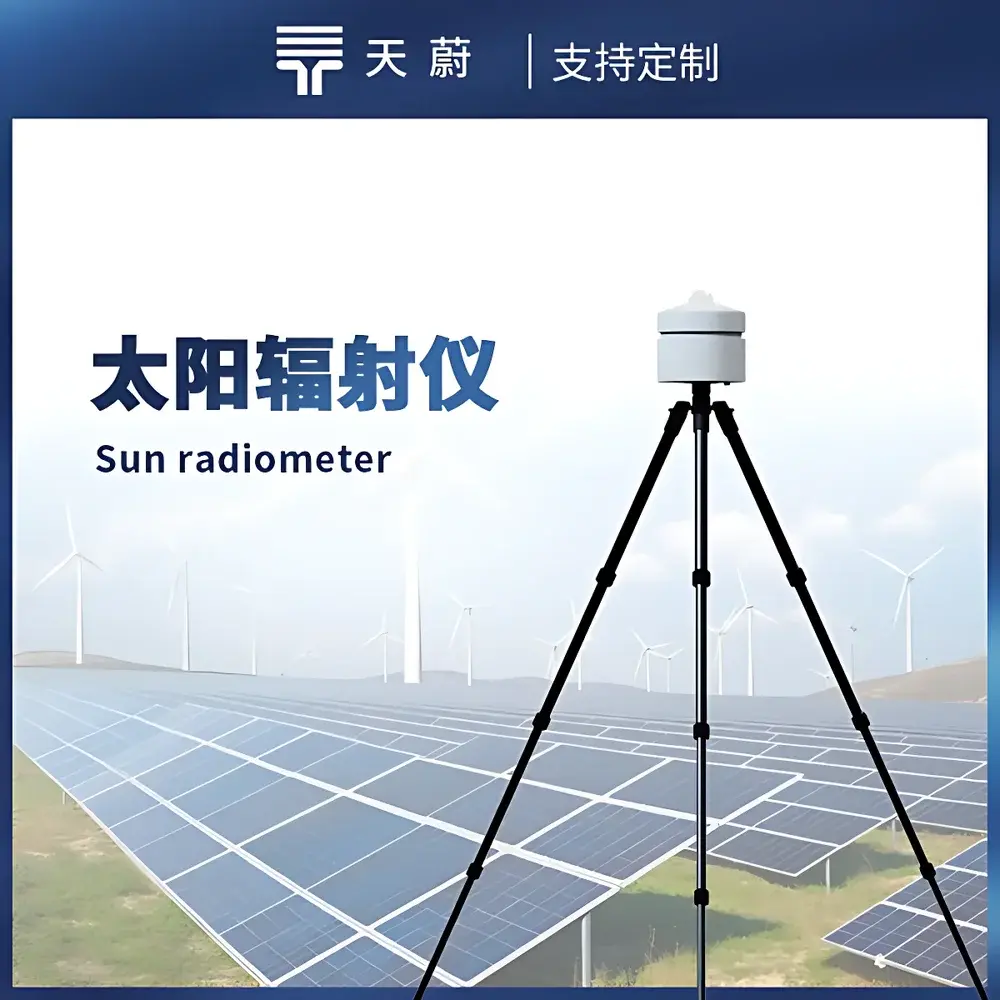
The TW-BF1 is designed for outdoor, unshaded horizontal mounting on meteorological masts, solar test beds, agricultural weather stations, and building-integrated PV monitoring systems. It meets mandatory technical requirements specified in GB/T 19565–2017 (Chinese National Standard for Total Radiation Sensors) and aligns with international best practices outlined in the WMO Guide to Meteorological Instruments and Methods of Observation (CIMO Guide, Chapter 7). Its First Class classification per ISO 9060:2018 ensures compatibility with solar forecasting models, PV performance ratio analysis, and atmospheric transmittance validation protocols. The sensor does not require external ventilation or heating units, making it suitable for low-maintenance deployment in remote or off-grid locations where power availability is constrained.
Software & Data Management
The TW-BF1 is supported by a cross-platform PC application for local data acquisition, visualization, and post-processing. The software natively accepts serial input via USB-to-RS485 adapters and supports configurable Modbus register polling intervals (1 s to 24 h), JSON-formatted telemetry streams, and timestamped binary logging. Users may define custom parameter mappings, assign descriptive labels and icons to each measured variable, and apply linear or polynomial correction coefficients during import. Built-in JavaScript execution engine enables advanced data transformation (e.g., clear-sky model fitting, cloud cover index derivation) and automated QA/QC flagging based on physical plausibility thresholds (e.g., GHI > 1367 W/m² or negative values). All data files include embedded metadata (sensor ID, firmware version, GPS coordinates if available) and support export to CSV, NetCDF, and CF-compliant formats for integration into climate databases such as BSRN or PVGIS.
Applications
- Solar energy resource assessment for utility-scale photovoltaic plant siting and yield modeling
- Long-term atmospheric radiation budget monitoring in ecological research and climate change observatories
- Agricultural microclimate studies, including evapotranspiration estimation and crop growth modeling
- Accelerated weathering testing of construction materials and coatings under natural solar exposure
- Real-time GHI input for smart grid dispatch algorithms and demand-side management systems
- Mobile emergency meteorological deployments following natural disasters or during field campaigns requiring rapid sensor network establishment
FAQ
Is the TW-BF1 calibrated traceable to national standards?
Yes — each unit ships with an individual calibration certificate traceable to the China National Institute of Metrology (NIM) or accredited third-party laboratories operating under ISO/IEC 17025.
Can the sensor be mounted vertically for measuring reflected or albedo radiation?
No — the TW-BF1 is optimized for horizontal global irradiance measurement only. For albedo studies, a matched pair (one upward-facing, one downward-facing) of identical First Class pyranometers is required.
Does the device support NTP time synchronization or GPS timestamping?
GPS timestamping is supported when used with an external GNSS module; NTP synchronization is not implemented onboard but can be applied during post-processing using the host PC’s system clock.
What maintenance is required for long-term field operation?
Bi-weekly dome cleaning with deionized water and lint-free cloth is recommended; no routine recalibration is needed within the first 12 months per GB/T 19565–2017 stability specifications (±2% sensitivity drift).
Is the software compatible with Linux or macOS?
The native desktop application is Windows-only; however, raw serial/Modbus data streams are fully interoperable with open-source platforms such as Python (pymodbus), Node-RED, or Grafana via standard protocol drivers.
Related Products







