
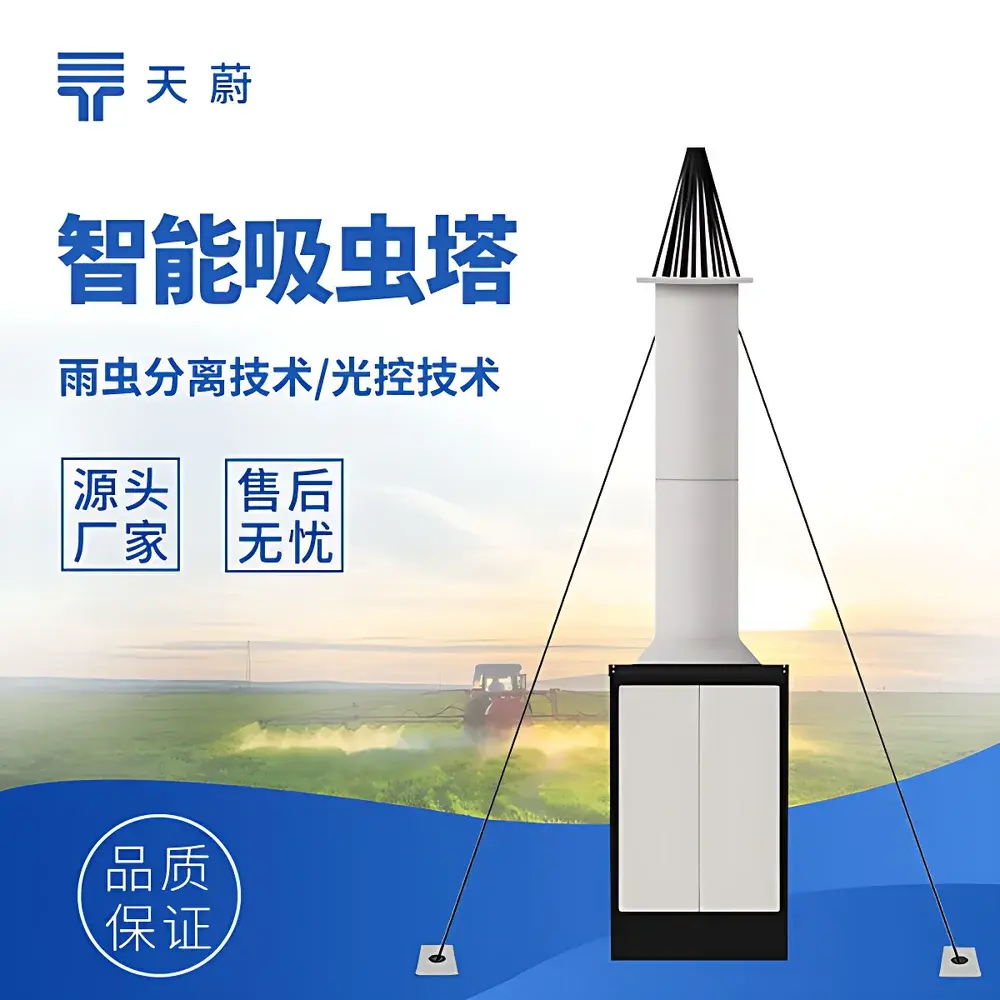
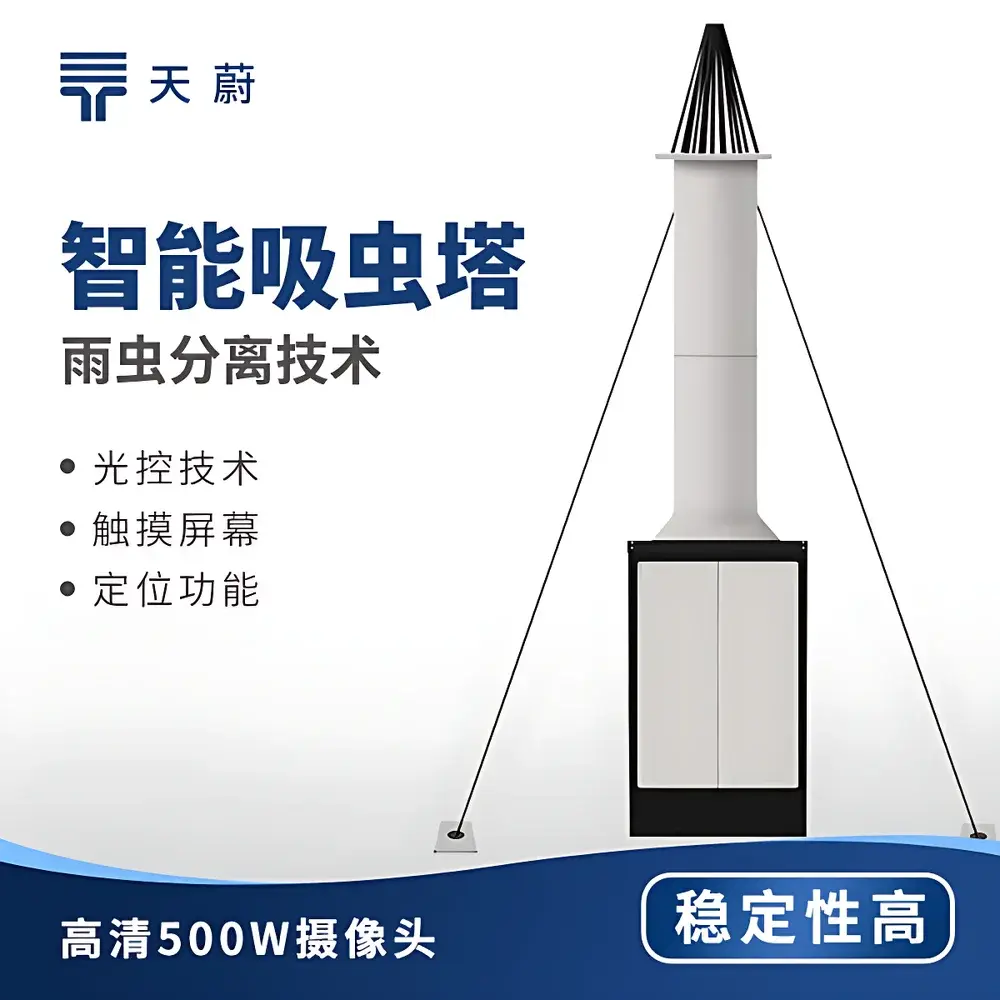
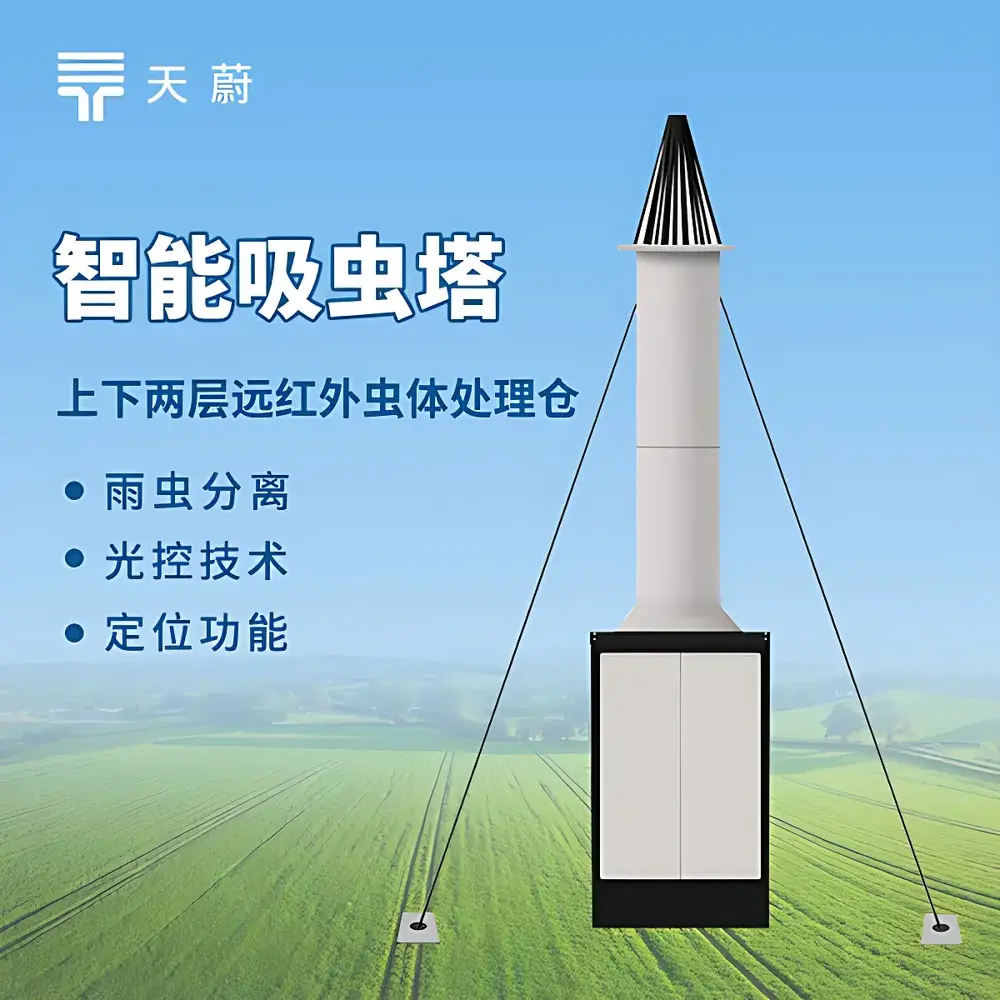
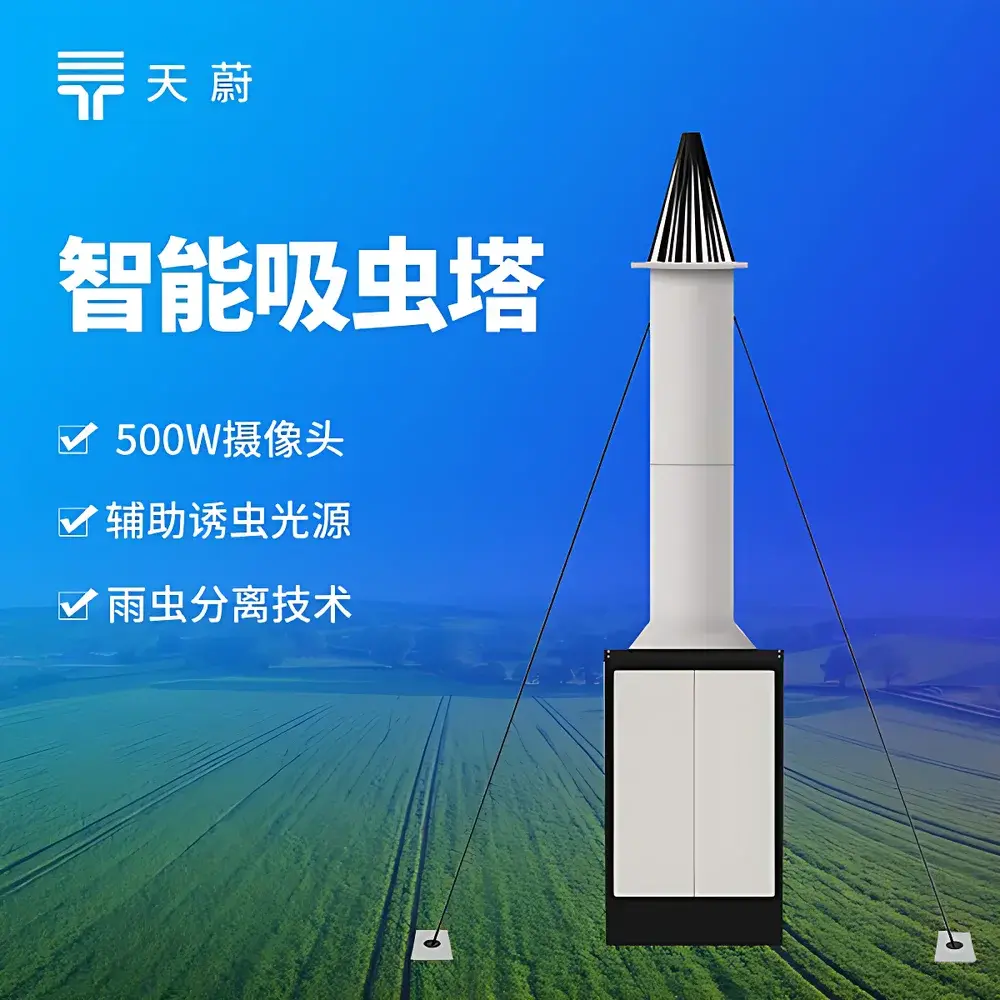
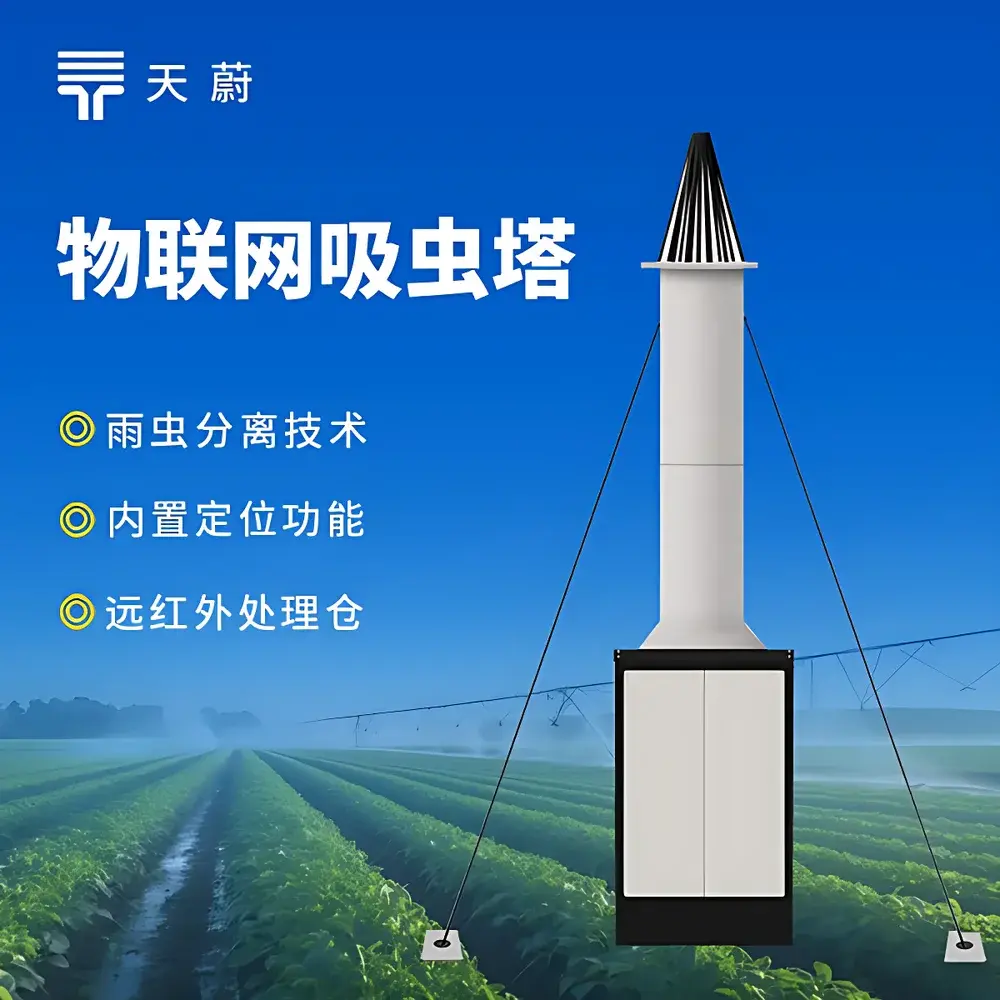
TW-CT1 Intelligent Suction Trap by Tianwei Environmental
| Brand | Tianwei Environmental (TW) |
|---|---|
| Origin | Shandong, China |
| Manufacturer Type | Direct Manufacturer |
| Country of Origin | China |
| Model | TW-CT1 |
| Instrument Category | Pest Monitoring & Forecasting System |
| Power Consumption (Standby) | ≤25 W |
| Power Supply | Solar-powered (with optional 220 V AC backup) |
| Operating Temperature | 0–70 °C |
| Relative Humidity Range | 0–85% RH (non-condensing) |
| Camera Resolution | 5 MP (500 W-pixel equivalent) |
| UV Light Source | 20 W, peak wavelength 365 nm |
| Infrared Killing Chamber Temp | 85 ± 5 °C after 15 min operation |
| Insect Mortality Rate | ≥98% |
| Specimen Integrity Rate | ≥95% |
| Image Capture Interval | Every 30 minutes |
| Communication | 4G cellular + Ethernet port |
| Integrated GPS | Yes |
| Infrared Counting Sensor Accuracy | ≥99% |
Overview
The TW-CT1 Intelligent Suction Trap is a field-deployable, solar-powered entomological monitoring system engineered for long-term, unattended surveillance of small migratory insects—particularly aphids, thrips, leafhoppers, and other aerial micro-arthropods critical to agricultural pest forecasting. Unlike passive trapping methods, the TW-CT1 employs active aerodynamic suction based on the principle of laminar airflow entrainment: a high-efficiency axial fan generates controlled negative pressure at the top inlet (mounted at 8.3 m above ground level), drawing airborne insects into a vertically oriented sampling column. Captured specimens are directed through a dual-stage filtration and separation module—comprising rain-shielded entry, avian exclusion mesh, and hydrophobic drainage—to ensure specimen integrity and environmental resilience. The system operates autonomously across diurnal cycles using light-sensing control logic, initiating nightly capture sequences without manual intervention.
Key Features
- Two-tier far-infrared insect killing chamber with thermal stabilization (85 ± 5 °C within 15 min), achieving ≥98% mortality while preserving ≥95% morphological integrity for downstream taxonomic verification.
- Rain-insect separation mechanism with gravity-assisted drainage and hydrophobic surface treatment prevents water ingress and specimen degradation during precipitation events.
- Automated photoperiod-based operation: activates at dusk and suspends non-critical functions at dawn; immune to transient ambient light interference (e.g., vehicle headlights or lightning).
- Integrated 5-megapixel industrial-grade camera with fixed-focus macro optics, capturing standardized top-down images of collected specimens every 30 minutes under consistent illumination conditions.
- Onboard 7-inch capacitive touchscreen HMI displaying real-time operational parameters—including chamber temperatures, ambient light intensity, rainfall status, communication signal strength, and component health diagnostics.
- Remote controllability via secure cloud interface: individual actuation of killing/drying cycles, camera trigger, and sensor calibration without physical access.
- Dual-mode power architecture: primary solar charging with intelligent battery management (LiFePO₄), plus failover compatibility with 220 V AC grid input for extended low-irradiance periods.
Sample Compatibility & Compliance
The TW-CT1 is optimized for capture and imaging of flying insects ranging from 0.5 mm to 5 mm in body length, including Hemiptera (aphids, whiteflies), Thysanoptera (thrips), Diptera (small midges), and Lepidoptera (micro-moths). Its collection protocol conforms to FAO Plant Protection Bulletin No. 17 guidelines for aerial insect monitoring and supports data traceability requirements aligned with ISO/IEC 17025:2017 for environmental monitoring laboratories. All firmware and cloud data handling comply with GDPR-compliant anonymization protocols for geotagged deployment metadata. The device meets IP65 ingress protection standards and UL 61010-1 electrical safety certification for outdoor instrumentation.
Software & Data Management
Images are transmitted via TLS-encrypted 4G or Ethernet to a dedicated agri-cloud platform hosted on AWS infrastructure. AI-driven image analysis leverages a convolutional neural network (CNN) trained on >2.1 million labeled entomological specimens across 132 taxonomic groups, delivering species-level classification confidence scores and automated count validation. Raw image archives, time-stamped metadata (GPS coordinates, temperature, humidity, light intensity), and processed analytics are retained for ≥18 months. Audit logs record all user-initiated commands and system events, satisfying GLP-aligned data integrity requirements. APIs support integration with third-party decision-support systems (e.g., CropX, Granular) and national pest forecasting dashboards operated by provincial agricultural extension services.
Applications
The TW-CT1 serves as a foundational node in regional pest surveillance networks—deployed across cereal belts, horticultural zones, tea plantations, tobacco farms, orchards, and forest buffer strips. It enables early detection of invasive species incursions (e.g., Aphis gossypii, Frankliniella occidentalis), supports resistance monitoring programs by correlating trap catch trends with pesticide application records, and provides longitudinal datasets for phenological modeling of insect flight windows. Research applications include landscape-scale movement ecology studies, host-plant association mapping, and climate-driven range shift analysis under IPCC AR6 scenarios.
FAQ
What insect size ranges does the TW-CT1 effectively capture?
It reliably captures flying arthropods between 0.5 mm and 5 mm in maximum dimension, with optimal performance for soft-bodied taxa such as aphids and thrips.
Can the system operate continuously during prolonged rainy periods?
Yes—the rain separation module and sealed sample tray design prevent water accumulation; internal drainage channels divert runoff while maintaining specimen viability for imaging.
Is cloud data storage compliant with international regulatory frameworks?
Data transmission uses TLS 1.2+ encryption; storage adheres to ISO/IEC 27001-certified infrastructure; audit trails meet FDA 21 CFR Part 11 electronic record requirements for agricultural monitoring.
How frequently are firmware updates released, and how are they deployed?
Critical security patches are pushed automatically over-the-air (OTA); feature updates follow quarterly release cycles and require explicit user approval via the web portal.
Does the device support integration with existing farm management software?
Yes—RESTful APIs provide structured JSON output for species counts, timestamps, geolocation, and environmental parameters, compatible with common agronomic middleware platforms.





