
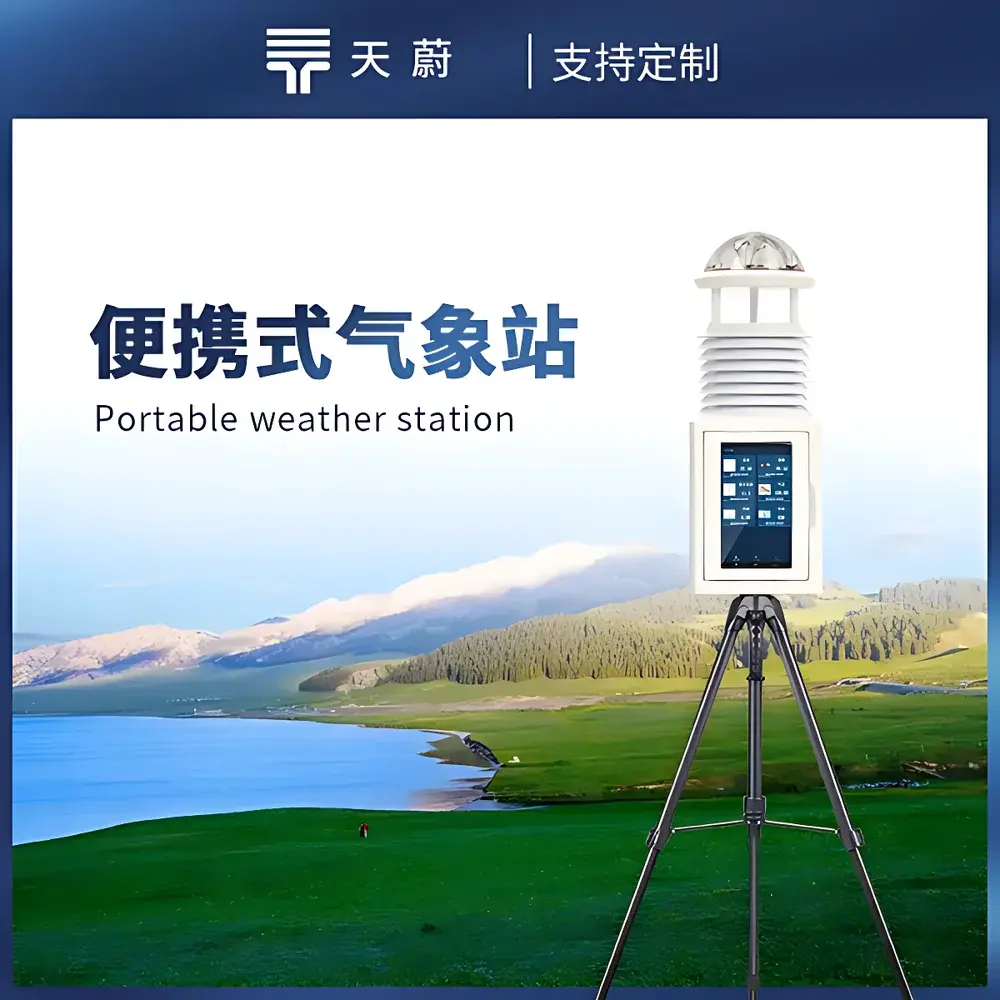
TW-PQX7 All-in-One Portable Weather Station by Tianwei Environmental
| Brand | Tianwei Environmental (TW) |
|---|---|
| Origin | Shandong, China |
| Manufacturer Type | OEM/ODM Producer |
| Country of Origin | China |
| Model | TW-PQX7 |
| Instrument Type | Portable Weather Station |
| Wind Speed Range | 0–60 m/s (±0.1 m/s + 0.01V) |
| Wind Direction Range | 0–360° (±2°) |
| Air Temperature Range | −40–80 °C (±0.3 °C at 25 °C) |
| Relative Humidity Range | 0–100 %RH (±3 %RH within 20–80 %RH) |
| Atmospheric Pressure Range | 300–1100 hPa (±0.25 %) |
| Illuminance Range | 0–157286 lux (<±3 %) |
| Optical Rainfall Rate Range | 0–4 mm/min (≤±4 %) |
| Data Storage Capacity | ≥500,000 records |
| Power Consumption | 1.75 W |
| Battery | 12,000 mAh Li-ion, ≥32 h runtime |
| Total Weight | ≤5 kg |
| Deployment Time | ≤2 min (single operator) |
| IP Rating | ≥IP65 |
| Sensor Housing Material | Imported ABS (salt-fog resistant) |
| Display | 7-inch Android touchscreen |
| Mounting | Adjustable aluminum telescopic mast |
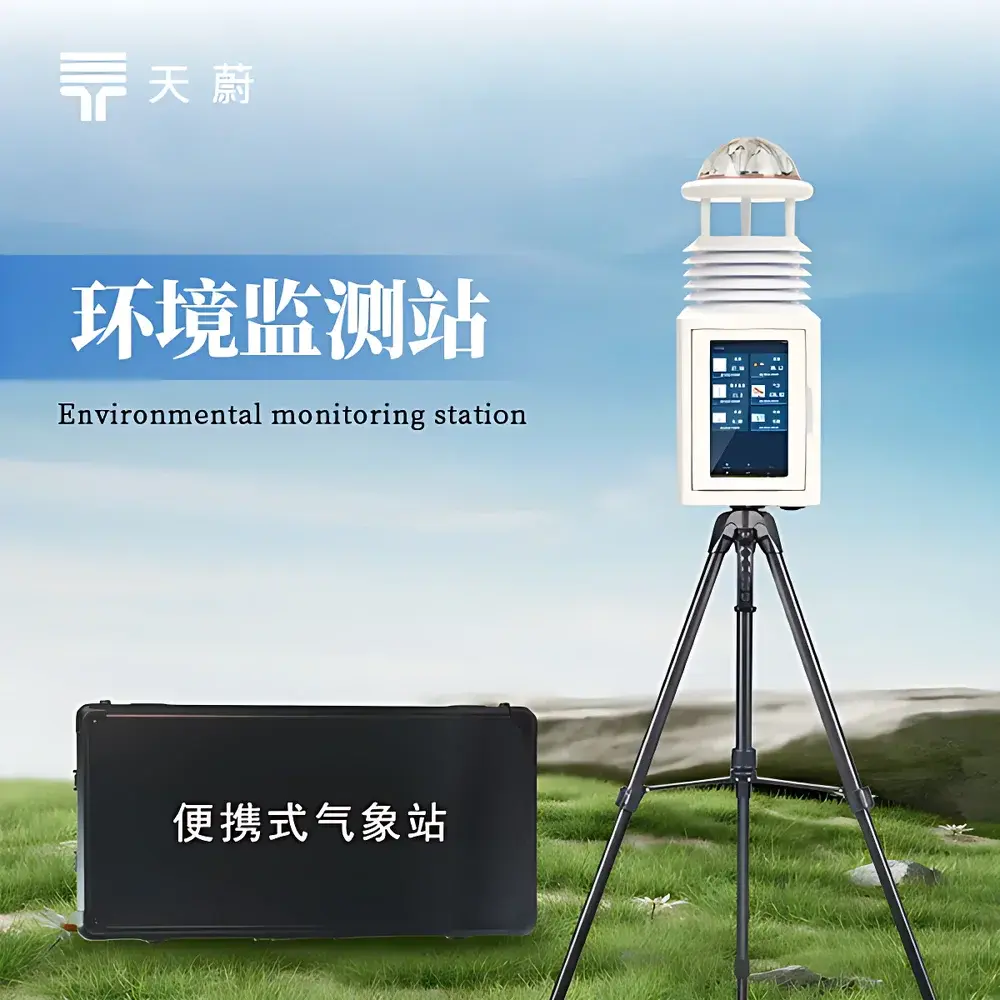
| Enclosure | Shock-absorbing pull-handle case |
Overview
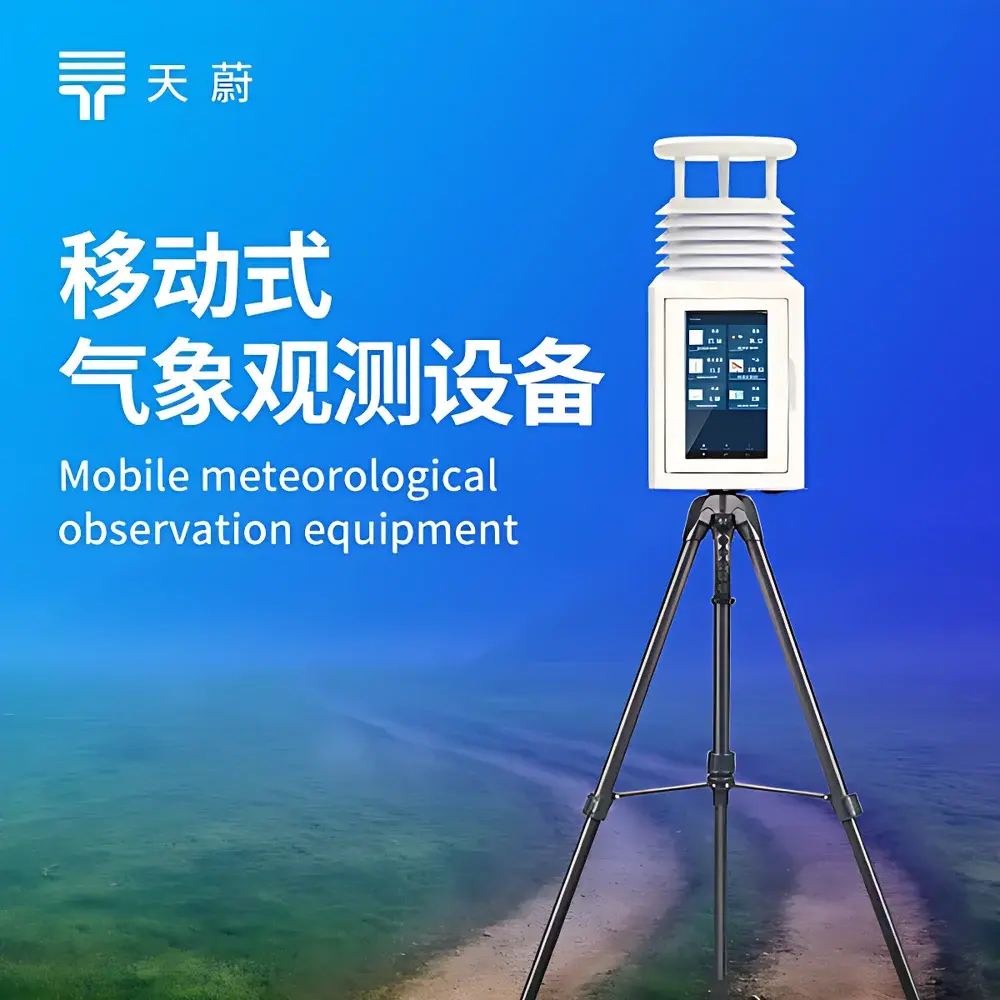
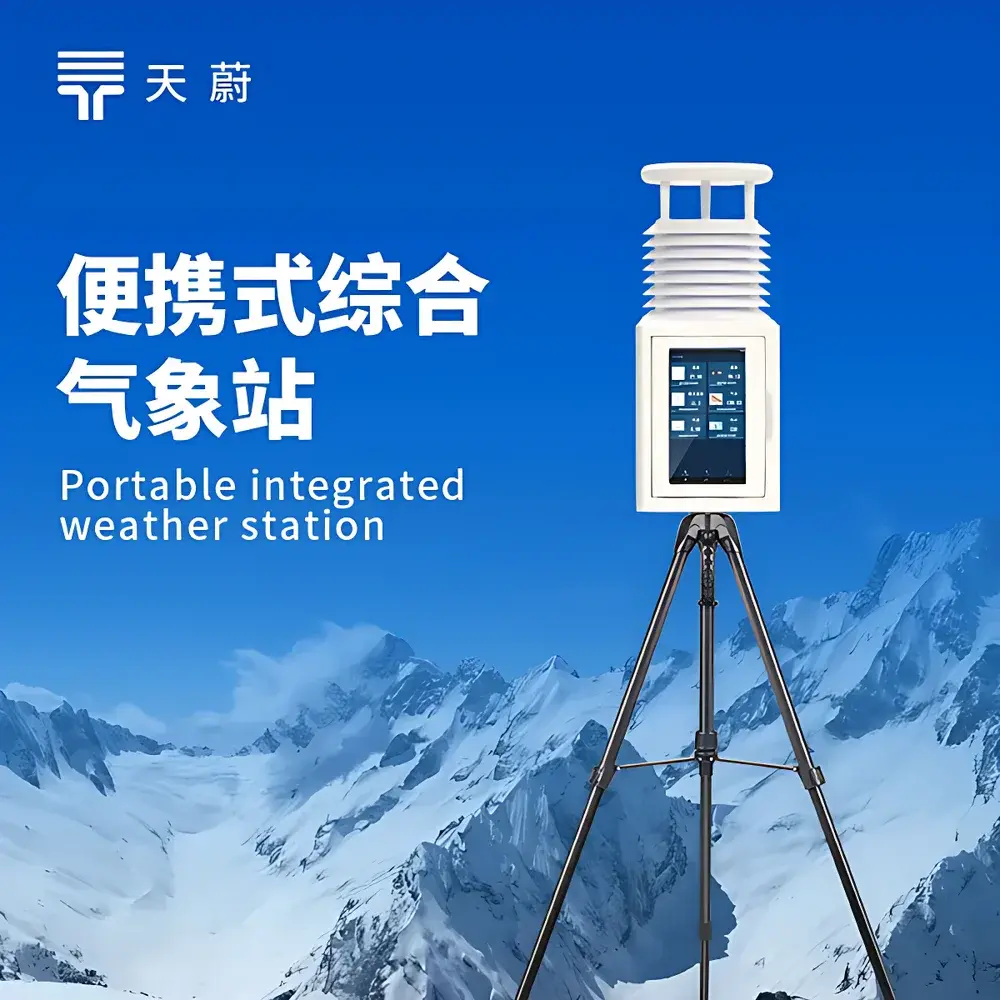
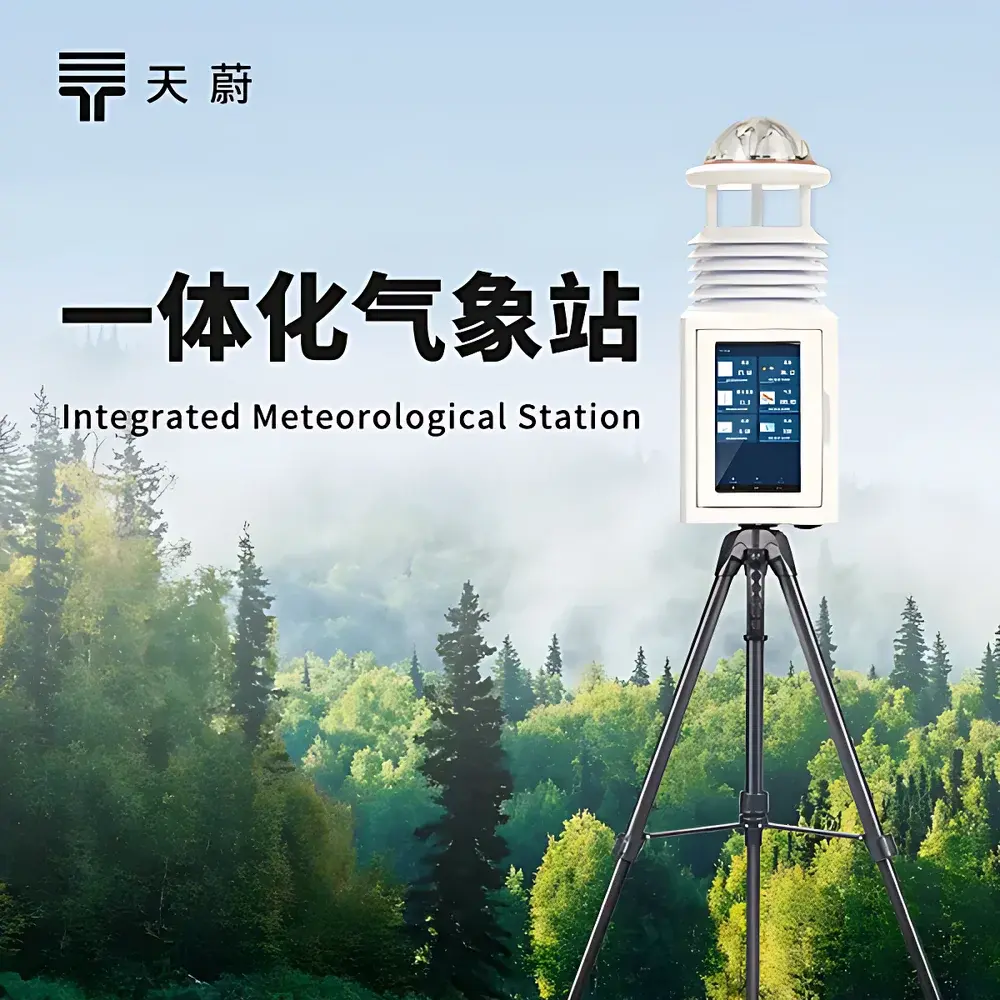
The TW-PQX7 All-in-One Portable Weather Station is an integrated, field-deployable environmental monitoring system engineered for high-reliability meteorological data acquisition in transient and remote operational environments. Built upon ultrasonic wind sensing principles—where continuous frequency-modulated acoustic signals are transmitted across orthogonal transducer pairs and wind vector components derived from phase-difference analysis—the station delivers contactless, moving-part-free measurement of wind speed and direction. Complementing this core capability, the unit integrates seven co-located, factory-calibrated sensors: ultrasonic anemometer, capacitive humidity sensor, thermistor-based temperature probe, piezoresistive barometric pressure transducer, silicon photodiode illuminance detector, and optical rain gauge utilizing infrared beam interruption and droplet size discrimination algorithms. All sensors are housed within a single, compact ABS enclosure rated IP65 or higher—certified to withstand dust ingress and low-pressure water jets—making it suitable for coastal, agricultural, alpine, and urban deployment scenarios where corrosion resistance and mechanical robustness are critical.
Key Features
- Ultrasonic wind measurement with concealed top-mounted transducers—eliminating snow accumulation, ice bridging, and wind shadow effects common in cup-and-vane designs
- Seven-parameter integration (wind speed, wind direction, air temperature, relative humidity, atmospheric pressure, illuminance, optical rainfall rate) in a single physical module—reducing inter-sensor spatial error and calibration drift
- Embedded 7-inch Android touchscreen interface supporting local real-time visualization, manual configuration, and offline data review without external hardware
- Rechargeable 12,000 mAh lithium-ion battery with on-screen state-of-charge indication and verified ≥32-hour continuous operation under typical ambient conditions (25 °C, 50 %RH)
- Lightweight modular design: total system mass ≤5 kg—including telescoping aluminum mounting mast, shock-dampened transport case, and quick-release sensor head—enabling rapid solo deployment in under 120 seconds
- Low-power architecture optimized for extended unattended operation; average power draw 1.75 W during active sampling cycles
Sample Compatibility & Compliance
The TW-PQX7 is designed for direct exposure to ambient outdoor environments across diverse climatic zones—from arid deserts to humid subtropical coastlines. Its ABS housing demonstrates validated resistance to salt fog per ISO 9227, enabling stable long-term performance near marine infrastructure. While not certified to IEC 61000-6-2/6-4 for industrial EMC immunity, its analog and digital signal paths incorporate galvanic isolation and ESD protection aligned with EN 61326-1 Class B requirements for laboratory and field-use instrumentation. The device supports traceable calibration via NIST-traceable reference standards applied during manufacturing. Although the instrument itself does not carry CE, UKCA, or FCC marks, its cloud platform architecture complies with GDPR-compliant data handling protocols and permits audit-ready logging when deployed under GLP-aligned workflows.
Software & Data Management
The TW-PQX7 operates with a dual-mode software stack: embedded Android OS for local interaction and a browser-accessible cloud platform (CS architecture) compatible with Chrome, Edge, and Safari on desktop and mobile devices. No client-side installation is required. The platform provides role-based multi-user access, real-time dashboarding with customizable widgets, time-series charting with zoom/pan functionality, and export of tabular data in CSV/Excel formats. Data persistence is ensured through redundant cloud storage with automatic failover. Communication protocols include HJ-212 (China’s environmental monitoring standard), HTTP RESTful APIs, and TCP socket forwarding—facilitating integration into SCADA, EMS, and third-party IoT ecosystems. Optional JavaScript post-processing modules allow users to implement custom unit conversions, statistical aggregation (e.g., 10-min gust detection), or threshold-triggered SMS alerts—all executed server-side without firmware updates.
Applications
- Emergency meteorological response: rapid deployment for flood forecasting, wildfire risk assessment, and post-disaster microclimate reconstruction
- Agricultural decision support: irrigation scheduling based on evapotranspiration models fed by localized temperature, humidity, solar radiation, and precipitation data
- Educational fieldwork: undergraduate atmospheric science labs requiring portable, self-contained observational platforms compliant with curriculum-based measurement objectives
- Renewable energy site surveys: preliminary wind resource assessment prior to permanent mast installation
- Urban heat island studies: dense-network deployments across city districts to map spatiotemporal gradients in temperature, humidity, and solar loading
- Environmental impact monitoring: baseline climate characterization for construction projects, landfill operations, and coastal reclamation initiatives
FAQ
Does the TW-PQX7 require periodic recalibration?
Yes—while factory-calibrated before shipment, annual verification against traceable references is recommended per ISO/IEC 17025 guidance for environmental monitoring instruments used in regulated applications.
Can the device operate autonomously without cellular or Wi-Fi connectivity?
Yes. Local data logging persists onboard for ≥500,000 records; all measurements remain accessible via the built-in touchscreen even during network outages.
Is the optical rain gauge susceptible to false triggers from dew or spider webs?
No. The sensor employs dual-wavelength infrared detection and temporal filtering logic to distinguish actual precipitation events from condensation artifacts or particulate interference.
What mounting options are available beyond the included aluminum mast?
The sensor head features standardized 1/4″-20 UNC threads and M6 mounting holes, enabling compatibility with tripod adapters, roof mounts, vehicle brackets, and custom UAV integration frames.
How is data security handled in the cloud platform?
All communications use TLS 1.2+ encryption; user accounts enforce password complexity and session timeout policies; audit logs record login attempts, configuration changes, and data exports for compliance reporting.
Related Products







