
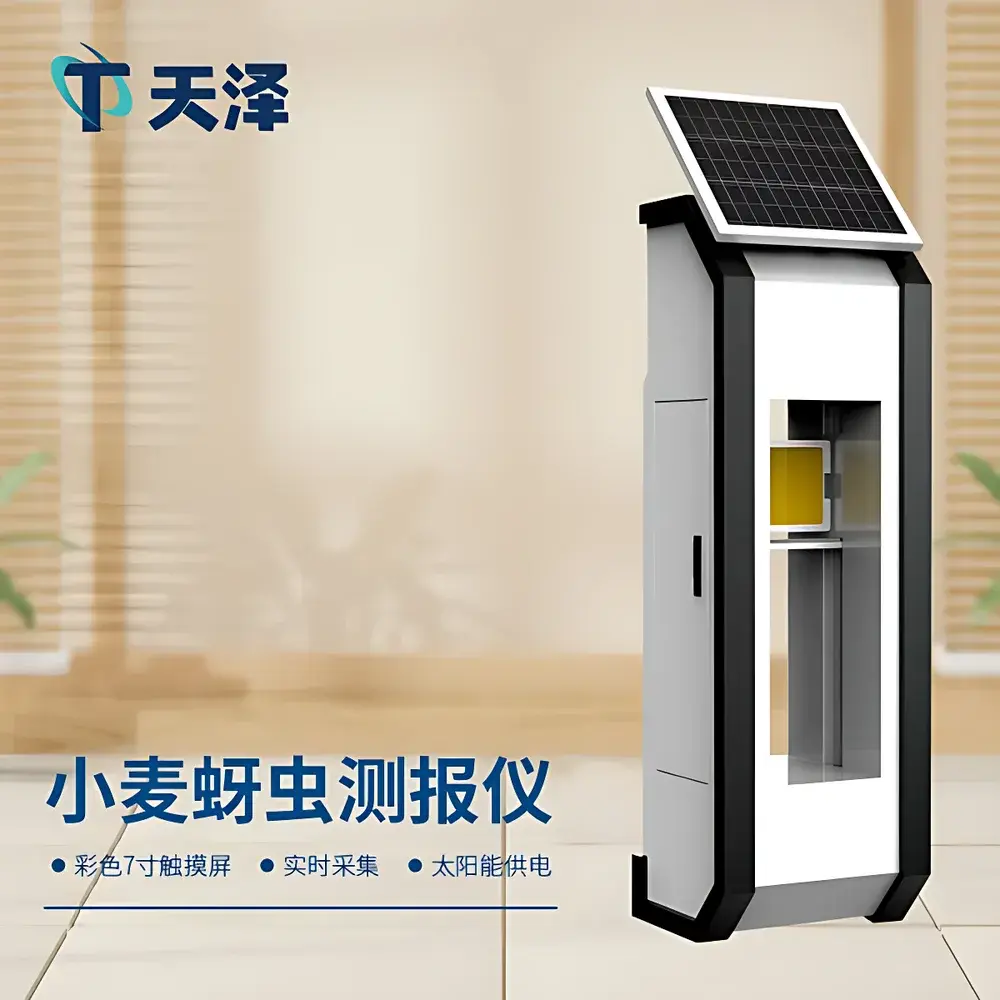
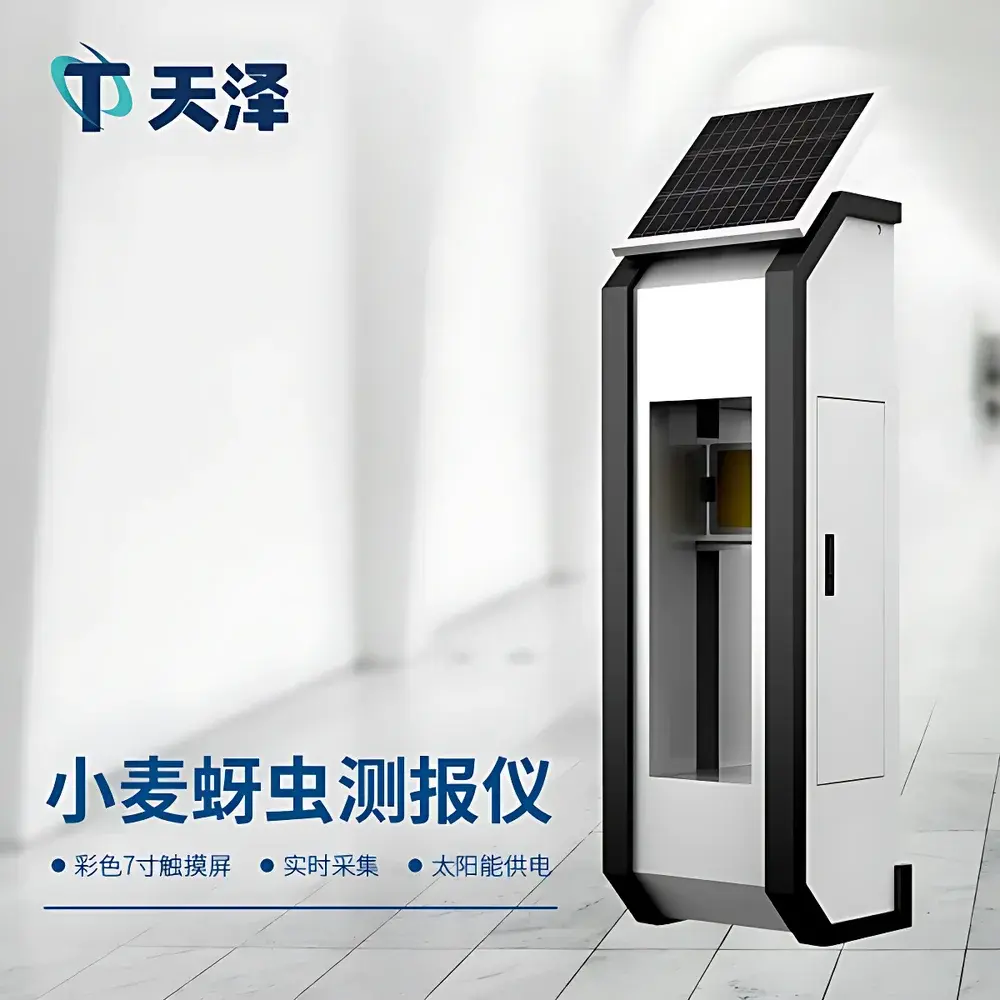
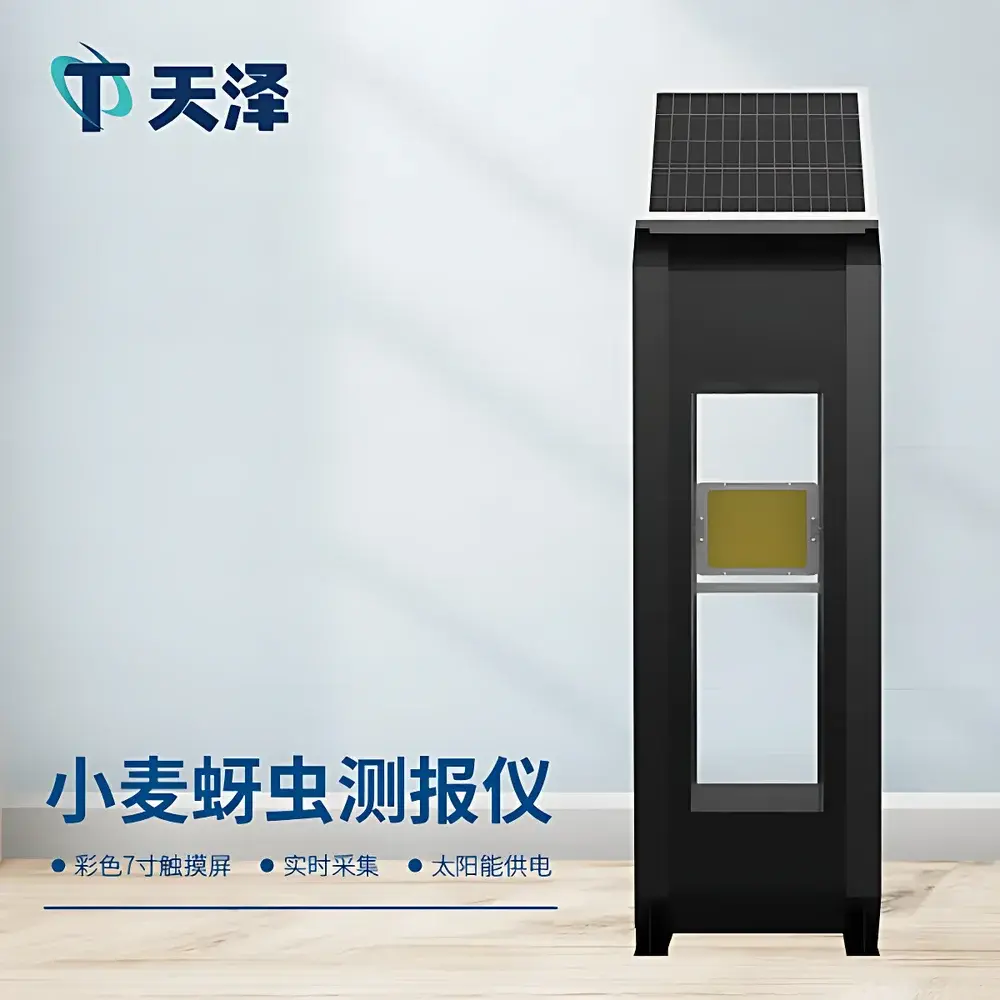
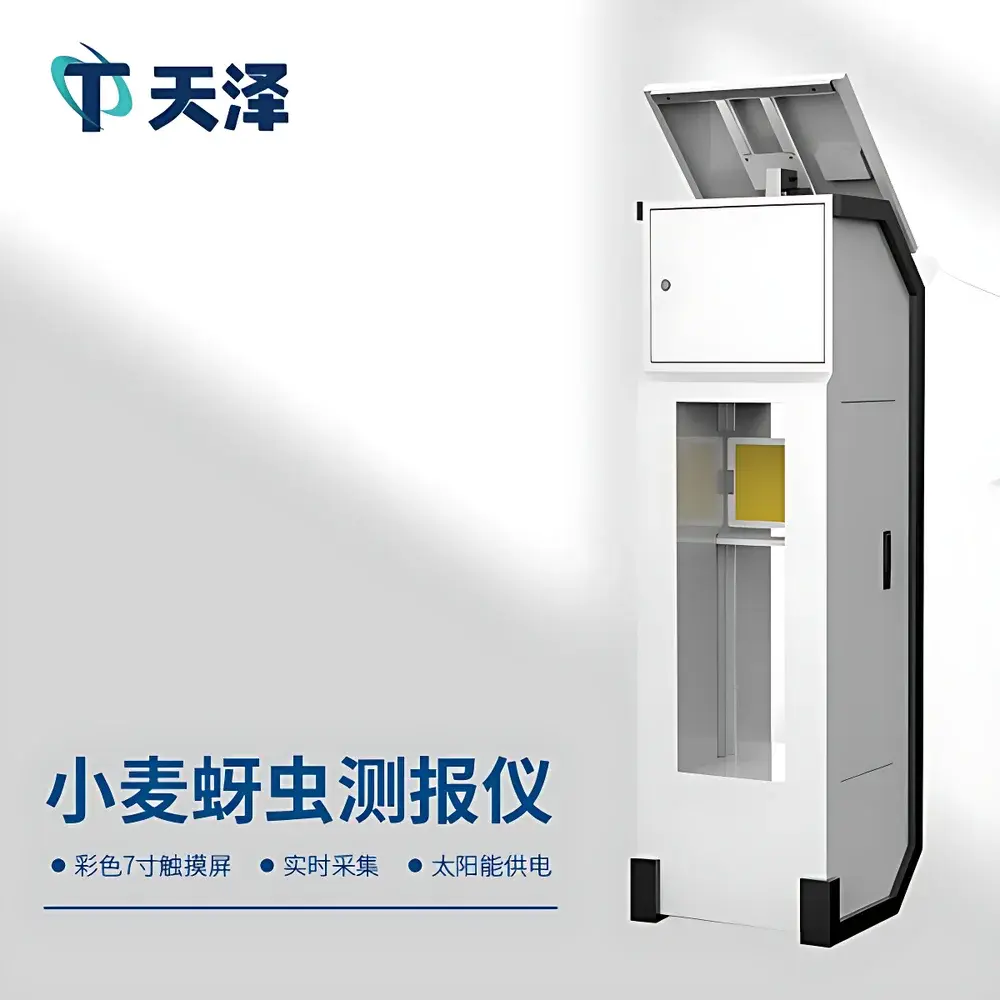
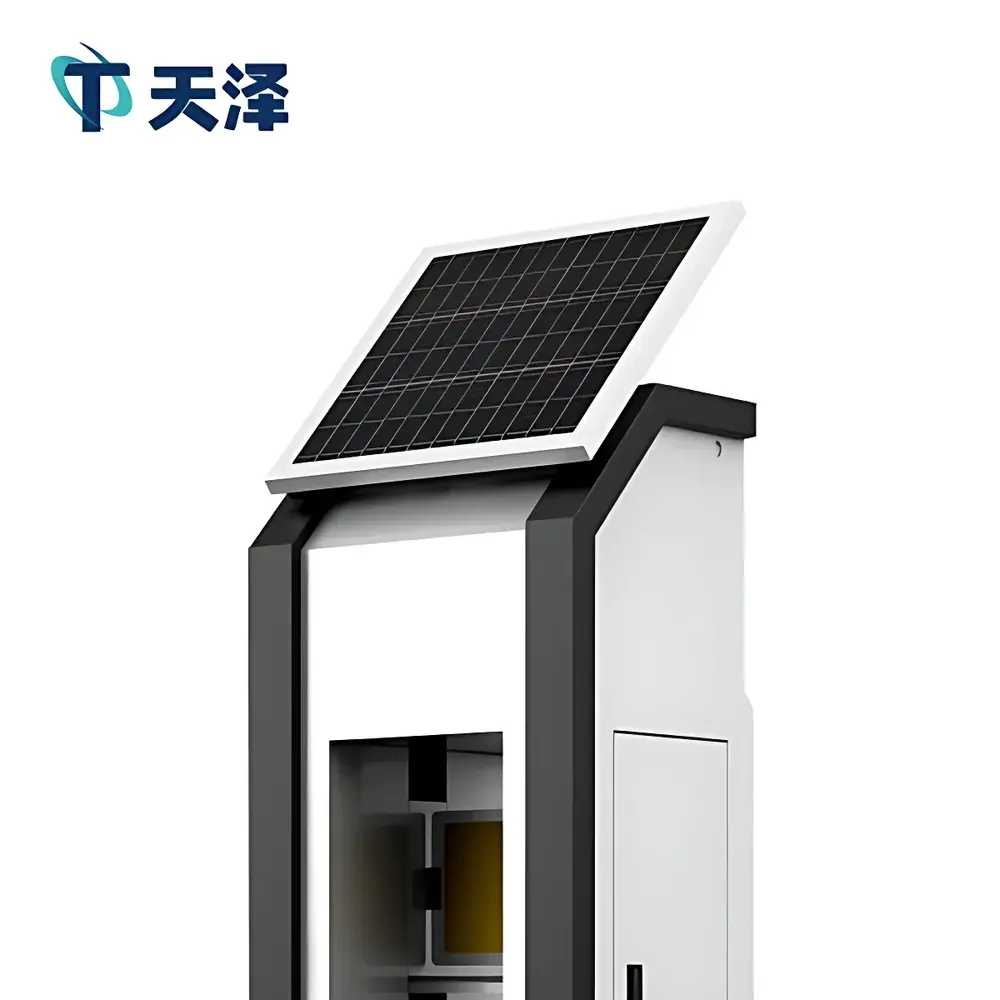
TZ-XM5 Wheat Aphid Monitoring and Forecasting System
| Brand | Tianze Environmental |
|---|---|
| Origin | Shandong, China |
| Manufacturer Type | Authorized Distributor |
| Country of Manufacture | China |
| Model | TZ-XM5 |
| Instrument Category | Pest Surveillance System |
| Power Consumption | ≤50 W |
| Solar Panel | 60 W |
| Battery | 12 V / 24 Ah |
| Display | 7-inch Capacitive Touch LCD (Android-based UI) |
| Imaging Sensor | 12 MP Color CMOS |
| Environmental Sensors | Wind Speed & Direction, Ambient Temperature & Humidity, Rainfall |
| Connectivity | 4G LTE / Wi-Fi / Ethernet |
| Insulation Resistance | ≥2.5 MΩ |
Overview
The TZ-XM5 Wheat Aphid Monitoring and Forecasting System is an automated, solar-powered field surveillance instrument engineered for early detection, quantitative monitoring, and ecological correlation analysis of aphid populations—particularly Rhopalosiphum padi, Sitobion avenae, and Metopolophium dirhodum—in wheat-growing regions. It operates on chromotropic attraction principles: aphids exhibit strong phototactic response to specific wavelengths in the yellow-green spectrum (520–570 nm), enabling reliable capture and enumeration on standardized chromatic sticky cards. The system integrates real-time image acquisition, programmable vertical actuation of color boards, multi-parameter meteorological sensing, and georeferenced data telemetry into a unified edge-to-cloud architecture. Designed for unattended operation across seasonal agricultural cycles, it supports longitudinal pest phenology modeling and contributes directly to integrated pest management (IPM) decision frameworks by correlating insect density trends with microclimatic variables—including temperature gradients, humidity thresholds, wind vector patterns, and precipitation events.
Key Features
- Automated chromatic board deployment: motorized vertical lift mechanism enables precise height adjustment (0.3–1.5 m above canopy) to match crop growth stages and optimize aphid interception efficiency.
- High-fidelity imaging subsystem: 12-megapixel color CMOS sensor with auto-focus and LED-assisted illumination captures >95% identifiable morphological features (e.g., antennal segment count, cauda shape, cornicle length) required for species-level discrimination under field lighting conditions.
- Integrated environmental monitoring suite: calibrated sensors measure wind speed (0–40 m/s, ±0.3 m/s), wind direction (0–360°, ±3°), ambient temperature (−30°C to +70°C, ±0.5°C), relative humidity (0–100% RH, ±3% RH), and tipping-bucket rainfall (0.2 mm resolution).
- Edge-computing Android platform: local data preprocessing, time-synchronized image stamping, and configurable sampling intervals (1–24 h) reduce bandwidth dependency while ensuring temporal integrity of phenological records.
- Dual GNSS positioning: embedded GPS/Beidou receiver provides sub-5 m horizontal accuracy for spatial registration within GIS-based pest mapping platforms and enables remote site validation during audit or calibration procedures.
- Modular power architecture: 60 W monocrystalline solar panel paired with sealed lead-acid 12 V / 24 Ah battery ensures continuous operation for ≥14 days under overcast conditions; system-wide power draw remains ≤50 W during active imaging and transmission cycles.
Sample Compatibility & Compliance
The TZ-XM5 is validated for use in cereal agroecosystems with documented efficacy in detecting alate and apterous aphid morphs on standardized yellow sticky cards (ISO 17892-7 compliant surface finish). Its non-invasive optical methodology eliminates chemical attractants or traps requiring regulatory registration under EPA FIFRA or EU Regulation (EC) No 1107/2009. Data output conforms to FAO’s Pest Risk Information Service (PRISE) metadata schema and supports alignment with national phytosanitary reporting standards including China’s GB/T 31759-2015 (Technical Specifications for Agricultural Pest Monitoring Equipment) and ISO/IEC 17025:2017 traceability requirements for field-deployed measurement systems.
Software & Data Management
Data are transmitted via encrypted MQTT protocol to a secure cloud dashboard supporting role-based access control (RBAC), time-series visualization, and automated alerting (SMS/email) when predefined aphid density thresholds are exceeded. Raw images and sensor logs are archived with SHA-256 checksums; all user configuration changes—including camera exposure settings, board rotation schedules, and alarm parameters—are logged with timestamps and operator IDs to satisfy GLP-aligned audit trails. API endpoints support integration with third-party platforms such as CropX, FarmLogs, or national agricultural extension portals. Firmware updates are delivered over-the-air (OTA) with cryptographic signature verification.
Applications
- Regional aphid outbreak forecasting using spatiotemporal clustering algorithms applied to aggregated station data.
- Evaluation of insecticide resistance development through longitudinal monitoring of population shifts correlated with spray timing and active ingredient usage records.
- Validation of climate-driven pest emergence models (e.g., degree-day accumulation, chill hour thresholds) in collaboration with national meteorological services.
- Support for precision scouting protocols in certified seed production fields where aphid-vectored barley yellow dwarf virus (BYDV) poses critical quality risks.
- Long-term ecological research on tritrophic interactions involving wheat, aphids, and natural enemies (e.g., Harmonia axyridis, parasitoid wasps) under varying tillage and cover cropping regimes.
FAQ
What color spectrum does the TZ-XM5 use for aphid attraction, and is it standardized?
The system employs ISO-certified yellow chromatic boards (CIE 1931 x=0.42, y=0.51) optimized for peak spectral sensitivity of cereal aphids; board reflectance is factory-calibrated and traceable to NIM (National Institute of Metrology, China) reference standards.
Can the device operate independently during extended periods of low sunlight?
Yes—the 12 V / 24 Ah deep-cycle battery sustains full functionality for ≥14 consecutive days without solar recharge, verified per IEC 61427-1 cycle-life testing protocols.
Is raw image data accessible for machine learning model training?
All captured JPEG and EXIF-tagged images are available for download via SFTP or REST API with optional bounding-box annotations for supervised classification tasks.
Does the system comply with cybersecurity requirements for agricultural IoT deployments?
It implements TLS 1.2+ encryption, disabled default credentials, mandatory firmware signing, and periodic CVE vulnerability scanning aligned with NIST SP 800-183 guidelines for edge devices in critical infrastructure environments.




