
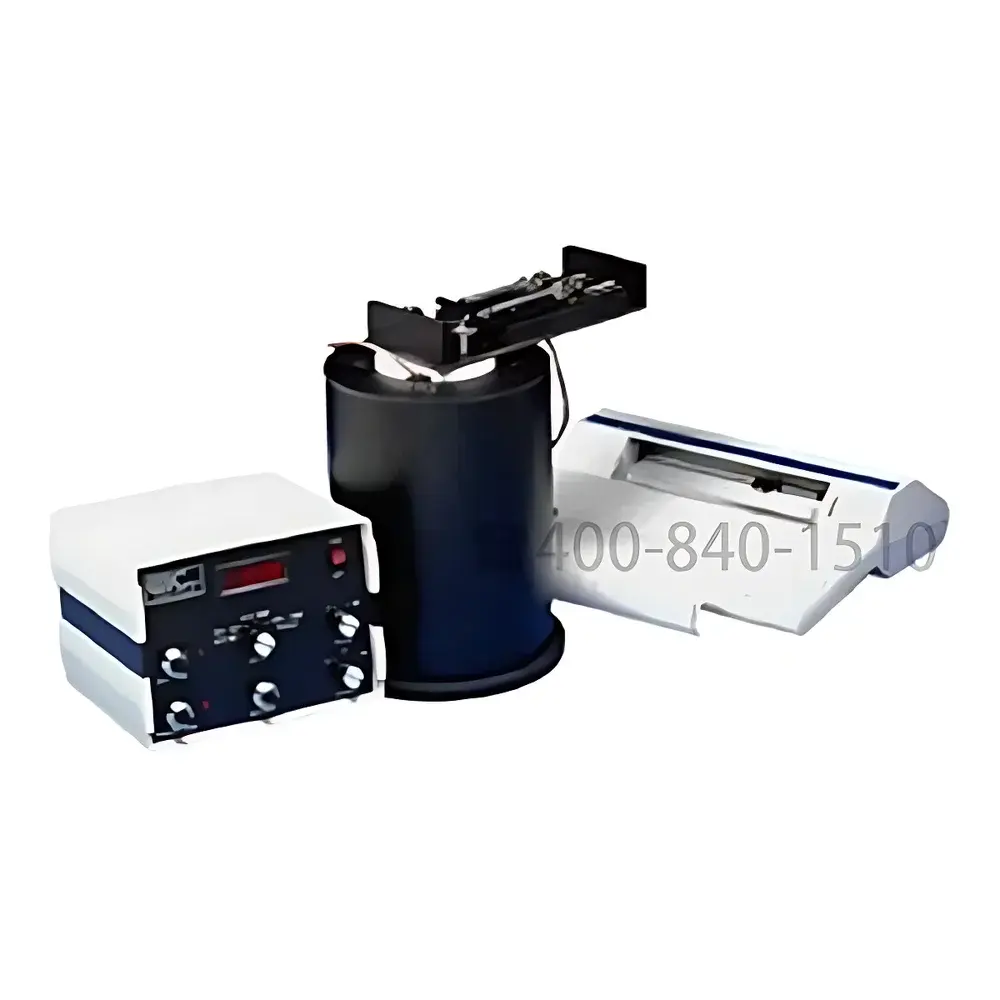
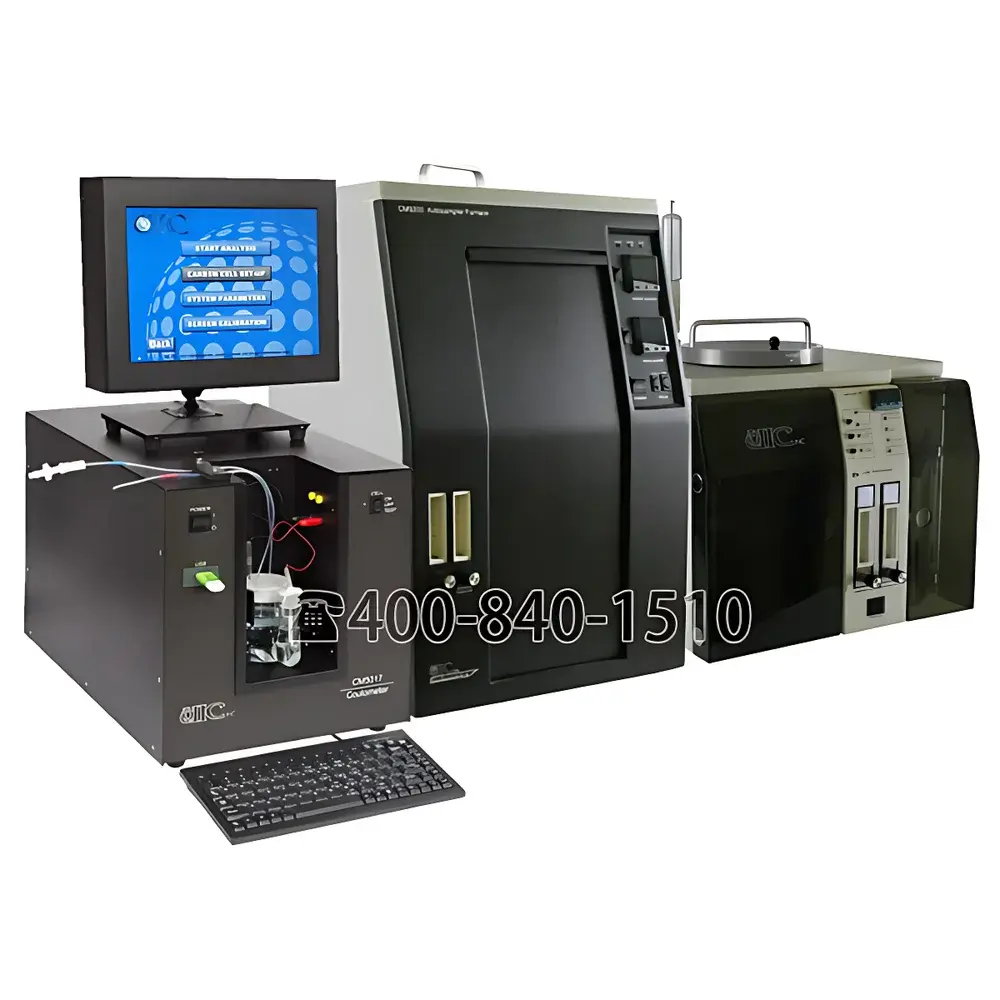
UIC Model 833 Vapor Pressure Osmometer
| Brand | UIC (United Instruments Corporation) |
|---|---|
| Origin | USA |
| Manufacturer Type | Authorized Distributor |
| Origin Category | Imported |
| Model | MODEL 833 |
| Price | USD 18,200 (FOB US port, ex-works pricing basis) |
Overview
The UIC Model 833 Vapor Pressure Osmometer is a precision analytical instrument engineered for the determination of number-average molecular weight (Mn) of non-volatile solutes in solution. It operates on the fundamental thermodynamic principle of vapor pressure depression—the colligative property wherein the presence of solute lowers the equilibrium vapor pressure of a solvent relative to its pure state. This instrument employs matched thermistor pairs housed within a thermostatically controlled vapor-saturated chamber. When identical solvent droplets are placed on both thermistors, thermal equilibrium is maintained. Upon application of a solution to one thermistor, preferential condensation of solvent vapor onto the solution surface releases latent heat, inducing a measurable temperature differential. This thermal perturbation alters the resistance of the solution-side thermistor, which is detected via a high-stability Wheatstone bridge circuit. The resulting voltage output is linearly proportional to solute molality—enabling direct quantification of Mn when calibrated with standards of known molecular weight.
Key Features
- Optimized thermistor geometry and cell design minimize solvent condensation-induced sample dilution, extending the stable measurement window and improving signal fidelity.
- Mechanically driven micro-syringe ensures repeatable, pulse-free sample delivery with independent heating at the injection point—reducing thermal shock and accelerating system equilibration.
- Typical equilibration time of 2–5 minutes per sample, significantly shorter than conventional VPO systems, enabling higher throughput without compromising precision.
- Thermistor matching and thermal shielding eliminate operator-dependent variables common in older-generation osmometers, delivering inter-laboratory reproducibility within ±3% RSD for Mn across replicate runs.
- Wide operational temperature range (ambient to 130 °C; sub-ambient operation supported via external coolant circulation) accommodates diverse solvent volatility profiles.
- Bridge current selection (5 µA, 20 µA, 100 µA) allows optimization of sensitivity/resolution trade-offs for low- or high-concentration analyses.
Sample Compatibility & Compliance
The Model 833 supports a broad spectrum of organic and aqueous solvents, including toluene, benzene, chloroform, 1,2-dichloroethane, dichloromethane, acetone, dimethylformamide (DMF), pyridine, and water. Its validated Mn range spans 100–25,000 Da in toluene and 100–5,000 Da in water—making it suitable for synthetic polymers, oligomers, peptides, and excipient characterization in pharmaceutical development. The instrument complies with ASTM D5296 (Standard Test Method for Molecular Weight Averages of Polymers by Size-Exclusion Chromatography) as a complementary technique for Mn verification. Data acquisition meets GLP/GMP documentation requirements when integrated with compliant software; audit trail, electronic signature, and 21 CFR Part 11 readiness can be achieved via optional UIC DataLink™ interface modules.
Software & Data Management
While the base Model 833 provides analog 0–200 mV output for connection to strip chart recorders (e.g., included JI503-020-01 unit) or legacy DAQ systems, UIC offers optional Windows-based DataLink™ software for modern laboratory integration. This application enables real-time signal visualization, automated baseline correction, multi-point calibration curve generation (linear or polynomial), and export of tabular results in CSV/Excel format. All raw voltage-time traces and processed Mn values are timestamped and stored with full metadata (operator ID, solvent, temperature setpoint, bridge current). Software-generated reports include calibration history, system suitability checks, and uncertainty estimates derived from replicate standard deviations—supporting regulatory submissions under ICH Q5E and USP <788>.
Applications
- Quality control of polymer batches in contract manufacturing organizations (CMOs) producing PEGylated biologics or synthetic peptide APIs.
- Verification of oligonucleotide synthesis yield and coupling efficiency during solid-phase synthesis scale-up.
- Determination of aggregation state and monomer/dimer ratios in protein formulation studies using volatile organic co-solvents.
- Characterization of dendrimer generations and hyperbranched polyesters where SEC calibration drifts due to conformational effects.
- Supporting regulatory filings requiring orthogonal Mn methods per FDA guidance on polymer-based drug products.
FAQ
What is the minimum detectable concentration for aqueous samples?
For water-based systems, the practical lower limit is 2.5 × 10⁻⁴ mol/L—corresponding to ~25 mg/mL for a 1,000 Da solute.
Can the Model 833 measure samples containing volatile impurities?
No. Volatile components interfere with vapor phase equilibrium and compromise thermistor response linearity; samples must be purified prior to analysis.
Is routine calibration required between samples?
A single-point solvent blank is performed before each batch; full multi-point calibration is recommended daily or after solvent change.
Does the system support automated sample changers?
Not natively—but third-party XYZ autosamplers with TTL-triggered syringe actuation can be integrated via the instrument’s external control port.
How is temperature stability maintained during extended runs?
The measurement cell resides within a dual-zone air bath with PID-controlled heaters and optional recirculating chiller coupling—achieving ±0.02 °C stability over 8-hour periods.
Related Products





