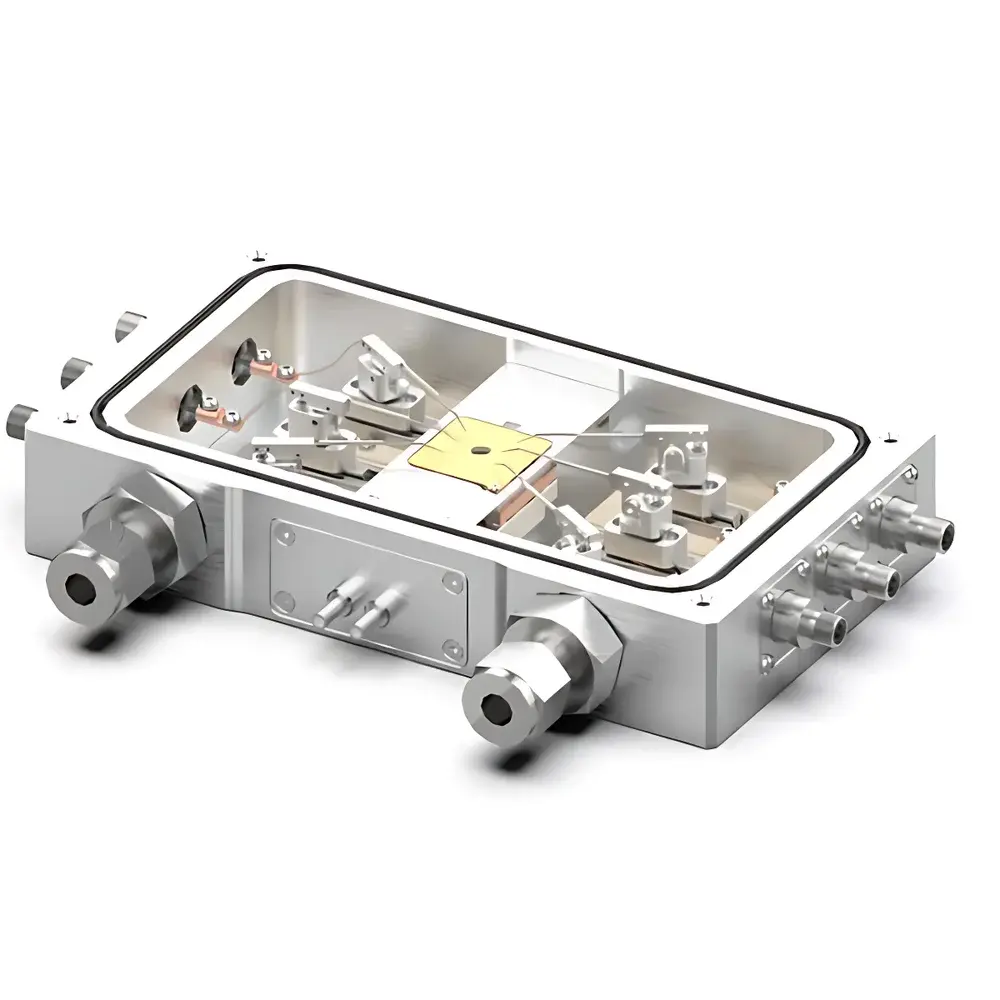
ULTECH MPS Peltier-Integrated MEMS Microprobe Station
| Brand | ULTECH |
|---|---|
| Origin | South Korea |
| Model | MPS |
| Category | Vacuum Probe Station |
| Operation | Manual |
| Wafer Size Compatibility | 1″ to 8″ |
| Temperature Range Options | −40 °C to 200 °C (Peltier), −40 °C to 170 °C (Peltier), RT to 450 °C (Ceramic Heater), RT to 750 °C (Ceramic Heater), 77 K to 300 K (Liquid Nitrogen Cooling) |
| Vacuum Chamber | Yes, hermetic sealing |
| Gas Delivery | Mass Flow Controller (MFC)-equipped multi-gas inlet |
| Optical Access | Integrated viewport for microscope coupling |
| Electrical Interface | Standard coaxial and triaxial feedthroughs |
Overview
The ULTECH MPS Peltier-Integrated MEMS Microprobe Station is a compact, manually operated vacuum probe station engineered for high-precision electrical, optical, and thermally coupled characterization of microscale semiconductor devices and functional materials. Designed around a rigid, low-vibration stainless-steel vacuum chamber with certified hermetic integrity (<1×10⁻⁷ mbar·L/s leak rate), the system supports simultaneous in situ electrical probing and environmental control under high vacuum or controlled gas atmospheres. Its core architecture integrates thermoelectric (Peltier) and resistive ceramic heating elements—enabling stable, programmable temperature regulation across five distinct operational ranges—from cryogenic (77 K) to high-temperature (750 °C) regimes. The short working distance (<15 mm) and integrated optical viewport allow seamless integration with upright and inverted optical microscopes, confocal Raman systems, and photoluminescence spectrometers—making it particularly suited for correlative optoelectronic metrology in academic and industrial R&D labs.
Key Features
- Compact footprint (≤380 mm × 320 mm × 260 mm) and lightweight design (<18 kg), optimized for benchtop deployment and integration into multi-instrument setups.
- Vacuum-rated chamber with metal-sealed flanges and ISO-KF 25/40 ports; base pressure ≤5×10⁻⁷ mbar with standard turbomolecular pumping configuration.
- Dual-mode thermal control: High-stability Peltier modules (±0.1 °C setpoint accuracy) and interchangeable ceramic heaters with independent PID loops and real-time thermocouple feedback (Type K or PT100).
- Multi-gas delivery via calibrated mass flow controllers (MFCs), supporting up to three independent gas lines (e.g., N₂, O₂, H₂, forming gas) with flow range 1–500 sccm and <1% full-scale repeatability.
- Electrical interface compatibility with industry-standard coaxial (SMA, BNC) and triaxial (TRIAX) connectors; feedthroughs rated to 1 kV DC / 500 MHz bandwidth.
- Modular probe arm assembly with micrometer-driven XYZ translation (resolution: 1 µm), low-noise tungsten or platinum-iridium tips (tip radius <1 µm), and optional guarded cabling for ultra-low-current (<100 fA) measurements.
Sample Compatibility & Compliance
The MPS accommodates wafers from 25 mm (1″) to 200 mm (8″) diameter, including diced dies, thin-film substrates, 2D material flakes, and MEMS cantilevers mounted on custom carriers. Chuck surface flatness is maintained within ±1 µm over 100 mm span, ensuring uniform thermal contact and mechanical stability during variable-temperature operation. All vacuum components comply with ISO 10100:2019 (vacuum technology — terminology and definitions) and meet CE marking requirements for electromagnetic compatibility (EMC Directive 2014/30/EU) and low-voltage safety (LVD Directive 2014/35/EU). Optional calibration certificates traceable to NIST standards are available for temperature and vacuum sensors.
Software & Data Management
While the MPS operates in manual mode by default, it supports full automation via optional RS-232/USB/IEEE-488 (GPIB) interfaces for integration with LabVIEW™, Python-based control frameworks (PyVISA), or third-party test executive software (e.g., Keysight PathWave, NI TestStand). Temperature ramps, vacuum sequencing, and MFC gas mixing profiles can be scripted and logged with timestamped metadata. All measurement data—including thermocouple readings, pressure transducer outputs, and external instrument triggers—can be exported in CSV or HDF5 format. Audit trails and user access logs are configurable to align with GLP-compliant workflows per ISO/IEC 17025:2017 Annex A.3.
Applications
- In situ Raman spectroscopy of strain-engineered 2D heterostructures under controlled thermal and gaseous environments.
- Temperature-dependent I–V, C–V, and transconductance characterization of GaN HEMTs and MoS₂ FETs.
- Gas-sensing response kinetics of metal oxide nanowires (e.g., SnO₂, WO₃) under ppm-level target analytes.
- Phase transition mapping in VO₂ thin films via resistance hysteresis and infrared reflectivity during thermal cycling.
- Photocurrent scanning microscopy (PCSM) combined with localized laser excitation and bias-controlled carrier injection.
- Hall effect and Seebeck coefficient measurements on thermoelectric thin films under high vacuum and inert atmosphere.
- Ferroelectric domain switching dynamics observed via conductive AFM or PFM synchronized with bipolar voltage pulses and thermal modulation.
FAQ
Is the MPS compatible with cryogenic liquid nitrogen cooling without external dewar modifications?
Yes—the system includes a dedicated LN₂ cold finger port with vacuum-jacketed transfer line interface and integrated temperature regulation logic to maintain stable 77 K–300 K operation.
Can the vacuum chamber be upgraded to UHV (<10⁻⁹ mbar) specification?
Yes—optional UHV-compatible components (e.g., all-metal seals, ion pump integration, bake-out capability up to 150 °C) are available as factory-configured variants.
What level of electromagnetic interference (EMI) shielding does the chamber provide?
The stainless-steel chamber body provides >60 dB attenuation from 10 kHz to 1 GHz; optional mu-metal lining further enhances low-frequency magnetic field suppression for sensitive Hall or SQUID measurements.
Are probe arms equipped with position encoders for automated alignment routines?
Standard manual arms do not include encoders, but motorized XYZ stages with 0.1 µm resolution and closed-loop feedback are available as an upgrade option.
Does ULTECH supply application-specific probe tip sets for nanoscale transport measurements?
Yes—custom tip geometries (e.g., wedge-shaped, bent, or lithographically defined) and conductive coatings (Ti/Pt, Cr/Au) are offered under NRE agreements with documented tip radius metrology (SEM + TEM cross-section validation).