
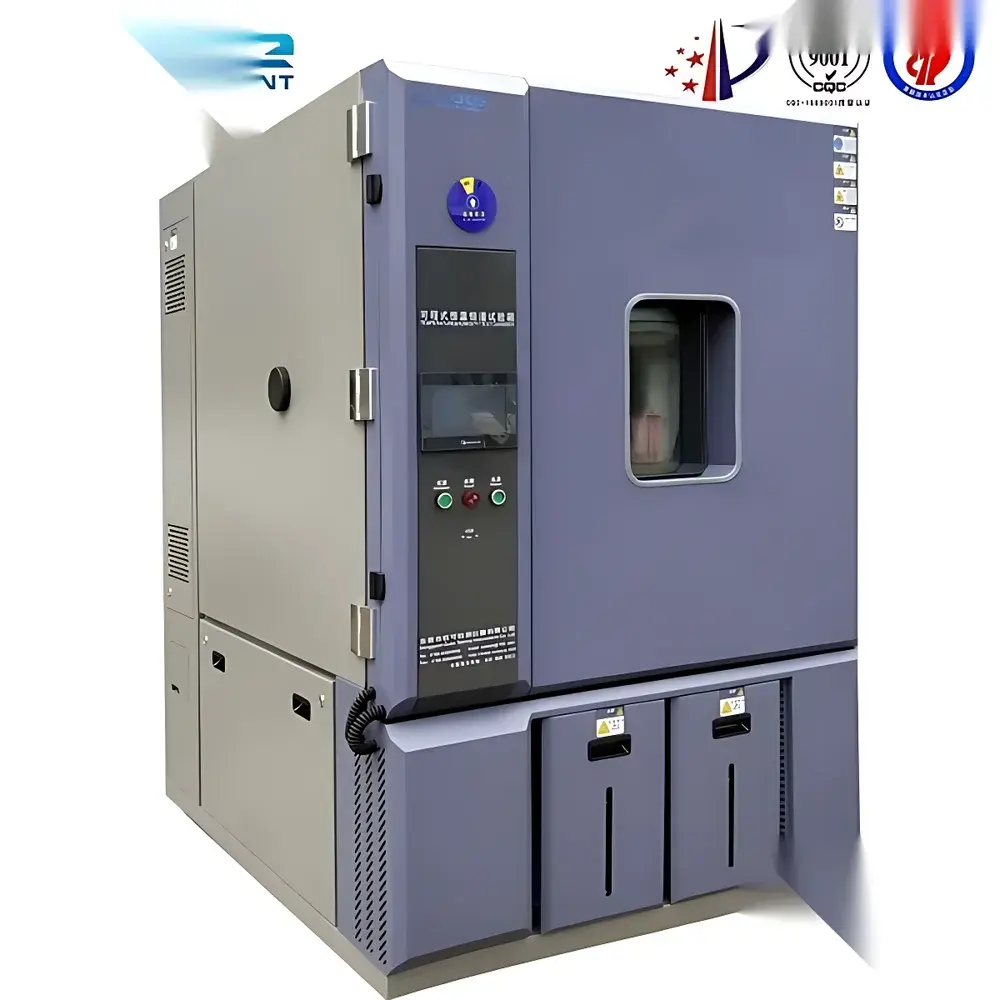
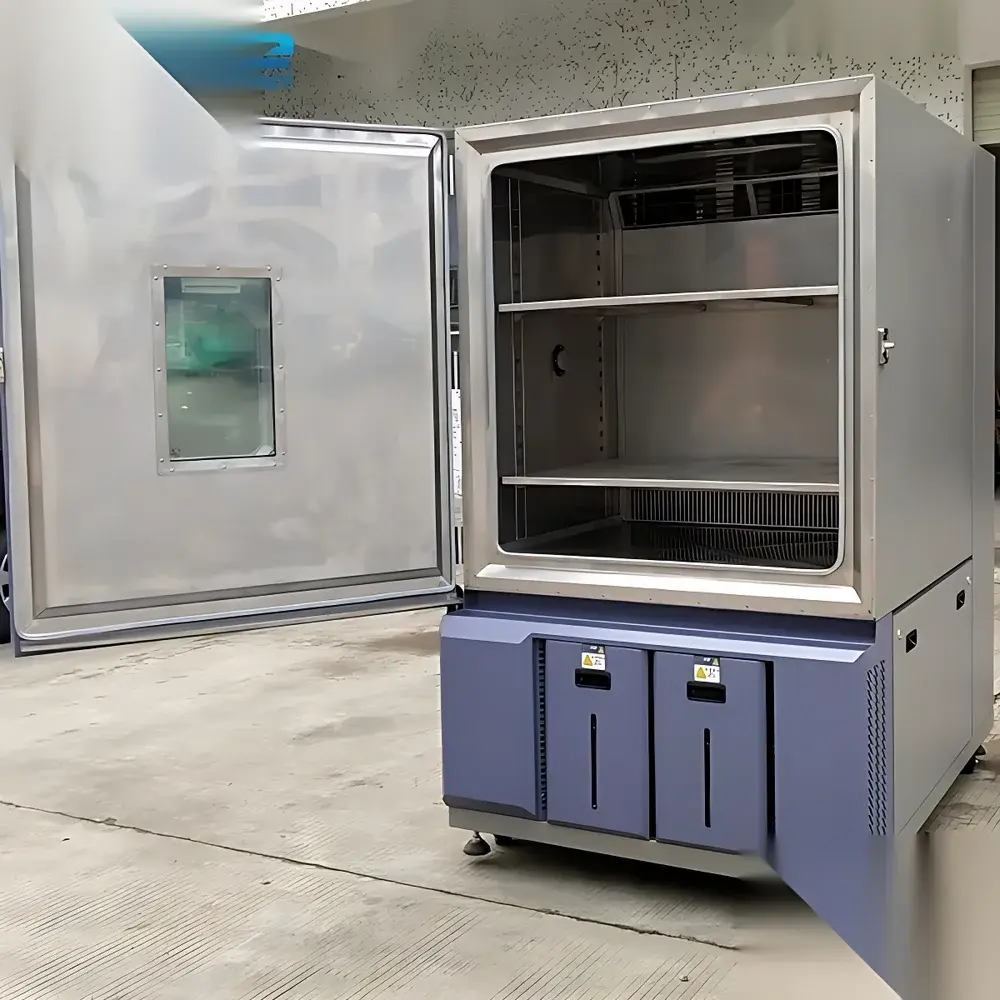
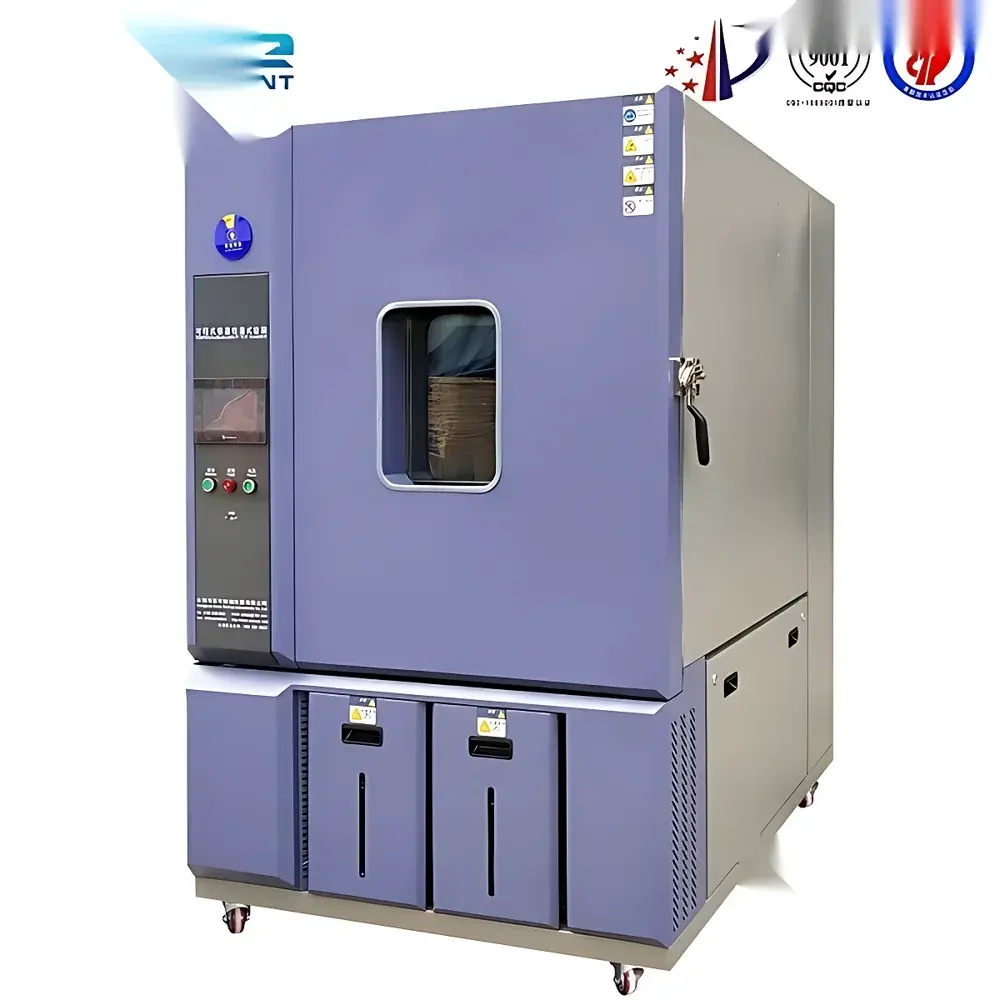
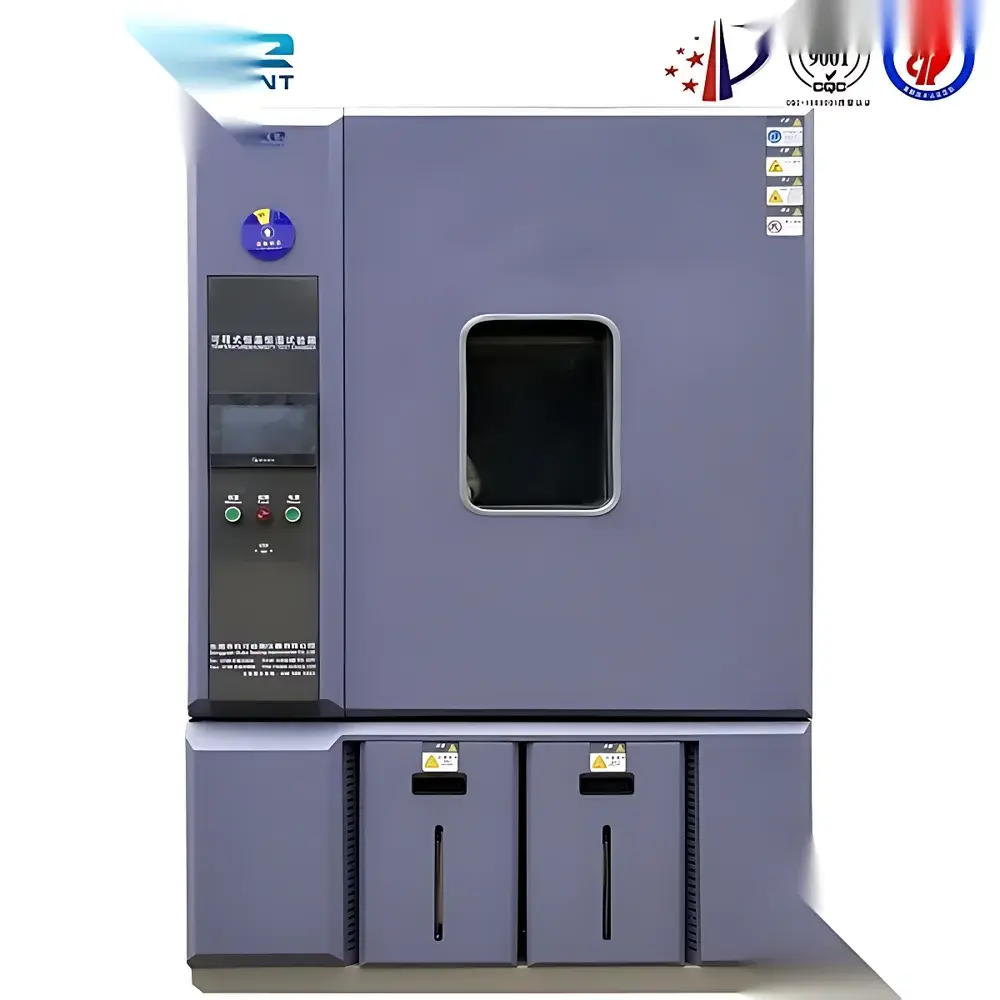
Ultra-Low Temperature and Humidity Controlled Environmental Test Chamber (–70°C)
| Brand | OEM / Private Label |
|---|---|
| Origin | Imported |
| Manufacturer Type | Authorized Distributor |
| Price | USD 3,100 (Reference Only) |
| Temperature Range | –70°C to +150°C |
| Humidity Range | 20–98% RH |
| Compliance | GB/T 5170.2–1996, GB/T 5170.5–1996, GB 2423.1–1989, GB 2423.2–1989, GB 2423.22–1987, GB 10589–1989, GB 10592–1989, GB 11158–1989 |
Overview
The Ultra-Low Temperature and Humidity Controlled Environmental Test Chamber (–70°C) is a precision-engineered climatic simulation system designed for rigorous environmental stress testing of materials, components, and finished products under controlled low-temperature and variable-humidity conditions. Based on the principle of balanced heating, cooling, humidification, and dehumidification—implemented via a BTHC (Balanced Temperature & Humidity Control) architecture—the chamber maintains stable thermal and hygroscopic profiles across its full operating range. It supports static and dynamic test profiles including constant temperature/humidity, temperature cycling, and combined temperature–humidity cycling per internationally recognized test standards. Its core design prioritizes long-term operational stability, repeatability under load, and compliance-ready performance for laboratories operating under GLP, ISO/IEC 17025, or internal quality assurance protocols.
Key Features
- Extended low-temperature capability down to –70°C, achieved through a multi-stage cascade refrigeration system with fully capillary-tube-based automatic capacity modulation—eliminating reliance on mechanical expansion valves for improved control fidelity and reduced maintenance intervals.
- Advanced PID-controlled SSR (Solid-State Relay) power regulation for both heating and humidification circuits, enabling precise BTHC operation where thermal/humidification input dynamically matches chamber heat/moisture loss.
- Ergonomic, seamless arc-shaped stainless-steel interior and exterior housing with flat, non-reactive door handles—optimized for cleanroom compatibility, ease of cleaning, and structural integrity under repeated thermal cycling.
- Intuitive touchscreen controller with programmable multi-segment test profiles, real-time trend logging, and password-protected parameter locking—supporting both standalone operation and optional Ethernet/RS485 integration.
- Robust cooling water interface specification: inlet temperature 10–28°C, pressure 0.1–0.3 MPa—ensuring consistent condenser performance and rated cooling capacity even in ambient environments up to 31°C.
- Modular construction allows customization of internal volume (from 100 L to walk-in configurations), shelving layout, port placement, and sensor mounting—fully scalable to client-specific validation or production test requirements.
Sample Compatibility & Compliance
This chamber accommodates a broad spectrum of test specimens—including electronic assemblies, automotive ECUs, polymer composites, pharmaceutical packaging, and aerospace sealants—without compromising profile accuracy. All stated specifications (e.g., –70°C minimum, ±0.5°C temperature uniformity, ±2.0% RH stability) are validated under no-load, ambient-conditioned (25°C ±6°C) laboratory settings per GB/T 5170.2 and GB/T 5170.5 calibration methodologies. The system meets mandatory clauses of GB 2423.1 (Cold Test), GB 2423.2 (Dry Heat), and GB 2423.22 (Temperature Change), and supports traceable execution of IEC 60068-2 series test plans. Optional IQ/OQ documentation packages and 21 CFR Part 11–compliant audit trails are available upon request for regulated industries.
Software & Data Management
Built-in controller firmware supports continuous data acquisition at user-selectable intervals (1–60 sec), with onboard storage for ≥30 days of timestamped temperature and humidity records. Export formats include CSV and PDF reports compatible with LIMS integration. For enterprise-level deployment, optional PC-based software enables remote monitoring, alarm escalation (email/SMS), multi-chamber fleet management, and automated report generation aligned with ISO 17025 clause 7.7 (Reporting of Results). All data logs retain immutable timestamps, operator IDs, and configuration snapshots—satisfying GLP audit requirements for data integrity and accountability.
Applications
- Reliability screening of lithium-ion battery modules under extreme cold-start conditions (–40°C to –70°C).
- Accelerated aging of elastomeric seals and gaskets exposed to cyclic low-T/high-RH stress.
- Validation of medical device sterilization packaging integrity after cold-humidity exposure.
- Material coefficient-of-thermal-expansion (CTE) characterization across sub-zero gradients.
- Qualification testing of avionics enclosures per DO-160 Section 4 (Operating Temperature) and Section 5 (Humidity).
- Environmental stress screening (ESS) in electronics manufacturing per JESD22-A104 and A119 standards.
FAQ
What is the meaning of “air average temperature change rate” in the technical specifications?
It refers to the arithmetic mean rate of air temperature transition measured at multiple predefined chamber reference points—not the surface or core temperature of the test specimen. Actual specimen response depends on mass, thermal conductivity, and mounting configuration.
Can this chamber operate continuously at –70°C with 95% RH?
No. At ultra-low temperatures, maximum achievable humidity is physically constrained by dew point limitations. At –70°C, saturation corresponds to <0.01 g/m³ absolute humidity; therefore, RH values above ~10% are not attainable. Humidity control is functional within the overlapping operational envelope (e.g., –40°C to +85°C at 20–98% RH).
Is external cooling water mandatory?
Yes. The cascade refrigeration system requires a stabilized water supply (10–28°C, 0.1–0.3 MPa) to maintain condenser efficiency and achieve rated cooling performance. Air-cooled variants are not available for the –70°C configuration due to thermodynamic constraints.
Are calibration certificates included with shipment?
A factory-as-built verification report (including temperature and humidity uniformity maps at key setpoints) is provided. NIST-traceable calibration certificates from an ILAC-MRA accredited lab are available as an optional add-on service.
Related Products



