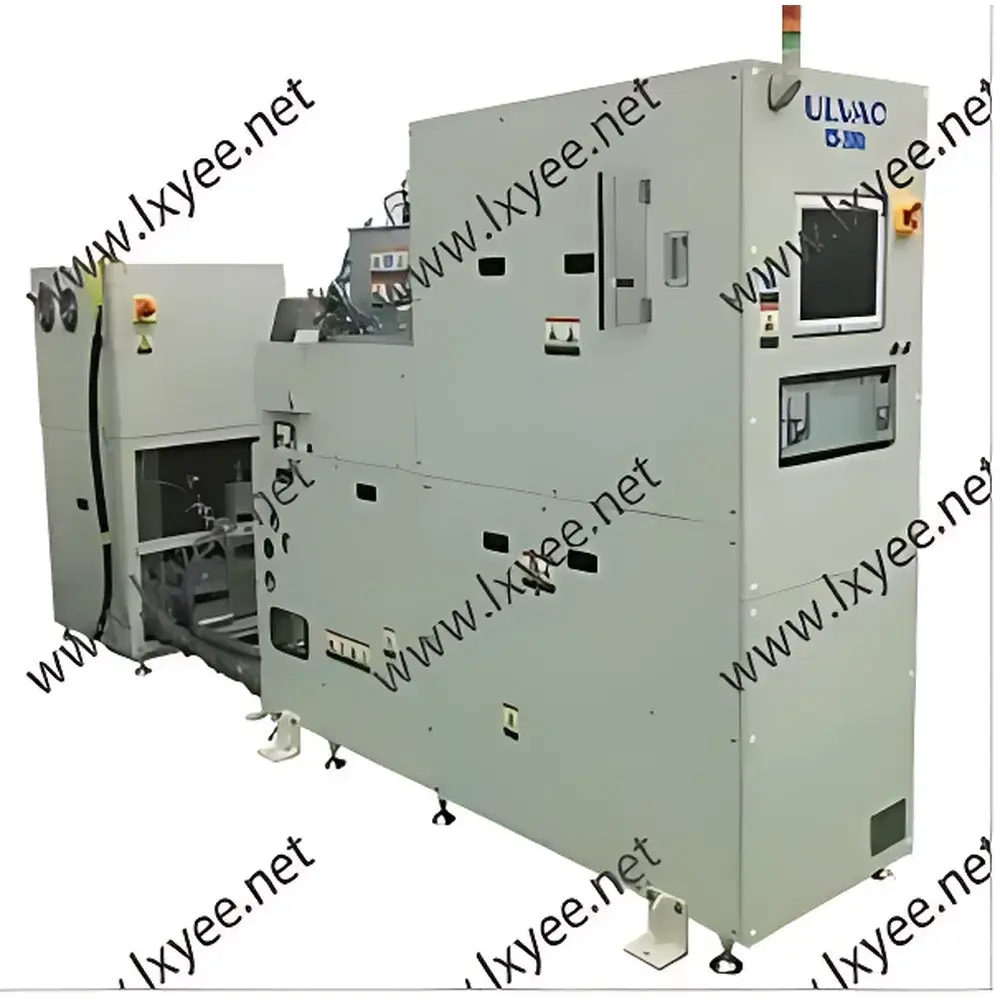
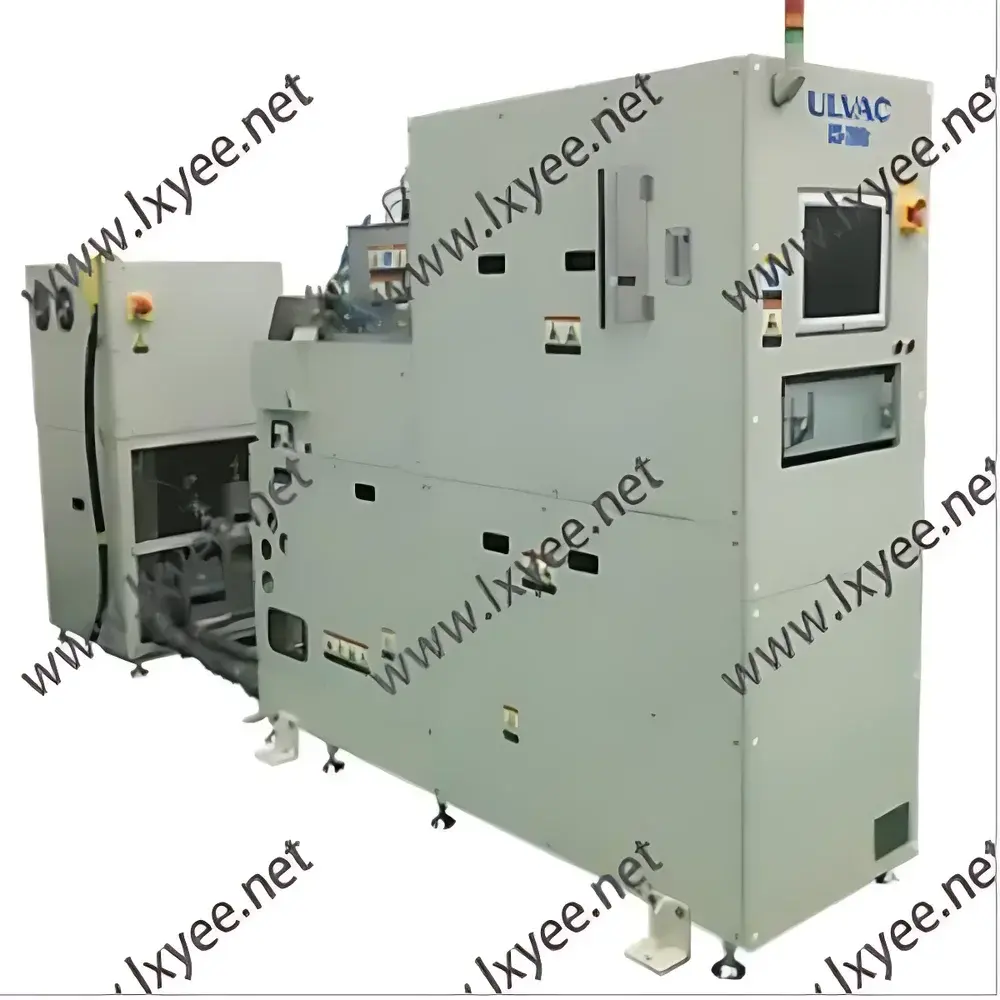
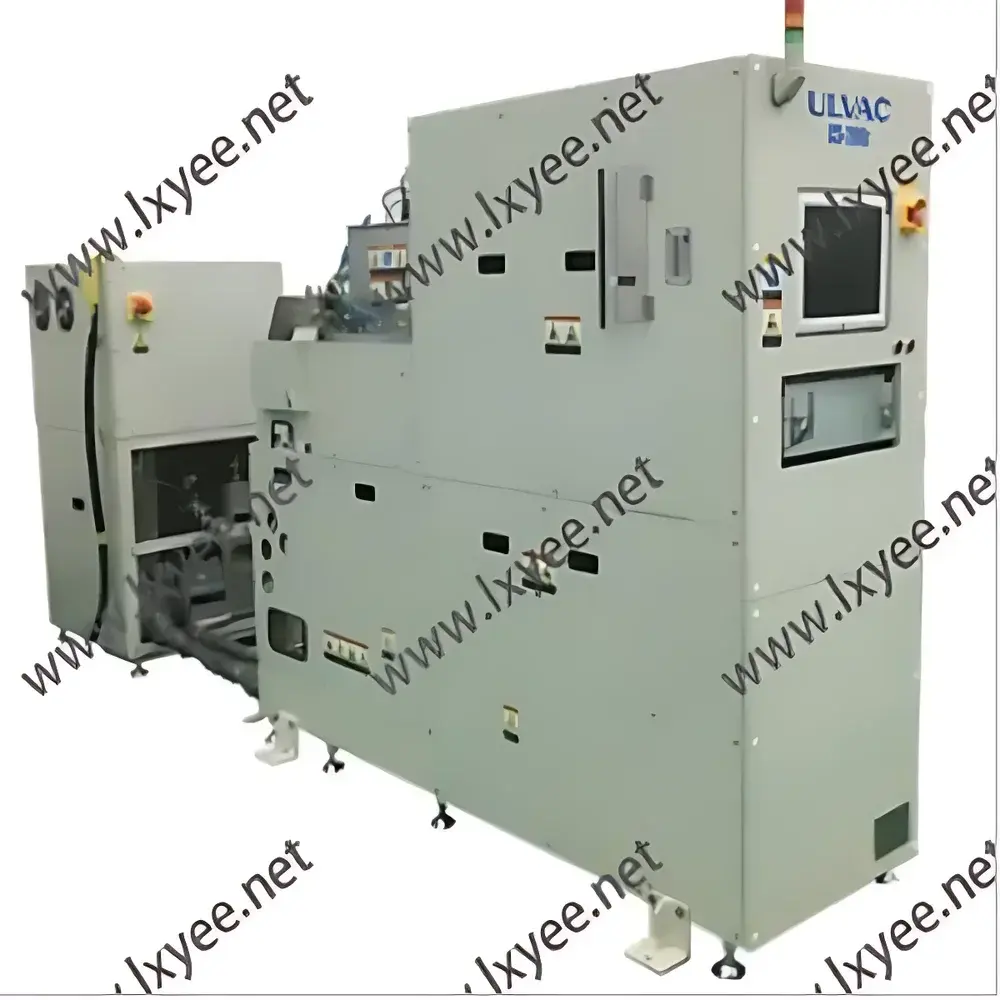
ULVAC CS-200Z Load-Lock DC/RF Magnetron Sputtering System
| Brand | ULVAC KIKO |
|---|---|
| Origin | Japan |
| Model | CS-200Z |
| Configuration | Load-lock type, high-vacuum DC/RF magnetron sputtering system |
| Substrate Compatibility | Ti trays for Φ2″–Φ4″ wafers (max. Φ320 mm) and custom-shaped substrates (e.g., 50×50 mm²) |
| Control System | ULVAC GPCS-2700 integrated PLC + PC-based HMI (English interface) |
| Data Logging | Real-time parameter logging to PC with Excel export capability |
| Footprint | 1500 × 4500 mm (including service clearance) |
| Environment | Designed for Class 100–Class 1000 cleanroom integration |
Overview
The ULVAC CS-200Z is a compact, load-lock type high-vacuum magnetron sputtering system engineered for precision thin-film deposition in semiconductor R&D, pilot-line fabrication, and advanced materials development. Based on proven DC and RF magnetron sputtering principles, the CS-200Z generates stable plasma in ultra-high vacuum conditions (base pressure ≤5×10⁻⁷ Pa) to enable uniform, stoichiometric, and low-defect-rate deposition of metals (e.g., Al, Cu, Ti, Ni), alloys (e.g., NiCr, TiW), and insulating ceramics (e.g., SiO₂, Al₂O₃, ITO). Its return-type chamber architecture minimizes cross-contamination between load/unload and process cycles, ensuring batch-to-batch reproducibility critical for process qualification and technology transfer. The system is not intended for high-throughput production but optimized for flexibility, repeatability, and traceability in controlled laboratory or cleanroom environments.
Key Features
- Load-lock configuration with independent vacuum chambers for sample loading/unloading and sputtering—eliminates main-chamber air exposure and preserves base vacuum integrity across multiple runs.
- Titanium (Ti) modular tray system supporting standard wafer diameters (2″, 3″, 4″) up to Φ320 mm, as well as non-circular substrates (e.g., 50×50 mm² square plates); tray interchange is tool-free and validated per ULVAC mechanical alignment specifications.
- Integrated ULVAC GPCS-2700 control platform combining industrial-grade PLC logic with a Windows-based HMI—enabling synchronized sequencing of vacuum pumping, gas dosing (Ar, N₂, O₂), power delivery (DC up to 3 kW / RF up to 1.5 kW), and shutter actuation.
- English-language operator interface compliant with ISO/IEC 62443-3-3 cybersecurity guidelines for industrial control systems; all hardware status indicators (valve positions, gauge readings, interlock states) are graphically mapped and actionable from the touchscreen.
- Real-time parameter logging at user-defined intervals (100 ms–10 s resolution); logged data includes chamber pressure, target voltage/current, substrate temperature (via optional thermocouple input), and gas flow rates—all stored locally on an embedded industrial SSD and exportable in .csv format for statistical process control (SPC) analysis.
- Compact footprint (1500 × 4500 mm including maintenance access zone) enables deployment in limited-space cleanrooms without compromising serviceability—front-accessible power supplies, cryo-pumps, and RF matching networks reduce downtime during preventive maintenance.
Sample Compatibility & Compliance
The CS-200Z accommodates substrates ranging from rigid silicon wafers and fused silica masks to flexible polyimide films and ceramic substrates—provided mechanical stability under vacuum and thermal load is maintained. Tray-based mounting ensures uniform thermal contact and minimizes warpage-induced film non-uniformity. All wetted components (chamber body, shields, trays) are electropolished stainless steel (SUS304L) or oxygen-free copper, meeting SEMI F20-0201 standards for particle generation control. The system complies with JIS B 8401 (vacuum equipment safety), UL 61010-1 (electrical safety), and CE Machinery Directive 2006/42/EC. Optional configurations support ISO 14644-1 Class 5 (Class 100) cleanroom certification when installed with HEPA-filtered utility lines and grounded ESD-safe flooring interfaces.
Software & Data Management
Process recipes are defined and managed via the GPCS-2700’s hierarchical recipe editor—supporting multi-step sequences (e.g., pre-sputter cleaning → deposition → post-anneal), conditional branching (e.g., pressure threshold triggers), and parameter constraints (e.g., max. target power ramp rate). Audit trails record all user logins, recipe modifications, and manual overrides with timestamps and operator IDs—fully compliant with FDA 21 CFR Part 11 requirements for electronic records and signatures when paired with network-authenticated domain login. Data exports conform to ASTM E1983-20 standards for materials characterization metadata, facilitating integration with LIMS platforms such as LabWare or Thermo Fisher SampleManager.
Applications
- Deposition of adhesion layers (Ti, Cr) and diffusion barriers (Ta, TaN) for Cu interconnect metallization.
- Preparation of transparent conductive oxides (ITO, AZO) for OLED and micro-LED test structures.
- Functional oxide thin films (LiCoO₂, V₂O₅) for solid-state battery electrode R&D.
- Hard masking layers (SiNₓ, TiN) for etch process development and lithography optimization.
- Research-scale deposition of multilayer magnetic stacks (CoFeB/MgO/CoFeB) for spintronics device prototyping.
FAQ
What vacuum level can the CS-200Z achieve, and what pumping configuration is used?
The system achieves a base pressure of ≤5×10⁻⁷ Pa using a combination of turbomolecular pumps (with nitrogen-cooled cryo-traps) and dry scroll backing pumps—no oil-based forepumps are employed to eliminate hydrocarbon contamination.
Is RF sputtering capability standard or optional?
RF sputtering (13.56 MHz) is standard on the CS-200Z; dual-power supply configuration supports simultaneous DC + RF operation for reactive co-sputtering of compound films.
Can the system be integrated into a cluster tool or automated material handling environment?
Yes—the CS-200Z features SECS/GEM (SEMI E30/E37) communication protocols and vacuum interlock I/O signals compatible with factory automation systems (FABMS) and third-party robotic handlers.
What maintenance intervals are recommended for the turbomolecular pump and RF generator?
ULVAC recommends turbomolecular pump bearing inspection every 12,000 operating hours and RF generator capacitor calibration annually—both procedures are documented in the included GLP-compliant maintenance logbook.
Does ULVAC provide IQ/OQ documentation packages for GMP-regulated facilities?
Yes—validated installation qualification (IQ) and operational qualification (OQ) protocols, including sensor calibration certificates traceable to NIST standards, are available upon request for pharmaceutical or medical device manufacturing applications.