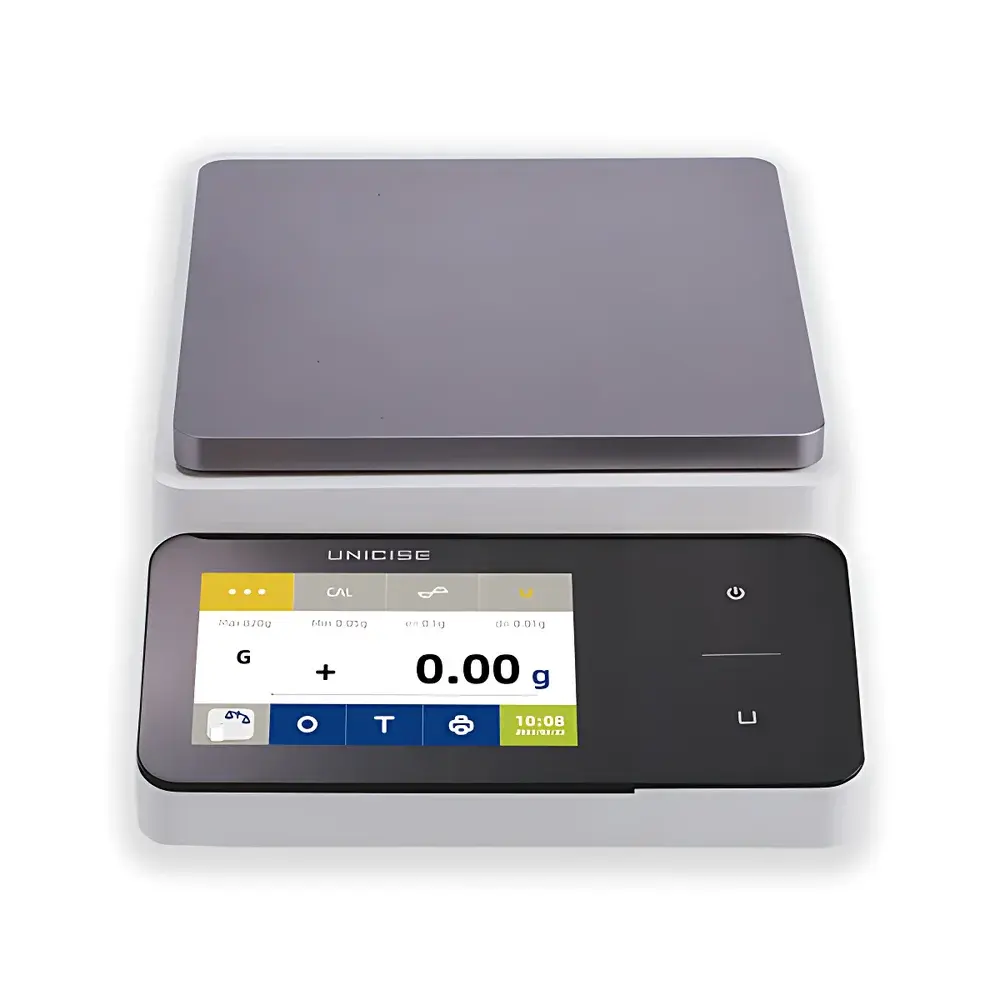
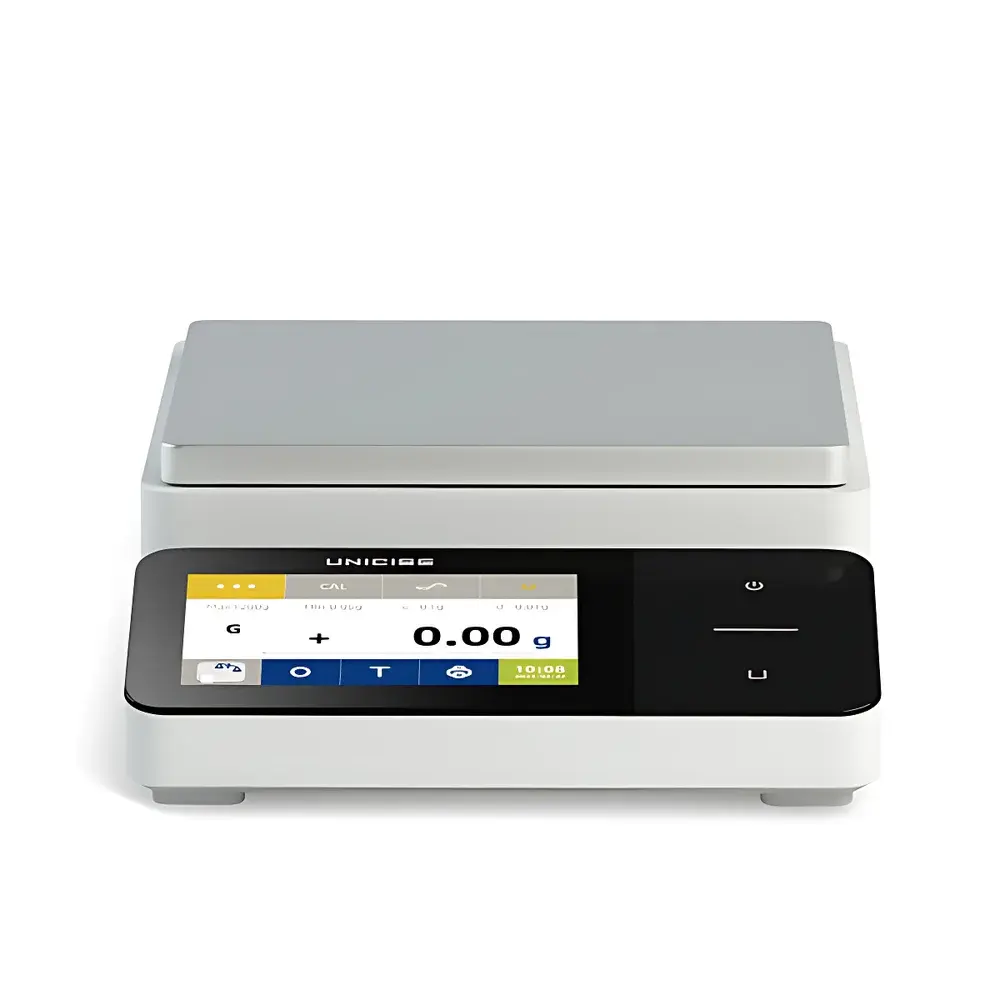
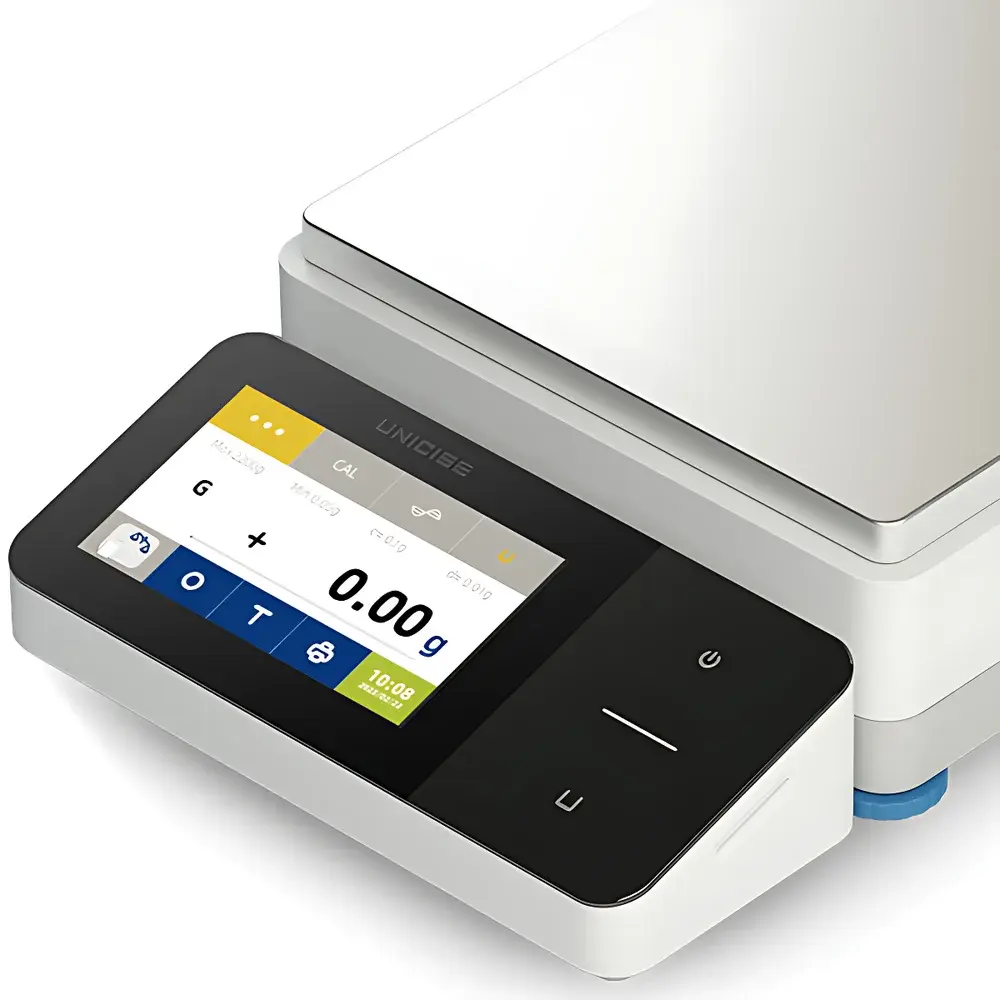
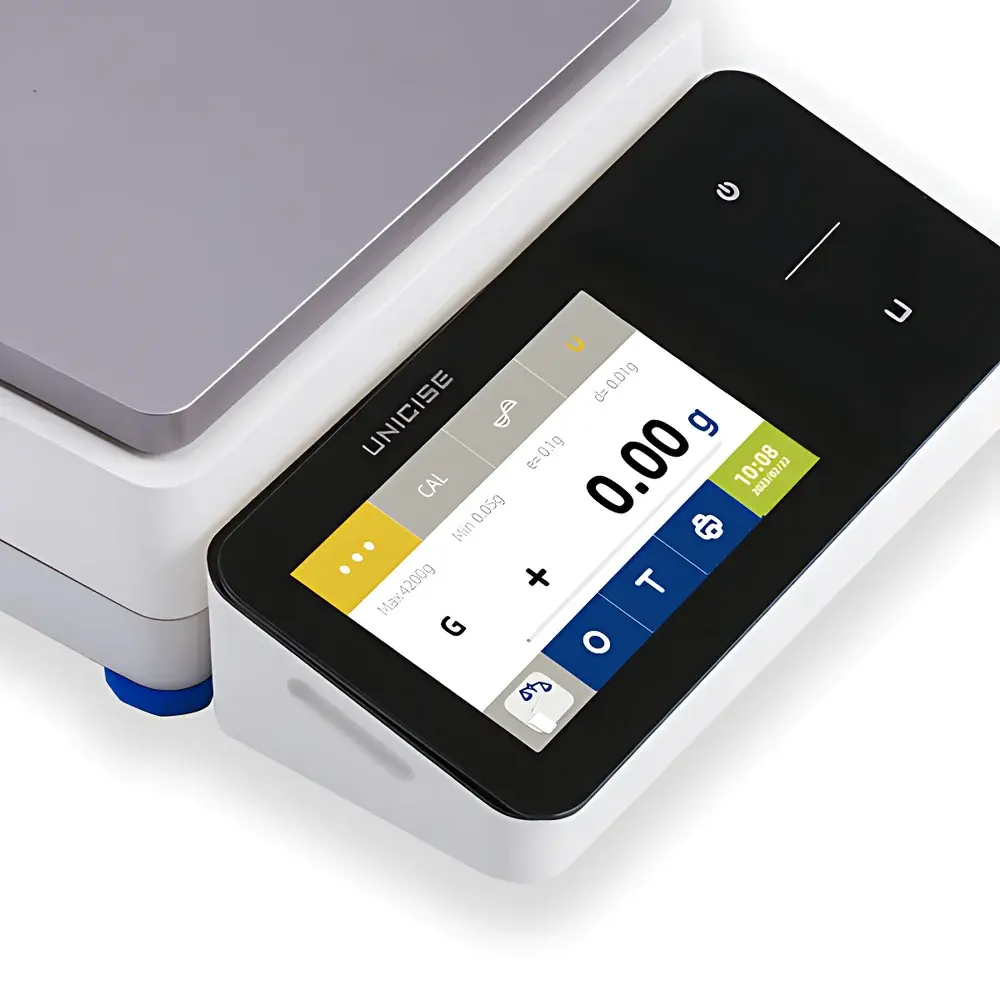
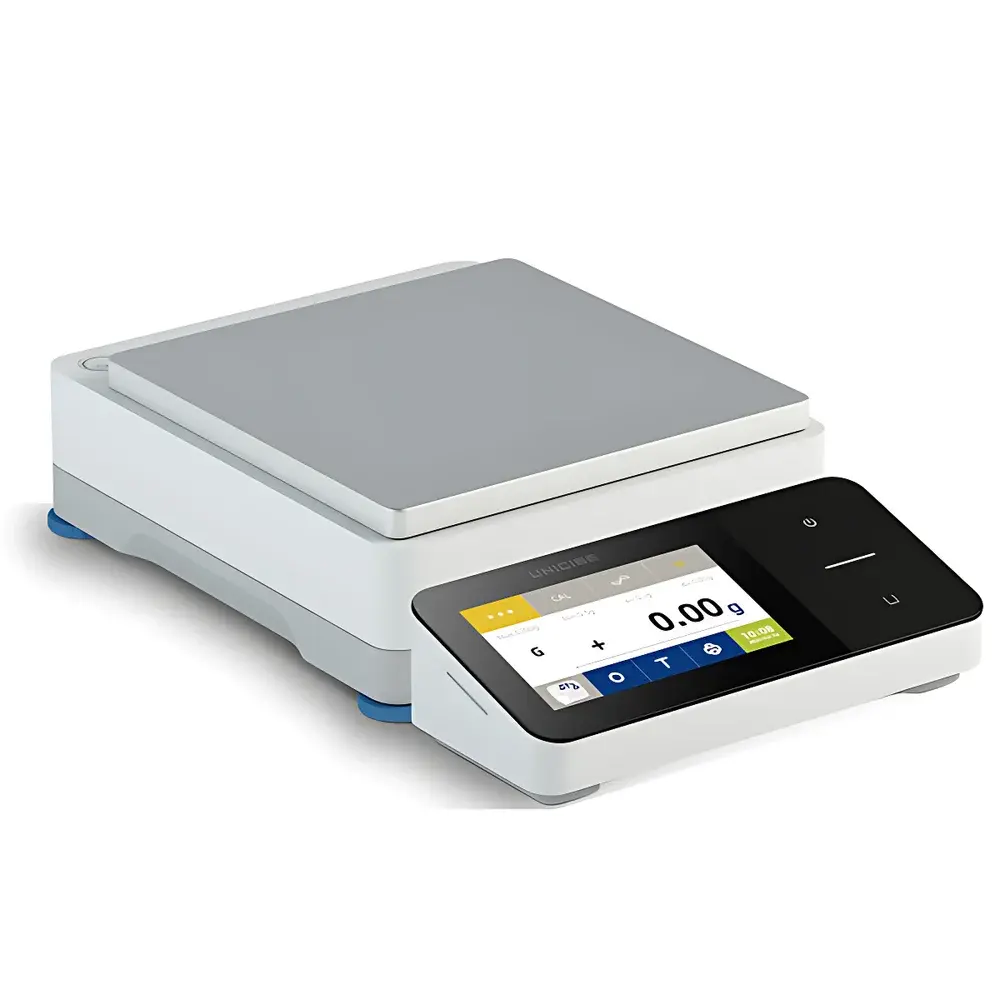
Unicise GeWu Series 10 mg Precision Analytical Balance
| Brand | Unicise |
|---|---|
| Origin | Jiangsu, China |
| Model(s) | UBP822, UBP1202, UBP2202, UBP3202, UBP4202, UBP5202, UBP6202 |
| Instrument Type | Analytical Balance |
| Capacity | 820 g – 6200 g |
| Readability | 10 mg |
| Repeatability (5% load) | 5 mg |
| Repeatability (full load) | 10 mg |
| Linearity | 6 mg |
| Stabilization Time | ≤ 0.9 s |
| Temperature Sensitivity Drift | ±2 ppm/K (10–30 °C) |
| Calibration Method | External |
| Communication Protocols | SBI (RS-232) & SICS |
| Compliance | GLP/GMP-ready data output (Device ID, Sample ID, Batch ID), password protection, minimum weight alert |
Overview
The Unicise GeWu Series 10 mg Precision Analytical Balance is an engineered solution for laboratories requiring high reproducibility, fast stabilization, and traceable mass measurement in routine quality control, formulation, and R&D workflows. Built around a proprietary electromagnetic force compensation (EMFC) transducer with integrated dynamic temperature compensation (DTC), the balance delivers consistent 10 mg readability across its full range—spanning from 820 g to 6200 g—without mechanical levers or moving parts that compromise long-term stability. The EMFC principle ensures linearity and hysteresis performance aligned with ISO 9001 and ISO/IEC 17025 metrological expectations for analytical weighing. Designed for environments where ambient thermal fluctuation is common—such as shared QC labs or pilot-scale production support—the ±2 ppm/K sensitivity drift specification reflects rigorous thermal modeling and real-world validation under controlled environmental gradients (10–30 °C).
Key Features
- High-speed EMFC sensor architecture: Achieves ≤ 0.9 s stabilization time at full load, enabling rapid throughput in batch weighing, inventory reconciliation, and multi-sample preparation.
- True-color capacitive touchscreen interface: Intuitive Chinese-language OS with customizable hotkeys and illuminated key feedback—designed for glove-compatible operation and reduced operator fatigue during extended shifts.
- Dual communication interface: Standard DB9 (RS-232 compliant with SBI protocol) and USB-C (SICS-enabled) ports support seamless integration into LIMS, ELN, and MES platforms—eliminating need for serial-to-USB adapters or proprietary dongles.
- GLP/GMP-aligned data integrity: Automatic timestamped records include Device ID, Sample ID, Batch ID, operator login, calibration status, and environmental metadata—fully compatible with FDA 21 CFR Part 11 audit trail requirements when deployed with validated software layers.
- Minimum weight monitoring: Configurable threshold alarm alerts operators when sample mass falls below user-defined limits—supporting USP <41> and EU GMP Annex 8 compliance for analytical method validity.
- Corrosion-resistant construction: 316L stainless steel pan and baseplate meet food-grade and pharmaceutical cleaning standards; resistant to ethanol, isopropanol, and dilute acids used in lab sanitation protocols.
Sample Compatibility & Compliance
The GeWu Series accommodates standard weighing vessels—including aluminum pans, glass beakers, and polymer tare containers—without requiring recalibration or platform reconfiguration. Its draft shield compatibility (optional accessory) meets ASTM E898-22 recommendations for low-mass volatile sample handling. All models comply with OIML R76-1 (Class II) for non-automatic weighing instruments and are CE-marked per Directive 2014/30/EU (EMC) and 2014/35/EU (LVD). While not certified to ISO/IEC 17025 as a standalone instrument, the balance supports accredited laboratory workflows through documented calibration procedures using NIST-traceable weights and validated uncertainty budgets.
Software & Data Management
Data export is natively supported via ASCII-formatted RS-232 transmission or SICS-compliant USB-C streaming, enabling direct ingestion into LabWare LIMS, Thermo Fisher SampleManager, or custom Python-based QA dashboards. The built-in 12-application suite—including statistical analysis (mean, SD, CV%), density determination (via displacement method), percentage weighing, piece counting, and animal weighing—operates without external software licensing. All functions retain full audit trail capability: each action logs user ID, timestamp, parameter settings, and result values. Password protection enforces role-based access (operator, supervisor, administrator), satisfying internal SOPs for data governance and change control.
Applications
- Pharmaceutical QC release testing (active ingredient assay, excipient blending verification)
- Chemical formulation development (catalyst dosing, stoichiometric ratio validation)
- Food & beverage quality assurance (nutrient labeling compliance, moisture content checks)
- Academic research requiring repeatable gravimetric analysis (e.g., catalyst synthesis yield, polymer degradation studies)
- Contract manufacturing organizations (CMOs) performing GMP-compliant batch record generation
- Environmental labs conducting soil/sediment sample partitioning prior to ICP-MS digestion
FAQ
What calibration standards are recommended for external calibration?
NIST-traceable Class M2 or better weights, certified for the specific capacity of each model (e.g., 500 g for UBP822, 3000 g for UBP3202), with uncertainty ≤ 1/3 of the balance’s readability.
Is internal calibration available on any GeWu Series model?
No—this series implements external calibration only, supporting ISO/IEC 17025 traceability chains via documented weight handling and environmental logging.
Can the balance operate continuously on power bank supply?
Yes—USB-C port supports 5 V / 2 A input; typical runtime exceeds 8 hours on a 20,000 mAh power bank under intermittent use.
Does the device support automatic tare reset after each weighing cycle?
Yes—programmable auto-tare is configurable per application mode (e.g., enabled in “Counting” but disabled in “Statistics”) via touchscreen menu.
How is linearity verified during periodic performance qualification?
Using at least three test points: 5%, 50%, and 100% of full scale—with deviations reported against manufacturer-specified ±6 mg tolerance and recorded in equipment logbooks per ISO 17025 Clause 6.4.6.