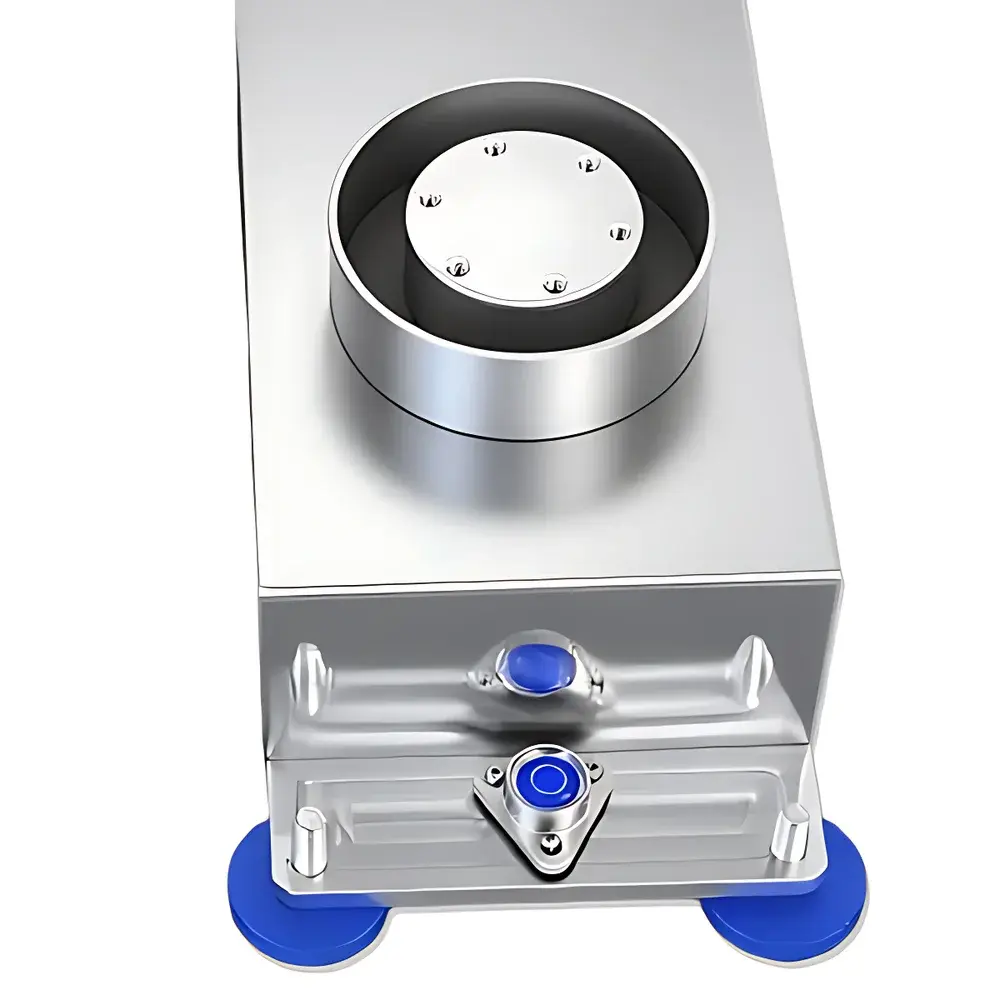
Unicise UWM Series 0.01 mg Electromagnetic Force Compensation Weighing Module
| Key | Brand: Unicise Precision Measurement |
|---|---|
| Origin | Jiangsu, China |
| Model Range | UWM35-I / UWM65-I / UWM125-I / UWM35 / UWM65 / UWM125 |
| Capacity | 30 g / 60 g / 120 g |
| Readability | 0.01 mg |
| Repeatability | 0.02 mg |
| Preload Range | 0–10 g / 0–20 g / 0–40 g |
| Operating Temperature | +10 to +30 °C |
| Calibration | Internal (I-series) or External (non-I-series) |
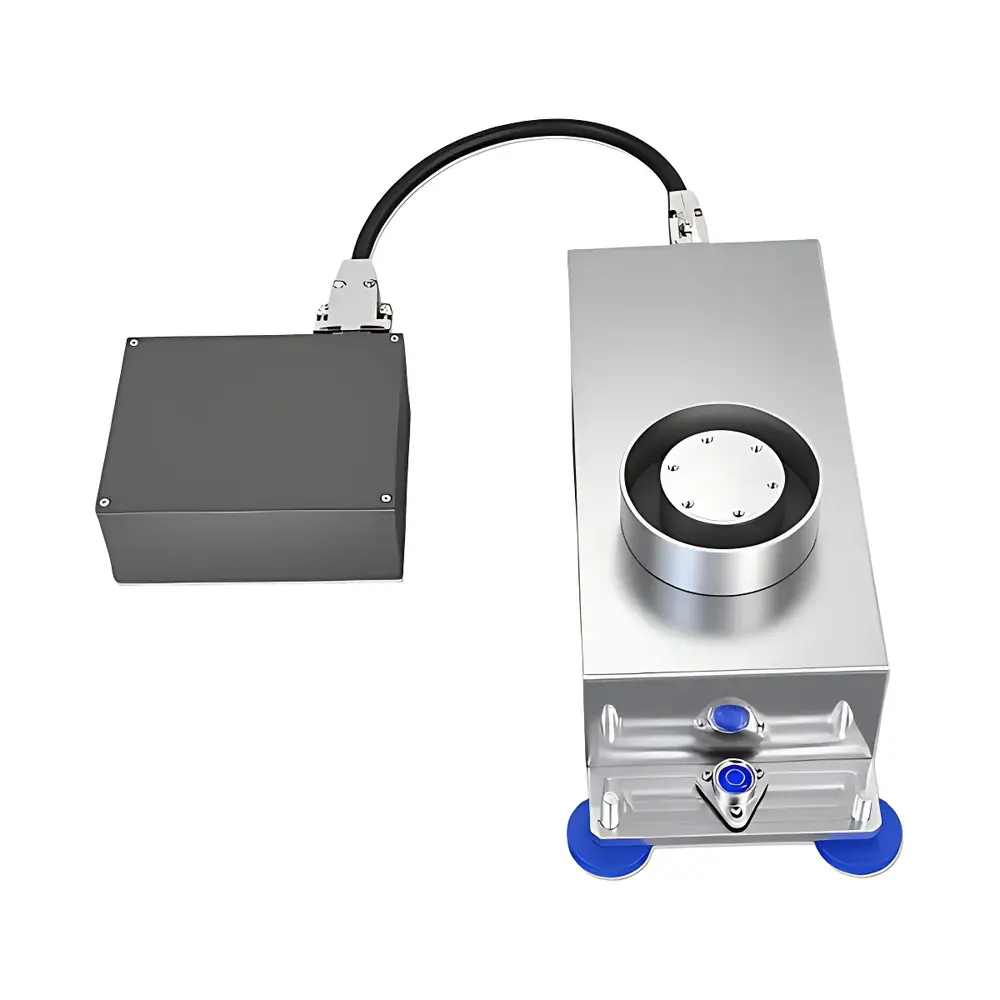
| Sensor Housing Dimensions (L×W×H) | 265 × 114 × 90 mm |
| Electronics Box Dimensions (L×W×H) | 110 × 90 × 45 mm |
| Interface | DB9 (RS-232/SBI compliant) and USB Type-C |
| Environmental Rating | Designed for controlled lab and industrial automation environments |
Overview
The Unicise UWM Series is a high-precision electromagnetic force compensation weighing module engineered for integration into automated analytical systems, continuous dosing platforms, and inline quality control stations. Unlike traditional strain-gauge-based load cells, this module employs a proprietary Uni-block electromagnetic force restoration sensor architecture—where mass-induced displacement is actively counterbalanced by a precisely regulated electromagnetic field, generating a current proportional to the applied load. This closed-loop principle delivers inherent linearity, minimal hysteresis, and immunity to mechanical creep, enabling consistent 0.01 mg readability across its full 30 g, 60 g, and 120 g capacity variants. Designed for operation in temperature-stabilized environments (+10 to +30 °C), the UWM Series maintains metrological integrity under dynamic loading conditions typical of high-speed gravimetric feeders, tablet weight checkers, and micro-dosing units in pharmaceutical, fine chemical, and advanced materials manufacturing.
Key Features
- Uni-block electromagnetic force sensor: Monolithic design with no moving parts subject to wear; eliminates drift associated with mechanical pivots or flexures.
- Dual calibration configuration: I-series models (UWM35-I, UWM65-I, UWM125-I) integrate motor-driven internal calibration masses traceable to national standards; non-I variants support external calibration with NIST-traceable weights.
- Robust mechanical architecture: Fully metallic housing with integrated overload protection (up to 500% of rated capacity), ensuring long-term stability in vibration-prone industrial settings.
- Flexible digital interfacing: RS-232 (SBI protocol compliant) via DB9 connector and high-speed USB Type-C port enable seamless integration with PLCs, SCADA systems, and custom HMI software stacks.
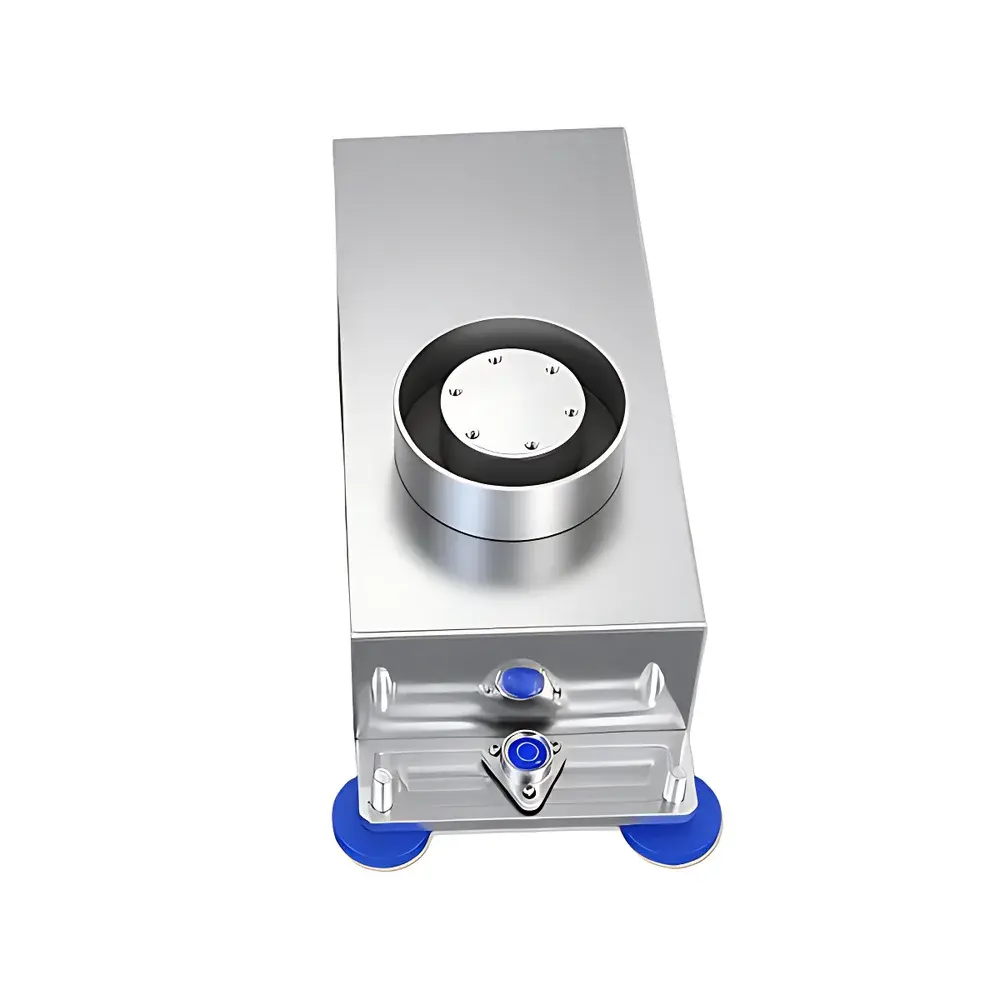
- Optimized mechanical layout: Standard 42 mm diameter weighing pan with external draft shield mount; compact sensor head (265 × 114 × 90 mm) and separate electronics box (110 × 90 × 45 mm) allow modular installation in space-constrained enclosures.
- Real-time operational feedback: Dual-color LED status indicator provides immediate visual confirmation of power-up, stabilization, zeroing, and error states—reducing operator dependency during commissioning and routine maintenance.
Sample Compatibility & Compliance
The UWM Series supports direct weighing of solid powders, granules, tablets, and small-volume liquid aliquots within enclosed or semi-enclosed process vessels. Its 0.02 mg repeatability meets the performance thresholds required for USP <41> and EP 2.1.6 applications involving low-dose active pharmaceutical ingredient (API) handling. While not certified as a standalone legal-for-trade instrument, the module complies with OIML R76-1 Annex C requirements for Class I laboratory weighing instruments when installed in accordance with manufacturer-specified environmental controls (e.g., anti-vibration mounts, draft shielding, and ambient temperature regulation). All firmware versions support audit trail logging compatible with GLP/GMP documentation workflows, and data export formats (ASCII, CSV) are structured to align with FDA 21 CFR Part 11 electronic record retention protocols.
Software & Data Management
The module operates in command-response mode using ASCII-based SBI (Standard Balance Interface) protocol, permitting deterministic data acquisition at up to 10 Hz sampling rate under stable conditions. Optional Unicise Link software (Windows/Linux) provides real-time visualization, statistical process monitoring (SPC), and configurable pass/fail threshold alerts. Raw weight data streams include timestamp, gross/net/tare flags, stability indicators, and calibration status metadata—enabling traceable batch records without post-processing. For enterprise-level deployment, RESTful API wrappers and OPC UA companion specifications are available under OEM licensing agreements, supporting integration into MES and LIMS platforms compliant with ISA-95 and ASTM E2500-18 system validation frameworks.
Applications
- Automated micro-dosing systems for catalyst formulation and nanomaterial synthesis.
- In-line weight verification of blister-packed pharmaceuticals and medical devices.
- Gravimetric feeding control in twin-screw extrusion and continuous wet granulation lines.
- Dynamic loss-in-weight (LIW) monitoring for powder feeders in battery electrode coating processes.
- Reference-grade mass comparator subsystems in metrology labs performing uncertainty analysis per ISO/IEC 17025.
- Custom OEM integration into analytical instrumentation requiring sub-100 µg resolution—e.g., thermal gravimetric analyzers (TGA), micro-reactors, and electrochemical deposition rigs.
FAQ
What is the difference between I-series and non-I-series models?
The “I” suffix denotes internal calibration capability: UWMxx-I modules contain a built-in motorized calibration mass assembly and perform automatic adjustment without manual intervention. Non-I models require external calibration weights and are typically selected where regulatory constraints prohibit internal moving parts or where cost-sensitive integration is prioritized.
Is the UWM Series suitable for use in cleanroom environments?
Yes—when paired with optional stainless-steel draft shields and mounted on ISO Class 5-compatible anti-vibration tables, the module has been validated for use in Grade A/B cleanrooms per EU GMP Annex 1, provided ambient particulate and humidity levels remain within specified limits (≤40% RH, non-condensing).
Can the module be used for continuous dynamic weighing (e.g., belt-scale applications)?
It is not designed for conveyor-mounted continuous weighing. However, it excels in intermittent, high-accuracy dynamic scenarios such as loss-in-weight feeding, where material discharge is measured over discrete time intervals with stabilized baselines between cycles.
Does the firmware support password-protected configuration changes?
Yes—parameter modification (e.g., baud rate, filter settings, tare behavior) requires administrator-level authentication via encrypted serial command sequence, fulfilling ALCOA+ data integrity requirements for regulated industries.
What is the recommended recalibration interval under GxP conditions?
Per Unicise’s IQ/OQ/PQ guidance document, initial qualification includes 24-hour stability testing and 3-point linearity verification. Subsequent recalibration is advised every 6 months—or after any physical relocation, mechanical shock event, or observed deviation exceeding ±0.03 mg in repeatability checks.