
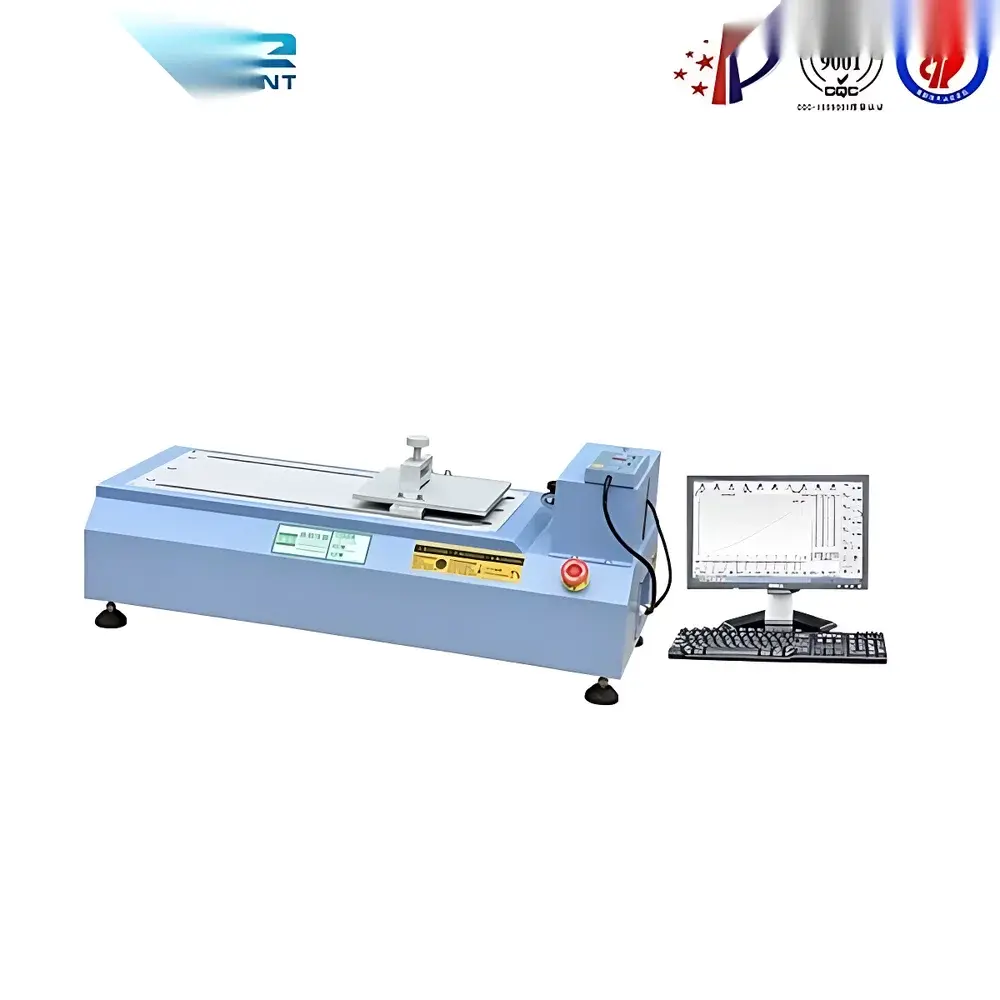
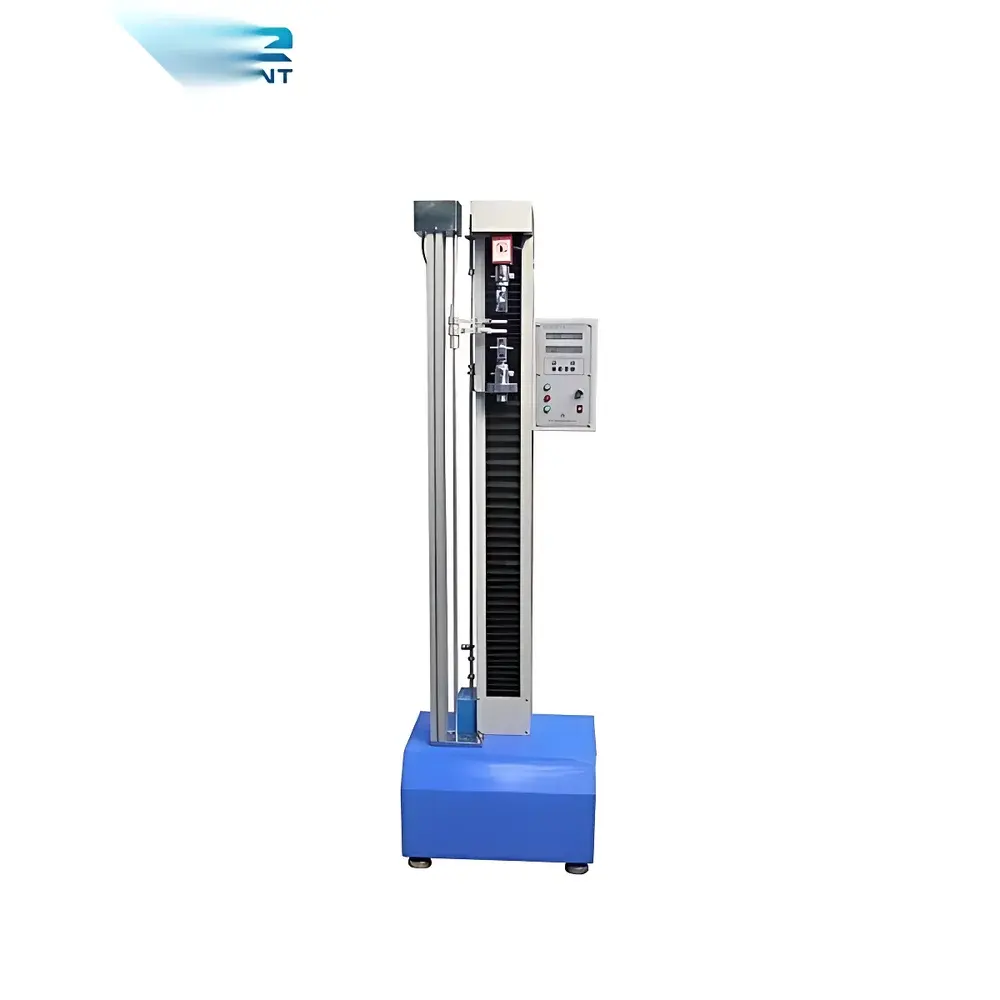
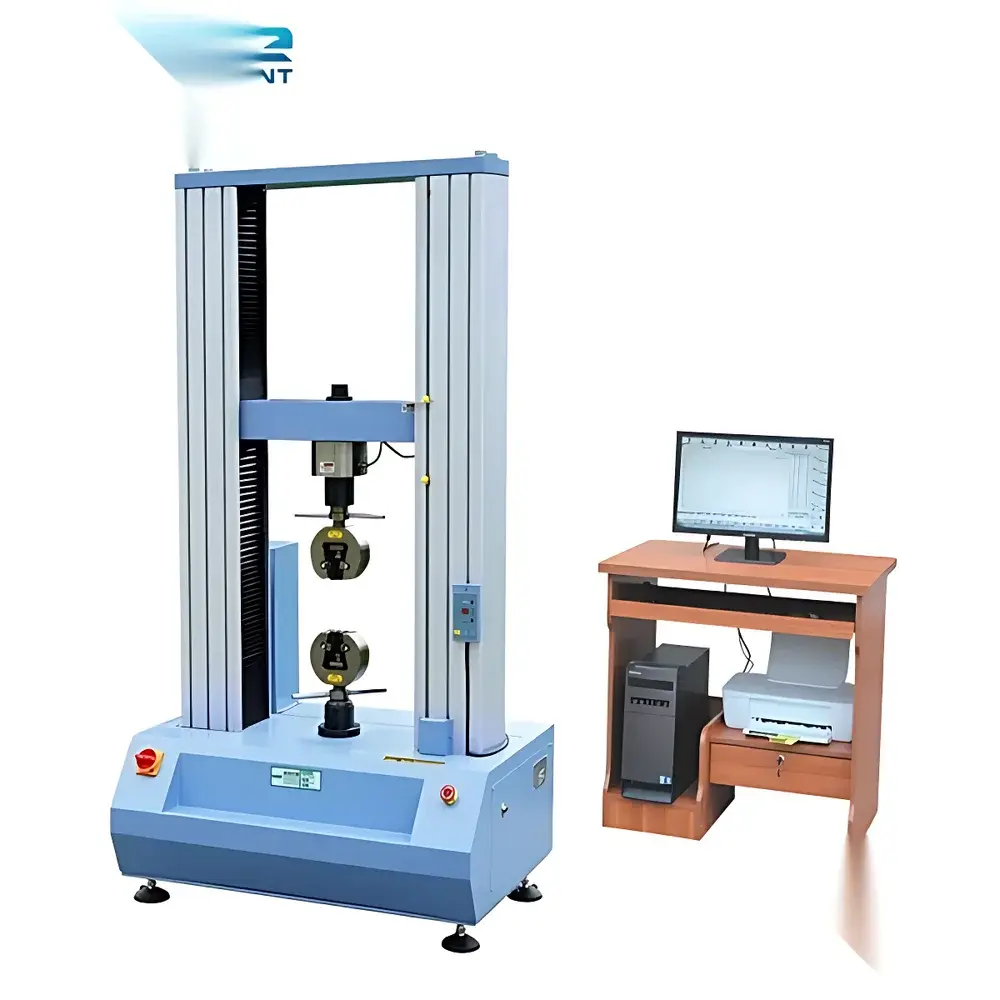
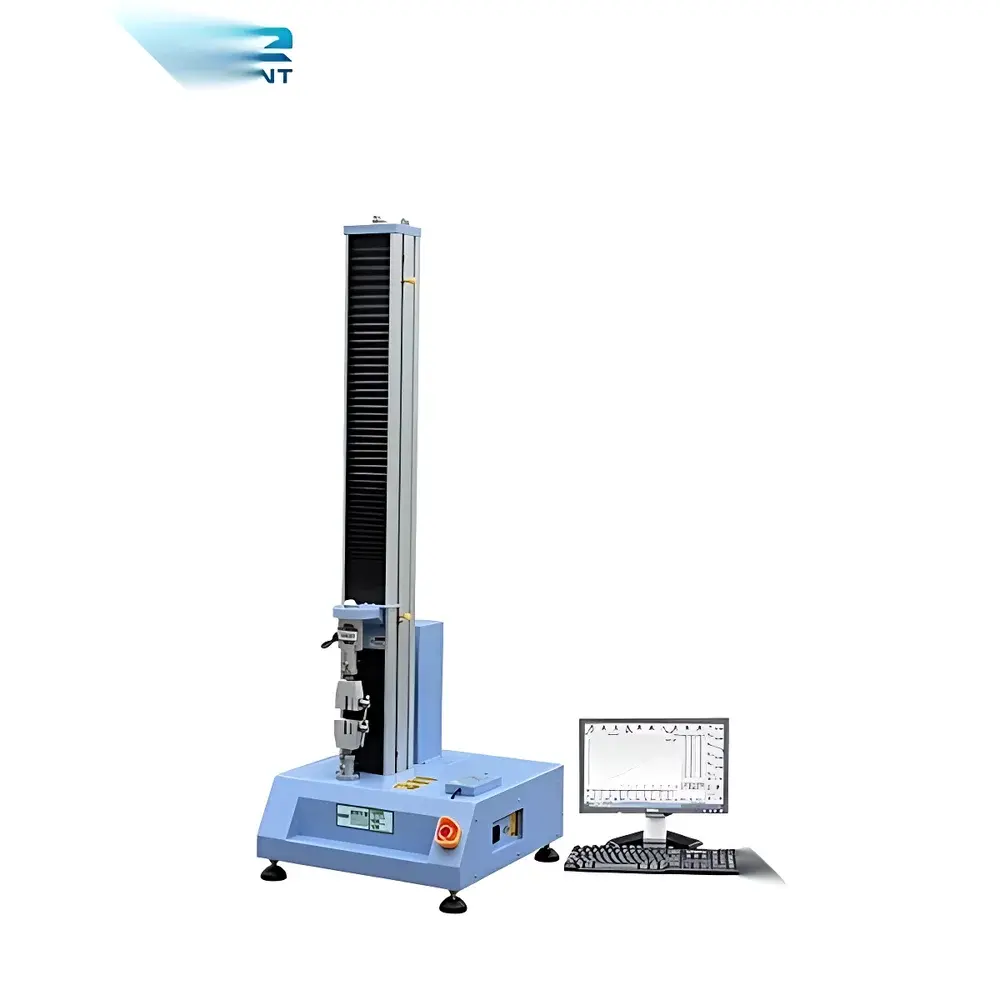
Universal Electronic Tensile Testing Machine
| Brand | Other Brands |
|---|---|
| Origin | Imported |
| Manufacturer Type | Authorized Distributor |
| Quotation | Available Upon Request |
Overview
The Universal Electronic Tensile Testing Machine is a precision electromechanical system engineered for static mechanical property characterization under uniaxial loading conditions. Based on the principle of controlled displacement or load-controlled actuation via servo-motor-driven linear motion, it measures fundamental mechanical responses—including tensile strength, yield strength, elongation at break, modulus of elasticity, peel resistance, shear strength, and adhesion force—across a broad spectrum of solid materials. Designed in accordance with international standard test methodologies, the system delivers traceable, repeatable, and compliant data for quality control (QC), research & development (R&D), and regulatory submissions in industries ranging from polymer science and biomedical device manufacturing to packaging engineering and aerospace composites. Its modular architecture supports interchangeable load cells, extensometers, and environmental fixtures—enabling standardized testing per ASTM D638, ISO 527-1, ISO 1798, ISO 8510-2, and EN 13924, among others.
Key Features
- Panasonic AC servo motor drive system coupled with a 2500-pulse/rev high-resolution optical encoder ensures precise speed control, minimal velocity fluctuation (< ±0.2% of set value), and smooth low-noise operation across the full speed range (0.001–500 mm/min).
- High-precision preloaded ball-screw transmission combined with hardened linear guideways guarantees axial alignment accuracy ≤ 0.02 mm/m and long-term dimensional stability under cyclic loading.
- Explosion-proof precision load cell with automatic thermal drift compensation, zero drift < 0.01% F.S./°C, repeatability ±0.03% F.S., and transient overload capacity up to 150% of rated capacity.
- Intelligent auto-stop function triggered upon specimen rupture—activated within ≤ 20 ms to prevent over-travel and preserve sensor integrity.
- Integrated mechanical and software-based travel limit protection system safeguards both operator safety and hardware reliability during high-speed or high-force tests.
- Dual-mode control interface supporting both load-controlled and displacement-controlled test profiles, with programmable ramp-hold-step sequences compliant with ISO 6892-1 and ASTM E8/E21 protocols.
Sample Compatibility & Compliance
The system accommodates specimens from thin films (≥ 5 µm thickness) to rigid structural composites (up to 100 mm wide × 50 mm thick), including elastomers, thermoplastics, nonwovens, metal foils, fiber bundles, laminated safety belts, adhesive tapes, and biomedical sutures. Standardized grips include pneumatic wedge-type, hydraulic self-tightening, and specialized peel fixtures (90° and 180° configurations). All test procedures align with national and international standards—including GB/T 16491 (Chinese equivalent of ISO 7500-1), GB/T 1040 (ISO 527), GB/T 2792 (peel adhesion), GB/T 3923.1 (tensile properties of textiles), and ASTM D3330 (adhesive tape peel). Full compliance documentation supports GLP/GMP audit readiness and FDA 21 CFR Part 11–enabled electronic records when paired with validated software modules.
Software & Data Management
Equipped with PC-based control and analysis software featuring real-time graphical display of stress–strain, force–displacement, and load–time curves. The platform supports multi-channel synchronized data acquisition (load, extension, crosshead position, environmental chamber feedback), automated calculation of ISO/ASTM-defined parameters (e.g., Young’s modulus, Poisson’s ratio, tear initiation energy), and export to CSV, PDF, and XML formats. Audit trail functionality logs all user actions, parameter modifications, and calibration events with timestamped digital signatures. Optional validation packages include IQ/OQ documentation templates aligned with GAMP5 guidelines and support for electronic signature workflows compliant with 21 CFR Part 11 requirements.
Applications
- Mechanical evaluation of polymeric films and flexible packaging under tension, peel, and puncture modes.
- Characterization of fiber-reinforced composites and nanocomposites for aerospace and automotive structural qualification.
- Adhesion strength testing of pressure-sensitive adhesives, medical tapes, and wound dressings per ISO 29467 and ASTM D3330.
- Quality assurance of wire-and-cable insulation tensile performance under IEC 60811-501.
- R&D of biodegradable polymers, hydrogels, and tissue-engineered scaffolds requiring low-force, high-resolution elongation tracking.
- Validation of textile tensile integrity and seam strength in PPE and technical apparel per ISO 13934-1 and ASTM D5035.
FAQ
What load cell capacities are available for this system?
Standard configurations support nominal load ranges from 50 N to 100 kN; custom high-capacity options up to 300 kN are available upon request.
Is extensometer integration supported?
Yes—the system accepts both clip-on and non-contact video extensometers (including DIC-compatible models) for strain measurement down to ±0.5 µm resolution.
Can the machine be used in an environmental chamber?
Fully compatible with standard temperature/humidity chambers (−70°C to +300°C); optional vacuum and inert-gas purge interfaces are available.
Does the software support multi-language UI and report generation?
Yes—UI languages include English, German, French, Spanish, Japanese, and Simplified Chinese; reports conform to ISO/IEC 17025 formatting requirements.
What calibration and traceability documentation is provided?
Each unit ships with a factory calibration certificate traceable to NIST or CNAS-accredited reference standards, plus a full calibration procedure manual and uncertainty budget.



