
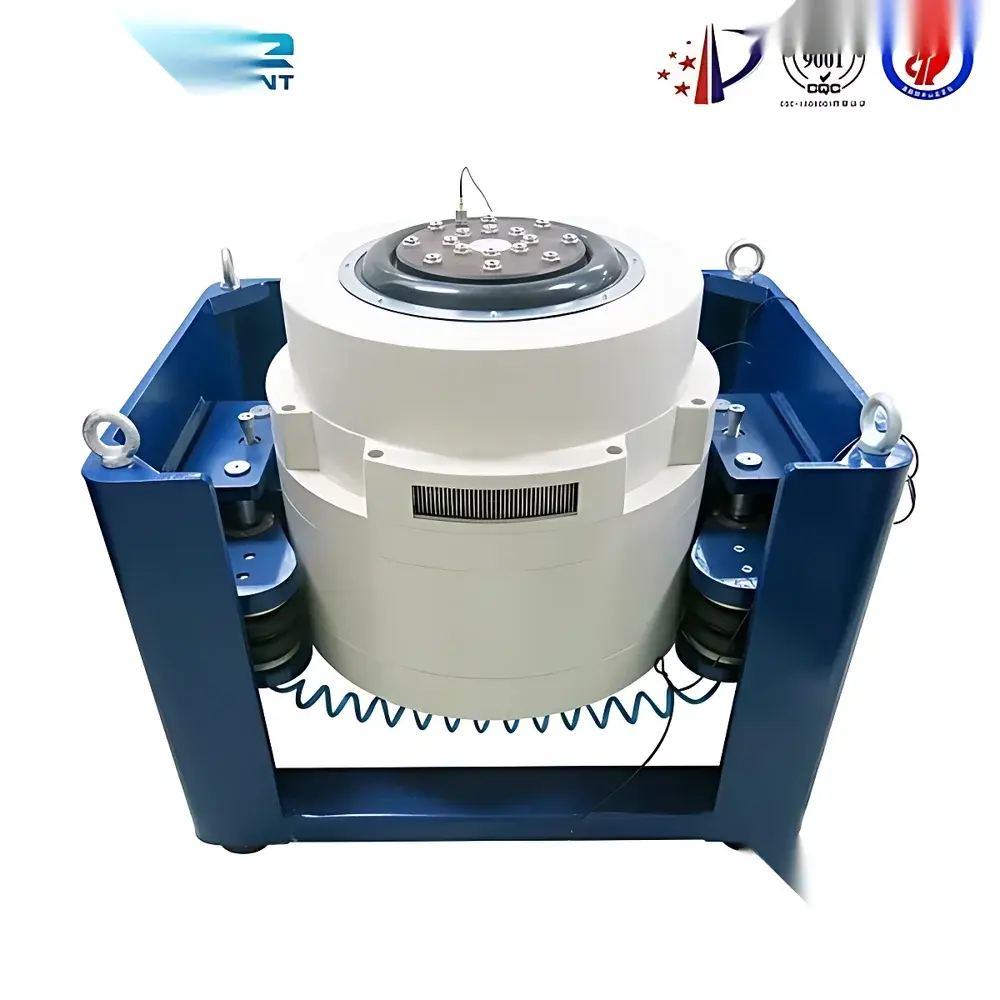
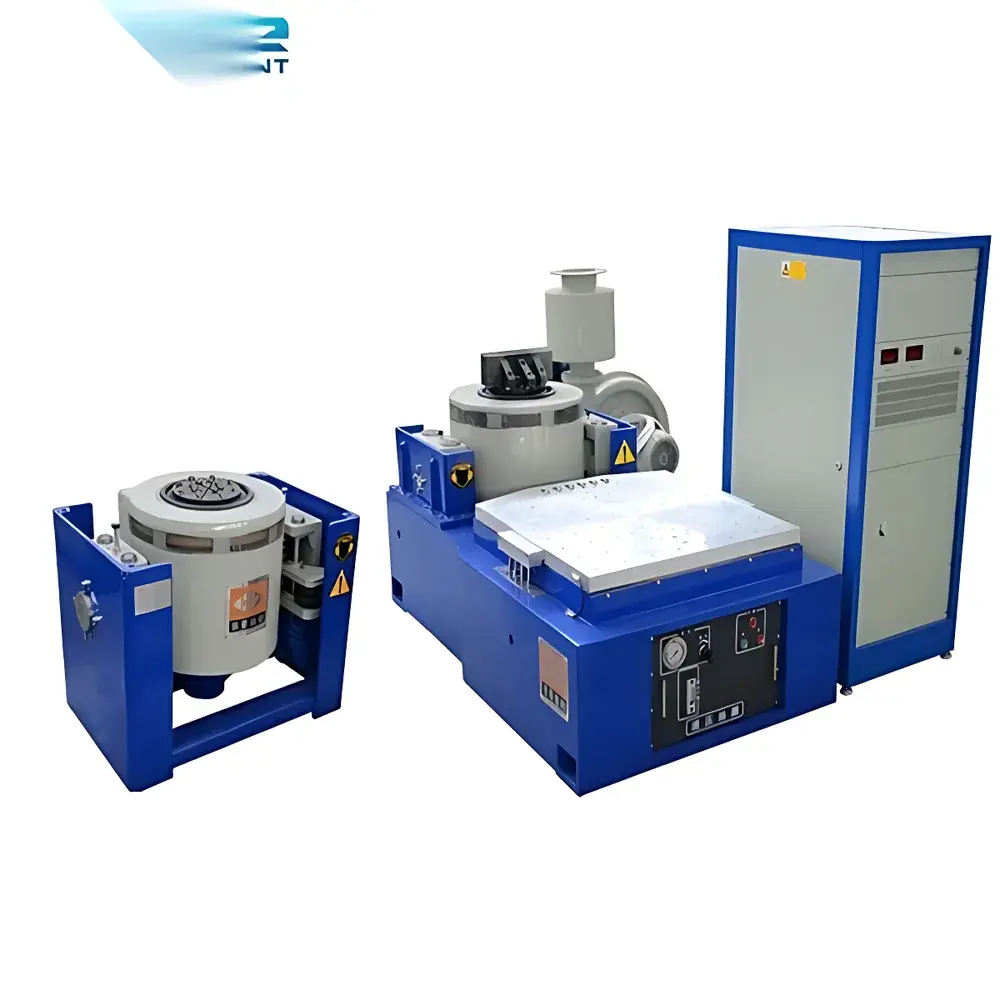
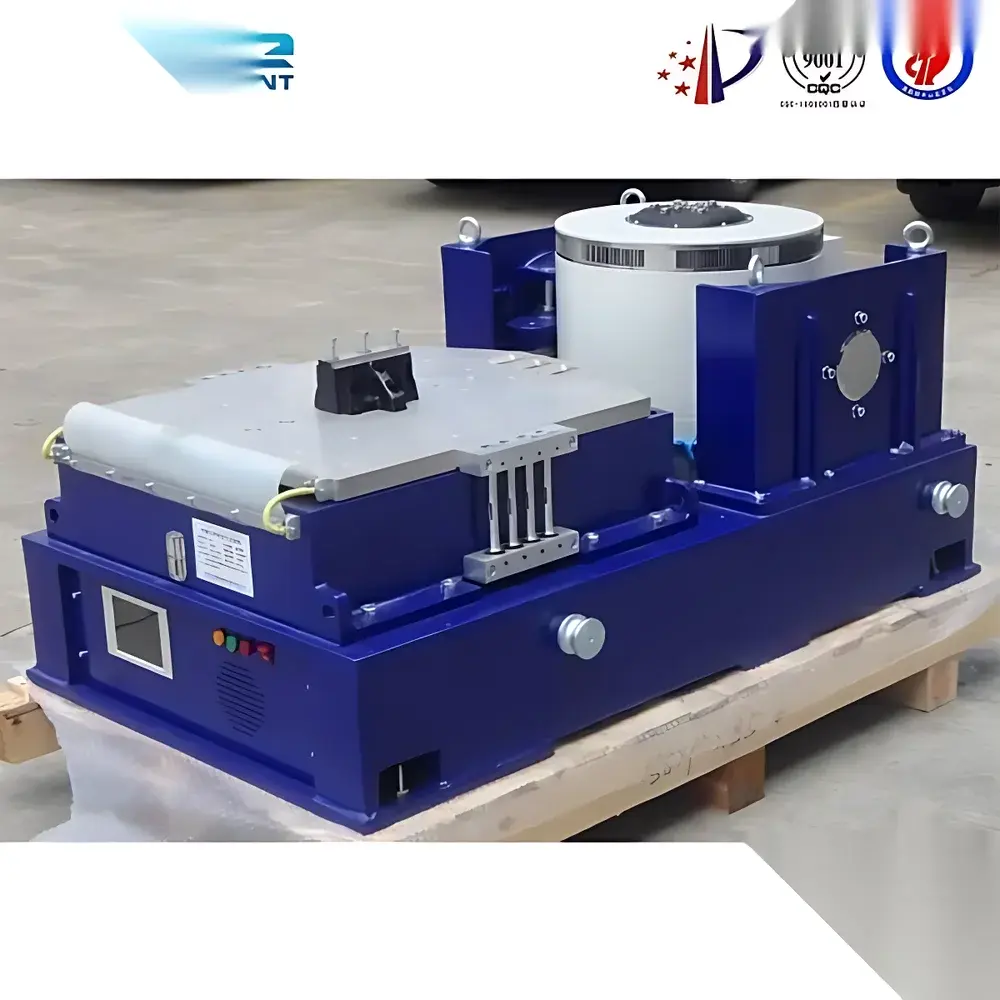
Universal Impact and Vibration Test System
| Brand | Other Brands |
|---|---|
| Origin | Imported |
| Manufacturer Type | Authorized Distributor |
| Price | USD 21,500 (FOB) |
| Frequency Range | 1–3000 Hz |
| Max. Payload | 100 kg |
| Sweep Rate | 0.1–5 oct/min |
| Control Mode | Sine Sweep, Fixed-Frequency, Resonance Search |
| Timing Accuracy | ±0.1 s (SAWANA Digital Timer) |
| Power Consumption | 60% lower than industry-average electrodynamic shaker controllers |
Overview
The Universal Impact and Vibration Test System is an electrodynamic shaker-based laboratory platform engineered for mechanical shock simulation, sine sweep resonance detection, and structural durability assessment under controlled dynamic loading. It operates on the principle of electromagnetic force generation—where a voice-coil actuator converts electrical input into precise linear motion—enabling reproducible acceleration profiles across a broad frequency spectrum (1–3000 Hz). Unlike random vibration systems governed by statistical power spectral density (PSD), this system implements deterministic sine excitation, making it particularly suitable for identifying frequency-dependent failure modes such as resonant amplification, fatigue crack initiation at nodal lines, or mounting interface loosening. Its design aligns with fundamental test philosophies outlined in ISO 10816 (mechanical vibration evaluation), ASTM D999 (vibration testing of packaged products), and MIL-STD-810H Method 514.7 (vibration exposure for equipment qualification).
Key Features
- Modular architecture: Physically separated shaker table and control cabinet to minimize electromagnetic interference and enhance signal integrity during low-amplitude, high-frequency sweeps.
- Reinforced aluminum table surface with standardized M6 threaded mounting holes along all four edges—compatible with DIN 45673-1 fixture interfaces and enabling rapid sample clamping without custom tooling.
- Integrated frequency controller supporting three operational modes: fixed-frequency dwell, logarithmic sine sweep, and programmable resonance search—each configurable via intuitive touchscreen interface with real-time waveform preview.
- SAWANA digital timing module providing high-resolution test duration control up to 99 hours, 99 minutes, and 99 seconds, with automatic shutdown and event logging upon completion.
- Energy-optimized amplifier design meeting IEC 61000-3-2 Class A harmonic emission limits; achieves 60% lower active power draw compared to conventional Class-D shaker controllers operating at equivalent payload and acceleration levels.
Sample Compatibility & Compliance
The system accommodates specimens ranging from small PCB assemblies (<0.5 kg) to industrial control enclosures (up to 100 kg), provided center-of-gravity height remains within 300 mm above the table surface to maintain lateral stability during 50 gpk peak acceleration sweeps. Mounting adaptability supports both rigid base-plate coupling and isolation-mounted configurations per ISO 10816-3 guidelines. All firmware and calibration procedures are traceable to NIST-traceable accelerometers and laser vibrometers, satisfying internal audit requirements for GLP-compliant laboratories. The control software includes built-in compliance checklists for ISO/IEC 17025 Clause 6.4 (equipment validation) and supports export of raw time-history data in IEEE Std 1159-compliant CSV format.
Software & Data Management
A Windows-based host application provides graphical setup of sweep parameters—including start/stop frequencies, amplitude setpoints (in gpk or mmp-p), sweep rate (octaves/minute), and dwell durations—with auto-scaling FFT analysis for real-time resonance tracking. All test sessions generate timestamped metadata logs containing environmental temperature, supply voltage, and amplifier thermal status. Audit trails comply with FDA 21 CFR Part 11 requirements through role-based user authentication, electronic signatures, and immutable record archiving. Export options include MATLAB .mat, Excel-compatible .xlsx, and universal .tdms formats compatible with NI DIAdem and MATLAB Signal Processing Toolbox workflows.
Applications
This system serves critical roles in early-stage reliability engineering: detecting latent solder joint fractures in automotive ECUs via 10–200 Hz sine dwell tests; verifying modal stiffness margins of aerospace bracketry using 50–1000 Hz logarithmic sweeps; validating packaging integrity for medical device shipments per ISTA 3A protocols; and conducting design verification of consumer electronics housings against resonance-induced micro-cracking. It is routinely deployed in R&D labs performing DOE-based vibration sensitivity mapping and in QA departments executing incoming inspection protocols for electromechanical subassemblies.
FAQ
Can this system perform random vibration testing?
No—it is optimized exclusively for deterministic sine excitation. Random vibration requires separate hardware architecture (e.g., closed-loop PSD controllers and broadband amplifiers) and is not supported by this platform.
Is third-party calibration certification included?
Calibration is performed pre-shipment using NIST-traceable reference sensors; full ISO/IEC 17025-accredited certification is available as an optional add-on service.
What is the maximum allowable off-center load deviation?
For rated performance, the center of gravity must remain within ±15 mm of the table’s geometric center in both X and Y axes; deviations beyond this threshold require dynamic balancing verification.
Does the system support remote operation via Ethernet?
Yes—TCP/IP communication protocol enables integration into centralized lab management systems using Modbus TCP or custom API endpoints for automated test sequencing.
Are safety interlocks compliant with EN 60204-1?
All emergency stop circuits, door switches, and over-temperature cutouts meet EN 60204-1 Category 3 requirements, with dual-channel monitoring and forced-guided relay architecture.



