
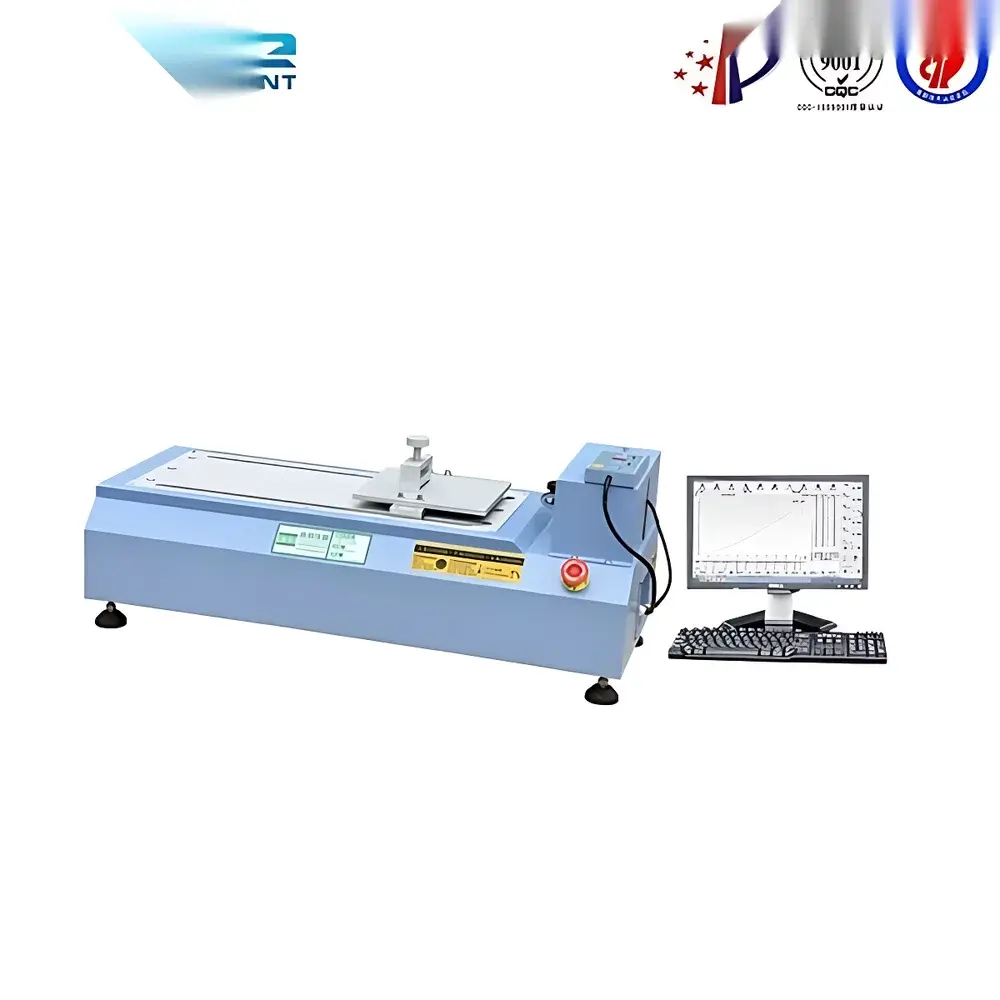
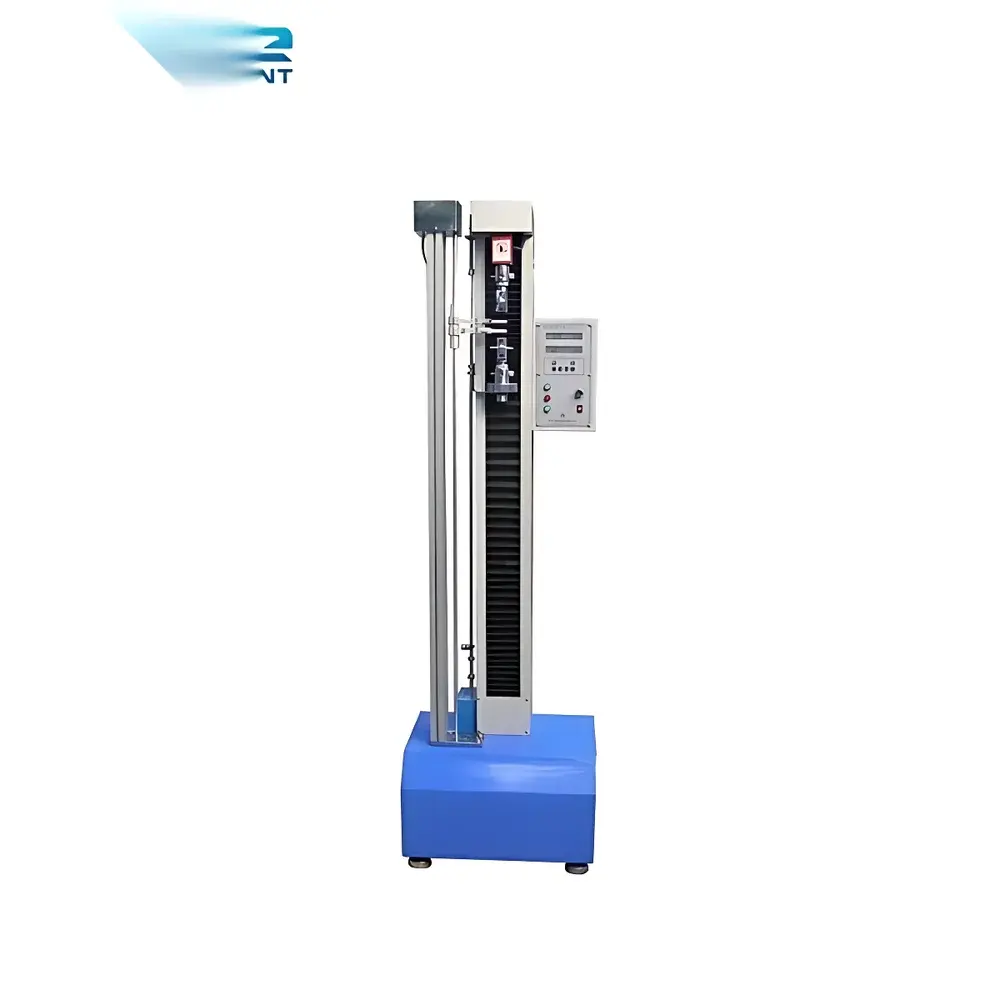
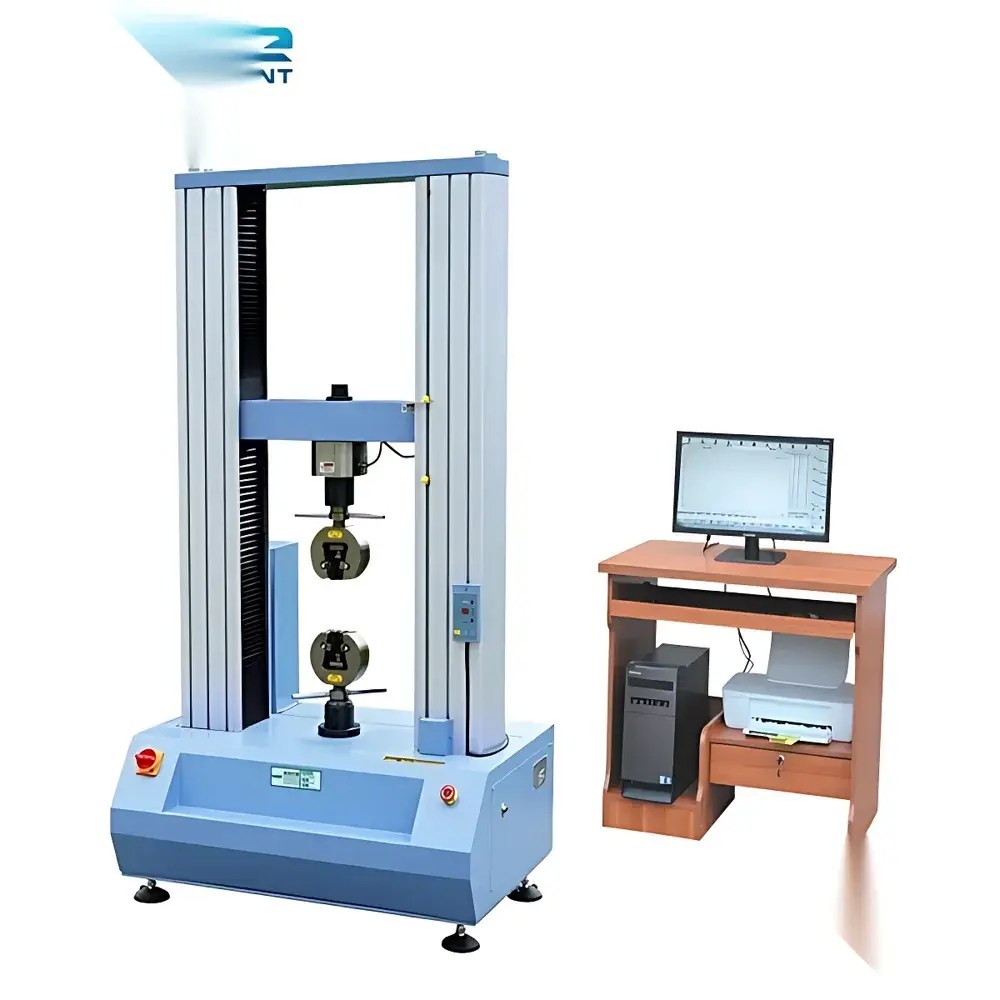
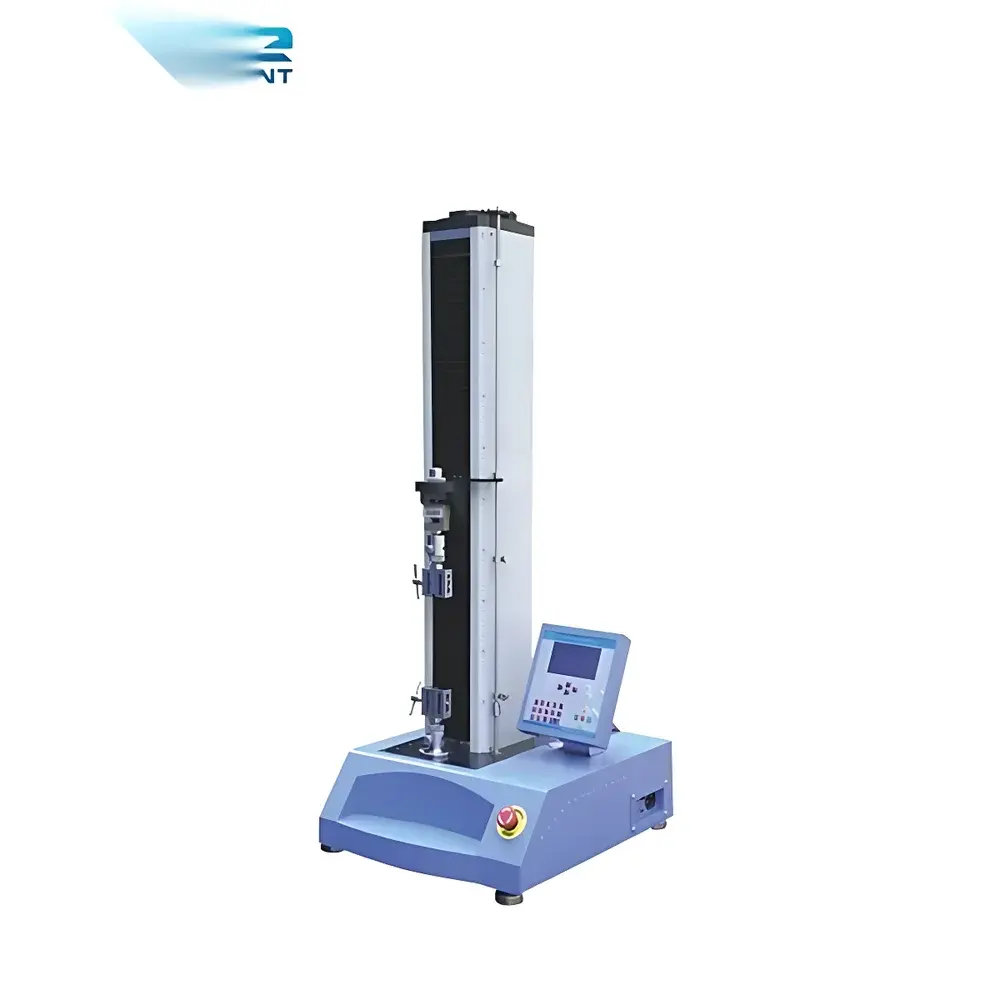
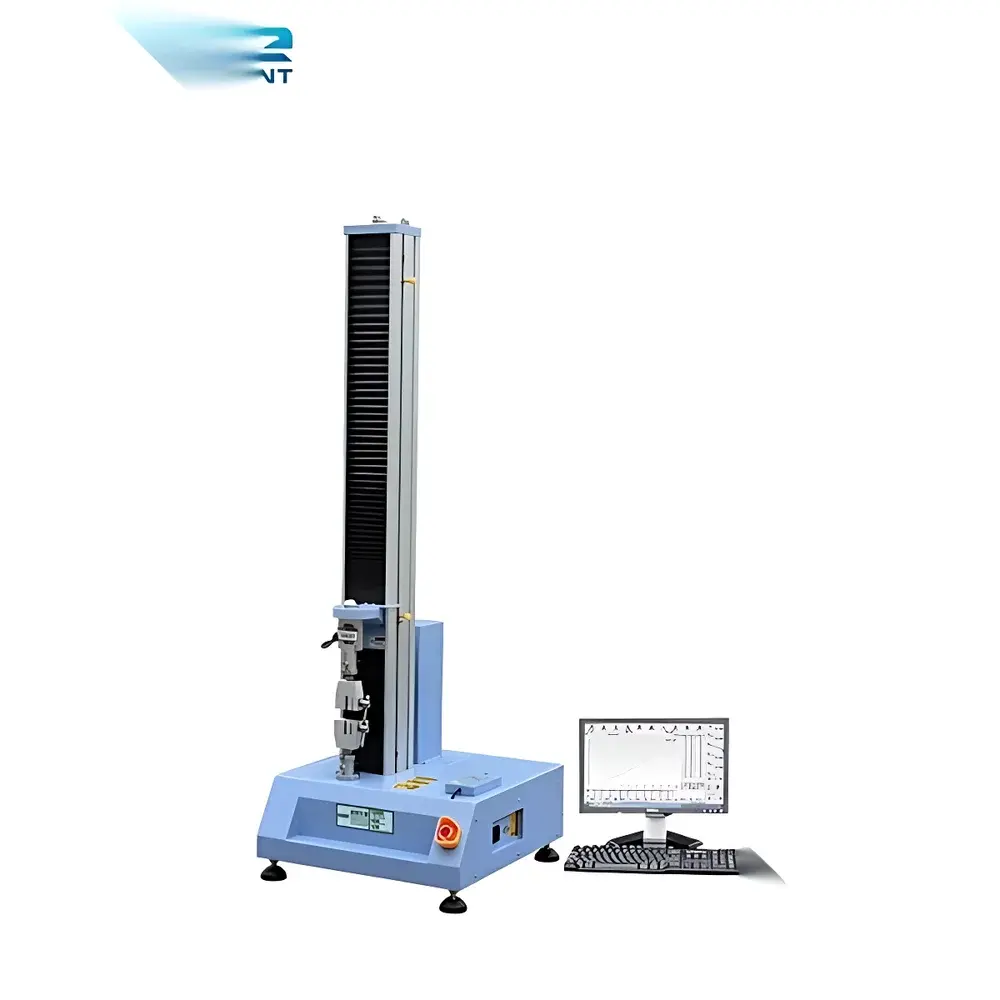
Universal Tensile Testing Machine – High-Precision Electromechanical Testing System for Materials Characterization
| Brand | OEM / White-Label Manufacturer |
|---|---|
| Origin | Imported (Global Supply Chain) |
| Distributor Type | Authorized Industrial Distributor |
| Price | USD 3,200 (FOB) |
| Load Cell Accuracy | ±0.03% F.S. |
| Overload Capacity | 150% of Rated Capacity |
| Displacement Resolution | 1/100,000 Full Scale |
| Transient Response | Auto-compensated for thermal drift |
| Compliance Standards | ASTM D638, ASTM D882, ISO 527-1, ISO 1798, ISO 37, EN 10002-1, GB/T 1040, GB/T 2792, GB/T 16491 |
Overview
The Universal Tensile Testing Machine is an electromechanical materials testing system engineered for precision uniaxial tensile, compression, peel, shear, and flexural characterization of solid and quasi-solid specimens. It operates on the principle of controlled displacement-driven loading via a servo-controlled AC motor coupled to a preloaded precision ball screw assembly, enabling closed-loop force and position control per ISO 7500-1 Class 1 accuracy requirements. Designed for laboratory and quality control environments, the system delivers repeatable mechanical property data—including ultimate tensile strength, yield strength, elongation at break, modulus of elasticity, and Poisson’s ratio—across polymers, elastomers, textiles, composites, metallic foils, and fiber-reinforced laminates. Its modular architecture supports interchangeable load cells (ranging from 10 N to 50 kN), extensometers, and environmental accessories such as temperature chambers and humidity controllers—enabling full compliance with thermomechanical test protocols under varying ambient conditions.
Key Features
- High-stiffness dual-column frame with hardened linear guide rails and preloaded ball screws ensures minimal deflection (<0.02 mm under 100% load) and ultra-low operational noise (<55 dB(A)) during high-speed or low-force testing.
- Explosion-proof strain-gauge-based load cell with integrated temperature compensation circuitry provides long-term zero stability and repeatability of ±0.03% full scale (F.S.), validated per ASTM E4 calibration procedures.
- Real-time digital control firmware enables dynamic load ramping, constant-rate extension (CRE), constant-rate loading (CRL), and stress-relaxation hold modes—all programmable via intuitive software interface.
- Automatic fracture detection triggers immediate crosshead stop upon specimen rupture, preserving raw data integrity and preventing over-travel damage to fixtures or transducers.
- Overload protection system activates at 150% of rated capacity without mechanical disengagement, maintaining sensor linearity and eliminating recalibration downtime.
- High-resolution encoder feedback (1 µm positional resolution) synchronized with 100 kHz analog-to-digital sampling ensures accurate capture of transient mechanical events such as necking onset or brittle fracture initiation.
Sample Compatibility & Compliance
The system accommodates standardized geometries per ASTM, ISO, and GB/T specifications—including dog-bone, dumbbell, strip, and ring-shaped specimens—using pneumatic, wedge, or screw-type grips with adjustable clamping pressure (0–2 MPa). It supports testing of thin films (≥10 µm), fibers (single-filament or yarn bundles), woven/nonwoven textiles, elastomeric sheets, adhesively bonded lap joints, and extruded polymer profiles. All mechanical and software functions comply with ISO/IEC 17025 documentation requirements for accredited testing laboratories. Test reports include audit trails compliant with FDA 21 CFR Part 11 (electronic signatures, user access logs, version-controlled method files), and raw data export conforms to ASTM E1434 for interoperability with LIMS platforms.
Software & Data Management
The embedded Windows-based control software features real-time plotting of stress–strain, load–displacement, and force–time curves with customizable axes scaling and derivative overlays (e.g., tangent modulus, strain hardening exponent). Automated report generation includes pass/fail evaluation against user-defined specification limits, statistical summaries (mean, SD, CV%), and graphical comparison across batches or material lots. Data is stored in encrypted SQLite databases with optional cloud backup (AWS S3-compatible). Export formats include CSV, PDF/A-2b, XML (ASTM E1434), and proprietary .TST binary for traceable reprocessing. Software validation packages (IQ/OQ/PQ documentation) are available upon request for GMP/GLP-regulated facilities.
Applications
This tensile tester serves critical roles in R&D labs evaluating polymer formulation effects on ductility; QC departments verifying incoming raw material conformance to ISO 10477 for medical tubing; packaging engineers validating seal strength per ASTM F88 and peel resistance per ASTM D903; textile manufacturers assessing tensile integrity of technical fabrics per ISO 13934-1; and academic researchers quantifying interfacial adhesion in composite laminates using modified ASTM D1876 (T-peel) configurations. It is routinely deployed in automotive component validation (seat belt webbing per FMVSS 209), aerospace fastener qualification (bolt preload relaxation per ASTM F606), and biomedical device testing (suture tensile strength per USP ).
FAQ
Does this machine support ASTM D638 Type I and Type IV specimen geometries?
Yes—the standard wedge-action grips accommodate both geometries with optional alignment fixtures ensuring ±0.1° angular tolerance per ASTM D638 Section 7.2.
Can the system perform cyclic fatigue testing?
No—this model is optimized for static and quasi-static monotonic tests; fatigue-capable variants require separate servo-hydraulic or resonant vibration modules.
Is third-party calibration certification included with purchase?
A factory calibration certificate traceable to NIST standards is provided; ISO/IEC 17025-accredited field calibration services are available as an add-on.
What is the maximum recommended crosshead speed for high-accuracy modulus measurement?
For elastic modulus determination per ISO 527-2, a crosshead rate of 1–5 mm/min is recommended to minimize viscoelastic contribution and ensure linear region fidelity.
Are custom grip designs available for non-standard samples?
Yes—custom jaw profiles, serrated coatings, and cryogenic-compatible fixtures can be engineered upon submission of sample drawings and mechanical property targets.



