
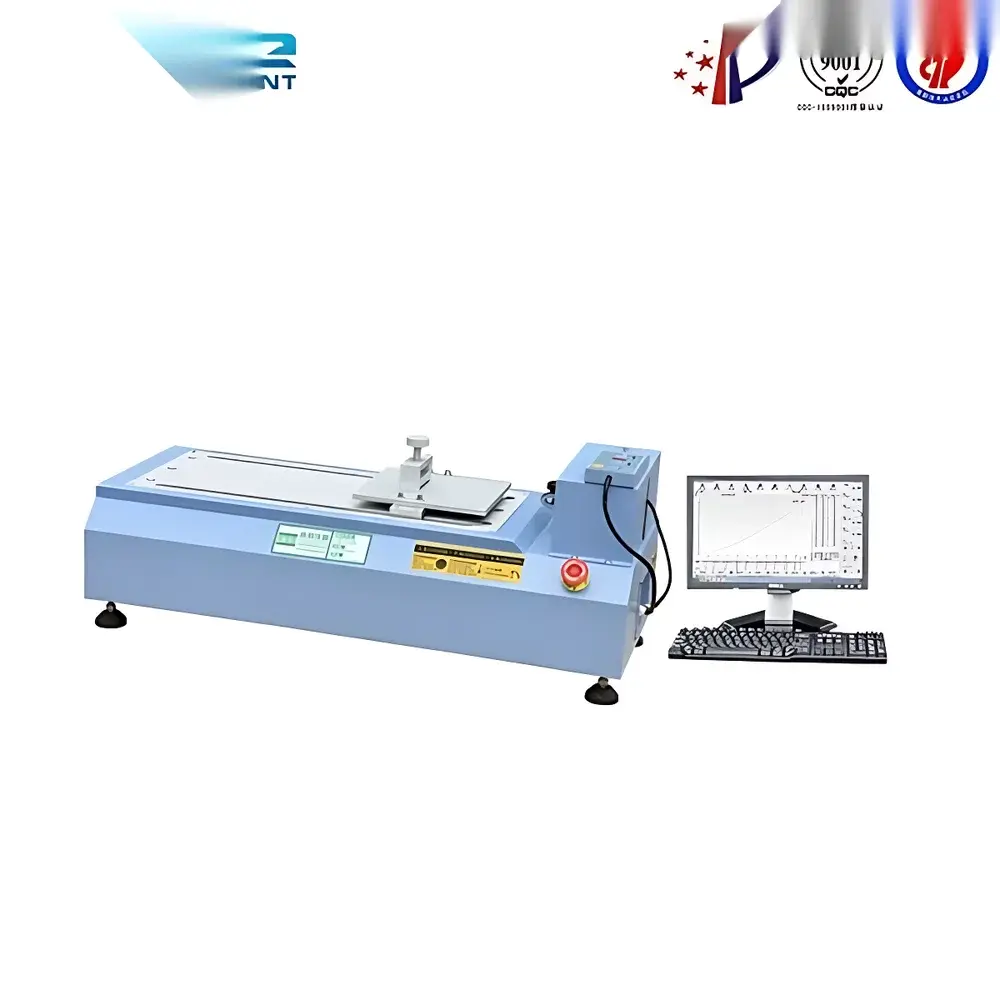
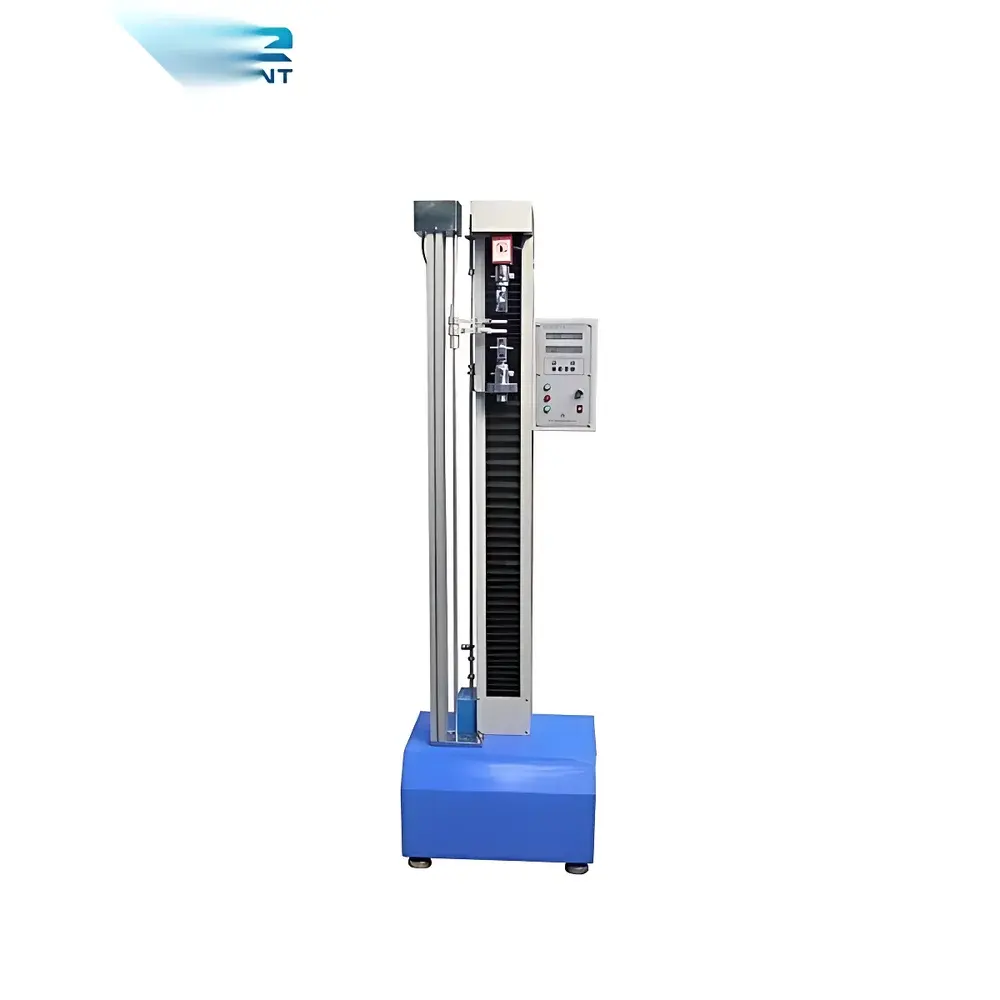
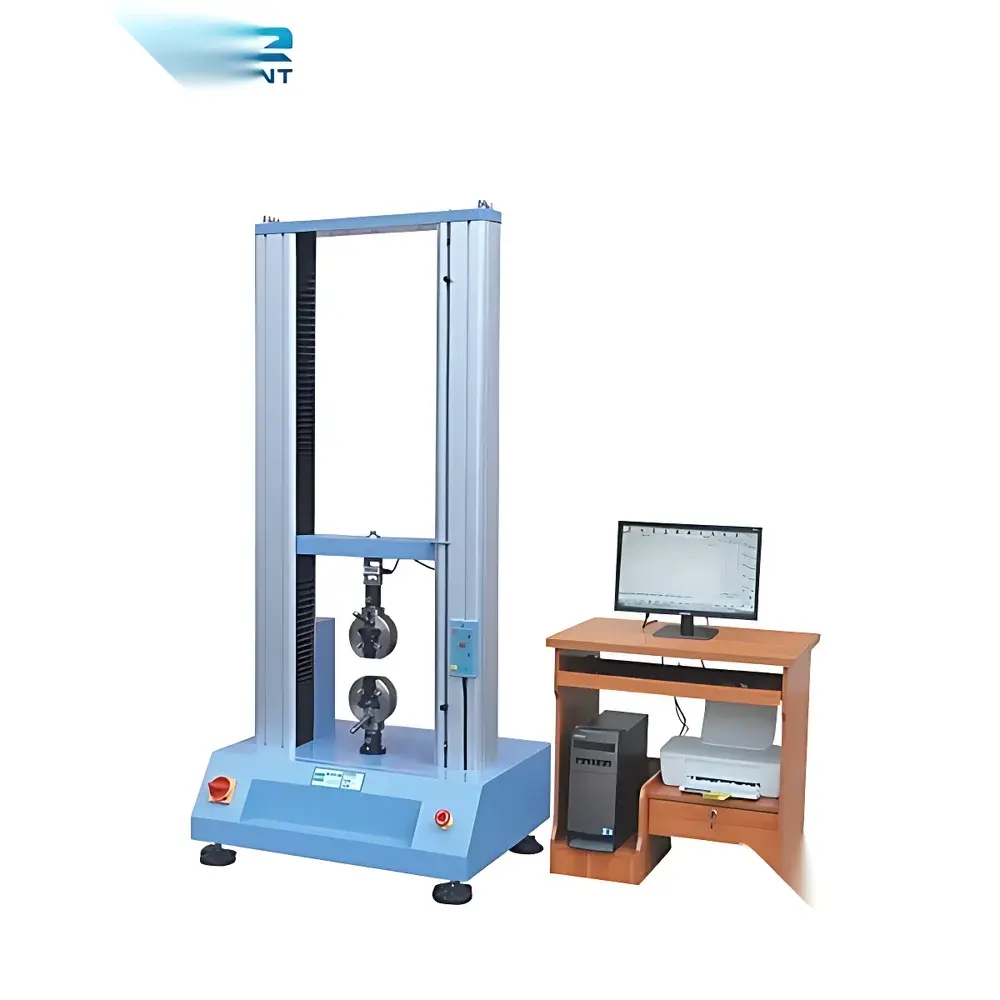
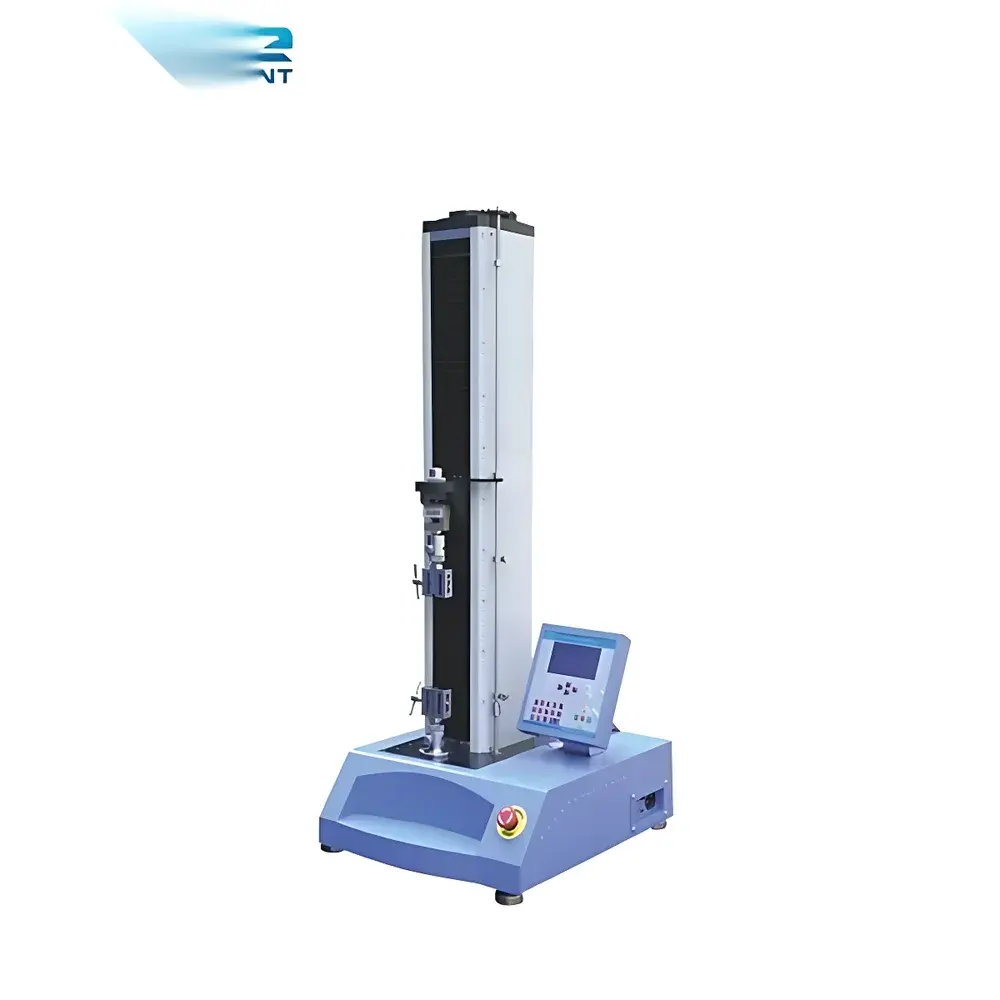
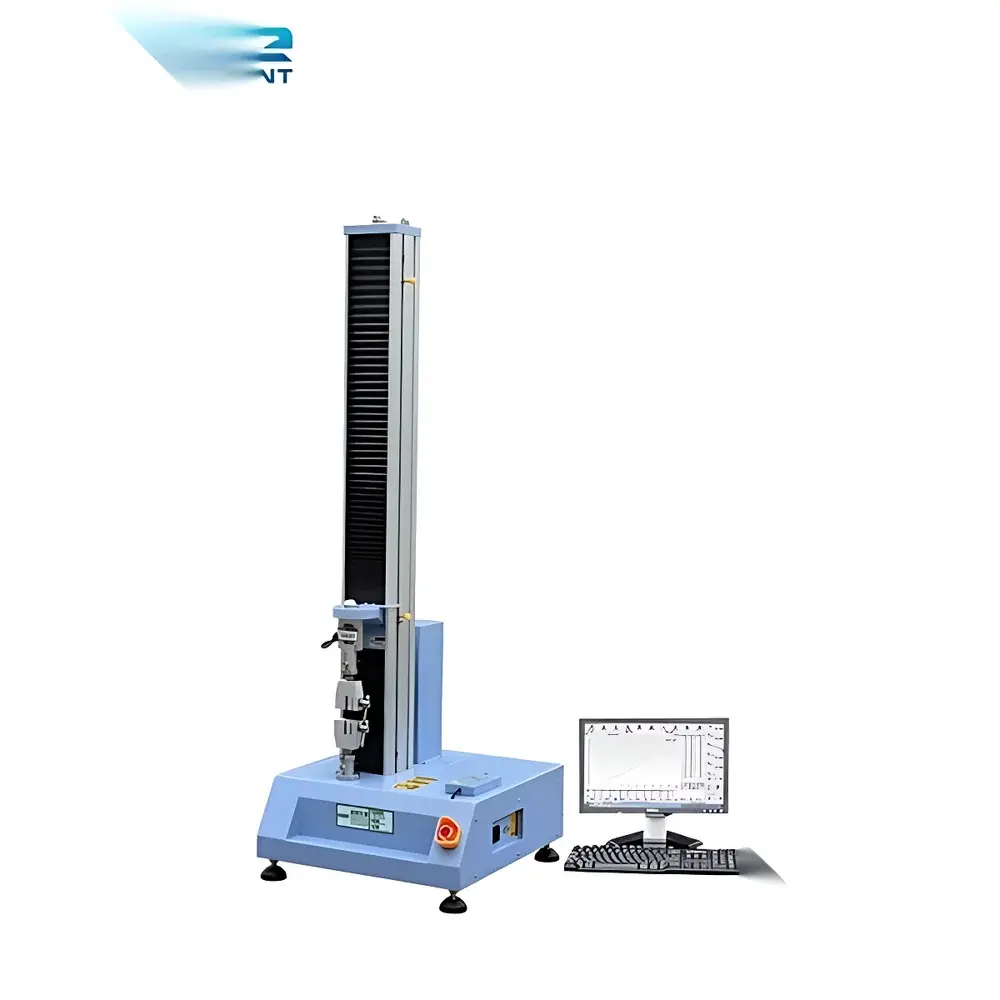
Universal Tensile Testing Machine with PC-Based Control and High-Precision Load Cell
| Brand | OEM / Private Label |
|---|---|
| Origin | Imported |
| Supplier Type | Authorized Distributor |
| Price | USD 3,200 (FOB) |
| Load Cell Accuracy | ±0.03% F.S. |
| Resolution | 1 part in 100,000 |
| Encoder | 2500 PPR AC Servo Motor |
| Travel Protection | Mechanical & Software Limit Switches |
| Data Acquisition | Real-time Curve Plotting, Peak Hold, Auto Stop on Break, Overload Protection, Temperature-Compensated Load Sensing |
| Compliance | ASTM D638, ISO 527, ISO 37, GB/T 1040, GB/T 3923 |
Overview
The Universal Tensile Testing Machine with PC-Based Control is an electromechanical static testing system engineered for precision measurement of tensile, compressive, flexural, peel, shear, and elongation properties of solid and sheet materials. It operates on the principle of controlled displacement-driven force measurement, where a high-torque AC servo motor actuates a precision ball-screw assembly to apply axial load at defined rates (ranging from 0.001 mm/min to 500 mm/min), while a temperature-compensated, explosion-proof load cell captures force data with traceable linearity and repeatability. Designed for laboratory and quality control environments, the system complies with fundamental mechanical testing standards including ASTM D638 (plastics), ISO 527 (tensile properties of plastics), ISO 37 (vulcanized rubber), and Chinese national standards GB/T 1040 and GB/T 3923. Its modular architecture supports both single-column and dual-column configurations, enabling adaptation to specimen geometry ranging from micro-filaments to structural composites.
Key Features
- High-fidelity force transduction via a calibrated, temperature-compensated S-type load cell with ±0.03% full-scale (F.S.) accuracy, 150% transient overload capacity, and minimal zero drift under thermal fluctuation.
- AC servo drive system (Panasonic) coupled with a 2500 pulses-per-revolution optical encoder, delivering smooth, low-noise motion control and precise speed regulation across the full test range.
- Precision transmission mechanism featuring preloaded ground ball screws and linear guideways with recirculating ball bearings—ensuring axial alignment stability, minimal backlash (< 0.005 mm), and long-term geometric fidelity.
- Dual-layer safety architecture: hardware-based mechanical travel limits prevent over-extension; software-enforced load thresholds trigger immediate stop upon exceeding user-defined upper bounds—protecting both sensor integrity and operator safety.
- Real-time data acquisition at ≥1 kHz sampling rate, supporting dynamic curve plotting (force vs. displacement, stress vs. strain), automatic peak detection, break-point identification, and post-test modulus calculation.
- Integrated PC control interface with intuitive GUI, supporting customizable test protocols, multi-step ramp-hold sequences, unit conversion (N, kN, kgf, lbf, MPa, psi), and export-ready report generation (PDF, Excel, CSV).
Sample Compatibility & Compliance
This tensile tester accommodates a broad spectrum of material forms—including elastomeric strips, polymer films (≥10 µm thick), fiber yarns, woven/nonwoven textiles, metallic foils, composite laminates, paperboard substrates, adhesive tapes, safety webbing, and cable insulation sheaths. Specimen gripping options include pneumatic wedge grips, screw-action vise grips, and custom fixtures for irregular geometries. All test methods adhere to internationally recognized metrological frameworks: calibration traceability to NIST or equivalent national standards, documented uncertainty budgets per ISO/IEC 17025, and support for GLP/GMP audit trails when configured with 21 CFR Part 11-compliant software modules.
Software & Data Management
The embedded Windows-based software suite provides full lifecycle test management—from method setup and instrument calibration to raw data archiving and regulatory reporting. Each test session logs timestamped metadata (operator ID, environmental conditions, calibration certificate IDs), enables digital signature authentication, and maintains immutable audit trails for revision history and parameter changes. Data files are stored in encrypted binary format with checksum verification; export functions comply with LIMS integration requirements via ODBC and HL7-compatible APIs. Optional add-ons include automated pass/fail decision logic based on user-defined specification limits and statistical process control (SPC) charting for batch-to-batch consistency analysis.
Applications
Typical use cases span R&D validation, incoming raw material inspection, in-process quality assurance, and final product release testing. Specific applications include: tensile strength and elongation-at-break evaluation of thermoplastic films per ASTM D882; peel adhesion quantification of pressure-sensitive tapes per PSTC-101; breaking load assessment of safety harness webbing per EN 364; Young’s modulus determination in carbon-fiber prepregs per ASTM D3039; and creep compliance characterization of viscoelastic polymers under sustained loading per ISO 899-1. The system is routinely deployed in ISO 17025-accredited labs serving automotive, medical device, packaging, and aerospace supply chains.
FAQ
What standards does this machine support out-of-the-box?
It natively implements test routines aligned with ASTM D638, ISO 527, ISO 37, GB/T 1040, and GB/T 3923. Custom protocol development for other standards (e.g., ISO 1184, DIN 53504) is available upon request.
Is the load cell factory-calibrated and traceable?
Yes—each unit ships with a NIST-traceable calibration certificate issued by an ILAC-MRA accredited laboratory, valid for 12 months under normal operating conditions.
Can the system be integrated into an existing MES or ERP environment?
Absolutely—the software supports OPC UA and RESTful API interfaces for bidirectional data exchange with manufacturing execution systems and enterprise resource planning platforms.
What maintenance intervals are recommended?
Ball screw lubrication every 6 months; load cell verification every 12 months; annual full mechanical and metrological recalibration advised for GMP-regulated operations.
Does the software meet FDA 21 CFR Part 11 requirements?
Yes—when configured with optional electronic signature and audit trail modules, it satisfies electronic record and signature compliance for regulated pharmaceutical and medical device testing.



