
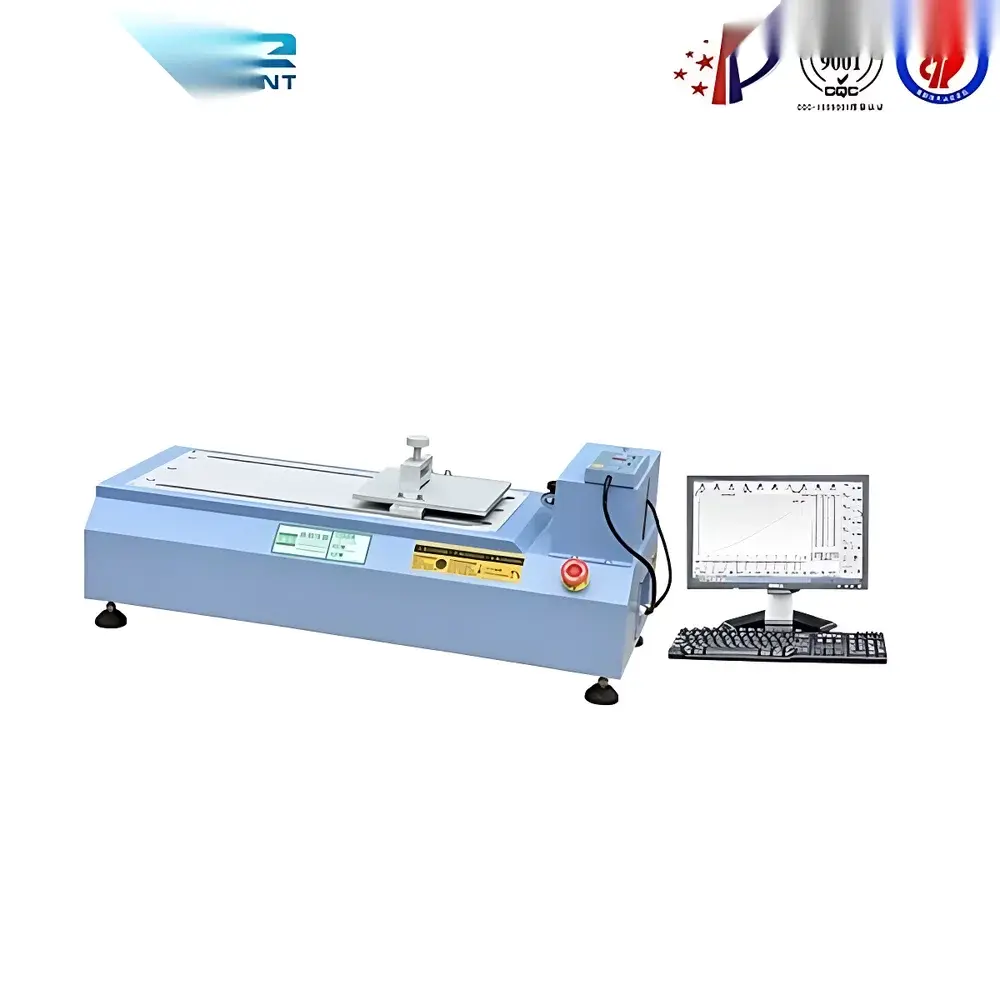
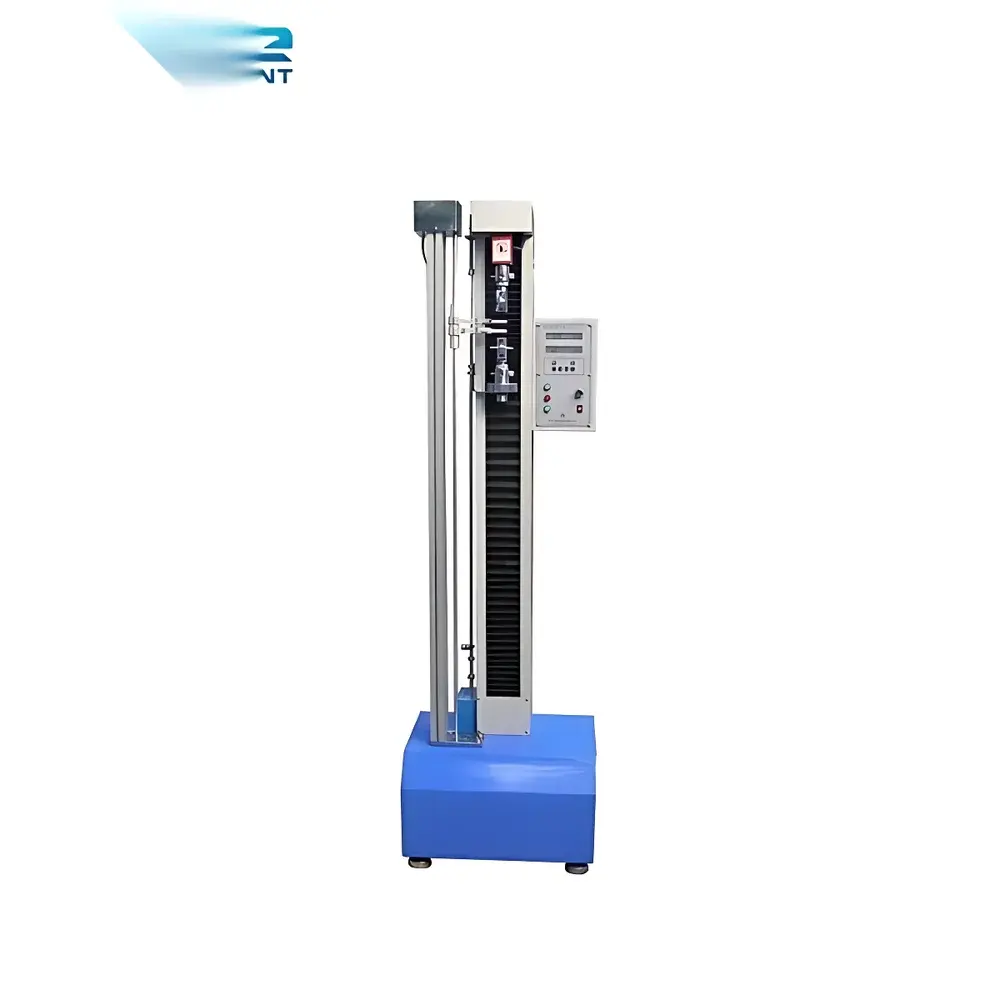
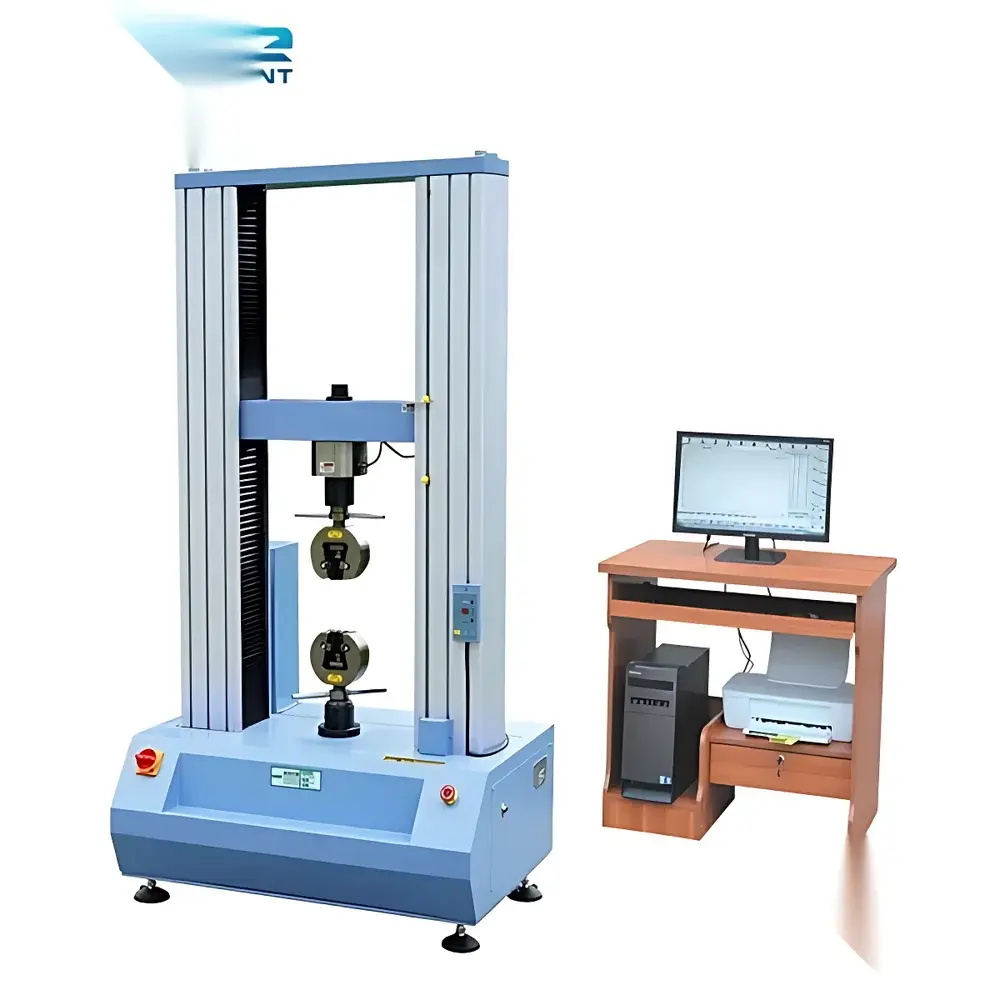
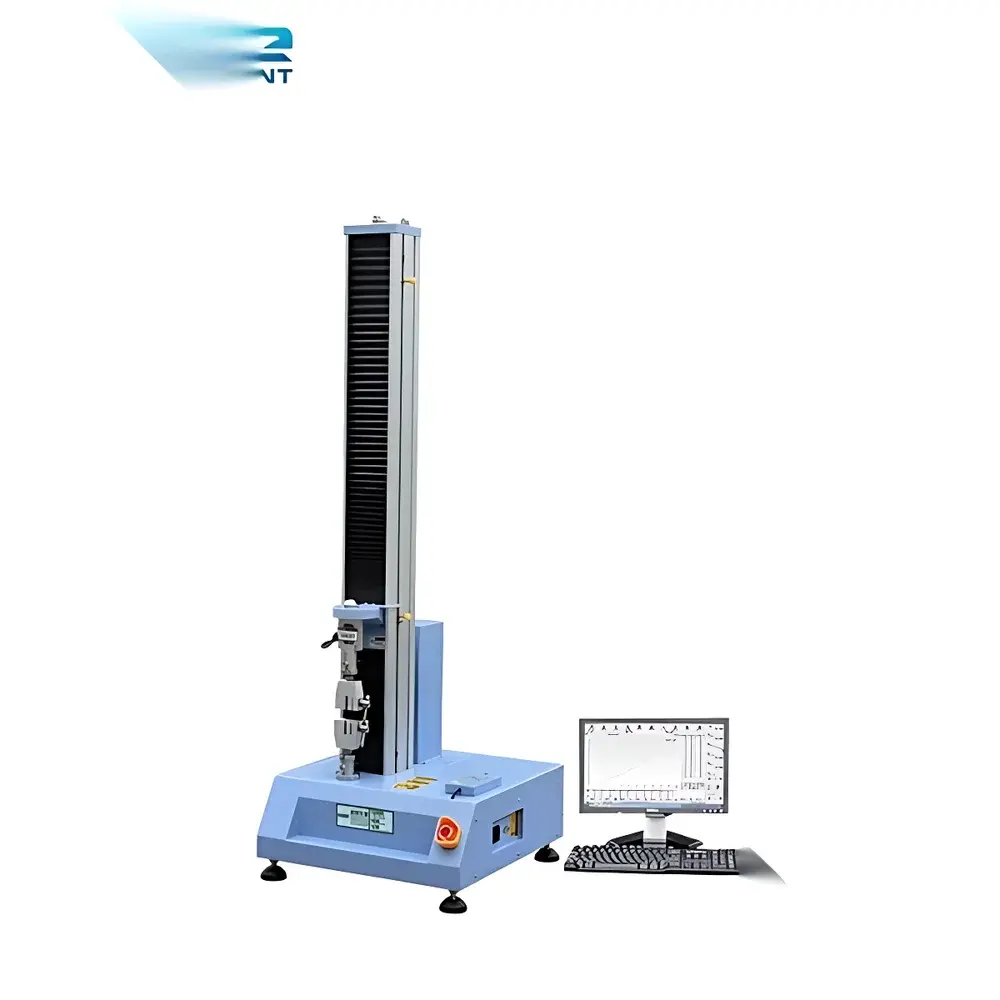
Universal Tensile Testing Machine for Plastics and Elastomers
| Brand | OEM / Custom-Branded |
|---|---|
| Origin | Imported |
| Manufacturer Type | Authorized Distributor |
| Price | USD 3,200 (FOB) |
| Load Frame Capacity | 1 kN–50 kN (configurable) |
| Force Accuracy | ±0.5% of reading (full scale) |
| Displacement Resolution | 0.001 mm |
| Crosshead Speed Range | 0.001–500 mm/min (programmable) |
| Encoder Resolution | 2500 PPR |
| Force Transducer | Explosion-Proof Precision Load Cell with Automatic Thermal Compensation |
| Repeatability | ±0.03% F.S. |
| Overload Protection | 150% F.S. transient capacity |
| Safety Features | Mechanical travel limit switches, software-based load/position upper limits |
| Compliance Standards | ASTM D638, D882, D412, D3039, ISO 527-1, ISO 1798, ISO 37, GB/T 1040, GB/T 16491, GB/T 2792, GB/T 2790, GB/T 3923.1 |
Overview
The Universal Tensile Testing Machine for Plastics and Elastomers is a statically rated electromechanical testing system engineered for high-fidelity mechanical characterization of polymeric, fibrous, and composite materials under uniaxial tension, compression, peel, shear, and flexural loading conditions. Based on the fundamental principle of controlled displacement actuation via servo-motor-driven ball-screw transmission, the system applies precisely regulated force while continuously measuring load, displacement, and strain to generate stress–strain curves, modulus values, yield points, elongation at break, and other standardized mechanical descriptors. Designed for laboratory and quality control environments, it conforms to globally recognized test methodologies—including ASTM, ISO, and Chinese national standards (GB/T)—and supports full traceability required in GLP-compliant and regulated manufacturing settings.
Key Features
- High-stiffness dual-column load frame with precision-ground linear guideways and preloaded recirculating ball screws—ensuring minimal deflection and axial alignment stability during high-force testing.
- Panasonic AC servo motor coupled with a 2500-pulse-per-revolution optical encoder delivers smooth, low-noise motion control across a wide speed range (0.001–500 mm/min), enabling both quasi-static and dynamic ramp protocols.
- Explosion-proof, temperature-compensated load cell with ±0.03% full-scale repeatability and 150% transient overload tolerance—certified to EN ISO 7500-1 Class 0.5 accuracy.
- Integrated hardware-based emergency stop circuitry, mechanical stroke limit switches, and programmable software-defined upper bounds for load and position—preventing transducer damage and operator error.
- Auto-return-to-start and break-stop functionality: the system halts immediately upon specimen rupture, preserving post-failure data integrity and minimizing crosshead overtravel.
- Modular fixture interface compatible with wedge-action grips, pneumatic clamps, peel fixtures (90°/180°), shear adapters, and custom tooling for non-standard geometries.
Sample Compatibility & Compliance
This tester accommodates specimens ranging from ultra-thin polymer films (≥12 µm) to thick-section composites and reinforced elastomeric profiles. It supports standardized sample geometries per ASTM D638 Type I–V, ISO 527-2, GB/T 1040, and ISO 37, as well as non-standard configurations such as fiber bundles, woven textiles, geotextiles, and adhesive lap joints. All test methods are implemented in accordance with regulatory frameworks governing material qualification in medical device packaging (ISO 11607), automotive component validation (SAE J211), and pharmaceutical primary packaging (USP ). The system architecture supports audit-ready documentation aligned with FDA 21 CFR Part 11 requirements when paired with validated software modules.
Software & Data Management
Bundled with Windows-based testing software compliant with ISO 17025 data integrity guidelines, the system provides real-time graphing, multi-curve overlay, automatic calculation of tensile strength, Young’s modulus, Poisson’s ratio, yield offset, and percent elongation. Raw data export is supported in CSV, XML, and PDF formats—with embedded metadata including operator ID, calibration timestamp, environmental conditions (optional sensor integration), and instrument firmware version. Optional add-ons include electronic signature workflows, LIMS connectivity via ASTM E1384-compliant API, and automated report generation templated to internal SOPs or regulatory submission formats (e.g., CTD Module 3).
Applications
- Mechanical validation of thermoplastics (PP, PE, PET, PC), thermosets (epoxy, phenolic), elastomers (NR, SBR, TPU), and biodegradable polymers (PLA, PHA).
- Quality assurance of extruded profiles, blow-molded containers, injection-molded components, and foamed insulation materials.
- Adhesion performance assessment of pressure-sensitive tapes, laminated films, and coated substrates using 90°/180° peel and loop tack protocols.
- Tensile and tear resistance evaluation of nonwovens, geotextiles, filtration membranes, and technical textiles per ISO 9073 and ASTM D5035.
- Wire-and-cable jacket integrity testing per UL 1581 and IEC 60811-501, including elongation and tensile retention after aging.
- R&D support for nanocomposite development, where dispersion homogeneity and interfacial load transfer are inferred from stress–strain nonlinearity and hysteresis behavior.
FAQ
What standards does this machine natively support?
It executes test procedures defined in ASTM D638, D882, D412, ISO 527-1, ISO 1798, GB/T 1040, GB/T 16491, and related national and industry-specific specifications without modification.
Can the system be integrated into an existing LIMS or MES environment?
Yes—via optional OPC UA or ASTM E1384-compliant data gateway modules that enable bidirectional communication with laboratory information management systems and enterprise resource planning platforms.
Is third-party calibration certification included?
Factory calibration is performed per ISO/IEC 17025-accredited procedures; NIST-traceable calibration certificates are available upon request with optional on-site verification by accredited metrology providers.
What maintenance intervals are recommended?
Ball screw lubrication and guideway inspection every 500 operational hours; annual recalibration of load cell and encoder subsystems is advised for GMP/GLP environments.
Does the machine support high-speed tensile testing up to 1 m/s?
No—this is a quasi-static system optimized for displacement-controlled tests up to 500 mm/min. High-strain-rate applications require dedicated impact or servo-hydraulic platforms.



